
Ineos Pauses Production at Hull Chemical Plants as High UK Gas Prices Threaten European Industry

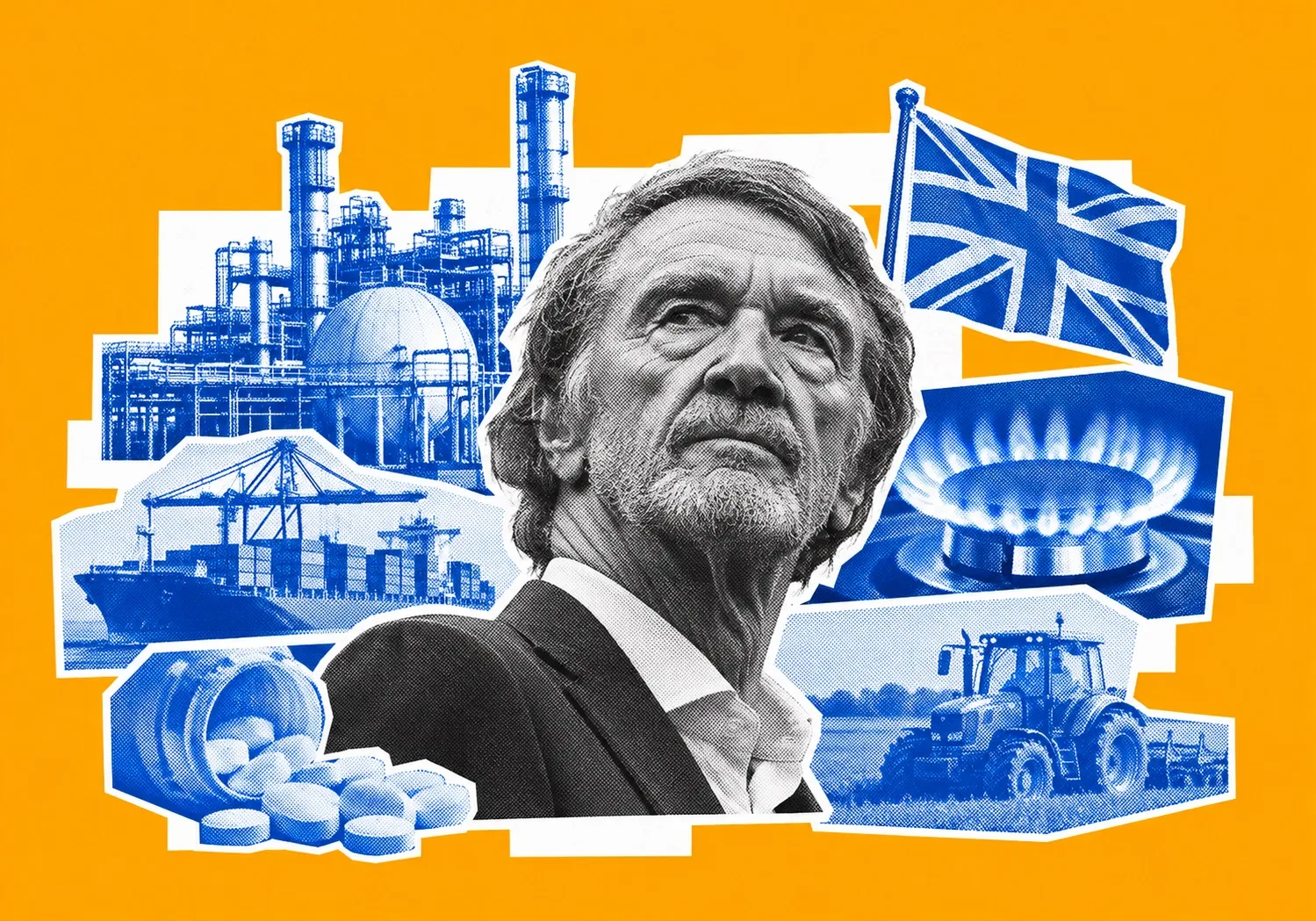
Ineos has suspended operations at its three Saltend chemical plants in Hull, blaming UK natural gas prices that are twelve times higher than in the US. The shutdown puts up to 1,000 jobs at risk and highlights a deepening competitiveness crisis that threatens to permanently push Europe's energy-intensive manufacturing to North America and Asia.
The three facilities manufacture acetic acid, acetic anhydride, and ethyl acetate, chemicals used in products ranging from aspirin and adhesives to food processing and industrial solvents. Their importance lies partly in how little attention these materials receive outside manufacturing. They are intermediate products, bought by other businesses and incorporated into goods that eventually reach consumers.
Losing domestic production does not necessarily mean those products disappear. It does mean that manufacturers may have to obtain essential ingredients from further away, often from competitors operating under very different energy and environmental conditions.
The price of keeping factories open
European gas prices have almost doubled since July following disruptions to oil and gas shipments through the Strait of Hormuz after the US-Israel war in Iran. The resulting pressure has been particularly severe for chemical producers, which depend on hydrocarbons not only to power their facilities but also as raw materials for industrial processes.
Ineos says British gas costs twelve times as much as in the United States, while Chinese competitors using coal-based production methods operate with energy costs roughly eight times lower.
Such differences cannot easily be overcome through efficiency improvements.
The Saltend facilities are already among the most efficient of their kind, according to Ineos. The company says their products have half the carbon footprint of comparable American production and one-eighth that of Chinese alternatives. Yet lower emissions have not translated into sufficient commercial protection against cheaper imports.
Ratcliffe has described the government's energy policy as "economic vandalism on an industrial scale" and said he has lost confidence in the UK.
His criticism comes from a company facing immediate financial pressure. Ineos Acetyls reduced its workforce by a fifth last year, and the latest shutdown places another 245 directly employed workers at Saltend in an uncertain position.
For now, the company intends to retain workers for up to a year while seeking cheaper liquefied natural gas directly from American suppliers or waiting for market prices to ease.
That creates an unusual situation: a major industrial producer is keeping employees on its books while the factories they operate remain idle.
Why a temporary shutdown can become permanent
Chemical production differs from manufacturing activities that can be suspended and restarted with relatively limited expense.
Complex industrial installations require substantial expenditure to shut down safely, maintain, and eventually return to operation. In sectors such as ammonia and acetyls, those costs can run into millions of euros.
A prolonged interruption therefore changes the financial calculation. The longer a plant remains idle, the harder it becomes to justify restarting it, particularly when cheaper foreign production remains available.
There is also a less visible cost. Chemical manufacturing depends on specialist engineers, technicians and operators whose expertise is often concentrated in particular industrial regions. Once those workers leave, restoring production becomes more difficult even if energy prices improve.
Europe has already experienced this process on a considerable scale.
Between 2022 and 2025, approximately 37 million tonnes of European chemical production capacity closed, representing around 9% of the sector's total. Those closures eliminated an estimated 20,000 direct jobs.
The contraction has affected the industrial network stretching through Antwerp, Rotterdam, the Rhine and the Ruhr, as well as manufacturing centres in Britain and elsewhere.
Weak demand has compounded the pressure from energy costs. Producers cannot readily pass higher expenses to customers when those customers are themselves struggling with subdued markets.
The result is a sector in which even technically competitive facilities can become commercially unviable.
America's advantage is becoming Europe's investment problem
The energy-price divide is changing where chemical companies choose to invest.
The United States benefits from substantially cheaper natural gas, giving producers a significant advantage in energy-intensive operations. China competes through lower-cost production processes, including coal-based manufacturing, although these can carry much higher emissions.
European companies face a different combination of pressures: expensive energy, weak demand and carbon costs that their overseas competitors do not necessarily bear at equivalent levels.
BASF's expansion in Louisiana illustrates the attraction of American manufacturing conditions. Investment decisions of this kind matter because new chemical facilities are long-lived assets. Once capital has been committed to a particular location, production capacity and associated employment tend to remain there for years.
Europe is consequently competing not only to preserve existing factories but also to secure the next generation of industrial investment.
The distinction is important. A temporary energy-price shock can be addressed through short-term assistance. A persistent disadvantage in operating costs changes the economic case for building factories in Europe at all.
Companies considering new capacity must assess whether future European energy prices, carbon obligations and market conditions will allow them to compete internationally.
If those calculations consistently favour North America or Asia, Europe's industrial contraction could continue even after the current disruption to energy supplies subsides.
The climate policy contradiction
European climate policy introduces another complication.
The EU Emissions Trading System requires industrial producers to account for the cost of carbon emissions. Its purpose is to encourage cleaner production and investment in lower-emission technologies.
For energy-intensive manufacturers, however, carbon pricing adds to costs that are already substantially higher than those faced by many overseas competitors.
The problem becomes particularly acute when European facilities with relatively low emissions close while production expands in countries with less demanding environmental requirements.
Economists describe this as carbon leakage: industrial activity moves abroad without delivering an equivalent reduction in global emissions.
Saltend offers a pointed example of the tension. If Ineos's emissions comparisons are accurate, replacing its output with higher-carbon imports could weaken the environmental benefits associated with domestic industrial efficiency.
The European Commission and Parliament have proposed targeted changes to carbon-market arrangements, including extending free emissions allocations and benchmarking protections towards 2040.
Such measures could relieve some immediate pressure, but they cannot eliminate the underlying disparity in energy prices.
Industrial policy therefore faces two separate problems. Carbon costs influence where production takes place, while the availability and price of energy determine whether many chemical processes are commercially viable in the first place.
Removing one disadvantage does not automatically resolve the other.
From chemical plants to food prices
The consequences extend into sectors that rarely feature in debates about chemical manufacturing.
Natural gas accounts for approximately 70% to 80% of the cost of producing ammonia and nitrogen fertilisers. When gas becomes prohibitively expensive, European fertiliser production faces the same economic pressures affecting acetyls manufacturers.
Reduced domestic ammonia output increases dependence on imported fertilisers and exposes agricultural producers to international price fluctuations.
Farmers facing higher input costs may reduce fertiliser use, potentially lowering crop yields. Those pressures can eventually affect food prices and the reliability of agricultural supply.
The pharmaceutical sector has its own vulnerabilities. Acetic anhydride, one of the chemicals produced at Saltend, is an important ingredient in aspirin manufacturing. Other chemical intermediates support the production of medicines, construction materials and automotive components.
The immediate effect of a plant closure may be manageable if imports remain available. The longer-term concern is the accumulation of dependencies across industries that rely on a relatively small number of essential chemical inputs.
European strategic autonomy becomes harder to sustain when the region increasingly relies on overseas suppliers for the materials required by its own manufacturers.
Governments face a narrowing set of choices
Ineos is calling for tariff protection against Chinese chemical products, placing trade policy alongside energy costs in the debate over industrial survival.
The British government has pointed to existing support, including £350 million for strategically important chemical producers, trade measures, the Supercharger programme and the British Industrial Competitiveness Scheme.
These interventions may help individual businesses, but the scale of Europe's industrial contraction raises questions about whether targeted assistance can compensate for persistent structural disadvantages.
Trade unions are also challenging the terms on which governments should intervene.
IndustriAll Europe wants public financial support and free carbon allocations tied to commitments to preserve employment and modernise production facilities. Its position reflects concern that subsidies could otherwise support companies without preventing subsequent closures or investment transfers abroad.
That demand creates a difficult negotiation between governments and industry.
Manufacturers want predictable energy costs, protection against cheaper imports and relief from environmental charges. Workers want guarantees that public assistance will preserve industrial employment. Governments must weigh those demands against climate commitments and the cost of maintaining production that may remain commercially vulnerable.
At Saltend, the immediate decision rests on whether Ineos can secure affordable American LNG or whether wholesale gas prices fall sufficiently to justify restarting production.
But the company's willingness to keep its workforce employed for another year also establishes a deadline of sorts. If conditions fail to improve, the question will no longer be how quickly three chemical plants can resume operations. It will be whether the economic case for operating them in Britain still exists.
For European policymakers, the harder problem is that a factory can be environmentally efficient, strategically valuable and technically advanced while remaining too expensive to operate. Carbon policy can reward cleaner production, and trade measures can address some competitive pressures. Neither guarantees that investors will continue financing European industrial capacity when the same chemicals can be manufactured elsewhere at substantially lower cost.