
EU Gas Prices Climb Above €87 as Iran War and Low Storage Threaten Winter Supply

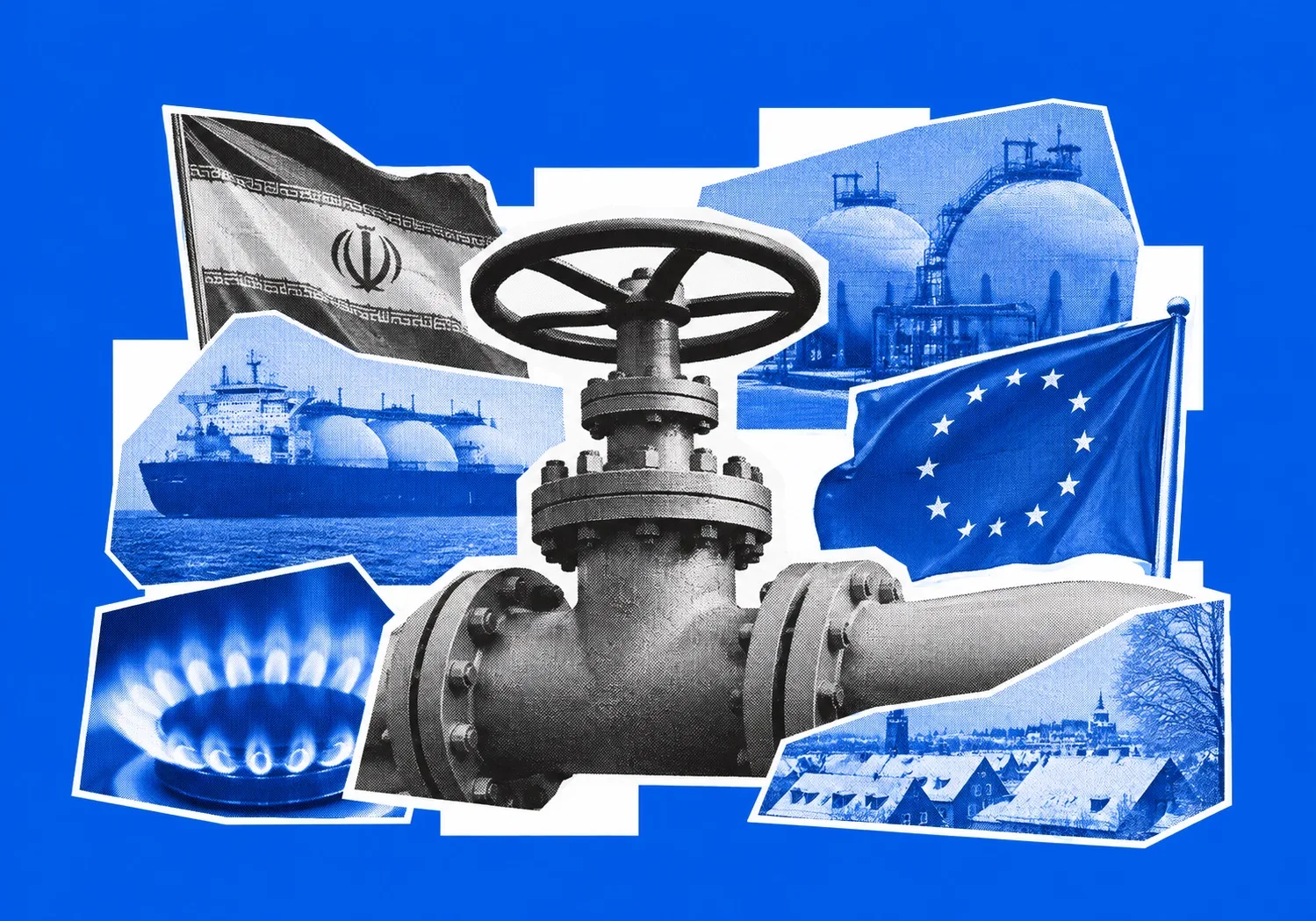
European benchmark TTF natural gas prices rose above €87 per megawatt-hour on November 11 as Middle Eastern LNG disruptions and unusually low EU storage levels (71.6%) heightened winter supply risks. With Qatari shipments delayed by the Iran conflict and Germany’s reserves below 60%, European households and industries face renewed pressure ahead of colder weather.
The Dutch Title Transfer Facility contract gained approximately 2.7% on Wednesday, reversing a period of declining prices when hopes of reduced tensions between Washington and Tehran had temporarily eased concerns about global energy supplies.
According to Eurasia Business News, renewed uncertainty surrounding the Iran war has returned geopolitical risk to European gas markets.
However, the immediate concern extends beyond the possibility of further military escalation. Europe is entering the heating season with significantly less gas in storage than usual, while disruptions to liquefied natural gas exports from the Persian Gulf continue to restrict global supply.
The result is a market increasingly sensitive to changes in shipping conditions, weather forecasts and competition for available LNG cargoes.
Why the Iran War Is Driving European Gas Prices Higher
The connection between the conflict involving Iran and European household energy costs lies primarily in the global LNG market.
Before the war, the Persian Gulf accounted for approximately one-fifth of international LNG trade. Qatar was among the world's leading exporters, supplying customers across Europe and Asia.
The Strait of Hormuz, separating Iran from Oman, serves as a critical passage for these shipments. Disruptions to tanker movements have therefore affected energy buyers far beyond the Middle East.
Although diplomatic signals from US President Donald Trump had raised expectations that further attacks on Iran might be avoided, continued threats to commercial shipping have complicated hopes of a rapid recovery.
The distinction between military de-escalation and restored energy supplies is particularly important.
Even if hostilities diminish, LNG production facilities, shipping schedules and contractual deliveries cannot necessarily return to normal immediately. Importers may still face delayed cargoes, higher transport costs and uncertainty over future supplies.
European buyers must compete with Asian customers for LNG exported from the United States and other producers. When supplies from Qatar become unavailable, that competition can push prices higher across multiple regional markets.
Consequently, a disruption affecting customers in Asia can indirectly increase the price paid by European utilities, even when the gas itself was never intended for Europe.
Qatar's LNG Disruptions Are Becoming a Long-Term Supply Problem
The continuing difficulties facing QatarEnergy illustrate why the consequences of the Iran war cannot be measured solely through daily movements in oil and gas prices.
In September, Italian energy company Edison confirmed that QatarEnergy had extended force majeure affecting deliveries under its long-term LNG agreement.
According to Edison's official statement, the disruption covered 35 LNG cargoes scheduled between April and early December 2026, representing approximately 4.6 billion cubic metres of natural gas.
Edison reported that it had already replaced 23 affected shipments by September 28 and maintained that it could fulfil its commitments to customers.
Nevertheless, replacing contracted deliveries requires additional purchases and logistical arrangements. Those replacement cargoes must come from a global market where other importers face similar problems.
The disruption has also begun reshaping long-term commercial relationships.
On November 10, Reuters reported that Poland's Orlen had terminated one of its two long-term LNG supply contracts with QatarEnergy after deliveries failed to resume.
The cancelled agreement covered approximately one million tonnes of LNG annually through 2034. Orlen indicated that its diversified supply portfolio would protect Polish consumers from immediate shortages.
The decision demonstrates how prolonged geopolitical disruptions can alter European energy procurement strategies, rather than simply causing temporary fluctuations in market prices.
For European governments, the question is increasingly whether alternative LNG supplies can remain reliable and affordable over several consecutive winters.

Europe's vulnerability is not limited to disruptions in international shipping. The continent is also beginning winter with an unusually small reserve of stored gas.
Data from Gas Infrastructure Europe show that EU underground gas storage was approximately 72% full in early November.
More specifically, figures for November 10 compiled from the AGSI+ database indicate that storage facilities held approximately 811 terawatt-hours of gas, equivalent to 71.6% of capacity.
That compares with approximately 82.4% at the same point in 2025 and a five-year seasonal average of 89.1%, according to the European gas storage tracker .
The differences between individual countries are particularly striking.
Germany, Europe's largest economy and a major industrial gas consumer, had filled only around 58% of its storage capacity. The Netherlands was below 63%, while Italy held more than 88%.
Poland's storage facilities were close to 97% full.
These figures do not mean that Germany or the Netherlands face an immediate shortage. European gas supplies also depend on pipeline imports, domestic production and continuous LNG deliveries.
Nevertheless, lower storage levels reduce the margin available to absorb unexpected supply disruptions or prolonged periods of high consumption.
The uneven distribution of reserves also raises questions about how effectively gas can move between European markets during a severe winter.
Storage capacity, pipeline infrastructure and cross-border connections differ substantially between countries. A relatively comfortable reserve in one member state does not automatically eliminate pressure elsewhere.
Cold Weather Could Accelerate Gas Withdrawals
Weather conditions will play an increasingly important role in determining whether Europe's current gas reserves are sufficient.
Gas consumption normally increases during winter as households and businesses require additional heating. Demand can rise further when cold weather coincides with weak wind generation, forcing electricity producers to rely more heavily on gas-fired power plants.
Recent withdrawals suggest that this seasonal pressure has already begun.
Market reporting cited by Eurasia Business News indicated that net withdrawals from European storage facilities had increased nearly sixfold compared with the previous week.
However, the prospect of a particularly severe winter remains uncertain.
Seasonal forecasting models have generally suggested relatively mild conditions across much of Europe. That outlook does not exclude shorter periods of unusually low temperatures, especially in northern and central regions.
Weather forecasting company MetDesk has warned that disturbances to the polar vortex could increase the likelihood of colder spells during December and later in winter.
A polar vortex disruption can influence atmospheric circulation and create conditions favourable to outbreaks of cold air. It does not, by itself, guarantee a prolonged freeze across Europe.
For gas markets, the timing and duration of cold periods may prove more important than average seasonal temperatures.
A relatively mild winter interrupted by several weeks of intense cold could still produce significant pressure on storage facilities, particularly if LNG imports remain constrained.
What Higher Gas Prices Mean for European Industry and Households
Rising wholesale gas prices affect European economies through several channels, although the impact is neither immediate nor identical across countries.
Households with variable energy contracts may experience price changes sooner than consumers protected by fixed-rate agreements or regulated tariffs.
Utilities that purchase gas in advance may also be partially insulated from short-term market volatility.
Industrial consumers, however, can face more direct exposure.
Energy-intensive industries such as chemicals, fertilisers, ceramics, glass and certain metals depend heavily on natural gas, either as fuel or as a production input.
Higher gas prices increase operating costs and can weaken the competitiveness of European manufacturers against producers in regions with cheaper energy.
This is particularly relevant for Germany, where industrial companies are already navigating structural changes in energy supply and manufacturing investment.
Electricity prices may also be affected because gas-fired power stations frequently help determine wholesale electricity prices during periods of strong demand or limited renewable generation.
The economic consequences extend beyond individual energy bills.
If elevated gas prices persist, they can contribute to inflationary pressure, reduce household purchasing power and complicate the outlook for European monetary policy.
For governments, the challenge is balancing energy affordability with the need to maintain adequate reserves and encourage investment in more resilient supply infrastructure.
Can Europe Avoid Another Energy Crisis?
Europe enters the winter of 2026–2027 with a different energy system from the one that confronted the Russian supply crisis in 2022.
The EU has expanded LNG import capacity, developed alternative supply relationships and accelerated investments in renewable energy and efficiency.
These changes have reduced dependence on a single external supplier.
Yet diversification has introduced a different kind of exposure: European energy security now depends more heavily on developments across the global LNG market.
Additional import terminals cannot independently solve shortages when the available supply of LNG is constrained.
Similarly, securing contracts with multiple exporters provides protection against individual disruptions but cannot fully insulate buyers from simultaneous increases in international demand.
The prolonged interruption of Qatari shipments highlights this limitation.
The challenge for European policymakers is therefore no longer simply to replace Russian pipeline gas. It is to build a system capable of withstanding disruptions across several international supply routes while maintaining competitive energy prices.
That requires investment in storage flexibility, electricity networks, cross-border infrastructure and technologies that reduce dependence on gas consumption.
Three Scenarios for Europe's Winter Gas Market
The outlook for the coming months depends on developments that remain difficult to predict with confidence.
A mild winter combined with improved LNG shipping conditions would offer the most favourable outcome. Lower heating demand would slow withdrawals from storage, while recovering deliveries from the Persian Gulf could ease competition for alternative cargoes.
Under this scenario, European gas prices could stabilise or decline, although the speed of any recovery would depend on how quickly physical shipments resume.
A colder winter with continued Middle Eastern supply disruptions would create greater pressure. European utilities would need to withdraw more gas from storage while competing with Asian buyers for available LNG.
Prices could remain elevated, with the greatest pressure falling on countries entering winter with relatively low inventories.
A further escalation affecting energy infrastructure or shipping would represent the most disruptive scenario. Additional restrictions on LNG exports could trigger renewed volatility even if European weather conditions remain relatively mild.
None of these outcomes is inevitable.
European gas markets are influenced by multiple variables, including Norwegian pipeline deliveries, US LNG exports, industrial demand, renewable electricity generation and weather conditions.
What makes the current situation unusual is the limited margin for unexpected developments.
With EU storage levels substantially below their seasonal average and major LNG supply routes still disrupted, even relatively short interruptions could have consequences for prices.
For European households, businesses and policymakers, the coming winter will test whether the continent's increasingly diversified energy system can deliver not only secure supplies but also predictable and affordable energy.
Sources: European gas, Gas Infrastructure Europe, Edison's official statement, Business News