
Hungary Calls Ukraine's 2030 EU Membership Target Unrealistic

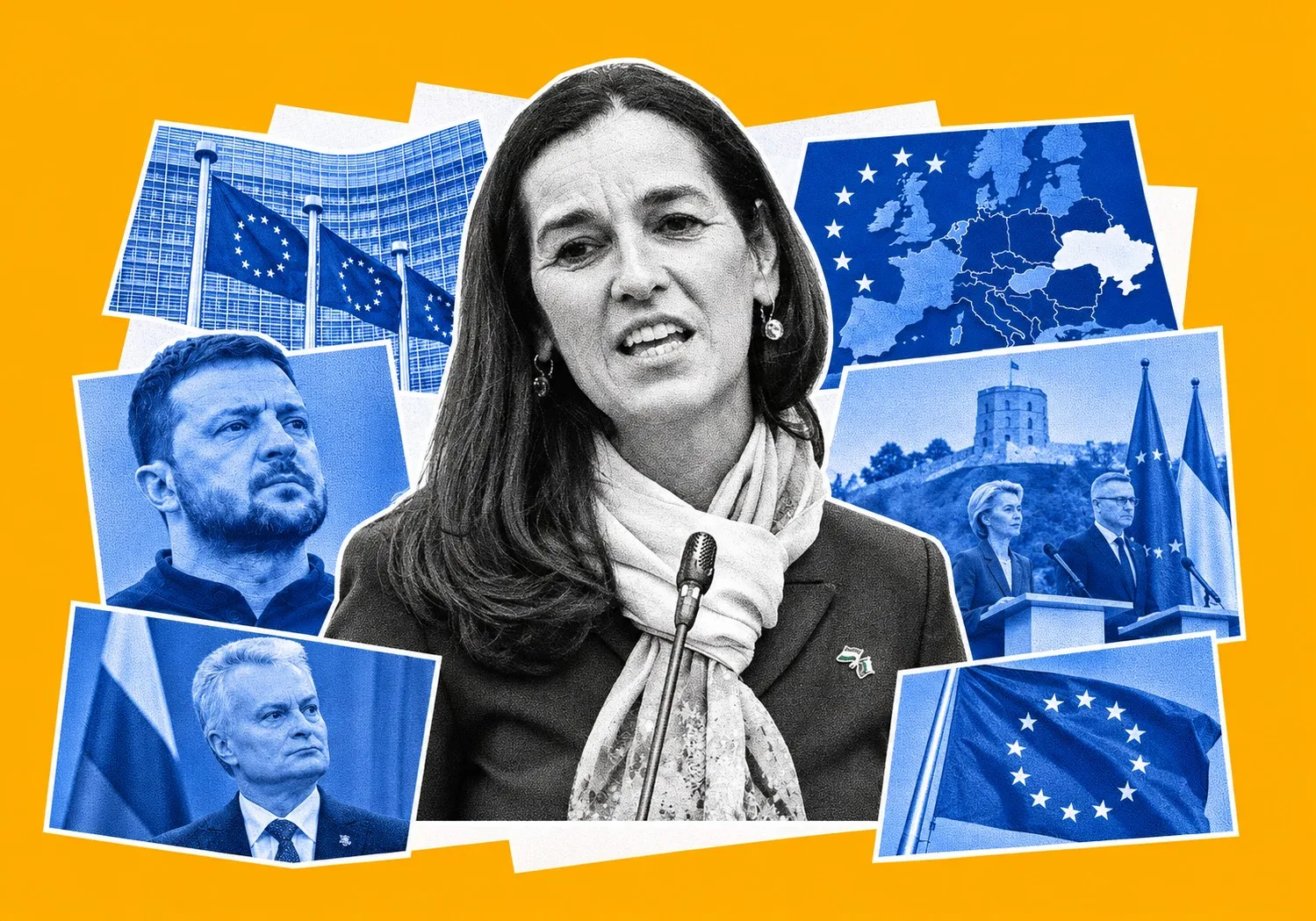
Speaking in Vilnius on 5 November, Hungarian Foreign Minister Anita Orbán rejected any fast-track accession procedure, insisting that Ukraine must meet the same requirements as other EU candidates. Her remarks follow months of negotiations that saw Budapest lift several objections to Kyiv's membership bid. Four of Ukraine's six negotiating clusters are now open, but approval of documents for the remaining two has been delayed.
Asked whether Ukraine could join the European Union by 2030, Anita Orbán replied: "We do not consider this realistic."
The Hungarian foreign minister said her government supported accession based on each country's progress in meeting EU requirements. She also acknowledged improvements in relations between Budapest and Kyiv, particularly following an agreement on the rights of ethnic Hungarians in Ukraine's Zakarpattia region.
Lithuanian Foreign Minister Kęstutis Budrys, speaking at the same press conference, offered a different assessment. He argued that accession by 2030 remained possible if Ukraine completed the necessary reforms and the EU advanced negotiations without unnecessary delays.
Lithuania wants the EU to adopt 2030 as a target for Ukrainian membership. Advancing Kyiv's accession will be among its priorities during its presidency of the Council of the EU in the first half of 2027.

How Hungary Held Up Talks
Ukraine applied for EU membership on 28 February 2022, four days after Russia launched its full-scale invasion. It received candidate status that June.
EU leaders agreed to open accession negotiations in December 2023. The first intergovernmental conference followed in June 2024.
Further progress required unanimous approval from EU member states, giving Hungary the ability to delay the opening of individual negotiating clusters.
Under Prime Minister Viktor Orbán, Budapest repeatedly withheld that approval.
The dispute centred largely on Ukraine's education and language laws. Legislation adopted in 2017 expanded the use of Ukrainian in schools, including institutions serving national minorities.
Hungary argued that the changes restricted Hungarian-language education for roughly 100,000 ethnic Hungarians living in Zakarpattia.
Kyiv defended the importance of ensuring that pupils could study in the state language. Ukrainian officials also linked the policy to efforts to reduce the legacy of Russian linguistic influence.
Ukraine amended its minority-rights legislation in 2023 following recommendations from European institutions. Budapest maintained that the safeguards remained insufficient.
Hungary also raised concerns about the economic consequences of Ukrainian membership, particularly for agriculture, and the implications of admitting a country at war.
By 2025, Hungary's objections had prevented the opening of the first negotiating cluster, despite the European Commission completing its assessment of Ukraine's readiness.
Poland and Denmark attempted to resolve the dispute during their respective EU Council presidencies but failed to secure Hungarian agreement.
Magyar Changes Course
Hungary's parliamentary election on 12 April 2026 ended Viktor Orbán's 16 years in power. His Fidesz party lost to the Tisza party led by Péter Magyar, who became prime minister in May.
The new government reopened negotiations with Kyiv while continuing to demand stronger protection for Hungary's minority community.
Diplomatic consultations intensified throughout May. Discussions covered Hungarian-language schooling, cultural institutions and the use of minority languages in public administration.
On 3 June, Magyar announced an agreement with Ukraine on minority rights.
It included commitments concerning Hungarian-language education, cultural activities and access to public services. The measures were also intended to protect other communities whose languages are official EU languages.
Budapest subsequently withdrew its objection to the first negotiating cluster.
On 15 June, EU governments opened the fundamentals cluster. It covers democratic institutions, judicial reform, fundamental rights and public administration.
The external relations cluster followed on 14 July, allowing negotiations on foreign policy, trade and security matters.
Hungary nevertheless insisted that Ukraine implement the June commitments through legislation before the remaining negotiations could advance.
In September, Budapest again withheld approval, this time for the internal market and competitiveness clusters.
Hungarian officials said Ukraine had not yet implemented the minority-rights agreement.
Anita Orbán told Hungarian media that Budapest expected legally binding safeguards for education, culture and political representation.
According to Hungary's Telex, the education provisions were expected by the end of 2026, with further measures planned for 2027.
The disagreement focused on the extent to which schools serving ethnic Hungarians could teach in Hungarian while meeting Ukraine's state-language requirements.
On 12 October, Ukraine's parliament adopted amendments concerning education for national minorities and indigenous peoples. The legislation received 266 votes and was signed by President Volodymyr Zelenskyy that day. It expands opportunities for education in minority languages that are official languages of the EU, including Hungarian. The law also provides safeguards for minority-language schools when educational institutions are reorganised or closed.
Ukrainian remains a compulsory part of education. The new arrangements do not automatically extend to Russian, which is not an official EU language.
Budapest welcomed the amendments and lifted its objections to the next stage of accession negotiations.
October's Breakthrough
On 13 October, the EU opened two additional negotiating clusters: internal market, and competitiveness and inclusive growth.
Together, they cover 17 chapters. These include the free movement of goods and services, financial regulation, taxation, employment, education and digital policy.
The decisions brought the number of open clusters to four.
On 16 October, Zelenskyy and Magyar held their first bilateral meeting in Brussels. They discussed Ukraine's EU accession, bilateral trade and efforts to end Russia's war.
Zelenskyy thanked the Hungarian prime minister for supporting progress in the negotiations.
The meeting followed months of talks between officials from both governments and EU institutions.
Work also continued on implementing the minority-rights agreement, which remained part of Ukraine's broader reform obligations under the accession process.
At EU working-group meetings on 20 and 27 October, Hungary withheld approval of screening documents for the two remaining clusters.
One covers the green agenda and sustainable connectivity, including transport and environmental policy. The other concerns resources, agriculture and cohesion funding.
These documents are required before negotiations can formally open on the relevant policy areas.
The delays prompted speculation that Budapest was preparing another veto.
Ukraine's ambassador to the EU, Taras Kachka, rejected that interpretation in an interview with Euronews on 3 November.
He said Hungarian officials had requested more time to examine several hundred pages of documentation.
"I think that this word block misleads us," Kachka said, arguing that Budapest had introduced no new substantive demands.
According to the ambassador, the earlier dispute over minority education rights had been resolved. He expected the remaining clusters to open before the end of 2026.
Agriculture presents a separate challenge. Ukraine's large farming sector would affect competition, subsidy spending and access to the EU market.
Poland has also sought adjustments to the EU's negotiating position on agricultural matters, independently of Hungary's objections.
Brussels Sets Its Conditions
The European Commission's enlargement report, published on 4 November, concluded that Ukraine had met the conditions for opening its remaining clusters.
The assessment acknowledged progress in bringing Ukrainian legislation closer to EU requirements. It also identified areas requiring further reform.
These include the judiciary, public administration, anti-corruption safeguards and implementation of the action plan on national minorities.
The Commission found that Ukraine's specialised anti-corruption institutions continued to operate broadly independently and effectively.
Enlargement Commissioner Marta Kos said the Commission could assess Ukraine's progress against key rule-of-law benchmarks during the first half of 2027, provided reforms accelerated.
The assessment, known as the Interim Benchmark Assessment Report, is an important stage before individual negotiating chapters can be provisionally closed.
Kyiv has set a goal of completing accession negotiations by the end of 2028.
The Commission described that timetable as ambitious and dependent on faster implementation of reforms. It has not established a date for Ukraine to become an EU member.
Completing negotiations would still leave several stages before accession. The EU would need to agree on a final treaty, setting out the terms of membership. That treaty would then require approval and ratification under the applicable EU and national procedures.