
Hungary Blocks Opening of Final 2 EU Accession Clusters for Ukraine

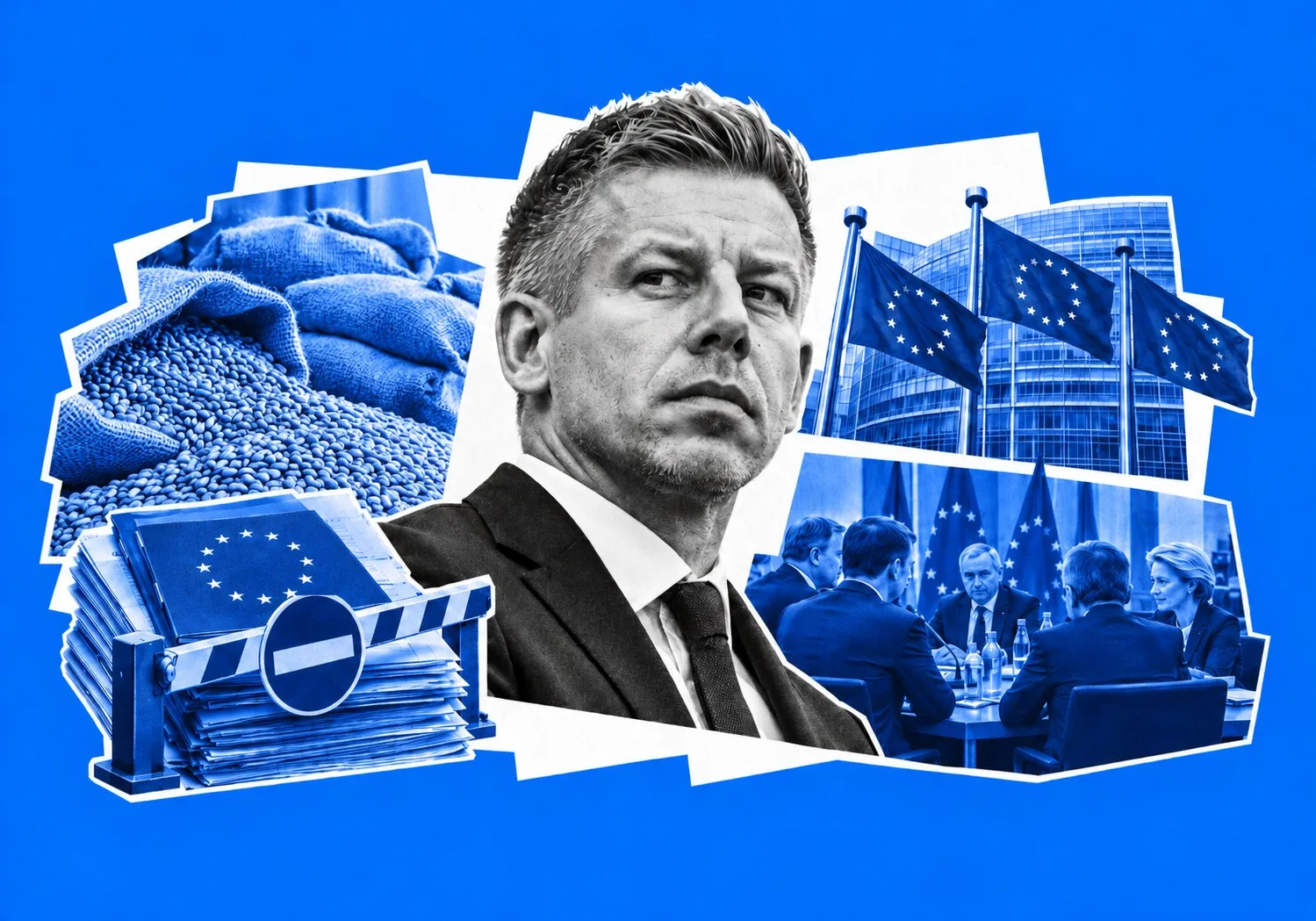
After Kyiv passed sweeping minority rights legislation to appease Budapest, Hungary abruptly blocked procedural steps on Tuesday to open the final two negotiating clusters in Ukraine’s EU accession bid. Citing EU diplomats familiar with the discussions, media reports confirmed that Hungarian representatives refused to clear the technical screening outcomes for Clusters 4 and 5 during a closed-door meeting in Brussels. The veto halts movement on critical files governing agriculture, transport, the environment, and regional cohesion. The Hungarian delegation offered no technical rationale for the decision, simply stating that its position remained unchanged.
The outcome lays bare a fundamental reality of EU expansion.
While candidate states can push through complex legal alignment via parliamentary voting, their accession progress remains hostage to individual member states once negotiations shift from abstract legal compliance to direct commercial competition. In Brussels, resolving cultural grievances has not removed vetoes—it has merely pushed them onto lucrative economic territory.
Sectoral Blockade: Agriculture, Transport, and Market Integration
When technical experts gathered on October 20 to pave the way for opening Clusters 4 and 5, the mood in the room shifted quickly.
By withholding consent on agricultural and transport integration while allowing earlier single-market chapters to advance, Budapest retained significant political leverage over Kyiv.

EU diplomats privately view the maneuver as a move calibrated for domestic consumption in Hungary. Appearing firm on Ukrainian agricultural integration allows the government to signal vigilance to domestic farm constituencies, even after compromising on the sensitive issue of ethnic Hungarian rights in Transcarpathian (Zakarpattia) Region.
Yet the impulse to protect domestic markets extends well beyond Hungary.
While baseline rule-of-law benchmarks under Cluster 1 assess judicial independence and administrative capacity, the final clusters cut straight to the core of the EU internal market.
Ukraine’s vast farming capacity, low production costs, and large transport fleet represent structural variables that existing member states hesitate to integrate without substantial protective buffers.
Poland demonstrates this economic tension clearly.
Despite remaining Ukraine’s primary defense and logistical backstop against Russian aggression, Warsaw has consistently drawn a hard line on agricultural trade. Domestic farm lobbies in Poland—alarmed by falling crop prices and future shifts in Common Agricultural Policy funding—continue to exert immense pressure on political decision-makers.
Memories of unilateral grain bans, border blockades, and prolonged transit disputes linger across Polish border regions.
Consequently, Polish trade officials and political leaders insist that Ukraine's EU accession treaty must incorporate strict import limits, transit monitoring, and long-term safeguard mechanisms for local farmers.
At intergovernmental meetings in Luxembourg on October 14, major agricultural producers like France joined Poland in officially supporting the opening of all negotiating clusters.
Behind closed doors, however, long-term market access remains contentious.
To prevent an outright deadlock, EU Enlargement Commissioner Marta Kos suggested addressing detailed agricultural integration terms during final treaty drafting rather than holding up cluster openings at this stage.
Whether such procedural workarounds satisfy member states with large farming sectors remains an open question. Where regulatory objections end, commercial protectionism routinely steps in.
Minority Rights Legislation and Bilateral Background
To make sense of Tuesday's blockade, one must look at the long-standing dispute over minority rights in western Ukraine.
Centered around Berehove, friction over native-language schooling, administrative autonomy, and cultural representation has strained ties between Kyiv and Budapest for years. Historical wounds run deep, including the legacy of post-war Soviet forced labor and deportations affecting ethnic Hungarians between 1944 and 1946—an episode the Verkhovna Rada formally recognized in a September 2026 resolution.
Diplomatic relations soured further after Ukraine enacted education and language laws in 2017 and 2019.
Designed to bolster state-language proficiency across public life, the statutes introduced mandatory Ukrainian instruction quotas in secondary schools. Follow-up legislation in 2020 reinforced these requirements for core subjects, triggering sharp complaints from Budapest over minority language access.
Under former Prime Minister Viktor Orbán, Hungary turned these local educational grievances into a broad diplomatic veto.
For years, Budapest systematically stalled EU military aid packages, sanctions measures, and integration milestones, demanding complete legislative rollbacks from Kyiv.
The political shift that brought Péter Magyar to power in Budapest altered the dynamic.
Magyar replaced sweeping political rhetoric with a focused, administrative approach.
The framework was established in Uzhhorod in January 2024, when Hungarian envoys presented an 11-point demand list regarding education and cultural guarantees. Ukraine subsequently built those requirements into a 122-measure minority action plan in May 2025, monitored by the State Service for Ethnopolitics and Freedom of Conscience, culminating in expert-level agreements by June 2026.
That process produced concrete statutory changes on October 12, 2026.
In a decisive vote, the Verkhovna Rada passed comprehensive amendments to national education laws, securing 273 votes in principle and 266 in its final reading before President Volodymyr Zelenskyy signed the bill.
The law established a clear legal framework for minority schools, permitted translated national exit exams, mandated bilingual signage on public buildings, and exempted EU-language minority schools from student enrollment thresholds that previously threatened state funding.
The legislative breakthrough produced immediate results.
On October 14, during intergovernmental talks in Luxembourg chaired by Ireland's Europe Minister Thomas Byrne, all 27 member states agreed to open Clusters 2 and 3, covering internal market rules and competitiveness.
Two days later, Zelenskyy and Magyar met on the sidelines of the European Council summit in Brussels to discuss supply chains, logistics, and trade links. Commission officials pointed to the meeting as evidence of steady diplomatic momentum.

Tuesday’s veto on Clusters 4 and 5 shattered that brief period of optimism.
Accession Mechanics and Political Timelines
The structural reality of eastern enlargement adds further complexity to Kyiv’s path.
Under current European Commission policy, Ukraine and Moldova move along a synchronized accession timeline.
While joint processing maintains regional momentum and prevents individual candidates from being isolated, it also means procedural delays targeting one country can stall the schedule for both.
For Ukrainian negotiators, led by Deputy Prime Minister for European Integration Vsevolod Chentsov, the contrast between domestic speed and EU bureaucracy is stark.
Working under wartime conditions, the Verkhovna Rada has passed technical legislation at a pace that regularly outstrips typical EU timelines. Yet parliamentary agility cannot bypass the unanimity rule inside the Council of the European Union.
Holding the rotating Council Presidency, Ireland intends to place the contested clusters back on the agenda of upcoming working group meetings in Brussels before its term expires in December.
EU officials privately express hope that diplomatic negotiations can unblock the files, potentially allowing Clusters 4 and 5 to open before the end of the year.
Even if diplomats resolve the current impasse, the episode underscores a broader truth about EU integration. As accession talks transition from political benchmarks to technical market controls, candidate countries face a changing diplomatic landscape. Passing laws in Kyiv is no longer the hardest part; getting existing member states to open their markets is where the real battle begins.
Sources: The Kyiv Independent, European Pravda, Interfax-Ukraine