
How Rising Energy Bills in Europe Are Threatening Support for Ukraine

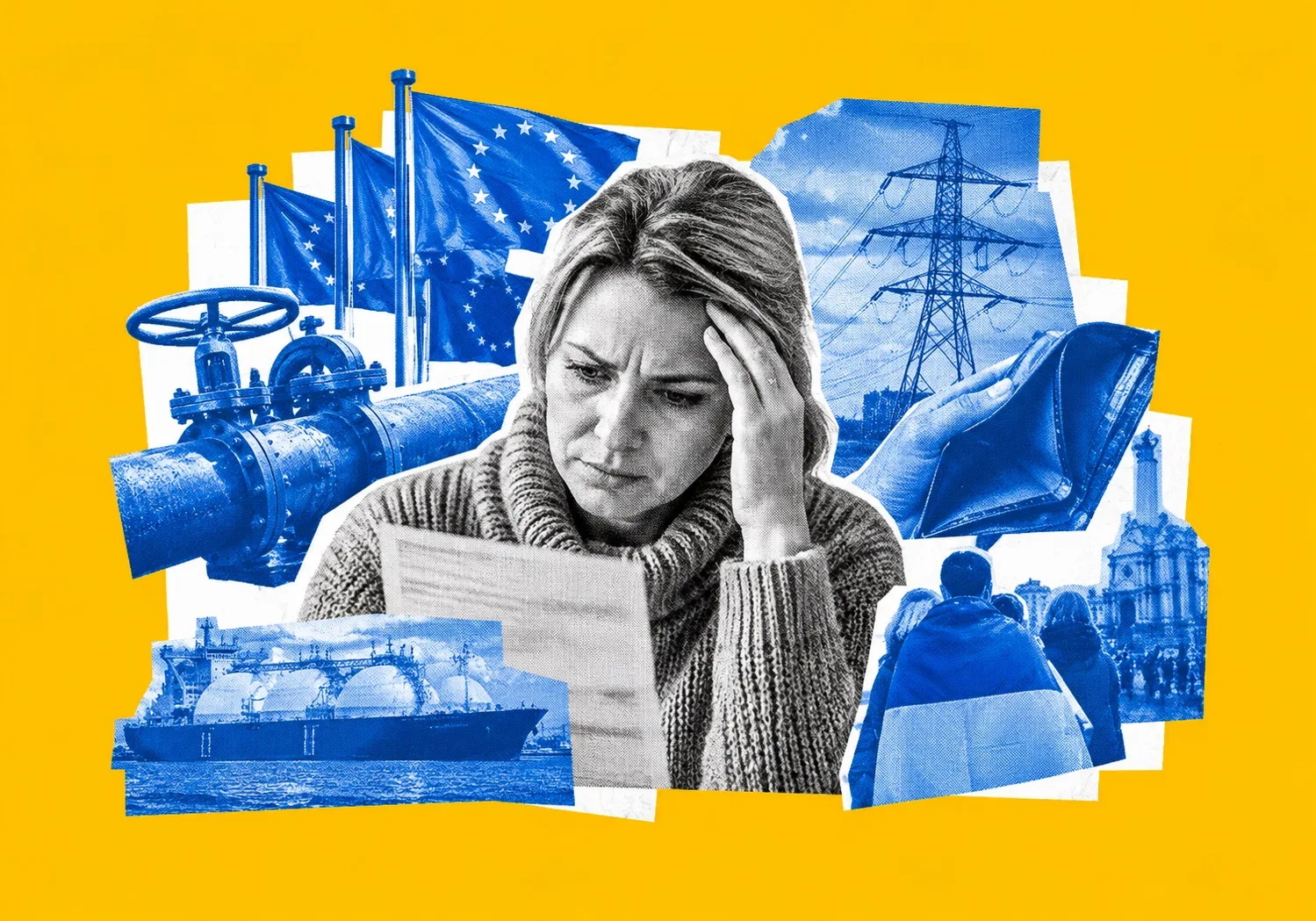
Driven by soaring gas prices, the cost-of-living crisis across Europe is sparking widespread protests and boosting opposition parties from France to Germany. As rising energy bills turn into a major political liability, populist leaders are offering a controversial fix: resume Russian energy imports - putting the continent’s long-term support for Ukraine directly on the line.
Opposition parties are offering a clear answer: bring back Russian energy and lower the cost of living. The proposal is gaining political ground because it connects a problem people feel every day with a foreign policy they can vote against.
That does not mean Europe's voters have suddenly turned against Ukraine. But the pressure on household finances is making it easier to question how much the confrontation with Russia should cost, and who should bear the burden.
When the bills become a political liability
The protests in France began with complaints about deteriorating school facilities in the northern suburbs of Paris. They have since spread into serious unrest, with shops looted, buildings torched and a 19th-century town hall in Limoges burned.
Emmanuel Macron has acknowledged the protesters' legitimate demands while condemning the violence. His problem is that the grievances extend well beyond the original dispute. Higher living costs are adding to dissatisfaction with public services and the government's handling of the economy, while a growing budget deficit leaves less room for expensive remedies.
Italy has its own version of the problem. Demonstrations over public services and rising costs have led to clashes in Milan. Farmers and truckers have blocked roads in Sicily and southern Italy, disrupting supplies and contributing to local fuel shortages.
In Portugal, tens of thousands have marched in Lisbon over wages and housing costs. In Spain, the eviction of an 87-year-old woman has become a focus for anger over rents and the shortage of affordable homes. The resulting demonstrations have helped trigger a snap election. Belgium and Albania have also seen protests.
These are not all protests about energy, and treating them as one coordinated revolt would miss what is happening on the ground. Housing shortages, low wages and poor public services have their own causes. But when several pressures arrive together, people become less willing to accept the government's explanation that the situation is difficult, the causes are external and improvement will take time.
That is where the political opportunity lies. Governments are being judged on problems they cannot quickly solve. Their opponents need only convince voters that a different approach would leave them better off.
The promise of cheaper Russian energy
Marine Le Pen's National Rally has been particularly well placed to exploit the mood in France. Fuel prices have become a central issue in her campaign ahead of the presidential election in April. Her ratings have risen as Macron's have fallen, and she has proposed cutting VAT on fuel to offer motorists some immediate relief.
The promise is simple enough to understand at a petrol station. The more difficult part is the wider argument behind it: that France and Europe should reconsider their energy relationship with Russia rather than continue to pay the price of their current policy.
Germany offers another example. Inflation reached a near three-year high in September, with energy prices rising by 14.9%. The Alternative for Germany (AfD), which leads national polls, is using the squeeze on households to attack Chancellor Friedrich Merz and demand a resumption of Russian energy imports.
In Italy, Roberto Vannacci's National Future advocates restoring gas links with Russia. Poland's Grzegorz Braun and his Confederation of the Polish Crown are pushing for Russian oil and gas to return.
The appeal is not limited to the far right. Hard-left politicians are also arguing for restored energy ties, giving the proposal a broader political reach. The underlying calculation is much the same: voters worried about heating, transport and the price of goods may be more receptive to an argument about cheaper supplies than to a defence of sanctions.
There is an obvious gap between making that promise and proving it would deliver the expected savings. Europe's current price shock has been intensified by the war with Iran. Restoring Russian imports would not, by itself, resolve every cause of higher energy costs. The available information does not establish how much prices would fall or how quickly.
But that uncertainty has not stopped the argument gaining ground. Opposition parties can promise a change of direction; governments must explain why the existing one remains necessary while people are struggling to pay their bills.
The cost of standing with Ukraine
Since Russia's full-scale invasion of Ukraine in 2022, European governments have worked to reduce dependence on Russian energy and maintain pressure on Moscow. That policy has a strategic purpose, but it also carries economic consequences that become harder to defend when prices rise sharply.
The US-Iran war has given opponents of the policy a fresh opening. Although the latest surge in energy prices is tied directly to disruption caused by that conflict, political campaigns can connect the increase to sanctions against Russia and Europe's wider alignment with Ukraine. The distinction between separate causes is easily lost in a debate about the cost of filling a car or heating a home.
This is more than a communications problem for governments. If demands to restore Russian supplies gain electoral support, leaders may face pressure to change policy even without a decisive shift in public attitudes towards the war in Ukraine.
The consequences could spread across the EU. A government reconsidering Russian imports would put pressure on the common approach to sanctions. Other governments would then have to decide whether to defend the existing policy, accommodate domestic demands or risk handing more support to their opponents.
For Kyiv, that creates an uncomfortable uncertainty. European support depends not only on decisions made by national leaders but also on their ability to sustain those decisions at home. A policy that becomes a recurring target in election campaigns is harder to maintain, particularly when the economic pressure is visible and immediate.
The political opening for Russia's supporters does not require voters to endorse Moscow. It is enough for them to conclude that their own government has made an expensive mistake.
Relief now, a bigger bill later?
The financial position of European governments complicates their response. They are under pressure to protect households and maintain public services, yet support measures and tax cuts can deepen budget problems.
France is already dealing with a ballooning deficit as Macron faces unrest and a difficult presidential contest. Germany's Merz must contend with an AfD that has made energy policy a weapon against his government. In Italy, Giorgia Meloni faces protests over the cost of living and public services, alongside disruption caused by roadblocks.
None has an easy way to make the immediate pain disappear. Cutting fuel taxes may help motorists, but it reduces government revenue. Subsidising energy bills shifts some of the cost to the public budget. Doing too little risks leaving households exposed and gives opponents another reason to attack.
The same pressure threatens longer-term energy plans. A return to Russian hydrocarbons is being presented as a practical answer to high prices, while reducing dependence on Russia can seem like a more distant objective. The political temptation is to prioritise the next bill over the next strategic risk.
Yet the latest crisis also exposes the limits of national governments' control. The war with Iran has disrupted markets across borders, and no European leader can independently restore normal trading conditions. Governments can cushion the effects, but they cannot guarantee that another external shock will not follow.
The European Commission's estimate of a €100bn cost gives some measure of the damage. The harder figure to calculate is how much political support will be lost before energy prices ease.
In France, Le Pen's improving position suggests that anger over fuel costs is already changing the electoral contest. In Germany, the AfD is using inflation to press a demand that would once have been much harder to sell as mainstream policy. Similar arguments are gaining an audience in Italy and Poland.
The test for European governments is no longer simply whether they can manage the economic fallout. They must also defend a foreign policy that is increasingly being judged through the price of everyday life, while their opponents promise that a change of course towards Russia would make that life cheaper.