
Fuel Shortages and Airlifted Food Hit Russia’s Arctic

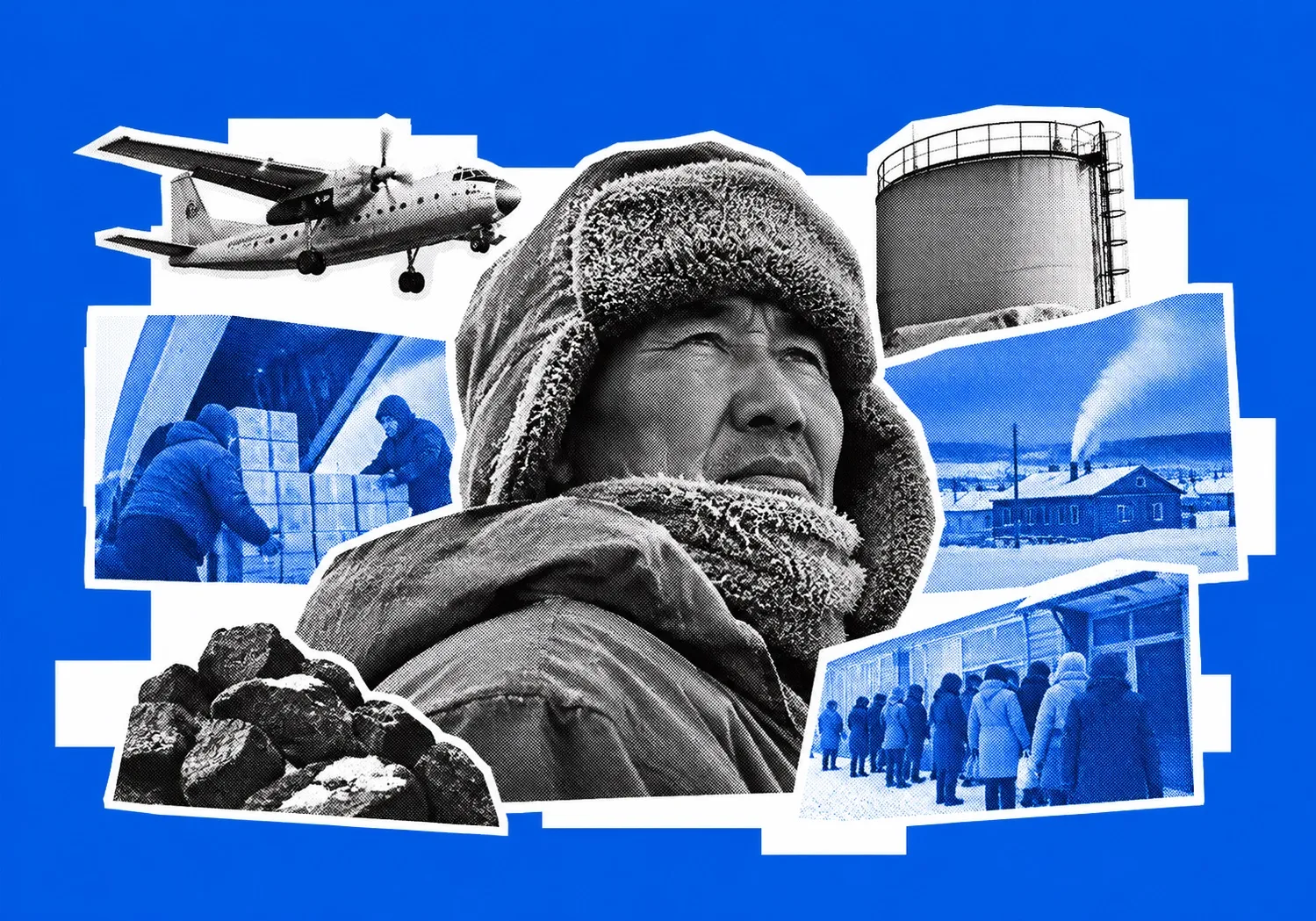
Across Russia’s Arctic regions, including Yakutia and Evenkia, low river levels and mounting utility debts have disrupted seasonal supply routes, forcing authorities to strip seats from passenger planes to airlift basic groceries. As winter sets in, communities in Siberia face soaring food prices and dwindling heating fuel - exposing deep financial and logistical cracks behind Moscow’s Arctic ambitions.
For residents of Tura, the administrative centre of Evenkia, the difficulties began months before winter.
The last river shipment reached the settlement in late July. Low water levels on the Lower Tunguska River subsequently prevented cargo vessels from reaching their destination.
As supplies dwindled, shops began running short of fresh vegetables, dairy products and other everyday necessities. Some subsidised food products were subject to purchase limits, restricting the quantities available to individual customers.
The situation prompted authorities to open a criminal negligence investigation.

By 29 October, more than 85 tonnes of food had been delivered by air since mid-September. Regional airline KrasAvia announced plans to increase flight frequency and remove passenger seats from its An-26 aircraft, allowing each plane to transport up to four tonnes of cargo.
Air transport can provide immediate relief, particularly for perishable products. However, it is considerably more expensive than river shipping and cannot easily replace the volumes normally transported by cargo vessels.
For households, the consequences extend beyond empty shelves. Even when products become available again, higher transportation costs can make them less affordable. Families with limited incomes are particularly exposed in settlements where alternative retailers and supply routes are scarce.
Fuel shortages threaten heating security in Yakutia
Further east, Yakutia faces a different but potentially more serious problem.
The regional authorities reported that 95.1% of the overall northern delivery plan had been completed. Yet this figure concealed considerable differences between individual districts.
Data presented during an October discussion in Yakutia’s regional parliament showed that only 72.4% of planned coal and petroleum shipments had been delivered along the Yana River. Along the Indigirka River, the completion rate stood at just 61.3%.

Dmitry Ammosov, head of the Momsky District, warned that local boiler plants could be forced to shut down if fuel supplies were insufficient.
Regional officials subsequently maintained that existing petroleum reserves would last until winter roads became operational.
The distinction matters. There is no confirmed widespread heating failure resulting from these shortages. Nevertheless, the situation illustrates how a relatively small shortfall in the republic’s overall delivery figures can create significant risks for individual communities.
In Arctic settlements, heating is not simply another municipal service. It is essential to keeping homes habitable, maintaining water systems and ensuring that schools and medical facilities remain operational.
A prolonged delay in fuel deliveries could therefore have consequences far beyond the energy sector.
Billions in unpaid debts undermine the supply chain
Low river levels were cited by authorities in both regions as the principal reason for disrupted deliveries. However, Yakutia’s experience suggests that financial and organisational problems made the situation worse.
The region faced a shortage of tugboats, interruptions to coal shipments from the Dzhebariki-Khaya mine and substantial outstanding debts between companies responsible for supplying northern communities.
As of 20 October, Yakutia’s state-owned housing and utilities enterprise owed the Lena United River Shipping Company 2.225 billion rubles, equivalent to approximately $27.3 million at the exchange rate reported at the time.
Coal producer Yakutugol also pointed to nearly 489 million rubles in unpaid utility debts and delays in the provision of barges for loading.
These financial disputes reveal a weakness in the structure of the northern delivery system. Although the programme performs an essential public service, its operation depends on commercial transactions between utilities, mining companies, freight operators and regional authorities.
When one participant fails to pay its bills, the consequences can spread throughout the supply chain. Transport operators face difficulties financing their activities, suppliers accumulate unpaid invoices, and municipalities risk receiving essential goods late.
Completing the outstanding deliveries in Yakutia was estimated to require more than 1.4 billion rubles, or approximately $17.2 million, in additional expenditure.
Emergency deliveries consequently create another financial burden for a system already struggling with unpaid obligations.
A predictable environmental risk becomes a recurring crisis
Russia’s northern delivery programme relies heavily on seasonal transport.
During the warmer months, rivers and maritime routes carry fuel, food, medicine and other essential supplies. In winter, temporary roads across frozen ground and waterways provide access to settlements without permanent transport connections.
Between these periods, communities largely depend on accumulated reserves and aviation.
The problem is that neither river navigation nor the opening of winter roads follows an entirely predictable calendar.
Low water levels can restrict the amount of cargo vessels carry or prevent them from reaching certain settlements altogether. Meanwhile, winter roads cannot safely open until the ground and waterways have frozen sufficiently.

Climate change adds another layer of uncertainty. The Arctic is warming considerably faster than the global average, while thawing permafrost and changing hydrological conditions complicate infrastructure maintenance and seasonal transport planning.
There is insufficient evidence to attribute the current shortages directly to climate change. Nevertheless, the broader environmental trends make contingency planning increasingly important.
Economist Nikolai Kulbaka told The Insider that low water levels were a genuine obstacle but also a known risk that should have been incorporated into supply planning.
Maintaining larger emergency reserves, securing alternative transport capacity and preparing for shorter navigation seasons would reduce the likelihood that a single disruption leaves entire settlements without essential goods.
Such measures, however, require additional investment.
Why government loans cannot solve the funding problem
Russia’s northern delivery programme receives government support through federal budget loans to regional authorities and regional subsidies.
The difficulty is that transportation and procurement costs can increase after funding allocations have already been established.
Russian opposition politician Vladimir Milov suggested that rising procurement costs, particularly fuel prices, may have exceeded the sums originally allocated to the programme. He also pointed to pressure on the federal budget and efforts by the Finance Ministry to contain the deficit.
The underlying economic problem is more complicated than a temporary shortage of working capital.
Delivering goods to isolated Arctic communities is inherently expensive. Charging residents the full commercial cost of transportation would make many essential products unaffordable. Keeping prices within reach therefore requires sustained public subsidies.
Loans can help companies purchase goods before the navigation season begins. They cannot permanently compensate for the difference between the actual cost of supplying remote settlements and what residents can afford to pay.
Without predictable funding, regional authorities risk accumulating debt, postponing payments and relying on increasingly expensive emergency deliveries.

There is no direct evidence that military expenditure or Western sanctions caused the current shortages. However, maintaining expensive civilian infrastructure becomes more difficult when public finances are under pressure and procurement costs continue to rise.
Moscow’s Arctic ambitions clash with conditions on the ground
Russia considers the Arctic central to its long-term economic and geopolitical strategy. The region contains substantial natural resources, provides access to strategically important maritime routes and occupies a prominent place in Moscow’s military planning.
The Kremlin has promoted the Northern Sea Route as an international transport corridor capable of connecting European and Asian markets while supporting the expansion of Russian resource exports.
Yet the difficulties in Yakutia and Evenkia reveal a less visible side of Russia’s northern development.
Large-scale industrial and maritime projects do not automatically improve the transport networks serving isolated communities. Infrastructure designed to export hydrocarbons or support strategic installations cannot necessarily meet the everyday needs of settlements located hundreds of kilometres from major transport hubs.
The distinction is particularly relevant for European policymakers assessing Russia’s Arctic capabilities. Investment in strategic infrastructure can coexist with serious weaknesses in civilian logistics, municipal finances and regional supply networks.

Russia’s ability to develop individual Arctic projects should therefore not be confused with the overall resilience of its northern territories.
For residents of Tura and remote Yakutian districts, Moscow’s ambitions offer little immediate protection against food shortages or uncertainty over heating supplies. Their living conditions remain dependent on seasonal rivers, temporary roads, subsidised cargo flights and the financial stability of companies struggling to pay their bills.
Sources: The Insider, YK24, GTRK Sakha, Newslab, Energy and Industry of the Far East , NeruLife, Interfax