
40,000 Russians Left Without Heating at −15°C After Moscow’s Freeze Threats

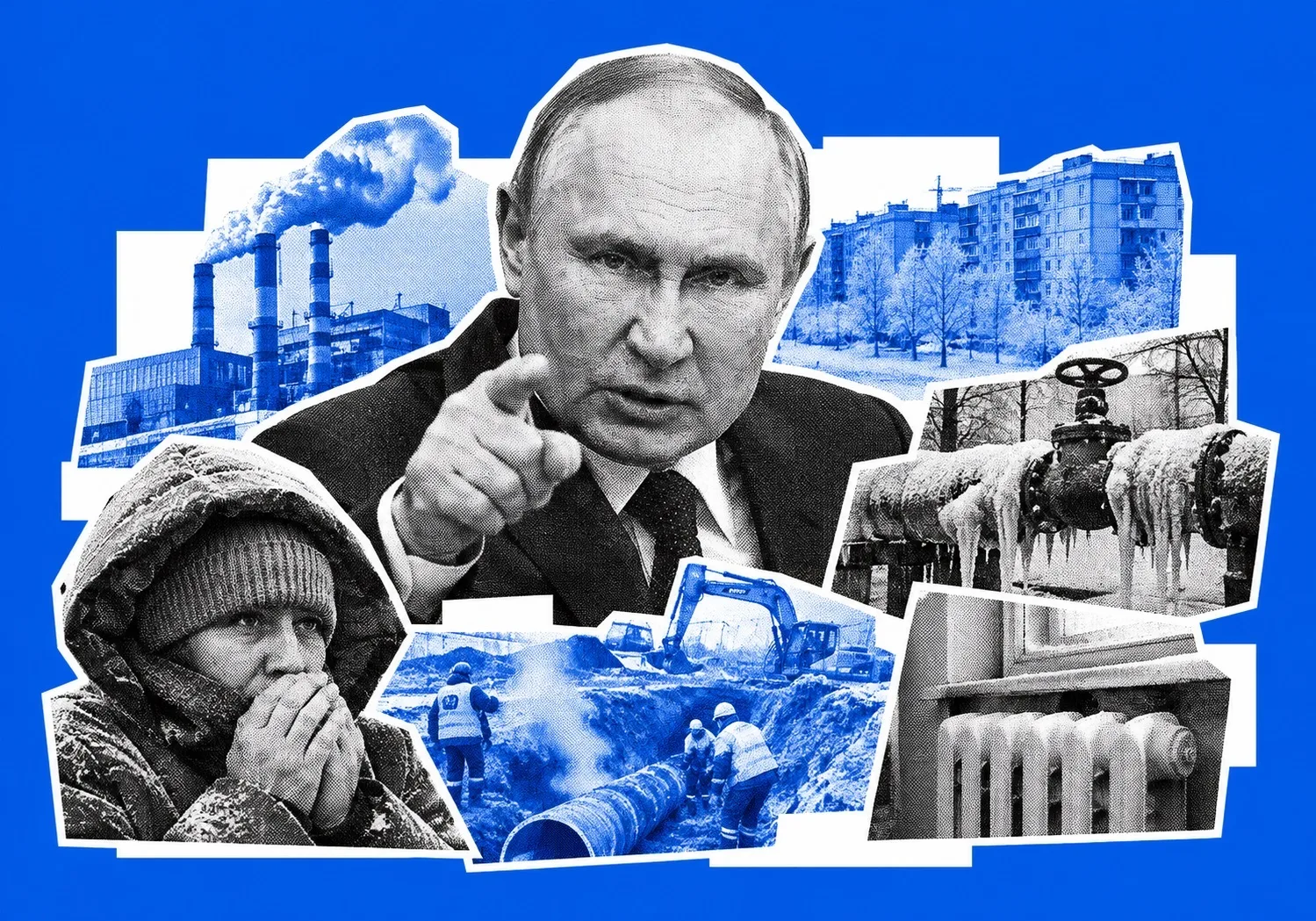
A major heating pipeline rupture in Russia’s Far Eastern city of Khabarovsk left 40,000 residents without heat or hot water on November 21 as temperatures dropped to −15°C, exposing severe infrastructure decay in a country that repeatedly threatened Europe with freezing winters.
The accident occurred just one day after the regional energy company announced that it had completed its winter preparations. Despite official assurances that the damage had been repaired, some residents were still reporting cold apartments on November 24.
Four days with cold radiators
The pipeline ruptured at 3:50 a.m. on Saturday in Khabarovsk’s Industrial District. The initial shutdown affected 147 buildings, including 125 residential blocks.
Emergency crews managed to reconnect some buildings to an alternative heating pipeline. However, more than 23,000 residents remained without heating and hot water for over a day. Three kindergartens were also affected by the disruption.
Five specialised pumps were deployed to remove hot water from the damaged pipeline before workers could access the ruptured section. Emergency services erected heated tents for repair crews working in freezing conditions.
On November 22, regional Governor Dmitry Demeshin announced that the damaged pipe had been welded and refilled. He said residential heating would gradually return to normal.

But for some households, the official announcement did not match what was happening inside their apartments.
On November 24, local news outlet DVHAB reported complaints from residents of a five-storey apartment building on Krasnorechenskaya Street. One resident, identified as Vladimir, said most of his radiators remained cold and that his family had been living without proper heating for four days.
His building management company attributed the problem to the consequences of the pipeline rupture. Meanwhile, the city’s emergency dispatch service maintained that the original accident had been resolved.
Residents were effectively left trying to establish which authority was responsible for restoring heat to their homes.
The heating company had declared itself ready for winter
The timing of the accident raised questions about the effectiveness of Russia’s winter preparations.
On November 20, the Far Eastern Generating Company announced that it had received winter readiness certification from Russia’s Energy Ministry.
The company reported completing repairs on 357 pieces of equipment and modernising or replacing approximately 33 kilometres of heating pipelines during 2026.
Less than 24 hours later, a major section of Khabarovsk’s heating network failed.
Authorities have not publicly established the precise technical cause of the rupture. However, it was not the city’s first major heating emergency this year.
In February 2026, another pipeline accident in Khabarovsk interrupted heating and hot water supplies to at least 119 apartment buildings and 40 individual houses.
Residents have also complained about recurring interruptions to water and electricity supplies. What officials describe as separate emergencies has become a repeated disruption to everyday life for some households.
Russia’s heating infrastructure is deteriorating faster than it is being replaced
Khabarovsk’s problems are part of a wider infrastructure challenge that Russian authorities have acknowledged for years.
In March 2026, Construction and Housing Minister Irek Fayzullin stated that more than 40% of Russia’s utility networks required replacement. In some regions, infrastructure deterioration reached 80%.
Heating networks are particularly vulnerable.

Documents from a February 2026 meeting of the Russian State Duma’s Energy Committee, reported by Izvestia, indicated that only around 2.2% of heating networks were being replaced annually, compared with the government’s target of 5%.
Industry experts reported deterioration levels of up to 70% in some cities.
The problem is cumulative. When pipes reach the end of their service life faster than utility companies can replace them, emergency repairs consume resources that could otherwise be invested in long-term modernisation.
Russia’s own government strategy for the construction and utilities sector identifies insufficient financing as one of the obstacles to upgrading centralised heating systems. It also acknowledges substantial energy losses during heat production and distribution.
According to figures from Russia’s industrial safety regulator, Rostekhnadzor, more than 41 million people live in municipalities where heating systems have been classified as unreliable or insufficiently reliable.
For households, the consequences are practical: cold apartments, interrupted hot water supplies, additional electricity consumption from portable heaters and uncertainty over when essential services will return.
Prolonged heating failures during severe frost can also damage buildings and internal water pipes, creating further repair costs.
Moscow’s warnings that Europe would freeze
In September 2022, speaking at the Eastern Economic Forum in Vladivostok, Vladimir Putin threatened to suspend energy exports if Western governments imposed price restrictions on Russian oil and gas.
He invoked a Russian fairy tale about a wolf whose tail became trapped in ice, suggesting that Western countries would face the consequences of their energy policies.
The threat came as Moscow was already reducing gas deliveries to European customers following its full-scale invasion of Ukraine.
Europe did experience a serious energy crisis. Gas prices surged, governments introduced financial support programmes, and households and businesses faced higher energy bills.
But the predicted widespread freezing did not materialise.
According to the European Commission, Russian gas accounted for 45% of EU gas imports in 2021. By 2025, that share had fallen to approximately 12%.
The EU reduced annual Russian gas imports from 152 billion cubic metres to 36 billion cubic metres while expanding alternative supplies, investing in LNG infrastructure and reducing consumption.

Data published by the European Union Agency for the Cooperation of Energy Regulators (ACER) showed that Russia accounted for around 11% of EU gas imports during summer 2026.
Europe remains exposed to global energy price fluctuations, but Moscow’s ability to use gas supplies as a political weapon has diminished substantially.
An energy exporter struggling to heat its own homes
Russia’s vast oil and gas reserves do not automatically translate into reliable domestic heating.
Producing and exporting energy is one thing. Delivering heat through thousands of kilometres of ageing municipal pipelines is another.
Much of Russia’s centralised heating infrastructure requires extensive modernisation. In regions where winter temperatures regularly fall far below zero, delayed investment carries particularly serious consequences.
The Khabarovsk accident occurred before the coldest part of winter. Temperatures in the Russian Far East can fall considerably below those recorded during the November outage, placing additional pressure on vulnerable infrastructure.
Four years after Putin used the prospect of a freezing winter to threaten the West, Europe has substantially reduced its dependence on Russian energy. In Khabarovsk, meanwhile, residents were still contacting local journalists on November 24, asking why their radiators remained cold.
Sources: