
Russia’s Northern Sea Route: Grain Exports, Icebound Ships and Competing Arctic Interests

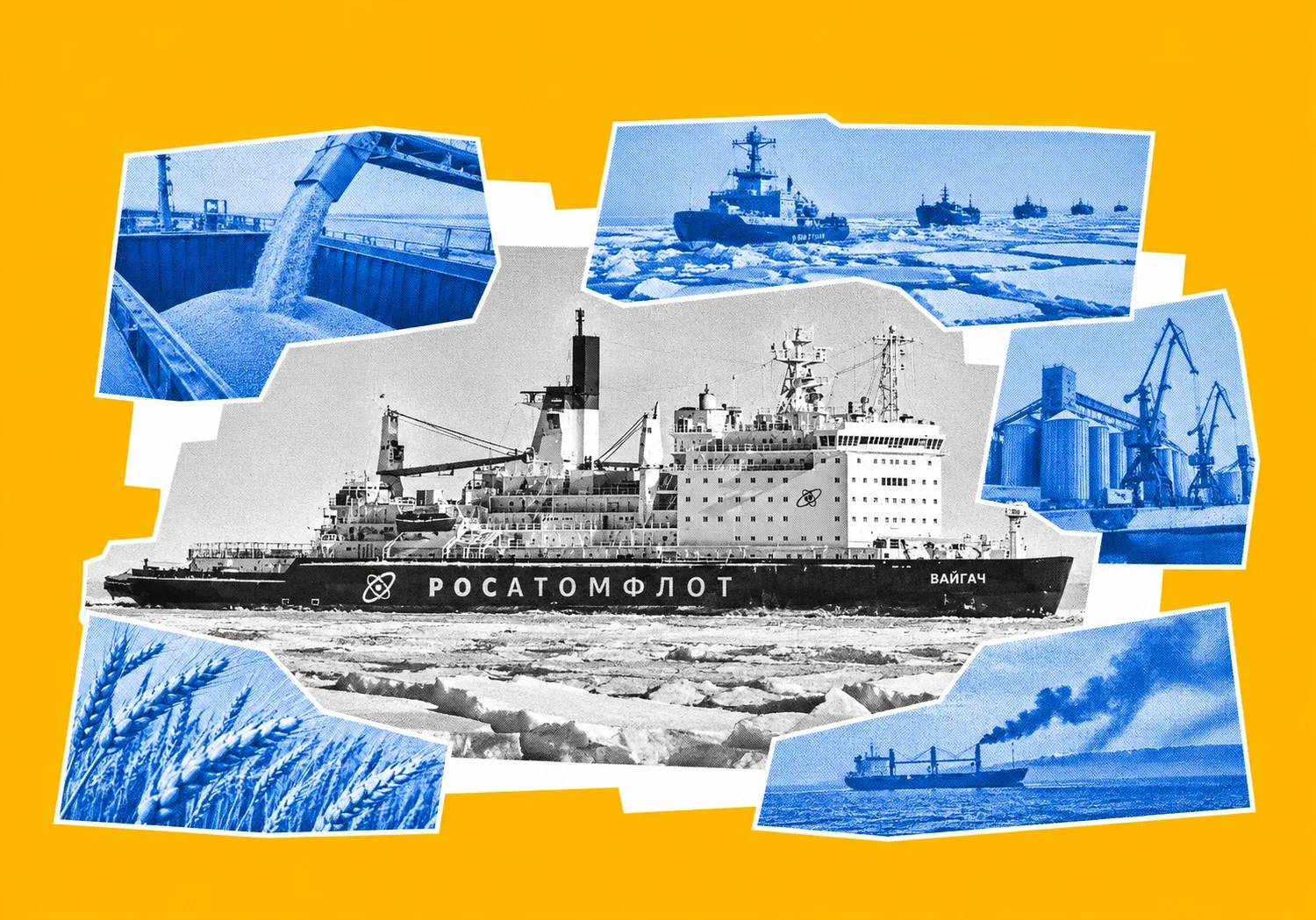
Russia, the world's largest wheat exporter, has begun using an Arctic shipping route associated with the Allied convoys of the Second World War to export grain for the first time. The move follows disruption to Black Sea trade caused by the war in Ukraine and warnings from Kremlin officials about possible hostile action in the Baltic Sea. Every Baltic coastal state except Russia is a NATO member. The first grain shipment from Murmansk is bound for Morocco via the Atlantic, rather than the Northern Sea Route along Siberia. Moscow is also seeking to expand commercial traffic through Arctic waters, where difficult ice conditions continue to interrupt shipping. China, the United States and European countries have their own commercial and strategic interests in the region.

Grain Takes the Arctic Route
On 28 October, Murmansk Commercial Seaport and grain trader Demetra Holding announced that loading had begun on an initial 3,400-tonne consignment. Reuters reported plans for approximately 28,000 tonnes of wheat to be shipped to Casablanca, citing shipping records and a market source.
Murmansk is an ice-free port on the Barents Sea, close to Norway. During the Second World War, Allied Arctic convoys used the harbour to deliver supplies to the Soviet Union.

The new shipment follows a sharp decline in Russian grain exports through the Black Sea. Nearly 90 per cent of the country's seaborne grain exports passed through Black Sea and Sea of Azov ports during the previous marketing season, according to Reuters.
Attacks on maritime infrastructure and commercial vessels disrupted operations in 2026. Russian exporters redirected cargo towards Baltic terminals, which handled 1.2 million tonnes of grain in September. Some facilities previously used for coal and fertiliser were converted to accommodate agricultural shipments. Russia also subsidised rail transport from its southern agricultural regions to northern ports.
Ukraine's Foreign Intelligence Service estimated that transporting grain to Murmansk added $18–$25 per tonne in inland freight costs because of the distance from Russia's agricultural regions. The estimate has not been independently verified.
Moscow’s Arctic Ambitions
The Northern Sea Route stretches approximately 5,600 kilometres along Russia's Siberian coastline, connecting waters near the Kara Sea with the Bering Strait. The state nuclear corporation Rosatom oversees infrastructure development and navigation services.
Moscow promotes the passage for exports of oil, liquefied natural gas and minerals, as well as commercial shipping between Asia and Europe. Russian regulations require vessels to obtain navigation permits, with icebreaker assistance arranged according to operating conditions.
In 2018, President Vladimir Putin set a target of 80 million tonnes of annual cargo traffic by 2024. Actual volumes reached approximately 37.9 million tonnes in 2024 before declining to 37.02 million tonnes in 2025, according to figures examined by the Carnegie Endowment for International Peace.
Most cargo served Russian Arctic energy and industrial projects rather than international services crossing the entire route.
On 27 October 2026, Rosatom's Arctic director, Vladimir Panov, forecast more than 40 million tonnes of traffic for the year, including over seven million tonnes of transit cargo.
Norway's Centre for High North Logistics recorded 104 completed transits carrying an estimated 3.7 million tonnes by 30 September. Its figures for the entire 2025 season showed 103 passages carrying 3.2 million tonnes. The 2026 totals remained preliminary.
Two Weeks Trapped in Ice
In July 2026, a group of sanctioned Russian oil tankers encountered difficult ice conditions in the Vilkitsky Strait, between the Siberian mainland and Bolshevik Island.
Radio Free Europe/Radio Liberty reported that the vessels were unable to continue their journeys and anchored while awaiting icebreaker assistance.
Some remained trapped for up to two weeks. One tanker managed to navigate the strait, while others eventually changed course.
The environmental organisation Bellona separately identified at least six tankers waiting in the eastern Kara Sea in late July. Their movements were affected by ice conditions and the availability of escorts.
Other commercial operations were disrupted. Bellona reported that a transport company postponed departures from Arkhangelsk to Pevek because of ice near the Vilkitsky Strait. The operator was awaiting conditions that would permit passage without paid icebreaker assistance.
Ksenia Vakhrusheva, who leads Bellona's Arctic project, explained to Radio Free Europe/Radio Liberty that retreating sea ice can fragment into drifting floes. These can accumulate in narrow passages, preventing ships without sufficient ice capability from continuing.
In August, a convoy that included oil tankers followed a route north of the Severnaya Zemlya archipelago to avoid difficult conditions farther south. Maritime reporting estimated that the diversion added almost 1,000 kilometres to the journey.
The International Maritime Organization's Polar Code sets specific requirements for vessels operating in polar waters. They cover navigation equipment, crew training, voyage planning and environmental protection.
Russia’s Nuclear Icebreaker Fleet
Russia is the only country operating a fleet of nuclear-powered icebreakers.
Rosatom reported eight operational vessels in December 2025.

Four belong to the modern Project 22220 class: Arktika, Sibir, Ural and Yakutiya. The others are Yamal, 50 Let Pobedy, Taymyr and Vaygach.
All eight were deployed simultaneously in December 2025 for the first time. According to maritime publication gCaptain, their operations concentrated on maintaining access to oil, gas and mineral export facilities in the Gulf of Ob and Yenisei Gulf.
Rosatom is developing a larger vessel, Rossiya, under Project 10510, also known as Leader.
On 24 December 2025, the corporation announced the manufacture of nuclear fuel for the first of Rossiya's two RITM-400 reactors.
The icebreaker is designed to deliver 120 megawatts of shaft power, break ice more than four metres thick and create channels approximately 50 metres wide. Rosatom says it will be capable of escorting merchant ships at speeds of up to 12 knots through ice two metres thick.
These are planned capabilities. The vessel remains under construction.
A September 2026 study by the Center for Strategic and International Studies (CSIS) reported that sanctions, supply-chain disruptions and rising costs had delayed Rossiya by at least three years beyond its original 2027 completion target.
The study also identified three older icebreakers approaching the end of their expected service lives by 2030. CSIS cited Rosatom's estimate that up to 14 nuclear icebreakers would be required for year-round navigation.
Maintenance presents another problem. According to CSIS, the newest vessels lack a suitable Arctic repair dock. A floating dock ordered from Turkey could not be delivered because of British sanctions, leaving repairs dependent on facilities near St Petersburg.
China’s Polar Silk Road
China has promoted northern maritime connections through its Polar Silk Road policy. It imports Russian Arctic commodities and has begun operating seasonal container services between Asia and Europe.
In August 2026, Hong Kong-incorporated shipping company Sea Legend announced eight sailings along the Northern Sea Route between August and October.
Its container ship Dubai Tower departed Ningbo on 15 August and reached Teesport in north-east England on 9 September. The cargo included batteries and other manufactured goods. The vessel subsequently called at Hamburg and Gdynia.
Sea Legend advertised shorter journey times than conventional shipping routes through the Suez Canal or around Africa.
The Centre for High North Logistics recorded four completed international Asia–Europe transits by the end of September, compared with one during the entire 2025 season.
China also receives Russian grain through overland transport corridors. Ukraine's Foreign Intelligence Service reported that shipments through the New Land Grain Corridor increased from 2.3 million tonnes in 2024 to 5.8 million tonnes in 2025.
The agency identified railway capacity, tariffs, Chinese import quotas and phytosanitary requirements as constraints on this trade.
Washington and Ottawa Look North
The United States has Arctic territory in Alaska, where it maintains maritime security, scientific research and transport interests.
The US Coast Guard has identified a shortage of icebreaking capacity as an operational concern. Its fleet renewal programme includes the construction of new polar security cutters.
Washington is cooperating with Canada and Finland through the Icebreaker Collaboration Effort, known as the ICE Pact.
Officials from the three countries met in Canada on 19–21 October 2026 to discuss shipbuilding, workforce development and industrial cooperation.
Canada's Arctic policy also concerns control over the Northwest Passage through its northern archipelago.
Ottawa regards the passage as Canadian internal waters, while Washington maintains that it is a strait used for international navigation. The dispute concerns a maritime corridor geographically separate from Russia's Northern Sea Route.
Europe’s Arctic Stakes
On 20 October 2026, the European Commission and the EU's High Representative presented a new Arctic strategy.
Denmark, Finland and Sweden are EU member states with Arctic territory. The strategy also addresses cooperation with Norway, Iceland and Greenland.
Brussels identifies maritime security, transport infrastructure, critical minerals, scientific research and climate protection as priorities.
The Commission proposes establishing a maritime security hub, strengthening surveillance of northern waters and improving protection for subsea cables.
It also intends to develop connections between ports, railway networks, energy terminals and digital infrastructure.
The strategy includes a €200 million investment package for Greenland in 2026–27. The financing covers connectivity, energy, raw materials and local development.
Norway has substantial interests in Arctic energy production, fisheries and maritime transport. Finland and Sweden possess northern infrastructure and mineral resources important to European industrial supply chains.
Britain published an updated Arctic Policy Framework on 15 October. The government identified environmental change, security, governance, economic partnerships and resilience as its principal areas of engagement.
Although the UK has no sovereign Arctic territory, its scientific research, northern maritime approaches and NATO commitments connect it to regional developments.
NATO launched Arctic Sentry in February 2026 to coordinate Allied military activity across the High North. Seven of the eight Arctic states are members of the Alliance.
NATO identifies Russian military installations and growing cooperation between Moscow and Beijing among its security concerns.
What the Analysts Say
Mikhail Korostikov of the Carnegie Endowment reported in September that the Northern Sea Route remained primarily a corridor serving Russian industrial projects. He identified scheduling uncertainty as a major obstacle to attracting international shipping companies.
Researchers Henrik Aslesen, Amund Fagereng and Naima Saeed examined Norwegian shipping stakeholders' views in a study published in the WMU Journal of Maritime Affairs in February 2026.
Interviewees consistently recognised shorter sailing distances as an advantage. However, their assessments of the commercial benefits varied.
The researchers found no consensus that insurance premiums or icebreaker fees made the route commercially unattractive in every case. Operators assessed costs according to the vessels involved, the cargoes transported and the conditions of individual voyages.
Thomas Alexa, a maritime-security analyst at Ambrey, told Radio Free Europe/Radio Liberty that Russia's Arctic oil transport operations were expanding from a relatively low base. He identified Western restrictions on specialised equipment and maintenance services as factors affecting fleet operations.
Shipping association BIMCO estimated that Sea Legend's advertised 2026 Arctic container departures represented less than 0.1 per cent of annual container volumes between East and Southeast Asia and northern Europe.
In its October assessment of Russian grain exports, Ukraine's Foreign Intelligence Service concluded that northern ports could accommodate some redirected cargo but lacked the railway infrastructure, grain elevators, transshipment facilities and suitable vessels needed to reproduce the capacity of the Black Sea export network.
Sources: Reuters, Radio Free Europe/ Radio Liberty, The Telegraph, Rosatom