
France Riots: Curfews Imposed in Paris and Northern Cities as Unrest and Looting Deepen Crisis

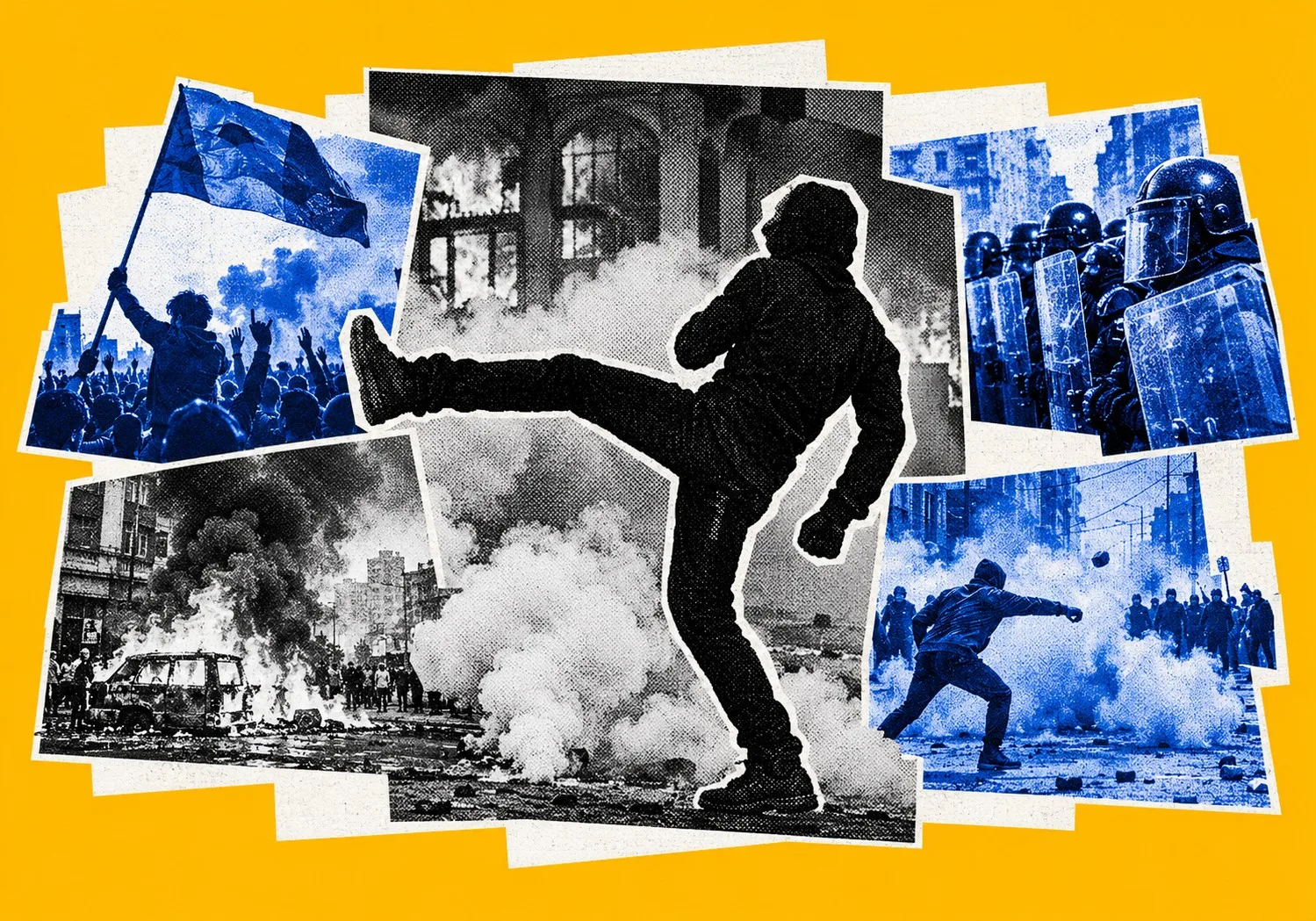
The Mayor of Nice has announced that a curfew for minors will begin at 21:00 local time (20:00 BST) on Monday.From 23:00 local time (22:00 BST) c curfew has been imposed to landmark shopping areas in central Paris, according to public radio. Curfews now lock down northern France. Lille, Douai, Wattignies, Denain—all under strict 19:00 to 05:00 movement bans following an emergency decree from Prime Minister Sébastien Lecornu's office. The triggers? Ransacked shops. Torched municipal halls. A blockaded Louvre Museum. Over 1,500 businesses looted nationwide. What launched in September as a minor, localized high school strike over class sizes has exploded into the worst civil security crisis facing the French state in years. Over 550,000 citizens took to the pavement over a single weekend. They brought major metropolises to a standstill, defied static police lines, and effectively dragged the 2027 presidential campaign onto the barricades six months early.

Streets as the New Ballot
Forget next spring’s formal campaign calendar. France’s electoral race started on Saturday.
By converting historic urban centers into tactical battlegrounds, the crisis completely bypassed the country's traditional political institutions. Debates over parliamentary amendments or policy white papers have vanished, replaced overnight by a stark confrontation over physical control of the republic.
The political extremes moved immediately.
Jean-Luc Mélenchon’s radical-left La France Insoumise wasted no time in adopting the crowd’s momentum.
Mélenchon rejected the government's framing of the unrest as mere lawlessness, characterizing it instead as an inevitable social eruption against systemic economic neglect, underfunded public services, and aggressive police tactics.
By aligning LFI directly with student walkouts and the massive daytime marches, Mélenchon aims to bypass the National Assembly entirely. His goal? Channel working-class and youth anger directly into an anti-establishment voting block.
Marine Le Pen and her Rassemblement National needed little effort to exploit the chaos.
Rolling news broadcasts did the heavy lifting. Images of burning municipal buildings, smashed storefronts in Marseille, and reports of 107 injured police officers provided the far right with instant, undeniable proof of a state in structural collapse.
Public exhaustion across provincial France is acute.
Order sells—and Le Pen is positioned to sell it.
That leaves President Emmanuel Macron stranded.
Six months out from the end of his second mandate, the president’s political leverage has almost entirely dissipated.
 His cabinet can neither maintain basic security across major city centers nor present an immediate, credible remedy for the cost-of-living pressures driving citizens into the streets.
Caught between a militant left and an expectant right, the centrist coalition is watching its base erode.
Blind Spot
Look closely at the deployment figures. They reveal a collapse in state intelligence so severe it beggars belief.
Ministry of the Interior analysts drew up security plans assuming roughly 200,000 marchers across France on Saturday.
They got more than 550,000.
Marseille provided the starkest example of this failure.
Roughly 30,000 angry marchers poured into the city center. To hold them, the state deployed a single company of CRS riot police—approximately 85 officers.
The outcome was inevitable.
For thirty-minute stretches, entire commercial avenues lacked any visible police presence.
Roving groups broke shopfronts, lit fires, and briefly breached Marseille City Hall itself.
In Limoges, the spire of the 143-year-old municipal town hall collapsed in a tower of flame.
"We lacked anticipation," admitted Interior Minister Laurent Nuñez during a morning interview on France Inter, conceding police had lost control of several urban cores.

Nuñez tendered his resignation to the Élysée Palace.
Macron turned it down.
Accepting the minister's departure mid-crisis would have meant publicly acknowledging that the state had lost control of its territory—a concession the president could not afford.
Nuñez remained in his post, tasked with rebuilding a broken security framework on the fly.
Spark to Powder Keg
The path to this weekend’s breakdown followed a precise, escalating sequence:
- September: Suburban Parisian high school teachers and students walk out over class sizes and staffing deficits. Demands are met; the local strike ends. The underlying frustration stays.
- Early October: Protests spread to secondary schools nationwide. A viral video showing a police officer putting a young female student in a banned headlock sparks immediate public fury over police tactics.
- Mid-October: Student marches merge with broader socio-economic anger. Trade unions, low-income workers, and unemployed youth join the crowds, turning an educational dispute into a revolt over inflation, stagnant wages, and living costs.
- October 17–18: Mass demonstrations draw 550,000 into the streets. Peaceful daytime rallies give way at nightfall to masked groups engaging in widespread arson and commercial looting.
The initial trigger was educational. The fuel, however, was purely financial. Years of persistent inflation, soaring energy bills, high youth unemployment, and visible economic inequality created a highly combustible populace waiting for a spark.
The gilets jaunes (yellow vests) provided the operational infrastructure.
By reactivating the decentralized digital networks that fueled France’s 2018 protests, yellow vest organizers gave scattered student anger national coordination. Benjamin Ball, website editor for the group, confirmed to reporters that a massive push for a renewed "Act II" mobilization was already underway.
By Monday morning, protesters had blockaded the entrance to the Louvre Museum in Paris, forcing the site to close.
Across the Île-de-France region alone, business groups reported between 1,500 and 2,000 commercial properties ransacked or destroyed over the weekend.
 ## Municipal Revolt
If the central government expected local executives to quietly endorse its emergency decrees, it misjudged the mood in town halls.
On Monday, the mayors of France's three largest metropolises—Emmanuel Grégoire of Paris, Benoît Payan of Marseille, and Gregory Doucet of Lyon—published a blistering joint piece in Libération.
Their assessment was blunt: the central state had failed its most basic duty of protection, leaving entire districts unprotected while looting continued unchecked. They demanded an independent parliamentary inquiry into policing failures and immediate direct negotiations with student groups.
Money sits at the center of this clash.
Parliament is currently debating a draft budget imposing strict spending limits on local authorities. The mayors’ argument is simple: Paris makes the tactical security errors, but local taxpayers are expected to foot the bill for smashed glass and burned municipal property.
Prime Minister Sébastien Lecornu attempted to signal operational flexibility by delegating curfew decisions to mayors.
Marseille moved quickly, using prefecture decrees to ban public gatherings between 12:00 PM and 8:00 PM on Monday.
Yet the subsequent expansion of overnight curfews to northern industrial cities like Lille, Douai, Wattignies, and Denain signals something else entirely. Far from demonstrating local empowerment, expanding curfew zones proves the central state can no longer maintain basic order without relying on emergency restrictions across multiple regions.
What Next?
Stripped of momentum, the government is leaning on the judicial system to re-establish control.
More than 2,000 people were arrested over the weekend, including 350 in Paris during overnight sweeps between Sunday and Monday. Lecornu confirmed that roughly 80 percent of those detained face formal criminal charges, promising swift court proceedings.
In Paris, a specialized team of 200 investigators has begun sifting through thousands of hours of CCTV footage, media recordings, and social media streams to track down rioters.
Meanwhile, President Macron has attempted to address economic anger through foreign policy. In a televised address on Sunday, he promised diplomatic moves to negotiate stable fuel supplies and lower energy prices with Gulf nations. But distant energy deals offer zero relief to shopkeepers clearing broken glass or families facing immediate monthly bills.
European capitals are watching Paris with deep anxiety.
The pressures gutting French household budgets—inflation, energy costs, underfunded services—exist across the continent. With cost-of-living protests stirring in neighboring states, European leaders fear French unrest could act as a template for wider regional instability.
With yellow vest organizers calling for nationwide "Act II" protests on Saturday, October 24, the state has little room to maneuver. The government is trying to police its way out of a deep political crisis, even as its security apparatus struggles to hold the line.
Six months before choosing its next president, France is no longer just debating its future—it is fighting for control of its streets.