
Why Are High Schools Blockaded in France? Inside the Suburban Education Crisis

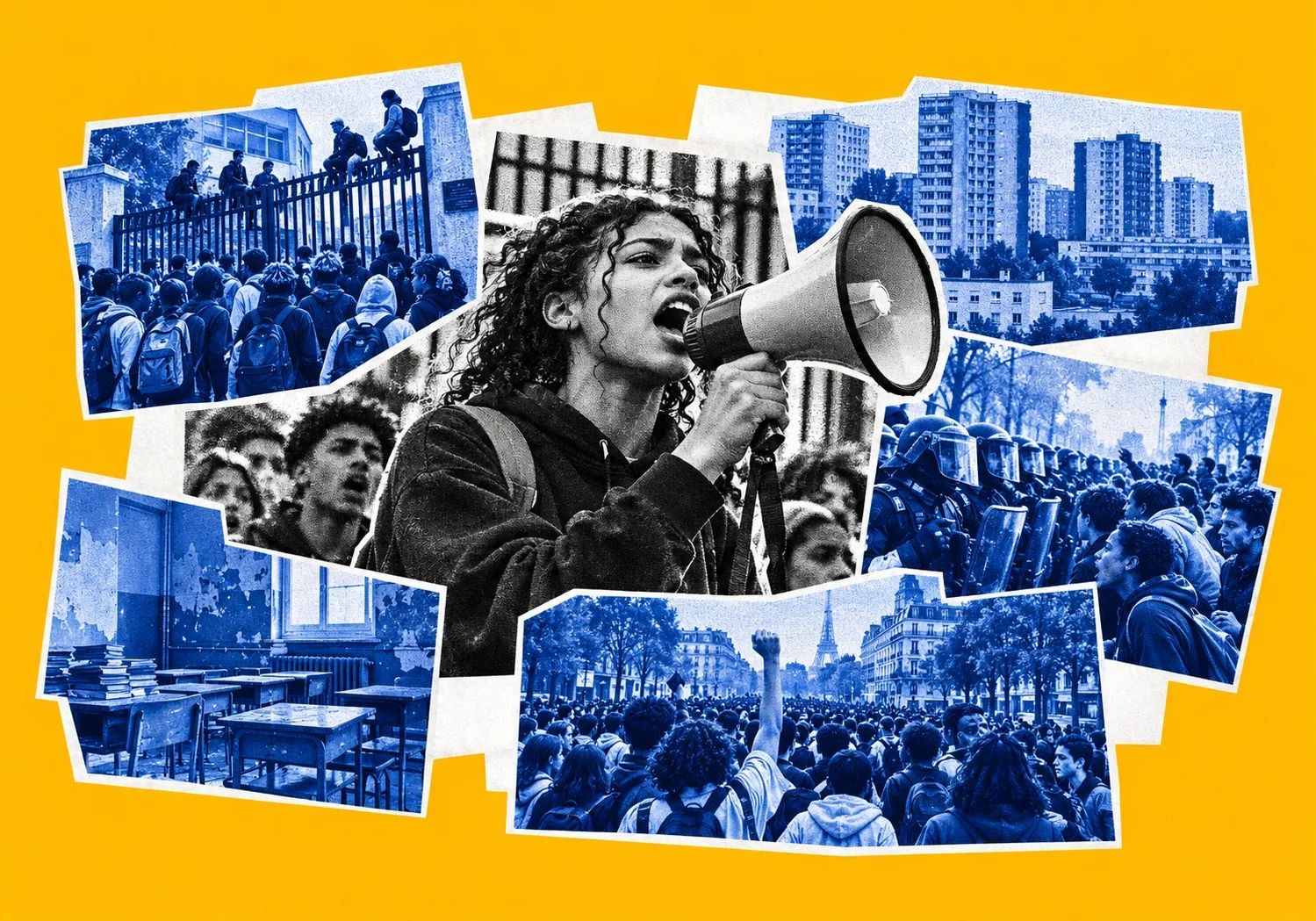
Widespread blockades across French secondary schools have turned into a formidable political test for Prime Minister François Bayrou's cabinet. What started as localized walkouts over unreplaced teachers and crumbling school buildings in working-class banlieues quickly spread nationwide. Tensions boiled over following a confrontation outside Lycée Auguste Béhal in Lens, Pas-de-Calais, where a 15-year-old student lost part of his hand during clashes with mobile gendarmerie units. The injury abruptly shifted national scrutiny onto state education budgets and riot police tactics in outer-urban neighborhoods.
Accounts of the clash in Lens remain sharply contested. Police headquarters reported that the teenager was injured while attempting to lob back an explosive sting-ball grenade deployed by officers to unblock the main gates.
Eyewitness reporting from regional daily La Voix du Nord indicated the ordinance detonated adjacent to the pupil before he could touch it. With administrative and judicial probes still underway, the incident drew immediate condemnations from teaching unions and student groups, turning local frustration into a national flashpoint.

The Staffing Vacuum in Seine-Saint-Denis
The wave of blockades stems from chronic structural shortfalls across the working-class ring surrounding France's major urban centers. Regional education board statistics confirm a stark gap in state provision between suburban municipalities and affluent inner-city arrondissements.
In Seine-Saint-Denis, immediately north of Paris, official records reveal that up to two-thirds of secondary schools operate with persistent teacher shortages.
Data published by the FCPE, the main national parents' union, shows pupils in the department lose between eight and twelve per cent of mandatory teaching hours each year simply because absent staff are never replaced. Classes in core subjects such as mathematics and French routinely sit empty for months, forcing families to rely on private tutoring or accept long gaps in their children's education.
Physical infrastructure across these outer districts shows equal strain. Town hall audits and trade union walk-throughs detail broken heating systems during winter freezes, unpatched roof leaks, and unserviceable toilets. In several secondary schools across the Île-de-France region, school medical rooms stand locked for days at a time owing to a nationwide shortage of qualified nurses and social workers.

Frustration exploded after the Ministry of National Education unveiled its 2026 draft budget.
While headline spending grew by 1.7 per cent, the underlying line items eliminated 3,256 teaching posts nationwide.
Officials defended the cuts by citing falling pupil numbers across primary and secondary sectors. The main secondary teaching union, SNES-FSU, countered that removing positions guarantees higher pupil-to-teacher ratios in banlieue classrooms where student counts already top thirty per desk room.
Parcoursup and the Selection Bottleneck
Beyond broken boilers and missing teachers, deep structural changes to university admissions and secondary curricula have fueled pupil anger across urban high schools.
The central target remains Parcoursup, the automated higher education admissions portal introduced to streamline university placement. Its sorting algorithms draw fierce criticism from sociologists, teachers, and student associations. Opponents argue the system secretly factors in the historical academic standing of an applicant's secondary school, putting candidates from under-resourced banlieue lycées at a systematic disadvantage before their application files are even reviewed by admissions committees.
Simultaneously, the overhaul of the Baccalauréat framework—which replaced traditional fixed humanities and science streams with modular subject choices—has scrambled daily school schedules. Teaching staff report that the reform increased administrative paperwork while cutting dedicated tutoring time for pupils preparing for end-of-year exams.
The loss of fixed class cohorts has also fragmented student peer networks, making collective academic support far harder to maintain in high-stress examination years.
Five Thousand Arrests and the LBD Controversy
As blockades gathered momentum across regional capitals including Lyon, Marseille, and Nantes, law enforcement interventions escalated dramatically. Ministry of the Interior tallies show police have detained over five thousand people near school gates since late September. Minors account for eighty-five per cent of those taken into custody.
The deployment of heavy crowd-control gear—including tear gas canisters, defense ball launchers (LBDs), and sting-ball grenades—against teenage crowds has drawn warnings from human rights watchdogs and legal experts. Hospital records and police logs confirm a string of severe injuries among underage protesters.

In Saint-Ouen-l'Aumône, Val-d'Oise, a 14-year-old pupil required facial reconstructive surgery after being hit by a tear-gas canister fired during crowd dispersal operations. Elsewhere in Île-de-France, a 16-year-old lost vision in one eye after being struck by an LBD rubber projectile. Combined reports from medical staff and civil rights monitors indicate nearly two hundred students and eighty school staff members have required treatment for physical trauma, gas inhalation, or crushing in crowd surges.
Government ministers have stood firmly behind the police operations. Government spokeswoman Maud Bregeon told television reporters that firm action was essential to disperse "groups of masked agitators and organized violent elements" embedded alongside school walkouts. Interior Ministry reports document property damage at twenty-four lycées, including a fire set at the entrance of Lycée Vauquelin in central Paris. In response, ministers drafted legislation making parents financially liable for municipal damages caused by delinquent minors.
Local leaders and trade unions reject this framing. Emmanuel Grégoire, representing the Paris city council, publicly questioned the safety of using kinetic weapons near school gates. The General Confederation of Labour (CGT) took the unusual step of assigning union stewards to form physical barriers between teenage crowds and riot squads, attempting to de-escalate confrontations before tear gas was deployed.
Electoral Calculations in the Assembly
The high school crisis arrives just six months before France's presidential election, forcing political parties into sharp confrontation over law and order versus suburban investment.
Marine Le Pen's National Rally has framed the blockades squarely as a breakdown of public order and state authority. Highlighting property damage and street skirmishes, party spokespeople advocate harsher criminal penalties for underage offenders and call for cutting family welfare payments to parents of truant pupils involved in unapproved blockades.
On the left, Jean-Luc Mélenchon’s La France Insoumise has thrown its full support behind the pupils. LFI lawmakers view the blockades as a legitimate uprising against austerity and aggressive policing. Several LFI deputies have physically joined picket lines outside high schools, using their parliamentary immunity and oversight status to inspect police operations on site and record officer badge numbers.
Caught in the middle, the governing centrist coalition faces pressure from both flanks in a turbulent National Assembly. Right-wing MPs accuse the government of softness in restoring order, while left-wing parties and civil liberties groups denounce the militarized policing of schoolchildren.
Sovereign Debt Limits and Market Pressures
Unlike previous French governments, the Bayrou administration faces this street turmoil under severe financial constraints imposed by international capital markets. Financial data shows French ten-year sovereign bond yields climbing to 5.0 per cent—their highest benchmark in twenty-four years—while the borrowing spread against German Bunds widened markedly.
City of London and European banking analysts attribute the bond sell-off to fears over France’s expanding fiscal deficit and legislative gridlock. The draft 2026 budget attempts to rein in public borrowing to meet European Union fiscal targets, but ongoing social unrest threatens to scuttle planned spending cuts and spark further rating downgrades.
Economic historians note this leaves the Élysée with almost no room to maneuver. During historic student uprisings—such as the 1986 protests against the Devaquet university reform or the 2006 demonstrations against First Employment Contracts—governments defused crises by withdrawing bills or releasing fresh funds. Today, record debt levels exceeding 112 per cent of GDP and strict EU deficit rules preclude quick financial compromises or emergency spending packages.

The Standoff at the Gates
The confrontation at French school gates lays bare a fundamental conflict between budget austerity and public services in modern France. While police units maintain cordons around suburban schools to keep gates open, teaching unions, parental groups, and student activists insist that no resolution is possible without direct reinvestment in banlieue education.
With the 2026 budget moving through a divided National Assembly, the government remains trapped between bond market demands for fiscal discipline and suburban demands for state investment.