
European Troops in Ukraine: Can a UK-France Led Force Succeed Without US Support?

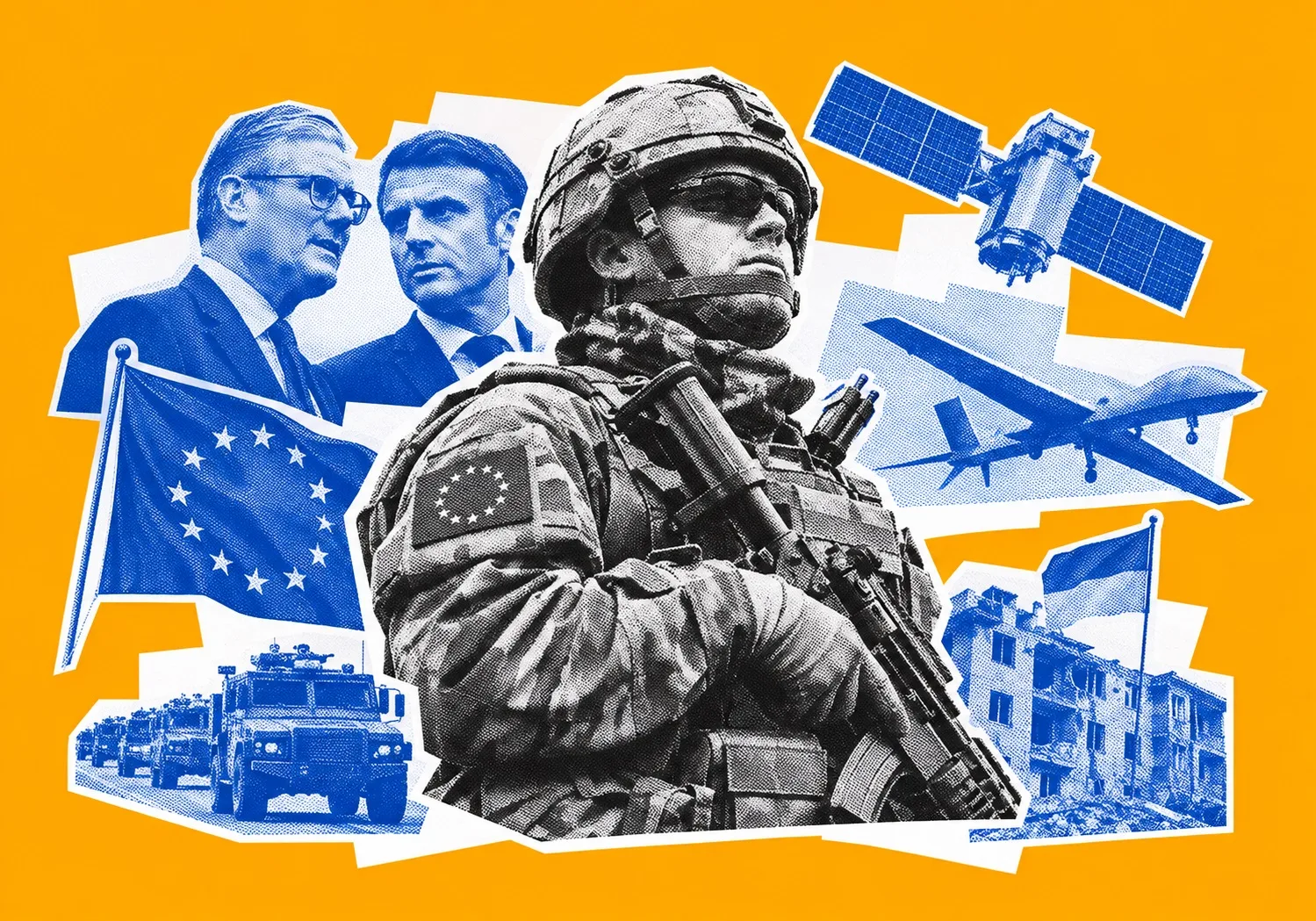
Britain and France are leading plans for a multinational European force to protect Ukraine and deter future Russian aggression. But political divisions, Moscow’s threats, and dependence on US technology like Starlink raise a critical question: can Europe guarantee Ukraine’s security on its own?
The details, reported by The Guardian on 3 November, come as 11 countries prepare for Exercise Koalicja, a multinational military exercise scheduled for 9–22 November in Poland.
The preparations represent a significant development. European governments are no longer discussing only financial assistance, weapons deliveries or diplomatic guarantees. They are testing how their own forces could operate on Ukrainian territory, potentially placing European soldiers in direct confrontation with Russia.
Yet the proposed deployment remains conditional on an end to hostilities and a request from Kyiv. The coalition has not agreed on every aspect of the mission, while Russia has already threatened to treat foreign troops as military targets.
The challenge is therefore larger than assembling a multinational force. Europe must demonstrate that it can sustain the deployment, defend its personnel and respond to renewed Russian aggression without depending on an American military intervention.
From political promises to military preparations
According to the British Ministry of Defence, Exercise Koalicja will involve approximately 2,800 military personnel. France will contribute 1,500 troops, while Britain will provide 300 soldiers alongside RAF Typhoon fighter aircraft and Voyager refuelling capabilities.
Belgium, Estonia, Germany, Lithuania, the Netherlands, Poland, Spain, Sweden and Turkey will also participate.
The exercise will test the movement of personnel and equipment, multinational command arrangements, logistical support and the protection of deployed forces. Turkey will lead preparations for a maritime component, including mine-clearance operations intended to restore commercial shipping in the Black Sea.
The multinational force, known as MNF-U, is commanded by British Lieutenant General Tom Bateman and operates under joint British-French leadership.
Its proposed mission differs from traditional peacekeeping. The British government explicitly states that MNF-U would not monitor a ceasefire or perform conventional peacekeeping duties. Instead, it would help rebuild Ukraine’s armed forces, support the security of its skies and seas, and strengthen its ability to resist future aggression.

This distinction matters. Rather than positioning European soldiers between two armies to supervise an agreement, the coalition intends to reinforce Ukraine’s military capabilities while maintaining a presence that could discourage Russia from resuming hostilities.
However, that presence would carry risks of its own.
Western officials told The Guardian that European troops would be permitted to defend themselves against Russian attacks, including drone strikes. Their operations would remain defensive, and the troops are expected to be stationed away from the front line.
But distance from the front would not necessarily guarantee safety. Russia has repeatedly demonstrated its ability to strike targets deep inside Ukraine.
If a Russian missile or drone hit a European military installation, the coalition would face an immediate decision over the scale and nature of its response.
Europe is not united on how far to go
Although Britain and France lead the initiative, participating governments have different views about the military risks they are prepared to accept.
According to Le Monde’s reporting on the preparations, France supports deploying troops inside Ukraine, while Britain places considerable emphasis on air support and Germany favours a more cautious approach involving forces stationed in neighbouring countries.
Poland offers another example of the coalition’s division of responsibilities.
In a 3 November statement, Poland’s defence ministry confirmed that the country would provide logistical and infrastructure support but would not deploy its own soldiers to Ukraine.
Poland would nevertheless play a central role in transporting and supplying allied forces. Its territory would serve as a logistical gateway for any future deployment.
Estonia has adopted a more forward-leaning position on preparing for Ukraine’s future security. Its defence ministry confirmed that a company-sized unit would participate in Exercise Koalicja, emphasising the need to prepare security guarantees despite Russia’s continued unwillingness to end its aggression.
These differences do not necessarily make the coalition unworkable. Multinational operations often distribute responsibilities between combat units, logistics, intelligence and support forces.
The more difficult issue is whether participating governments would accept the same level of risk if Russian forces attacked the mission.
Research conducted by the Norwegian Institute of International Affairs (NUPI) examines precisely these questions. Its Coalition of the Willing Tracker assesses the political willingness and military capabilities of 16 participating countries, including their national restrictions and possible contributions.
The research highlights the importance of distinguishing political support for Ukraine from a government’s willingness to expose its own military personnel to potential combat.
A country may support the mission financially, provide transport aircraft or participate in planning without agreeing to deploy soldiers inside Ukraine.
For the coalition, this creates a problem that cannot be resolved through military exercises alone: a multinational force needs not only equipment and personnel but also political agreement on when and how it will use force.
The Starlink problem exposes Europe’s dependence on America
Perhaps the most revealing aspect of the emerging plans is the effort to avoid dependence on American technology.
Western officials told The Guardian that the proposed force would not rely on US systems such as Starlink. This is not a formal prohibition on using the service, but a deliberate attempt to ensure that the mission can function without it.
The concern is not theoretical.
On 14 October, Ukrainian officials reported unexpected restrictions affecting Starshield, the military variant of SpaceX’s satellite communications technology.
According to a 2 November analysis by the Center for Strategic and International Studies, the restrictions disrupted communications with Ukrainian drones. Normal service was subsequently restored, but the incident demonstrated how decisions affecting privately operated technology could influence military operations.
CSIS researchers Clayton Swope, Lauryn Williams and Alexei Hoffman identified a wider strategic vulnerability: governments relying on foreign commercial technology for national defence may have limited influence over whether that technology remains available.
For Europe, the implications extend beyond Starlink.
Satellite communications, intelligence collection, surveillance, reconnaissance and sophisticated command systems are all essential to modern military operations. European forces possess substantial capabilities in these areas, but replacing American support across an entire multinational operation would be considerably more difficult.
European alternatives, including OneWeb and government satellite communications initiatives, could reduce some dependencies. They do not yet provide a complete substitute for every capability associated with American systems.
This creates an uncomfortable contradiction.
Europe wants to demonstrate that it can protect Ukraine independently of Washington. Yet reducing reliance on American technology could make a European military deployment more complicated, expensive and potentially less effective.
The issue is especially significant because President Donald Trump has ruled out committing American troops to a future peacekeeping mission in Ukraine, according to The Guardian.
Even without American soldiers on the ground, European governments would still have to decide whether to seek US intelligence, surveillance or other forms of indirect support.
An operation conducted outside NATO command would not automatically eliminate its reliance on American capabilities.
How many troops would actually be enough?
The size of the proposed force is another unresolved question.
Le Monde has reported discussions of a potential deployment involving up to 20,000 personnel from as many as 24 countries. Those figures remain part of planning rather than an approved commitment.
An earlier International Institute for Strategic Studies assessment examined three possible models.
The smallest involved approximately 10,000 ground troops, supported by limited air and maritime assets. A medium-sized force would comprise around 25,000 ground personnel, while a larger operation could require between 60,000 and 100,000.
Each model presents a different balance between deterrence and operational demands.
A relatively small force could be deployed and maintained more easily, but its capacity to resist a major Russian attack would be limited. Its principal deterrent would be the political consequences of attacking European soldiers.
A larger force would offer greater military credibility but require extensive logistical support, equipment, intelligence capabilities and regular troop rotations.
The IISS assessment also identified European shortages in areas including strategic intelligence, combat engineering, rocket artillery and the suppression of enemy air defences.
These limitations would become more significant without an American security backstop.
The central question is therefore not simply how many European troops could be deployed, but what those troops would be expected to accomplish.
A mission intended primarily to train Ukrainian forces requires a different structure from one expected to withstand a major Russian offensive.
Trying to achieve both objectives without sufficient resources could undermine the credibility of the entire operation.
Moscow has already threatened the mission
Russia has made clear that it opposes the presence of European military forces in Ukraine, even after a potential peace agreement.
On 15 July, Russian Foreign Ministry spokesperson Maria Zakharova warned that Moscow would consider multinational forces deployed by Ukraine’s allies legitimate military targets.
The statement, reported by Reuters, followed renewed commitments by Western governments to prepare a multinational security presence.
Russia's position introduces an important uncertainty into European planning.
The coalition intends to deploy only after hostilities have ceased, but Moscow has not accepted the legitimacy of such a force.
A ceasefire would therefore not necessarily remove the risk of confrontation.
Russian forces could attempt to test the mission through drone incursions, limited strikes or other military provocations. These are possible scenarios, not confirmed Russian operational plans.
The coalition would then have to determine whether its response should remain confined to immediate self-defence or include additional measures to prevent repeated attacks.
The distinction is crucial because MNF-U would operate outside NATO's formal command structure.
An attack on European troops in Ukraine would not automatically activate NATO's Article 5 collective-defence mechanism. The response would depend on the countries involved, their political decisions and the arrangements governing the mission.
That uncertainty could weaken deterrence if Moscow concluded that European governments were unwilling to escalate.
Conversely, clearly established rules of engagement and a credible military response could make attacks on the force considerably more costly.
Three possible futures for Europe’s Ukraine mission
The first scenario is that a ceasefire creates the conditions for deployment and European forces establish a sustained presence in Ukraine.
Under this arrangement, the coalition could support military training, strengthen air defence capabilities and contribute to restoring maritime security. Its presence would raise the political and military costs of renewed Russian aggression.
A second scenario involves a limited deployment followed by Russian attempts to test the coalition’s willingness to defend itself.
Even a relatively small attack could expose disagreements between participating governments. Some might favour a rapid military response, while others could seek to contain the incident diplomatically.
The third scenario is that the mission remains in preparation indefinitely.
Negotiations could fail to produce a durable ceasefire, or European governments could struggle to agree on troop commitments, financing and acceptable risks.
Domestic politics adds another complication. As Associated Press reported on 3 November, France’s 2027 presidential election could affect the future of the initiative, particularly if political forces opposed to military deployment gain influence.
For Britain and France, the challenge is to build a military arrangement that can survive changes of government as well as changes on the battlefield.
Ukraine’s security is becoming a test of European strategic autonomy
The proposed mission also has implications beyond Ukraine's immediate military security.
British planning includes the use of fighter aircraft to help create conditions for the eventual reopening of commercial aviation. Turkey's maritime component would focus on mine clearance and the restoration of shipping routes.
These activities could support Ukraine's economic recovery by reducing risks to trade, transport and investment.
But none of those outcomes is guaranteed by the deployment itself. Reopening airports and expanding maritime commerce would require a sustained improvement in security, not merely the presence of foreign troops.
For European governments, the broader significance lies in the ability to organise and sustain a major security operation without direct American leadership.
The Coalition of the Willing offers a framework for doing so outside NATO's formal command arrangements. That flexibility may help countries act despite disagreements within the wider alliance.
Yet operating independently also means assuming responsibilities that Europe has historically shared with Washington.
Exercise Koalicja will provide an early test of whether European militaries can coordinate their command structures, communications and logistics. It cannot determine whether their governments will ultimately accept the political consequences of deploying troops into a country Russia continues to threaten.
The possibility of European soldiers returning fire against Russian forces illustrates how far the debate has moved from the early stages of the war.
The more consequential question is whether Europe can build a force whose presence would make such an exchange less likely in the first place.
That will depend not only on military readiness, but on sustained political commitments, reliable technology, and an agreement among European capitals about what they are prepared to defend.
Sources: The Guardian, UK Ministry of Defence, Le Monde, Polish Ministry of National Defence, Estonian Ministry of Defence, CSIS, NUPI, Reuters, Associated Press