
European Troops Could Return Fire Against Russian Forces in Ukraine

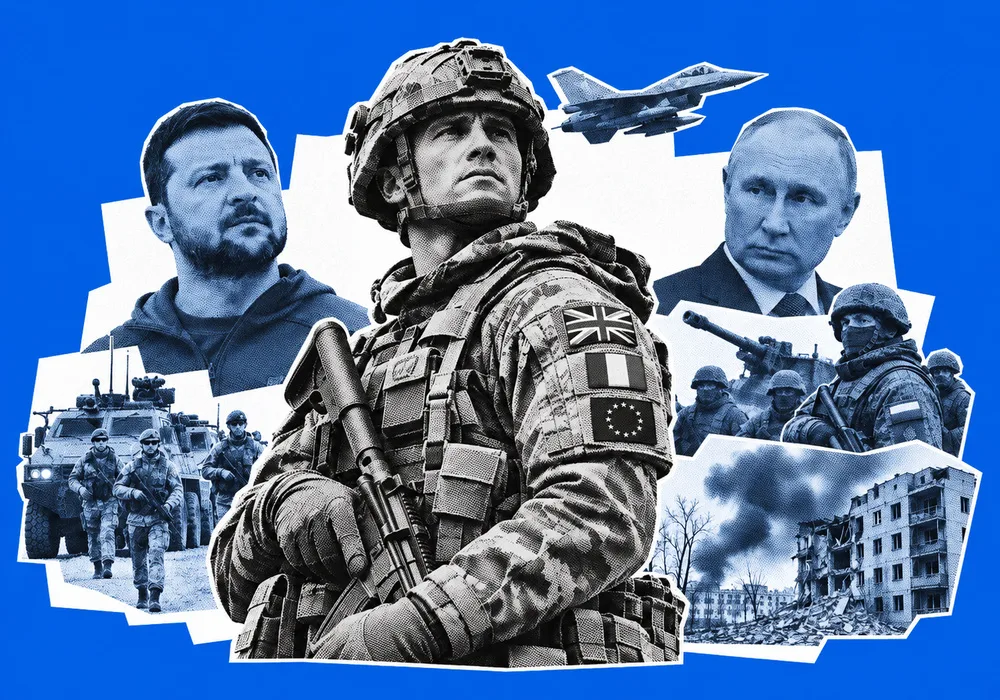
Britain and France are preparing a multinational European force for a potential deployment to Ukraine after a ceasefire, with rules of engagement allowing troops to defend themselves against Russian attacks. The planned mission would operate outside NATO and without dependence on US military technology, reflecting Europe's growing efforts to develop independent security capabilities.
British and other European troops deployed to Ukraine following a potential ceasefire would be authorised to return fire if attacked by Russian forces, according to plans being developed by the United Kingdom, France and their European partners. The proposed multinational stabilisation force would be designed to protect its personnel against aggression while supporting Ukraine's security and military recovery after the end of hostilities. Western officials have stressed that any engagement with Russian forces would be defensive rather than part of an offensive military operation.
The plans emerged as London and Paris announced preparations for Exercise Koalicja, a multinational military exercise scheduled to take place in Poland later in November. The exercise will bring together approximately 2,800 military personnel from 11 countries to rehearse the rapid deployment of a European force to Ukraine if a ceasefire is reached. France is expected to contribute 1,500 troops from its 1st Division, while the United Kingdom will provide 300 personnel from the British Army's 7th Light Mechanised Brigade.
The participating countries include the United Kingdom, France, Poland, Germany, Belgium, Estonia, Lithuania, the Netherlands, Spain, Sweden and Turkey. The exercise will test the ability of these militaries to coordinate operations across land, sea and air, including logistics, force protection and the movement of personnel and equipment. The deployment plans have been under development for more than a year, although an actual mission remains conditional on an agreement ending the war.
Lieutenant General Tom Bateman, commander of the proposed Multinational Force-Ukraine (MNF-U), said participating countries were committed to providing robust and binding security guarantees for Ukraine following a cessation of hostilities. The force would be intended to demonstrate that European countries could rapidly mobilise and operate together in support of Ukraine's long-term security.
Rules of engagement raise the stakes of a European presence
Although the proposed force would be stationed well away from the front line, its rules of engagement would allow European personnel to defend themselves against Russian attacks, including drone strikes. This creates the possibility of direct armed confrontations between Russian forces and troops from European countries, even if the mission is formally limited to defensive activities.
The experience of the previous ceasefire period in eastern Ukraine between 2014 and 2022 remains relevant to these preparations. Repeated violations, localised attacks and military provocations demonstrated how difficult it can be to maintain a stable cessation of hostilities without credible enforcement mechanisms. European planners therefore face the challenge of establishing rules that protect deployed personnel without allowing individual incidents to trigger a wider military confrontation.
Russia has repeatedly rejected the prospect of Western military personnel being stationed in Ukraine, with Vladimir Putin previously warning that foreign troops would constitute legitimate targets. Moscow's position raises questions about whether a European deployment could operate without becoming a target of Russian military or hybrid operations.
The distinction between defensive and offensive action will therefore be central to the mission's credibility. European governments will need to establish how attacks against their personnel are identified, who authorises responses and how participating countries coordinate decisions during a crisis. The ability to respond to Russian aggression could strengthen the deterrent value of the force, but it would also expose participating governments to the political and military consequences of a direct confrontation with Moscow.
Europe seeks to reduce dependence on American military systems
Another important element of the proposed mission is its planned independence from US military technology. The multinational force is expected to operate almost entirely through European capabilities, with officials confirming that it would not depend on American systems such as SpaceX's Starlink satellite communications network.
The decision reflects growing concerns among European governments about the reliability of US support for European security. In October, Washington temporarily restricted Ukraine's access to Starshield, the military version of Starlink, for approximately ten days. The disruption affected Ukrainian medium-range drone operations and highlighted the operational risks of relying on infrastructure controlled by an external provider.
One Western official involved in the planning said the multinational force was not dependent on US systems. This approach suggests that European countries are seeking to ensure that communications and operational coordination remain functional even if Washington is unwilling or unable to provide technological support.
The force would operate outside NATO structures, despite the fact that most participating countries are members of the alliance. This distinction is particularly significant given that US President Donald Trump has ruled out committing American troops to a peacekeeping deployment in Ukraine after a potential ceasefire. Washington's absence from the proposed force places greater responsibility on European governments to provide personnel, equipment, command structures and logistical support.
However, operational independence from American technology does not necessarily mean complete strategic independence from the United States. Intelligence cooperation, military supplies and broader security guarantees will remain important elements of any sustainable postwar arrangement. The extent to which European countries can maintain an effective mission without American assistance will depend on their ability to coordinate these capabilities independently.
Military reconstruction and reopening Ukraine's airspace
The proposed mission would extend beyond protecting European personnel. One of its principal objectives would be to help regenerate and strengthen Ukraine's armed forces after the war, providing logistical support, equipment and training expertise. European military personnel would work alongside Ukrainian forces to improve interoperability and strengthen their capacity to deter future Russian aggression.
The arrangement could also provide benefits to European militaries. Ukraine has accumulated extensive experience in modern warfare, particularly in drone operations, electronic warfare, air defence and the integration of rapidly evolving technologies into battlefield operations. Cooperation with Ukrainian forces would give European militaries access to practical lessons from a conflict that has fundamentally changed military planning across the continent.
Air operations are another component of the proposed security arrangements. European fighter aircraft are expected to conduct patrols aimed at helping reopen Ukraine's commercial airspace and restore civilian aviation. Ukrainian airports have remained closed to commercial traffic since Russia launched its full-scale invasion in February 2022.
At sea, Turkey is expected to lead a mine-clearing operation in the Black Sea to improve maritime security and facilitate the restoration of commercial shipping. Reopening maritime routes would be important for Ukraine's grain exports and wider international trade, while reducing the risks facing commercial vessels operating in the region.
These elements indicate that the planned force is intended to contribute to a broader postwar security framework rather than simply maintain a military presence. The combination of military reconstruction, airspace protection and maritime security would connect Ukraine's recovery to the wider economic and security interests of European countries.
A deployment still dependent on a political agreement
Despite the growing level of military preparation, the deployment remains hypothetical. Russia and Ukraine have not reached an agreement on ending hostilities, and diplomatic efforts have so far produced limited progress. Continued attacks on energy infrastructure and other targets demonstrate that the military situation remains active.
The United States is preparing another round of diplomatic engagement involving Ukrainian and Russian representatives, with talks expected to take place in Abu Dhabi. Washington is also consulting European governments and NATO representatives on Ukraine's security guarantees and the continent's postwar security architecture. However, significant disagreements between Kyiv and Moscow remain unresolved.
For European governments, preparing a multinational force before a ceasefire is reached serves two purposes. It allows military planners to address logistical and operational difficulties in advance, while signalling that Ukraine would not be left without international security support if an agreement were achieved. At the same time, the exercise tests whether European countries can translate political commitments into an operational military capability without relying on direct American participation.
The central uncertainty is whether such a force would be capable of deterring Russia rather than merely responding to attacks after they occur. Its effectiveness would depend on the clarity of its mandate, the willingness of participating governments to defend their personnel and the ability to maintain a coordinated response to Russian military pressure.
The preparations nevertheless represent a significant step in Europe's efforts to assume greater responsibility for Ukraine's postwar security. By planning for a force capable of defending itself against Russian attacks and operating independently of US military systems, Britain and France are attempting to establish a framework in which European security commitments could be backed by a credible military presence.
Sources: The Guardian, UK Ministry of Defence