
European Energy Companies Recruit Security Experts as Sabotage Threats Grow

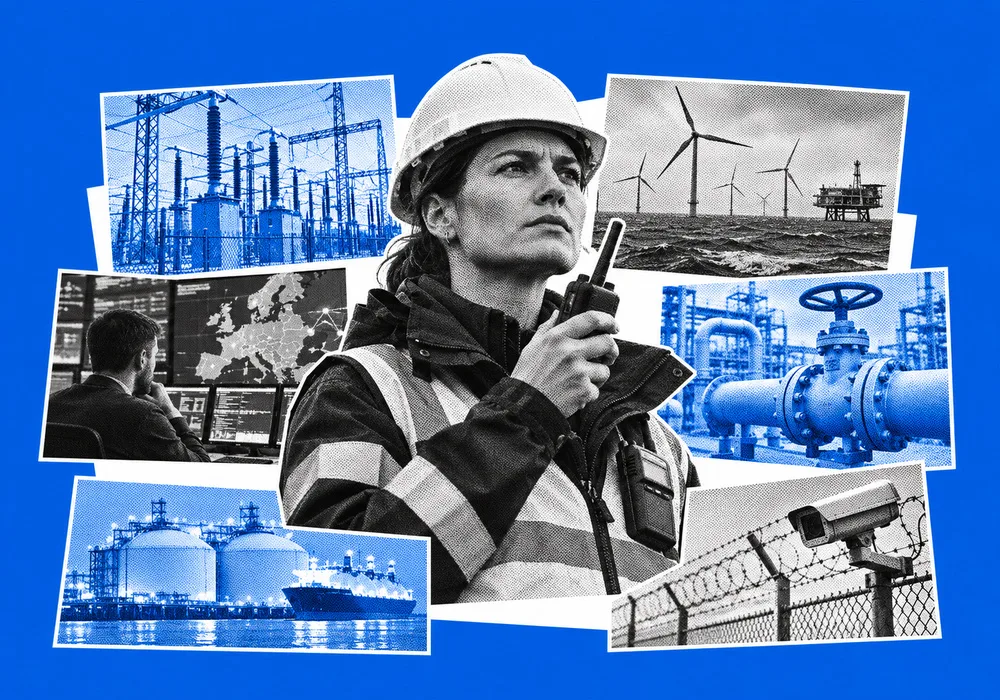
European energy groups are bringing former NATO officials, diplomats and security specialists into their organisations as suspected state-backed sabotage and cyberattacks expose vulnerabilities in critical infrastructure. The shift reflects growing recognition that energy security is no longer limited to protecting supply chains but increasingly requires defence against physical attacks, drones and hostile cyber operations.
European energy companies are strengthening their security capabilities in response to a growing number of suspected sabotage operations targeting critical infrastructure. Utilities, refineries and electricity networks are increasingly exposed to threats that extend beyond conventional operational risks, prompting companies to recruit specialists with military, diplomatic and intelligence backgrounds.
Finland's energy groups Fortum and Neste are among the companies adapting their internal structures. Both have brought in experienced security and geopolitical specialists to improve their understanding of emerging threats and strengthen their ability to respond to disruptions. Their recruitment reflects a broader shift in corporate risk management, as energy operators increasingly recognise that geopolitical instability can directly threaten the continuity of essential services.
The change has also been driven by incidents across Europe, including attacks on German electricity substations and suspected Russian-linked hybrid operations. A drone incursion at Leipzig airport has further highlighted the potential vulnerability of strategically important transport and energy infrastructure. For companies operating critical facilities, the distinction between commercial risk and national security is becoming increasingly difficult to maintain.
Companies turn to military and diplomatic expertise
Fortum has recruited Samu Paukkunen, a former senior NATO official, to strengthen its geopolitical and security capabilities. His responsibilities include assessing emerging risks and helping the company prepare for scenarios that previously received less attention from energy operators.
Neste has also expanded its expertise by appointing former Finnish ambassador Jukka Siukosaari. His role focuses on geopolitical developments affecting the company's international operations and supply chains, which depend on raw materials sourced from approximately 70 countries.
These appointments illustrate how European energy companies are beginning to incorporate expertise traditionally associated with governments and defence institutions. Understanding potential state-backed threats, anticipating political instability and maintaining operational continuity are becoming important elements of corporate planning.
The growing cooperation between private operators and government intelligence services is another part of this adjustment. Companies are seeking better access to security assessments and more effective information-sharing arrangements, recognising that they cannot independently identify or respond to every emerging threat.
Brussels reconsiders Europe's energy security framework
The changing threat environment is also putting pressure on European policymakers to reconsider the way energy infrastructure is protected. The European Commission is preparing to revise its energy security framework, with a stronger emphasis expected on the physical protection and resilience of critical facilities.
The traditional European approach has largely concentrated on the security of supply, including diversification of energy sources, storage capacity and reducing dependence on external suppliers. However, recent sabotage incidents have exposed another vulnerability: even when sufficient energy is available, attacks on transmission networks, substations and generating facilities can interrupt its delivery.
The revised approach is expected to place greater emphasis on infrastructure protection, reflecting security practices developed in countries that have faced more immediate threats. This could bring additional attention to physical surveillance, protective systems, emergency planning and potentially air defence capabilities around particularly sensitive energy installations.
Christian Bruch, chief executive of Siemens Energy, has warned that Europe remains inadequately prepared to protect its energy infrastructure against attacks. The experience of Ukraine, where Russia has repeatedly targeted electricity generation and distribution facilities, demonstrates how energy networks can become central targets in a wider military campaign.
Cyberattacks add another layer of vulnerability
Physical sabotage is only one part of the growing security challenge. European energy companies are also confronting an increasingly complex cyber threat environment, with digital attacks capable of disrupting operations, compromising industrial systems and affecting electricity and gas distribution.
Analysis by the International Energy Agency found that a typical gas or electricity utility faced more than 1,500 cyber threats per week in 2024, approximately three times the level recorded four years earlier. The growing volume of threats has increased pressure on operators to strengthen their digital defences and invest in technologies capable of identifying suspicious activity before it affects essential services.
Companies are also exploring the use of advanced artificial intelligence tools to improve cyber protection and detect emerging vulnerabilities. However, technological investment alone cannot eliminate the risks. Greater cooperation between energy operators, intelligence services and national authorities is needed to improve information-sharing and coordinate responses to attacks.
Europe's energy security increasingly depends on resilience
The recruitment of security specialists marks a broader change in how European energy companies assess their responsibilities. Protecting infrastructure is increasingly becoming part of the continent's wider defence and security agenda rather than a narrowly defined operational concern.
For the European Union, the challenge is to ensure that national energy systems can withstand disruptions without allowing individual attacks to trigger wider failures. This requires not only stronger protection of critical facilities but also redundant infrastructure, emergency response capabilities and closer coordination between governments and private operators.
The experience of Ukraine has demonstrated that maintaining energy supplies under sustained attack requires the ability to repair damaged facilities, redirect distribution and continue operations despite repeated disruptions. European companies are increasingly looking towards these lessons as they prepare for a more uncertain security environment.
The emerging shift also has implications for defence planning and industrial investment. If energy infrastructure is treated as a potential target in hybrid operations, its protection will require closer integration with national security strategies, intelligence networks and defence capabilities. Europe's energy transition and industrial competitiveness will depend not only on securing sufficient supplies but also on ensuring that the infrastructure delivering them can withstand deliberate attacks.
Sources: Financial Times, S&P Global