
European Energy Giants Hire Former NATO Officials to Guard Grids

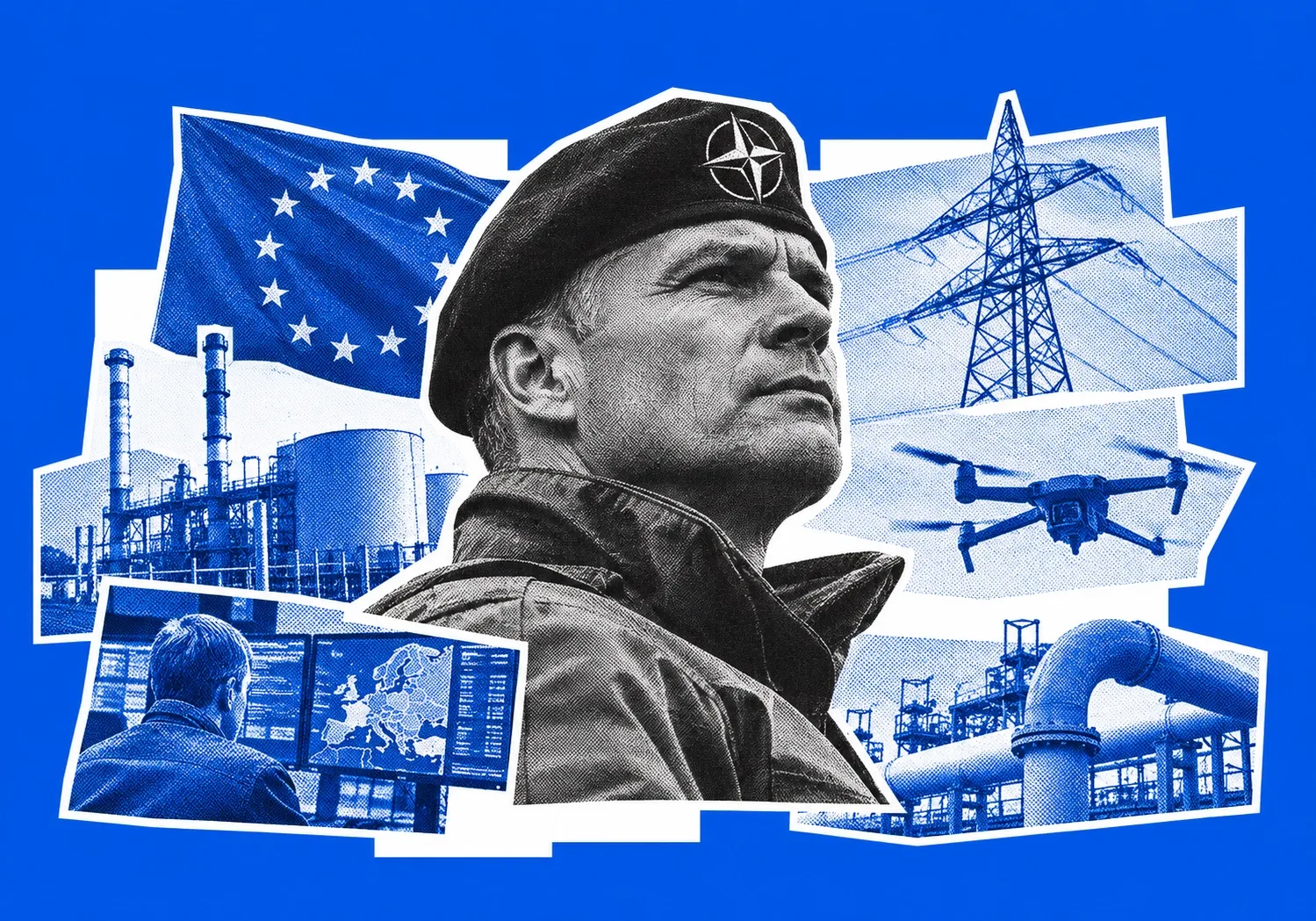
European energy companies, including Finland’s Fortum and Neste, are hiring former NATO officials and senior diplomats to protect power grids and supply chains from drones, sabotage, and cyberattacks. As hybrid threats to critical infrastructure escalate across Europe, corporate security is rapidly shifting from commercial risk management to national defense readiness.
According to a Financial Times report on 15 November 2026, Fortum brought in former senior NATO official Samu Paukkunen to assess geopolitical threats and drone risks, while Neste appointed former ambassador Jukka Siukosaari to oversee international supply chain security. The appointments come as energy executives warn that Europe's electricity networks and industrial facilities remain vulnerable to deliberate disruption.
For companies responsible for keeping electricity flowing and fuel supplies moving, the problem is increasingly difficult to separate from national security. A government may be responsible for responding to a hostile attack, but a private operator could be the first to detect it and the first to suffer the consequences.
Why Fortum and Neste want security expertise
Fortum's recruitment of Paukkunnen is closely connected to the threats facing energy infrastructure. His work includes assessing hybrid threats and developing scenarios involving drones.
That is a different assignment from the work traditionally associated with corporate risk departments.
An electricity company must still monitor energy prices, regulation and financial exposure. It must now also consider whether an unidentified drone near a facility could represent a security threat, how operations might continue after sabotage and when an incident requires cooperation with national authorities.
Neste's decision to appoint Siukosaari addresses another vulnerability.
The company operates international supply chains spanning approximately 70 countries. Its business depends on suppliers, transport arrangements and production networks that can be affected by political instability or disruptions far from Finland.
Siukosaari previously represented Finland as ambassador to the United Kingdom, Denmark and Japan. His diplomatic background gives Neste experience in assessing political developments and their possible effects on commercial operations.
Neither appointment means the companies are creating private intelligence agencies or taking over responsibilities belonging to the military.
The more immediate change concerns the kind of information executives need before making decisions. Understanding a country's political situation, the security of a transport route or the possibility of deliberate interference with industrial facilities has become part of protecting the business itself.
There is also a practical reason to bring that expertise inside a company. An external consultant can produce a security assessment, but an employee involved in day-to-day management can help incorporate those findings into operational planning.
Whether that approach produces measurable improvements in security remains to be seen.
Europe's infrastructure has already been tested
The sabotage of the Nord Stream pipelines in 2022 changed the discussion about the security of Europe's energy infrastructure.
The damage exposed the vulnerability of major installations located outside conventional industrial security perimeters. Subsequent incidents involving telecommunications and energy cables in the Baltic Sea added to concerns about how difficult it can be to protect infrastructure extending across national borders.
More recent events have brought those concerns closer to facilities on land.
Germany has experienced attacks on electrical substations, while incidents involving remotely compromised supermarket refrigeration systems have shown that connected equipment can create security problems outside conventional energy facilities.
One particularly concerning case emerged at Leipzig/Halle airport on 5 August 2026.
A drone carrying explosives and a detonator was discovered near Ukrainian Antonov An-124 cargo aircraft. German authorities subsequently attributed the incident to Russian actors on 1 September.
The circumstances differ from those of an attack on an electricity network. Nevertheless, the discovery showed how a relatively small device could pose a threat to valuable equipment and strategically important transport operations.
For energy companies, such incidents raise questions that cannot be answered through conventional financial risk calculations alone.
How should a facility respond to a suspected drone threat? Which operations could continue if part of a site had to be secured? What information should immediately be passed to police or other authorities?
Those questions are particularly difficult for operators managing several facilities, often in different jurisdictions.
The threat is also difficult to measure. A company may invest heavily in protection against an incident that never occurs, while failing to prepare for a less obvious weakness that an attacker eventually exploits.
The cyber problem is growing faster than many companies can measure
Physical sabotage attracts attention because the damage can be visible. Cyber threats are more persistent and considerably harder to assess from outside an organisation.
The International Energy Agency reported that a typical gas or electricity utility faced more than 1,500 cyber threats each week in 2024. That was roughly three times the level recorded four years earlier.
The number requires some care. It includes activities such as phishing, attempted intrusions, network scanning and malicious traffic. These are not necessarily successful attacks, and the figure does not establish how many attempts were linked to hostile governments.
Even so, the increase means security teams must examine a much larger volume of suspicious activity.
For energy companies, protecting digital systems involves more than keeping confidential files secure.
Electricity generation, distribution and industrial production depend on operational technology that controls equipment and processes. Security failures involving those systems can create problems for the physical operation of a facility.
A conventional office network can sometimes be isolated while an incident is investigated. Industrial systems present additional complications because shutting down equipment may itself interrupt essential services.
This is one reason energy operators need security specialists who understand both cyber risks and the consequences for physical infrastructure.
The IEA figures do not reveal how much individual European companies are spending on protection. Nor do they show whether the increase in detected threats has produced a comparable increase in successful attacks.
They do, however, provide a basis for the concerns now influencing corporate security decisions.
Siemens Energy sees weaknesses in the power grid
Christian Bruch, chief executive of Siemens Energy, has publicly warned that Europe's energy infrastructure remains insufficiently protected against major attacks.
He has pointed to the dangers illustrated by attacks on energy infrastructure in Ukraine and the Middle East.
The comparison has limits. European electricity systems differ from those operating in active conflict zones, and the effects of any attack would depend on the facilities involved, the methods used and the available protections.
But Bruch's warning concerns a problem familiar to electricity operators: networks depend on interconnected equipment, and disruption at one location can create difficulties elsewhere.
Protecting a generating facility is therefore only part of the task. Companies must also consider the equipment, connections and control systems needed to deliver electricity to customers.
An attacker does not necessarily need to destroy an entire power station to interfere with energy supplies.
The problem becomes more complicated when companies must prepare for several types of threat. Measures designed to prevent unauthorised physical access will not necessarily protect industrial software. Strong cybersecurity cannot prevent every form of physical sabotage.
Bringing security expertise into senior management may help companies decide where those different risks overlap and which investments deserve priority.
It also creates additional costs, particularly when operators must upgrade equipment, improve monitoring and maintain emergency arrangements across multiple sites.
Governments still control the response to hostile attacks
The European Union has already introduced legislation intended to improve the protection of essential infrastructure.
Its NIS2 Directive establishes cybersecurity requirements, while the Critical Entities Resilience Directive addresses the ability of organisations providing essential services to withstand disruption.
NATO and EU initiatives have also encouraged closer cooperation and stress testing of critical infrastructure.
Implementation remains uneven between member states, however, leaving companies to operate within different national security and regulatory arrangements.
This is especially relevant for energy groups with international operations.
A company may have facilities in one country, suppliers in another and transport routes passing through several more. An incident affecting those operations can require coordination between multiple authorities.
Former diplomats and NATO officials may be particularly useful in understanding those institutional relationships.
There are nevertheless limits to what companies can do independently.
They can monitor their facilities, strengthen cybersecurity, prepare emergency procedures and report suspicious activity. Criminal investigations, intelligence operations and military responses remain responsibilities of the relevant state authorities.
The growing involvement of former national security officials in corporate management does not change those legal boundaries.
It also leaves important questions unanswered.
The available reporting does not establish whether Fortum or Neste have developed new formal intelligence-sharing arrangements with governments, or whether their appointments have already resulted in changes to physical security systems.
Recruiting experienced officials is one decision. Translating their advice into effective protection across industrial operations is another.
For governments, the difficulty is equally practical. Private companies operate much of the infrastructure that national economies depend on, yet those companies cannot be expected to investigate hostile actors or organise a state security response.
The EU's existing resilience rules provide part of the framework. What remains less clear is how consistently operators and national authorities can exchange information and coordinate their actions when a suspected attack affects facilities or supply chains crossing several borders.