
Europe Needs Its Own Peace Plan as Putin Pushes for a New Yalta

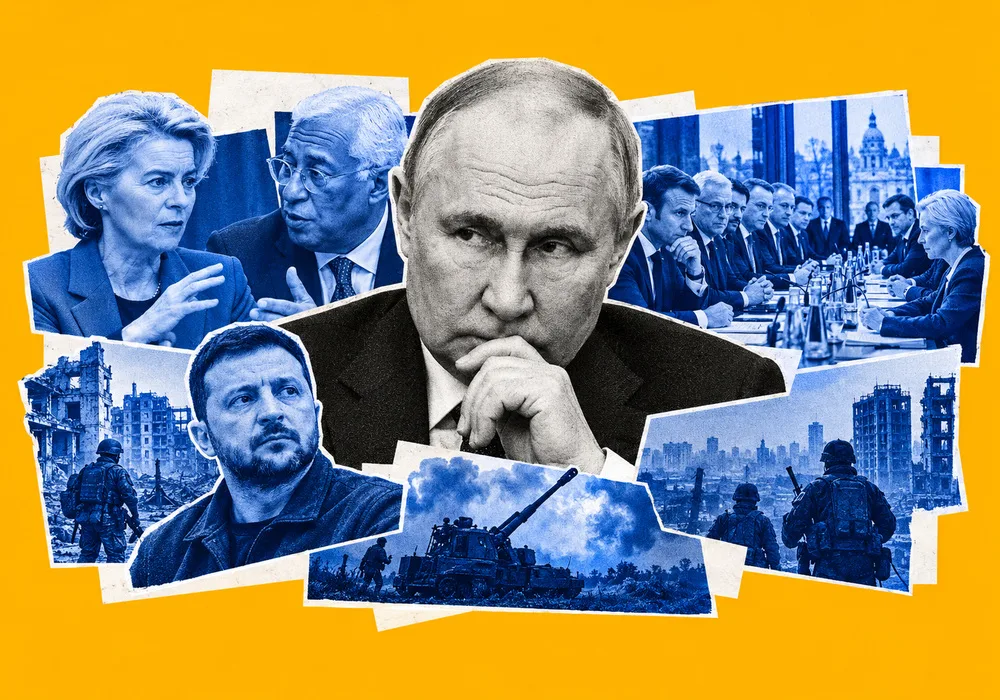
The prospect of a meeting between Donald Trump, Vladimir Putin and Xi Jinping has raised concerns about a settlement over Ukraine negotiated without Kyiv or European participation. The debate highlights Europe's need for a common diplomatic position, credible security guarantees and long-term commitments to Ukraine.
The prospect of a meeting between US President Donald Trump, Russian President Vladimir Putin and Chinese President Xi Jinping has raised concerns about Europe's role in shaping the future international order. The proposed format has drawn comparisons with the Yalta Conference of February 1945, when the leaders of the United States, the Soviet Union and the United Kingdom discussed the post-war settlement and the future of Europe. Although the circumstances are fundamentally different, the historical parallel carries particular significance for countries in Central and Eastern Europe, whose political futures were profoundly affected by decisions made by the major powers at the end of the Second World War.
The concern surrounding a potential modern-day Yalta is not simply that three powerful leaders might meet without European representatives. It is that negotiations over Ukraine could become part of a broader bargain in which the interests of major powers take precedence over the sovereignty and security of smaller states. For countries that experienced decades of Soviet domination, the possibility of decisions being made over their heads evokes a historical pattern in which strategic calculations by external powers determined the political choices available to nations across the continent.
A meeting between Trump, Putin and Xi would also serve purposes beyond the war in Ukraine. Washington is seeking a diplomatic breakthrough, Moscow wants to restore its international standing and reshape the European security architecture, while Beijing has an opportunity to demonstrate its influence over global affairs. Even without a binding agreement, a summit could reinforce the perception that the international system is increasingly organised around negotiations between major powers, leaving smaller countries to manage the consequences.
Ukraine Risks Being Excluded From Decisions About Its Future
The central concern for Kyiv is that Ukraine could become the subject of negotiations rather than an active participant in them. Russia's war has challenged not only Ukraine's territorial integrity but also its right to determine its political direction, defence arrangements and international partnerships. Any settlement that sought to resolve these questions without Ukrainian participation would risk undermining the legitimacy of the agreement and creating conditions for renewed confrontation.
The consequences would extend beyond territorial questions. Negotiations could address the size and capabilities of Ukraine's armed forces, its future relationship with NATO, the deployment of foreign military personnel, sanctions against Russia and the financing of reconstruction. These decisions would determine whether Ukraine could maintain its independence after a ceasefire or would remain vulnerable to renewed military pressure. An agreement reached without Kyiv's consent could also create a dangerous precedent by suggesting that military aggression allows a powerful state to negotiate over the political future of its neighbour.
For European governments, Ukraine's participation is therefore both a matter of principle and a practical requirement for a durable settlement. A ceasefire imposed without agreement on security guarantees, monitoring mechanisms and the consequences of violations could freeze the conflict without resolving its underlying causes. Russia could use the resulting pause to rebuild its military capabilities, while Ukraine would face the prospect of another confrontation under less favourable conditions. Diplomatic progress would consequently have to be measured by the sustainability of the settlement, rather than by the speed with which political leaders announce an agreement.
Russia's Objectives Extend Beyond Ukraine's Borders
For Putin, a high-profile summit with Trump and Xi would provide an opportunity to present Russia as an indispensable global power and advance Moscow's demands for changes to Europe's security arrangements. The Kremlin has repeatedly challenged the post-Cold War European order, including the principle that sovereign states can determine their own foreign policy and security partnerships. Russia's objectives therefore extend beyond the territories it occupies in Ukraine and encompass the wider strategic environment in which European countries make decisions about their defence.
This creates particular concern for countries on NATO's eastern flank, including Poland, Romania and the Baltic states. Their security depends on the principle that borders cannot legitimately be changed by force and that Russia cannot claim a privileged right to influence the defence policies of neighbouring states. Any political understanding that appeared to acknowledge Russian spheres of influence could weaken confidence in these principles, even if it contained no explicit provisions concerning NATO membership or military deployments.
Nevertheless, diplomatic recognition would not automatically translate into a lasting strategic victory for Moscow. Russia would still face the military and economic costs of the war, while any settlement that left Ukraine capable of resisting future aggression would limit the Kremlin's ability to impose its objectives. For Europe, the decisive question is whether negotiations would reduce the threat of renewed Russian aggression or simply provide Moscow with time to recover and prepare for another confrontation.
China's Role Complicates the Diplomatic Picture
China's potential involvement would place the proposed summit within a broader geopolitical context. Beijing maintains close relations with Moscow while continuing to pursue substantial economic ties with European countries and other Western economies. Participation in a high-level meeting would allow Chinese President Xi Jinping to present China as a central diplomatic actor capable of influencing the outcome of a conflict that has reshaped European security.
However, China's interests do not necessarily align completely with Russia's objectives. Beijing benefits from its strategic relationship with Moscow, but it must also consider the economic consequences of prolonged instability, the risk of further deterioration in relations with Western countries and the impact of sanctions on international trade. A diplomatic initiative could therefore offer China an opportunity to strengthen its global position without necessarily committing it to every element of the Kremlin's preferred settlement.
For Europe, the danger lies in the possibility that Ukraine's future could become linked to negotiations over wider relations between Washington, Moscow and Beijing. Trade, energy supplies, sanctions and the international balance of power could all influence the calculations of the three leaders. Yet a broader diplomatic framework would not automatically produce a more durable peace. Without Ukrainian participation and credible mechanisms to enforce an agreement, the involvement of additional major powers could increase the political significance of a summit without resolving the underlying security crisis.
Europe's Limited Influence Over the Negotiating Process
The proposed format highlights a strategic weakness that European governments have struggled to address: their dependence on the United States for much of the military support, intelligence and diplomatic leverage central to Ukraine's defence. Although European countries provide substantial assistance to Kyiv, their ability to influence negotiations may be limited if Washington and Moscow establish the main parameters of a settlement before consulting their European allies.
This would not automatically mean the end of the transatlantic partnership, but it could undermine confidence in the coordination that underpins NATO's deterrence. European governments would have to consider whether their security interests were adequately represented and whether they possessed the capabilities necessary to respond if a future agreement weakened the protection available to Ukraine or created new risks along NATO's eastern flank.
The European Union already has a common political position supporting Ukraine's sovereignty and territorial integrity. The challenge is to translate that position into a coherent diplomatic strategy backed by practical commitments. Differences among member states over military assistance, sanctions and the risks of confrontation with Russia could make it difficult to formulate a unified response. Without coordination, individual governments may struggle to influence negotiations conducted by more powerful states.
A stronger European approach would require an agreed negotiating mandate, close coordination with Ukraine and the United Kingdom, and a clear understanding of the security commitments Europe is prepared to provide. It would also require governments to identify which elements of a potential settlement would be unacceptable and what consequences would follow if Russia violated an agreement. Europe cannot guarantee that it will participate in every discussion, but a credible common position would make it more difficult for other powers to disregard European interests.
Security Guarantees Must Be Backed by Capabilities
The durability of any peace settlement would depend on the arrangements established after the fighting stops. A ceasefire could reduce immediate casualties and destruction, but it would not by itself eliminate the military confrontation between Russia and Ukraine. If Russia retained the capacity to rebuild its forces while Ukraine faced restrictions on its own defence capabilities, a settlement could become a temporary pause rather than a lasting peace.
European governments would therefore need to consider the practical requirements of credible security guarantees. These could include sustained supplies of weapons and ammunition, air defence systems, intelligence cooperation, military training and long-term financing for Ukraine's armed forces. Depending on the terms of an agreement, further discussions could address international monitoring arrangements or a European contribution to maintaining security after a ceasefire. Such measures would require political agreement, operational planning and clarity about how participating countries would respond to renewed Russian aggression.
The question of Ukraine's future relationship with NATO would remain central to these discussions. Any arrangement would need to ensure that Ukraine retained a credible ability to defend itself, rather than leaving the country with fewer military options and no reliable alternative protection. Political assurances alone would be insufficient if they were not supported by resources, clear commitments and a mechanism for responding to violations.
European defence spending and industrial capacity would consequently become part of the diplomatic equation. Governments would need to sustain ammunition production, strengthen air and missile defence, improve military mobility and ensure that their armed forces could respond to emerging threats. These investments would support Ukraine's position in negotiations while also strengthening Europe's ability to deter further aggression against its own territory.
The Economic Cost of an Unstable Peace
The outcome of negotiations would also affect Europe's economic outlook. A durable settlement could reduce uncertainty for businesses, create conditions for reconstruction and improve the prospects for restoring trade and investment in Ukraine. It could also reduce the risks facing Black Sea shipping, agricultural exports and infrastructure across the region. However, a ceasefire that failed to address the causes of the war could leave businesses reluctant to invest and governments facing years of elevated defence expenditure.
Sanctions would be another major issue. Russia would have an interest in securing relief from restrictions affecting its access to international markets, finance and technology. European governments would need to determine whether any changes to sanctions should depend on verifiable steps by Moscow, how compliance would be assessed and whether restrictions could be reinstated if an agreement were violated. A fragmented approach would weaken Europe's ability to use sanctions as leverage and could allow Russia to exploit differences between Western governments.
Ukraine's reconstruction would require substantial international financing, private investment and the restoration of infrastructure damaged by Russian attacks. The security environment established by a settlement would directly affect the willingness of investors to commit resources and the ability of European governments to plan long-term support. If the risk of renewed war remained high, reconstruction costs could rise while economic recovery remained uncertain.
These considerations demonstrate why a rapid agreement would not necessarily be the least expensive outcome for Europe. A settlement that reduced immediate political pressure but left Ukraine exposed to renewed aggression could generate significantly greater security and economic costs in the future. The objective must therefore be a peace that can be sustained, rather than an agreement whose weaknesses become apparent only after the fighting resumes.
Central and Eastern Europe Face the Consequences First
Countries closest to Russia and Ukraine would be particularly exposed to the consequences of any settlement that weakened deterrence. Poland and the Baltic states have invested heavily in strengthening their defences, while Romania has a direct interest in Black Sea security and the protection of regional infrastructure. For these governments, negotiations over Ukraine could influence military planning, defence spending and assessments of the risks facing NATO's eastern flank.
The Black Sea dimension is especially important. Russian attacks on Ukrainian ports and infrastructure have affected shipping and raised concerns about the security of commercial routes and agricultural exports. An agreement that failed to address maritime security could leave persistent risks for regional trade and transport. Romania and other neighbouring states would therefore have a direct interest in ensuring that any settlement included credible arrangements for preventing further escalation and protecting civilian infrastructure.
The Baltic states would also scrutinise any proposal that appeared to limit NATO's ability to reinforce its eastern members or support countries facing Russian pressure. Even without explicit restrictions on the alliance, a broader political understanding between major powers could affect perceptions of how far Western governments were prepared to go in defending their commitments.
These concerns are likely to reinforce calls for greater European defence readiness and closer regional cooperation. However, individual countries cannot address the strategic implications of a new European security arrangement in isolation. Their interests would need to be incorporated into a common framework that connects military preparedness, diplomacy and economic resilience.
The Limits of the Yalta Analogy
The comparison with Yalta is politically powerful, but the present international environment differs significantly from that of 1945. European institutions, NATO and the modern framework of international law provide political and legal constraints that did not exist in the same form at the end of the Second World War. A meeting between Trump, Putin and Xi would not automatically produce a binding agreement or determine the future of Ukraine and Europe.
Nevertheless, the historical analogy highlights the dangers of allowing military and economic power to become the principal basis for determining the political future of smaller states. When governments negotiate over countries that are absent from the discussion, the process risks undermining the principle of sovereign equality, regardless of whether the participants intend to reproduce historical arrangements.
For Europe, the appropriate response is not to assume that history will repeat itself, but to recognise the conditions that could make the comparison relevant. A divided European position, excessive dependence on American leadership and insufficient support for Ukraine would leave the continent less capable of influencing decisions affecting its security. Conversely, coordinated diplomacy, sustained military assistance and credible long-term commitments would strengthen Ukraine's position and give European governments greater leverage.
Europe Must Shape the Settlement, Not Simply React to It
The proposed summit presents European governments with a broader strategic choice. They can continue to rely primarily on diplomatic efforts to influence Washington's decisions, or they can develop a common position supported by the military and economic capabilities needed to defend their interests. The latter approach would require difficult political decisions, sustained investment and agreement on the risks Europe is prepared to assume.
The immediate priorities are to maintain Ukraine's ability to defend itself, preserve coordination with the United States, prevent negotiations from being conducted at Kyiv's expense and develop a credible framework for post-war security. Europe would also need to ensure that any discussion of sanctions relief, territorial arrangements or restrictions on military capabilities remained linked to Ukraine's participation and the implementation of enforceable commitments.
A durable settlement cannot be measured solely by whether the major powers reach an agreement. Its success would depend on whether Ukraine retains its sovereignty, whether Russia is deterred from renewed aggression and whether European countries can rely on a security framework that protects their interests. Without those conditions, a high-profile summit could create the appearance of diplomatic progress while leaving the foundations of European security increasingly uncertain.
Europe cannot control every decision made in Washington, Moscow or Beijing. It can, however, determine whether it enters the next phase of diplomacy with a coherent strategy, the capabilities to support it and the political resolve to defend its interests. The central question raised by the prospect of a new Yalta is therefore not simply who will sit at the negotiating table, but whether Europe is prepared to shape the order that emerges from it.
Sources: Euronews, The Standard