
EU Summit 2026: Brussels Unveils Emergency Energy Supplies and Import Restrictions on Chinese Hybrids

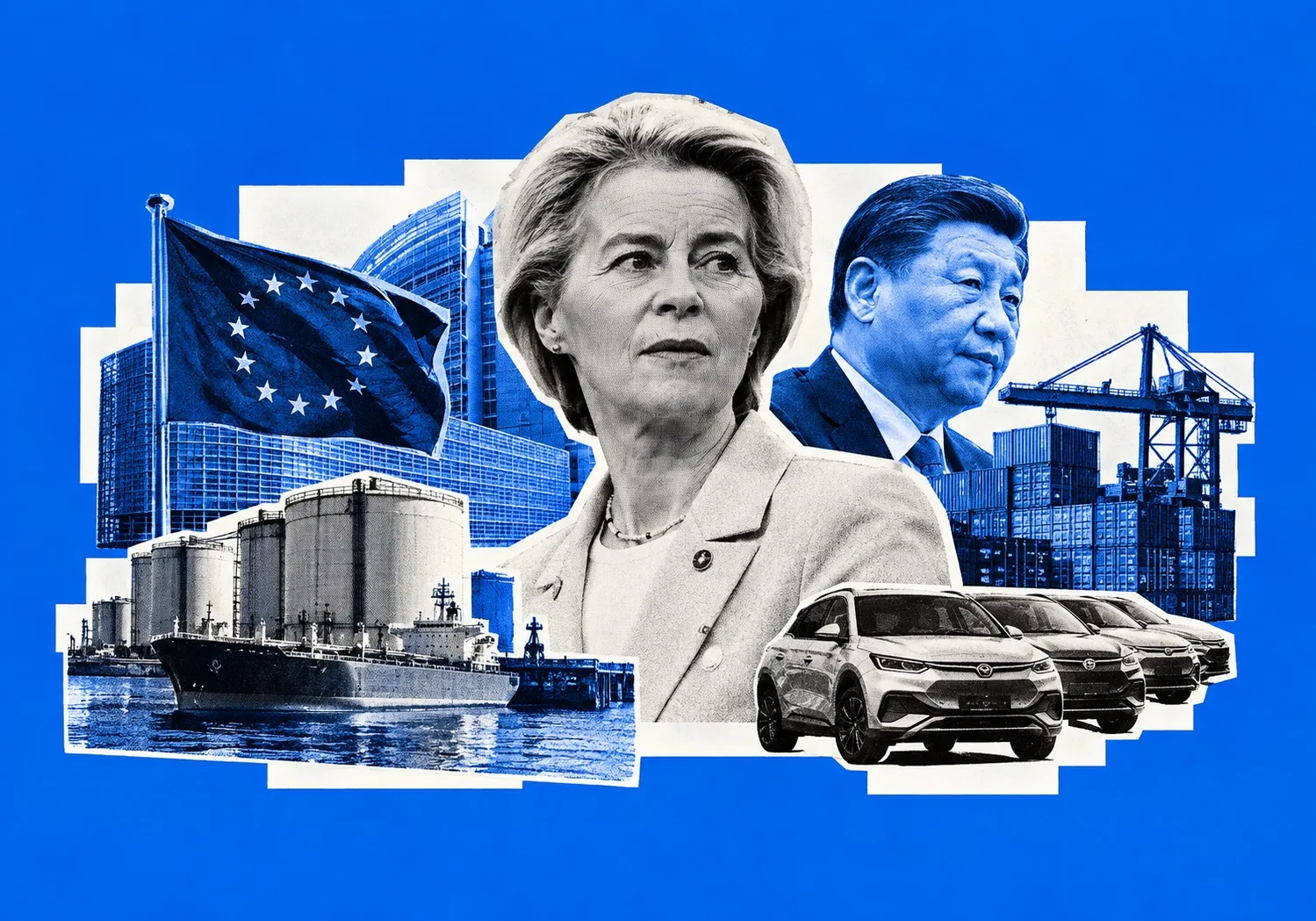
Following the summit on 15–16 October, EU leaders agreed to release 100 million barrels of emergency oil reserves and impose strict quotas on Chinese hybrid vehicles. To combat soaring energy prices and aggressive Chinese competition, Brussels is shifting toward a stronger interventionist economic strategy, even as a €70 billion financing gap for Ukraine remains unresolved.
The decisions will have consequences well beyond the current crisis. Brussels is moving towards a system in which access to the European market, industrial subsidies and energy purchasing are increasingly shaped by political and security considerations. For a union whose economic influence has long rested on open trade and competition rules, that is a considerable departure.
Europe cannot afford another prolonged energy crisis
The figures confronting European governments explain much of the urgency.
Since the conflict in the Middle East began, Europe's fossil fuel import costs have increased by €106 billion. Gas prices have climbed roughly 140% since late February, and diesel prices have doubled.
For manufacturers already competing with lower-cost producers abroad, the rise in energy prices is particularly damaging. Factories need predictable operating costs when deciding whether to maintain production, expand capacity or invest in new equipment. Another extended period of expensive energy could make those decisions considerably harder.
The EU's response combines immediate relief with changes to how it purchases and regulates energy.
The International Energy Agency will manage the release of 100 million barrels of oil and diesel over four months. Brussels will also extend temporary state aid arrangements, giving national governments more room to support companies facing exceptional costs.
The Commission has agreed to postpone the EU Methane Regulation by one year and begin a strategic dialogue on the future of European refineries.
Perhaps the more important change concerns purchasing. An existing EU task force responsible for aggregating energy demand will become an operator able to buy supplies on international markets.
The intention is to strengthen Europe's negotiating position by combining demand rather than leaving buyers to compete independently for supplies.
There is a precedent for this approach. The energy crisis that followed Russia's invasion of Ukraine in 2022 forced European governments to reconsider their dependence on external suppliers. The latest disruption has shown that reducing one vulnerability does not necessarily remove the others.
Europe's refining industry has also been shrinking since 2009. Releasing emergency stocks can ease immediate pressure, but it does little to address the underlying dependence on imported fuels and the capacity needed to process them.
The decision to delay methane regulation raises a different question. Brussels is prepared to relax part of its environmental timetable when energy security becomes sufficiently urgent. That may be defensible as a temporary response, but repeated exceptions could make the EU's longer-term climate commitments more difficult to deliver.
A limited deal with China buys time
The summit also produced an agreement that will reshape Chinese access to part of Europe's automotive market.
From 1 December, imports of Chinese hybrid and plug-in hybrid vehicles will be subject to an initial annual quota of 350,000 units. The allowance will rise by 6% each year under a four-year arrangement negotiated with Beijing.
China has agreed to lower duties on approximately €4 billion of European goods. It has also offered greater predictability over export controls on rare earths and permanent magnets, materials that matter to European manufacturers and defence industries.
The agreement gives both sides something they can present as progress. European carmakers gain a degree of protection from Chinese competition, while Beijing avoids an immediate escalation towards broader restrictions.
But the scale of the underlying trade problem remains enormous.
Europe's deficit with China reached approximately €360 billion in 2025 and has continued at around €1 billion a day this year. The imbalance extends across machinery, chemicals, solar panels, batteries and vehicles.
Restricting one category of automotive imports will not materially change those figures on its own.
The agreement is better understood as a political accommodation between two economies that remain closely connected despite growing mistrust.
Brussels has already imposed anti-subsidy duties of up to 35.3% on Chinese battery-electric vehicles in 2024. The new hybrid arrangement extends the use of targeted restrictions to another segment of the market.
For China, accepting a relatively narrow quota may be a reasonable price for avoiding more disruptive European action.
For European manufacturers, the benefits are less straightforward.
German carmakers and industrial exporters have substantial commercial interests in China. Measures designed to protect their position within Europe could invite restrictions on products they sell abroad.
Luxury goods, chemicals and industrial machinery are among the sectors potentially vulnerable to Chinese retaliation.
That creates an awkward division within European industry. Manufacturers facing direct competition from subsidised Chinese imports have reasons to welcome tougher safeguards. Companies whose business depends heavily on Chinese customers have reasons to fear them.
The next trade confrontation may be decided in Brussels
The hybrid vehicle deal is only one part of the Commission's plans.
Three further trade defence initiatives are being prepared for December. The proposed DiversifyEU framework would accelerate efforts to reduce reliance on vulnerable foreign supply chains. A Solidarity Mechanism would strengthen collective responses to economic coercion.
The third proposal, described informally as a trade 'kill switch', is intended to allow rapid restrictions on market access where subsidised industrial overcapacity threatens European producers.
Its appeal is obvious to governments concerned about losing domestic manufacturing capacity. Existing trade procedures can be slow, particularly when companies are already struggling against competitors benefiting from extensive state support.
A faster instrument could give Brussels greater leverage before an industrial dispute causes lasting damage.
The difficult part will be deciding how it works.
The Commission has yet to establish the precise legal conditions and operational procedures for the proposed mechanism. Any attempt to restrict imports rapidly will need to contend with EU competition rules, international trade obligations and differences between member states.
The EU already has a Foreign Subsidies Regulation and an Anti-Coercion Instrument. The new proposals would add to that framework rather than create European economic defences from nothing.
Their importance lies in the possibility of allowing the Commission to act more quickly and across a wider range of commercial threats.
Such authority would also change the relationship between Brussels and national capitals.
Trade restrictions rarely affect every member state equally. A measure welcomed by one country's manufacturers may increase costs for another country's importers or provoke retaliation against its exporters.
The Commission will have to decide whether protecting particular industries justifies those wider consequences.
Beijing, meanwhile, has little reason to surrender its advantages in batteries, vehicles or critical minerals. Its concessions on hybrid imports and export controls may help preserve a working relationship with Brussels without requiring major changes to China's industrial model.
The next confrontation may therefore concern not the size of a particular quota, but the circumstances under which Europe is willing to close parts of its market.
Domestic pressures complicate Europe's wider ambitions
The argument over industrial protection comes at a difficult moment for European public finances.
Governments are being asked to cushion consumers from higher energy bills, assist struggling businesses and maintain support for Ukraine. Each commitment competes for money and political attention.
The October summit made that tension particularly visible.
Nearly €16 billion has already been disbursed under the defence component of the Ukraine Support Loan. A further €17 billion is available for budgetary assistance, subject to structural reforms.
But the unresolved long-term funding requirement of approximately €70 billion remains a serious problem.
The contrast with the energy agreement is striking. European leaders were able to approve emergency market interventions while leaving a substantial strategic financing commitment unsettled.
The disagreement does not mean support for Ukraine has ended. It does, however, expose the difficulty of sustaining expensive international commitments when governments face immediate demands from their own economies.
A similar preference for collective action is evident in migration policy.
Irregular border crossings have fallen by more than 56% over two years and by 34% in 2026. Asylum applications are down 16%, while return rates have exceeded 30% under the new Return Regulation.
Brussels nevertheless plans to strengthen Frontex and introduce a European Emergency Response Framework before the end of the year.
Across these policy areas, European institutions are being asked to take on greater responsibility for problems that individual governments struggle to manage alone.
Economic policy presents a particularly sensitive test because the single market depends on rules that limit national favouritism and preserve competition.
Extending state aid flexibility may help businesses survive an energy shock. It may also give an advantage to companies based in countries whose governments can afford more generous support.
Restricting subsidised Chinese imports may protect European production. It could equally increase costs for businesses that rely on imported components or expose exporters to retaliation.
These are not necessarily arguments against intervention. They are the trade-offs that become harder to avoid as intervention expands.
The December proposals will bring those choices into sharper focus. European governments must decide how much freedom the Commission should have to act against external economic threats, how quickly it should be allowed to intervene, and what safeguards should apply.
For Germany's export-dependent manufacturers, the outcome could determine whether Europe's new trade policy provides more protection than commercial risk. For countries facing severe energy costs, the immediate concern is whether collective action can deliver relief before industrial damage becomes permanent.
And for Brussels, the unresolved question is how to build a more defensive economic system without undermining the open market on which so much of Europe's prosperity still depends.
Sources: The Brussels Times, Ilsole24ore, Euronews