
G7 Agrees Emergency 100 Million Barrel Oil Release as US Threatens Diesel Export Ban

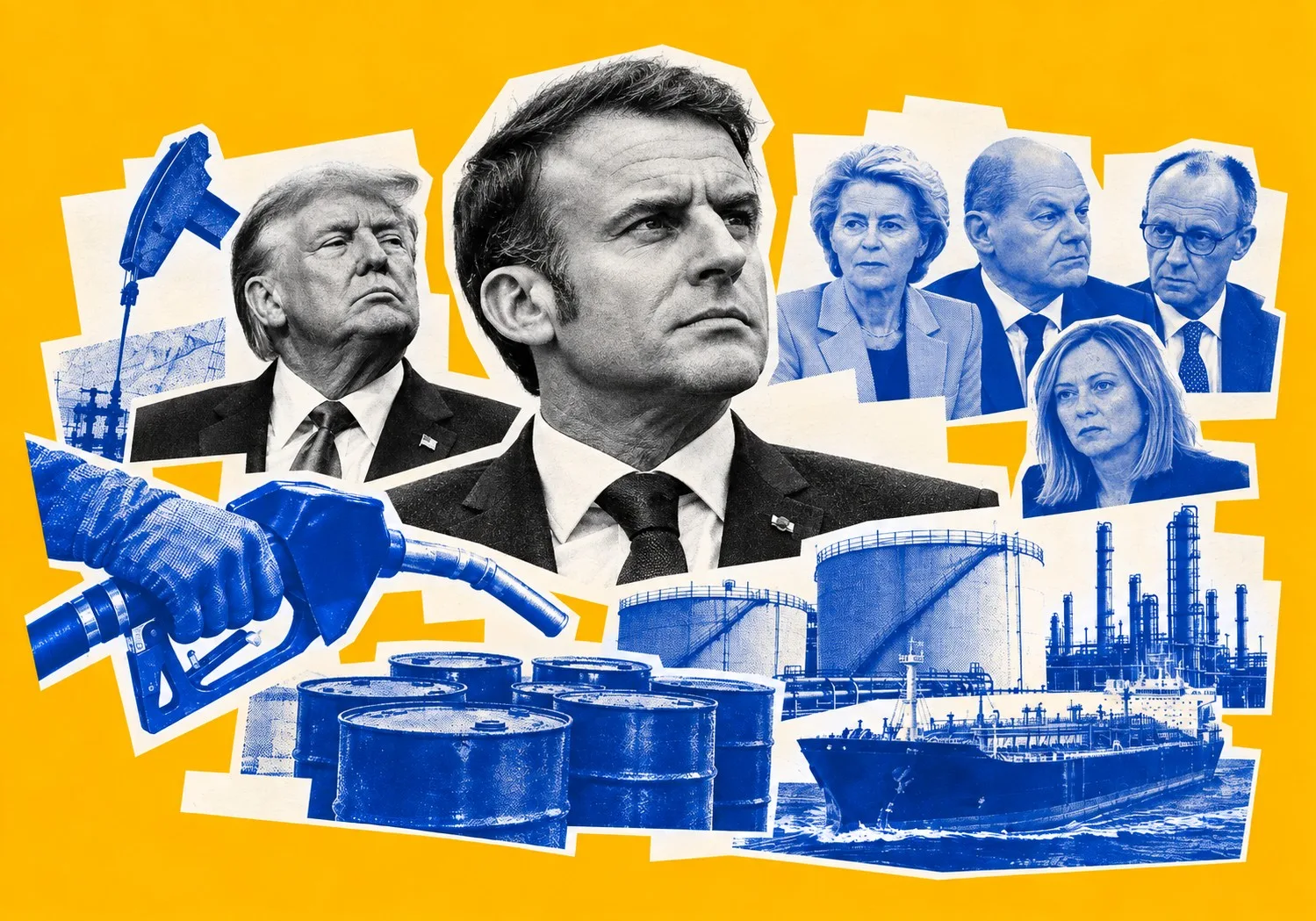
Group of Seven leaders have agreed to an immediate, coordinated release of 100 million barrels of strategic oil and diesel reserves following a period of intense, highly transactional pressure from Washington. The emergency intervention, coordinated globally by the International Energy Agency, was hastily convened by French President Emmanuel Macron after US President Donald Trump threatened a unilateral ban on American diesel exports to Europe.
Addressing the virtual summit on Friday, Macron said G7 nations wanted to “work in a coordinated manner to help bring down the prices of petroleum products, particularly diesel”.

A diplomatic way of describing a gun to the head.
Designed to tame record fuel prices driven by wartime refinery destruction in the Middle East and Ukraine, the agreement underscores a sharpening, somewhat uncomfortable rift in transatlantic energy security. The emergency conference was nominally set up to steady international commodity markets and head off a total trade rupture within the Western alliance, but behind the official communique issued by the French presidency—confirming that G7 members had agreed to draw down strategic crude and middle distillate stockpiles over a four-month window—lay an explicit ultimatum from the White House.
Facing record pump prices, mounting inflation, and growing public anger ahead of domestic elections, Washington indicated it would simply halt all American diesel shipments to Europe unless Allied capitals immediately unlocked their own well-stocked strategic reserves to flood the market.
The operation, overseen by the IEA, is deliberately structured for maximum front-end impact, mandating that a highly significant portion of refined diesel stocks be allocated to distribution channels within the first twenty days. European governments effectively had to choose between utilizing their emergency stockpiles or managing a catastrophic drop in US refined exports right as the winter heating and logistics season begins. Not much of a choice.
This rapid resolution of the diplomatic deadlock illustrates the current asymmetry in allied economic relations across the Atlantic basin, shifting the focus from abstract market volatility to hard, unavoidable physical supply metrics.
To understand the panic inside European capitals, you have to look at the actual mechanics of middle distillates and the specific vulnerabilities of the European energy grid since the imposition of Russian sanctions. Crude oil is relatively simple to handle; you can store it in vast underground salt caverns for years and move it around the globe on supertankers with relative flexibility. Diesel is an entirely different beast. It serves as the literal circulatory system for baseline industrial logistics, and Europe runs on it far more heavily than the US due to decades of tax incentives favoring diesel passenger vehicles. It powers commercial truck fleets, heavy agricultural machinery, maritime freight, and municipal transit networks. When middle distillate supply constrains, the resulting price increases act as an immediate regressive tax across multiple levels of commercial activity, directly impacting retail transport margins and pushing baseline consumer prices upward. High retail costs then drag down consumer confidence indices across major economies, leaving logistics firms running on absolute fumes and haulage companies facing bankruptcy.
Basic economics.
The current supply constraints are not connected to a lack of raw crude oil in the ground, but rather a severe, structural lack of operational industrial machinery capable of turning that crude into usable fuel. Sustained, targeted attacks on refineries across Ukraine and key processing complexes within the Iran conflict zone have systematically reduced global refining throughput. Throwing unrefined crude onto the market does not fix a shattered distillation column. Basic physics.
This specific processing bottleneck pushed retail prices to staggering, historic highs across major markets this week, forcing politicians to intervene before the logistics sector ground to a halt.
US diesel exceeded $6.37 per gallon. British drivers pulled up to pumps showing over 200 pence per litre for the first time in modern history.
In Washington, the political fallout from these metrics was immediate and highly measurable, turning an abstract supply chain issue into a blazing domestic crisis. A recent AP-NORC poll indicated that a clear majority of surveyed American adults attributed rising fuel bills directly to the administration’s current policy settings, severely dragging down economic approval metrics and forcing the White House into a corner. Strategic petroleum reserves, originally established in the twentieth century to buffer industrial nations against physical supply embargoes like the 1973 Arab oil shock, were abruptly repurposed as short-term policy mechanisms to stabilize domestic market prices. Domestic political factors in the United States completely dictated the aggressive schedule of Friday's agreement. The implementation of this deal demonstrates a notable shift in how policy consensus is formed within Western institutions, contrasting sharply with the polite diplomatic exchanges of the previous decade.
During initial discussions, European Union envoys desperately sought to establish a formal framework linking their participation in the reserve release to explicit, legally binding commitments from Washington regarding future export policies. European officials quite rightly noted that utilizing their national stockpiles without formal commitments would leave regional markets dangerously vulnerable to future American policy shifts. They wanted solid guarantees.
Washington simply ignored the request.
The immediate prospect of a US export embargo on refined products—which would have instantly crippled European haulage networks—led the French presidency to scrap its demands and push through a rapid compromise framework. Following the conclusion of the virtual meeting, President Trump issued a statement on Truth Social confirming that European nations had agreed to release their portioned diesel reserves, characterizing the development as a direct, unambiguous result of US trade negotiations.
Fair play to him, the tactic worked. Strategic policy priorities in Europe shifted rapidly following discussions regarding prospective bilateral trade measures, leaving diplomats feeling absolutely gutted but entirely outmaneuvered. These developments reflect deep structural changes in how economic statecraft and trade negotiations are conducted among allied nations today, replacing quiet diplomacy with blunt economic leverage. The reliance on established rules-based frameworks that characterized post-Cold War energy diplomacy is increasingly subject to crisis-driven, highly transactional management policies where leverage dictates the outcome. In this context, strategic reserves are evaluated not only as neutral state safeguards against physical supply interruptions, but also as operational instruments in broader political and economic survival strategies.
While the White House obtained immediate market supply increases intended to lower consumer costs, European policy frameworks encountered significant diplomatic pressure that exposed their underlying vulnerabilities. The decision to adjust reserve policies highlights the sheer operational reach of US economic influence when applied directly to international trade agreements.
Political priorities have essentially overridden the long-term strategic consensus on reserve management, prioritizing the next election cycle over the next decade of energy security. While global fuel markets may experience short-term price adjustments as the initial 20-day diesel release enters distribution networks in Europe and North America, the underlying structural parameters of global refining capacity remain completely constrained.
The International Energy Agency has previously coordinated major strategic interventions, such as the massive 400-million-barrel emergency release during earlier phases of Middle Eastern operational disruptions.
However, successive drawdowns of national reserves involve serious cumulative inventory considerations that nobody currently in office seems particularly keen to discuss. Releasing an additional 100 million barrels over the next four months reduces global strategic safety margins at the exact moment when military actions continue to affect critical refining facilities in active conflict zones. The emergency release provides temporary, politically convenient supply adjustments for governing authorities, but it does absolutely nothing to repair damaged refining columns in Eastern Europe or restore operational capacity at affected processing complexes in the Persian Gulf. National stockpiles are being utilized to address immediate market demands, while the structural deficit in global refining infrastructure remains an ongoing, untreated factor.
If operational disruptions continue to limit refining output beyond the four-month timeframe of this release, G7 member states will confront subsequent energy market developments with significantly reduced reserve volumes and almost no policy alternatives left on the table. The current intervention has successfully introduced additional fuel volumes into active trade channels to cool the political temperature, though it relies entirely on drawing down the very emergency reserves designed to protect the West from a prolonged global supply collapse.
Sources: Euronews, The Guardian, CNN