
EU Disburses €1.71 Billion in Ukraine Military Aid, With €684 Million Earmarked for European Defence Industry

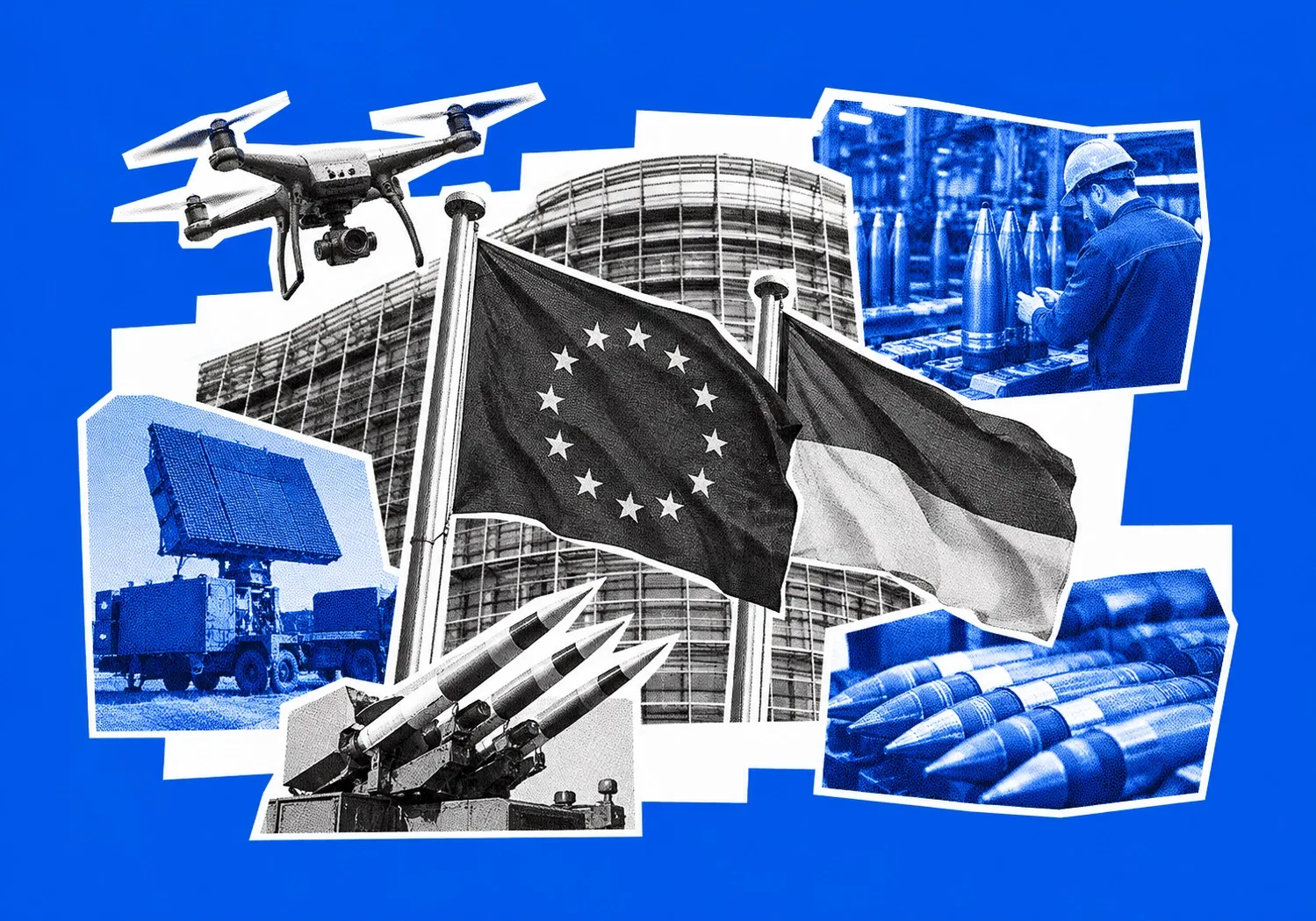
Under the €90 billion Ukraine Support Loan, the European Commission is funding drones, air defence systems and ammunition - while channelling 40% of the tranche directly into contracts with EU-based manufacturers.
Disbursed on November 16, the transfer is the eighth payment under the defence component of the financing programme, which is designed to sustain Ukraine’s military and budgetary needs through 2027. It also illustrates how Brussels is increasingly linking support for Kyiv - including urgent needs like early-warning radar systems - to the expansion of European defence production.
For European governments, the significance extends beyond the amount transferred. The arrangement creates demand for European military equipment while helping Ukraine purchase weapons without relying exclusively on donations from national military stockpiles.
How the €1.71 Billion Will Be Spent
According to Ukraine’s Ministry of Defence, the latest payment targets several categories of equipment urgently needed by the Ukrainian armed forces.
These include unmanned aerial systems, ammunition, early-warning radars and missiles used by air defence systems. The priorities reflect the continuing importance of drone warfare and the need to protect Ukrainian cities, military positions and critical infrastructure against Russian aerial attacks.
The procurement will involve both Ukrainian and European defence manufacturers.
Approximately €684 million is expected to go towards contracts with EU-based producers. The remainder will support other eligible procurement arrangements, including purchases involving Ukraine’s defence industry.
The allocation creates two interconnected benefits. Ukraine receives financing for military equipment, while European manufacturers gain access to additional orders supported by a common EU financial instrument.
However, the transfer of financing does not automatically translate into immediate battlefield deliveries.
Manufacturing schedules, component availability, procurement procedures and the capacity of individual suppliers will determine how quickly the funded equipment reaches Ukrainian forces.
This distinction is particularly important for sophisticated air defence systems, whose production can depend on specialised components and industrial processes that cannot be expanded overnight.
Why European Defence Manufacturers Stand to Benefit
The latest payment reflects a broader change in the relationship between European military assistance and industrial policy.
During the earlier stages of Russia’s full-scale invasion, European countries supplied Ukraine with significant quantities of equipment from existing national inventories.
That approach provided urgently needed weapons but also exposed limitations in Europe's ability to replenish its own military stocks while sustaining long-term assistance.
The Ukraine Support Loan offers a different financing channel.
Instead of depending entirely on individual governments to purchase or donate equipment, the programme makes EU-backed financing available for procurement based on Ukraine’s identified military requirements.
The programme's procurement rules generally favour defence products originating from Ukraine, the EU and other eligible European or partner countries, with exceptions permitted under specified conditions.
This approach is intended to strengthen both Ukraine’s military capabilities and the industrial base supplying them.
For European manufacturers, larger and more predictable procurement programmes can provide greater confidence when considering investments in additional machinery, production facilities, workforce training and supply chains.
Nevertheless, a single payment does not guarantee new factories or expanded output. Companies must assess whether future orders will be sufficient to justify long-term investments.
The €684 million allocation is therefore significant as a source of demand, but its industrial impact will depend on how contracts are distributed, how quickly orders are placed and whether subsequent procurement maintains that demand.
The €90 Billion Loan Changes How Europe Finances Ukraine
The November payment forms part of the Ukraine Support Loan, established to provide up to €90 billion in assistance during 2026 and 2027.

Unlike conventional bilateral assistance, the programme is financed through borrowing by the European Union on capital markets, backed by the EU budget.
This allows the Commission to mobilise substantial resources collectively rather than requiring every participating member state to finance individual military assistance packages through its national budget.
The repayment structure is another defining feature.
Under the programme's limited-recourse arrangements, the principal is to be repaid from future Russian reparations or other compensation payments. Ukraine is not required to repay the principal from its ordinary state budget if those resources do not materialise.
The EU nevertheless assumes financial responsibilities associated with raising the funds, including borrowing costs and the budgetary guarantees supporting the mechanism.
The arrangement therefore reduces Ukraine’s direct repayment exposure without eliminating financial risks for the European Union.
It also does not mean that frozen Russian sovereign assets have already been transferred to Ukraine or automatically converted into cash for the programme.
The distinction matters because the eventual availability of reparations remains uncertain, even as the EU has established a financing mechanism intended to operate before such payments are received.
A European Programme Without Full EU Participation
The Ukraine Support Loan was established through enhanced cooperation, a legal mechanism allowing a group of EU member states to advance a common initiative without requiring every member to participate.
Czechia, Hungary and Slovakia do not participate in the financing arrangement and do not bear financial obligations under its guarantees.
Their absence demonstrates the political limits of collective European defence financing.
Although 24 member states participate, the mechanism does not represent a fully unified EU defence budget or a common European military procurement authority.
National governments continue to control significant parts of their defence expenditure, military procurement and bilateral assistance to Ukraine.
The loan nevertheless provides an example of how participating countries can coordinate substantial financing even when unanimity is politically difficult.
For Brussels, this creates a potential model for future cooperation in areas where common security requirements exist but national political positions remain divided.
Whether that model can be expanded will depend on member-state support, EU budget constraints and the willingness of governments to accept additional shared financial commitments.
Why Drones and Air Defence Remain Central
The equipment categories covered by the November payment reveal the practical challenges confronting European defence procurement.
Drones have become central to battlefield reconnaissance, targeting and strikes. Their relatively short operational lifespans and rapid technological evolution create continuing demand for new systems.
That demand differs from traditional military procurement, where major equipment platforms may remain in service for decades.
Drone production requires manufacturers to respond quickly to changes in electronic warfare, communications technology, navigation systems and battlefield tactics.
For European suppliers, the challenge is not simply increasing production volume. It is maintaining technological relevance while delivering equipment quickly enough to meet Ukrainian operational requirements.
Air defence presents a different industrial problem.
Interceptor missiles and radar systems often involve more complex production chains, specialised electronics and demanding testing requirements.
Expanding their output can require sustained investment and coordination among multiple suppliers.
These differences explain why financing alone cannot resolve every military supply bottleneck.
A procurement programme may provide the resources needed to place orders, but industrial capacity determines the speed and quantity of deliveries.
The Ukraine Support Loan includes provisions allowing exceptions to certain procurement-origin requirements when eligible suppliers cannot meet urgent operational needs within the necessary timeframe.
Such flexibility is particularly important when immediate military requirements conflict with the longer-term objective of strengthening European and Ukrainian production.
Ukraine Facility and Defence Financing Serve Different Purposes
The defence component of the Ukraine Support Loan should also be distinguished from the Ukraine Facility.
The Ukraine Facility supports Ukraine’s macroeconomic stability, reconstruction, modernisation and reform agenda, including measures connected to its European integration.
Disbursements through that framework are linked to agreed conditions and reform milestones.
The defence component, by contrast, is designed primarily to finance military capabilities and strengthen defence-industrial production.
Both instruments contribute to Ukraine’s ability to withstand the war, but they operate through different spending priorities and implementation requirements.
The €90 billion Ukraine Support Loan also includes a budget-support component, part of which can be channelled through the Ukraine Facility. This means the two frameworks can overlap administratively without making their objectives identical.
Understanding this distinction is important when assessing EU financial commitments.
Money allocated to defence procurement cannot simply be treated as equivalent to general budget support, just as reform-linked financing should not automatically be counted as new military assistance.
The Next Test Is Industrial Delivery
Ukraine’s Ministry of Defence says the latest transfer brings defence financing received under the Ukraine Support Loan to €14.6 billion.
The ministry also reports that €10.2 billion remains available for defence-industrial development under the programme through the end of 2026.
These figures illustrate the scale of financing still intended to move through the procurement system.
Yet the effectiveness of the programme will ultimately be measured by more than disbursement totals.
For Ukraine, the immediate priority is whether the financing results in sufficient quantities of drones, ammunition and air defence equipment reaching military units when needed.
For European manufacturers, the question is whether procurement contracts can support sustained production increases rather than temporary spikes in demand.
And for EU policymakers, the broader challenge is whether collective borrowing and coordinated procurement can provide reliable military assistance while remaining politically and financially sustainable.
The November payment demonstrates that the financing mechanism is operational. Its longer-term strategic value will depend on how effectively European and Ukrainian defence industries turn that financing into equipment, deliveries, and additional manufacturing capacity.