
EU Mobilises €4.9 Billion for Ukraine’s Military Support

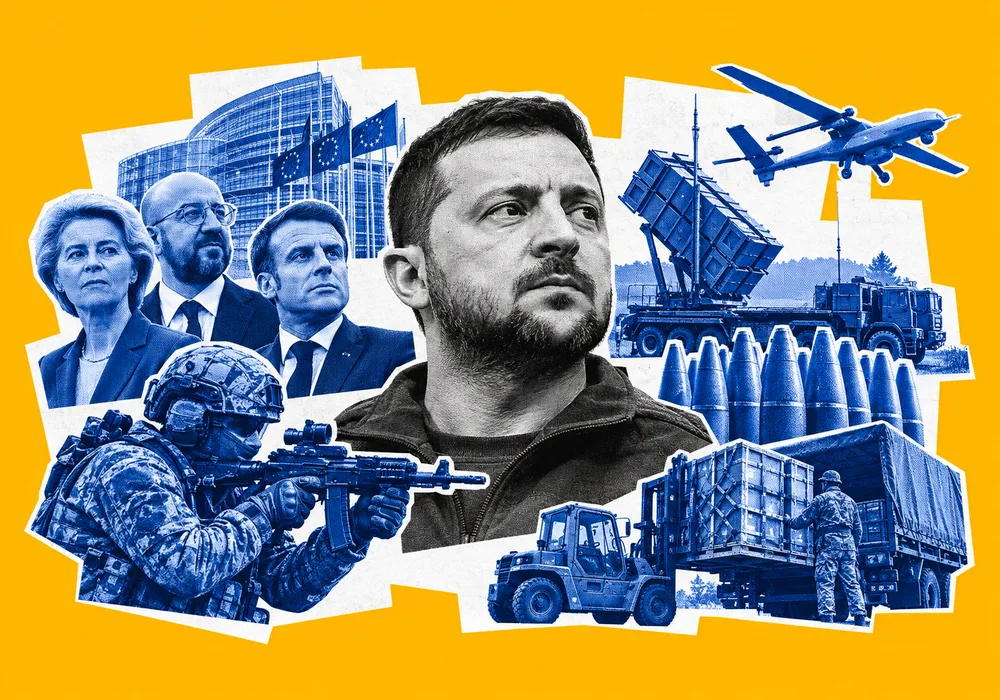
The Council of the European Union has adopted decisions enabling €4.9 billion in support for Ukraine through the European Peace Facility. The package covers partial reimbursement to member states for military assistance already delivered and additional funding for the EU’s military training mission. The move advances a broader €6.6 billion political agreement and brings total EU support to Ukraine through the facility to €10.8 billion.
The Council of the European Union adopted eight decisions on 26 October to mobilise €4.9 billion for Ukraine under the European Peace Facility (EPF), advancing the implementation of an agreement reached by EU member states in September. The package is intended to help cover the cost of military assistance already provided by European governments and strengthen the EU’s training support for the Ukrainian Armed Forces. The decisions represent a further step in the bloc’s efforts to sustain Ukraine’s defence capabilities as Russia’s full-scale war continues.
Of the newly mobilised funding, €4.7 billion will be used to partially reimburse member states for military aid already delivered to Ukraine, while €230 million will provide additional financing for the EU Military Assistance Mission in Support of Ukraine (EUMAM Ukraine). The reimbursement mechanism is designed to help participating governments recover part of the costs associated with supplying military equipment and other assistance. By easing some of the financial burden on national budgets, it can help preserve governments’ capacity to maintain military support for Kyiv.
The decisions form part of a wider political agreement reached on 25 September, under which EU member states agreed to mobilise €6.6 billion through the European Peace Facility. That broader commitment also includes €1 billion for new military assistance to Ukraine and further reinforcement of the EU training mission in 2027. The latest decisions put a substantial part of the agreed package into effect, although the reimbursement of previous deliveries should be distinguished from the provision of newly purchased equipment: the two mechanisms have different implications for the timing and availability of military supplies.
Reimbursement and Training as Separate Pillars
The European Peace Facility operates outside the EU’s regular budget and enables member states to finance measures with military and defence implications in support of international security. In Ukraine’s case, it has served as a mechanism for sharing the costs of assistance provided by individual governments, including equipment and supplies needed by Ukrainian forces. The facility can support both lethal and non-lethal military assistance, making it a central component of the EU’s collective response to Russia’s invasion.
The additional €230 million allocated to EUMAM Ukraine addresses a different requirement: the development of personnel and operational capacity. Established to help train Ukrainian troops, the mission complements bilateral programmes run by individual European countries and other international partners. Its continued financing is relevant not only to the immediate replacement of personnel and the preparation of new units, but also to Ukraine’s longer-term ability to sustain its armed forces under wartime conditions.
The distinction between equipment and training is strategically important. Military deliveries provide capabilities that can be deployed, while training helps personnel use those capabilities effectively and integrate them into broader operational structures. Sustained support in both areas is therefore necessary if European assistance is to contribute to Ukraine’s ability to defend its territory over an extended period.
Total Support Reaches €10.8 Billion
Following the latest decisions, the total amount mobilised for Ukraine through the European Peace Facility since the start of the programme reaches €10.8 billion. This comprises €9.9 billion allocated for the reimbursement of military assistance supplied by member states and €950 million for military training through EUMAM Ukraine. These figures refer specifically to support channelled through the facility and should not be confused with the much broader volume of European assistance to Ukraine.
The EU’s overall contribution to Ukraine’s defence effort extends beyond the EPF. Member states continue to provide military assistance through national programmes, while EU institutions support Ukraine through financial assistance, sanctions against Russia, cooperation with the Ukrainian defence industry and other forms of political and economic support. The Council’s wider accounting places total EU and member-state support for the Ukrainian armed forces at €97.3 billion, including assistance delivered through several different instruments.
The EPF decisions also follow previous efforts to direct extraordinary revenues generated by immobilised Russian assets towards Ukraine’s military needs. The EU has channelled €3.5 billion in such revenues through the facility to support priority requirements, including ammunition, air defence and drones. More than €1.5 billion in military equipment was procured directly from Ukraine’s defence industry through this funding stream, providing support to domestic production alongside the supply of equipment from European partners.
Political Agreement Must Translate into Deliveries
The mobilisation of funds demonstrates continued agreement among EU governments on the need to sustain Ukraine’s defence, but the practical effect depends on how quickly the financing translates into usable capabilities. Reimbursement decisions compensate governments for assistance already delivered; they do not, by themselves, guarantee that an equivalent quantity of new equipment will immediately reach Ukraine. Further deliveries depend on national decisions, procurement arrangements, production capacity and the availability of the systems required by Ukrainian forces.
The wider €6.6 billion agreement is therefore significant beyond the amount formally mobilised on 26 October. Its provisions for new military assistance and the continued training of Ukrainian troops create additional channels for support, while the reimbursement mechanism helps maintain incentives for European governments to contribute. The pace of implementation will determine how much the agreement strengthens Ukraine’s near-term military position and how effectively it supports planning for the following year.
For European governments, the decisions also reflect a continuing challenge: sustaining military assistance while managing domestic budgetary pressures and competing defence requirements. The reimbursement system distributes part of the cost across the collective framework, but it cannot replace national commitments or resolve shortages in European defence production. The EU’s capacity to support Ukraine will continue to depend on the readiness of member states to release equipment, replenish their own stocks and expand industrial output.
The Council’s latest decisions reaffirm the EU’s stated commitment to Ukraine’s independence, sovereignty and territorial integrity within its internationally recognised borders. More immediately, they advance the delivery of previously agreed financial measures and maintain support for the training of Ukrainian personnel. Their strategic significance will ultimately be measured by the speed and consistency with which European funding helps sustain Ukraine’s ability to resist Russia’s war and defend its territory.
Sources: Council of the EU, European External Action Service