
Estonia Redeploys Troops to Russian Border in Major NATO Deterrence Shift

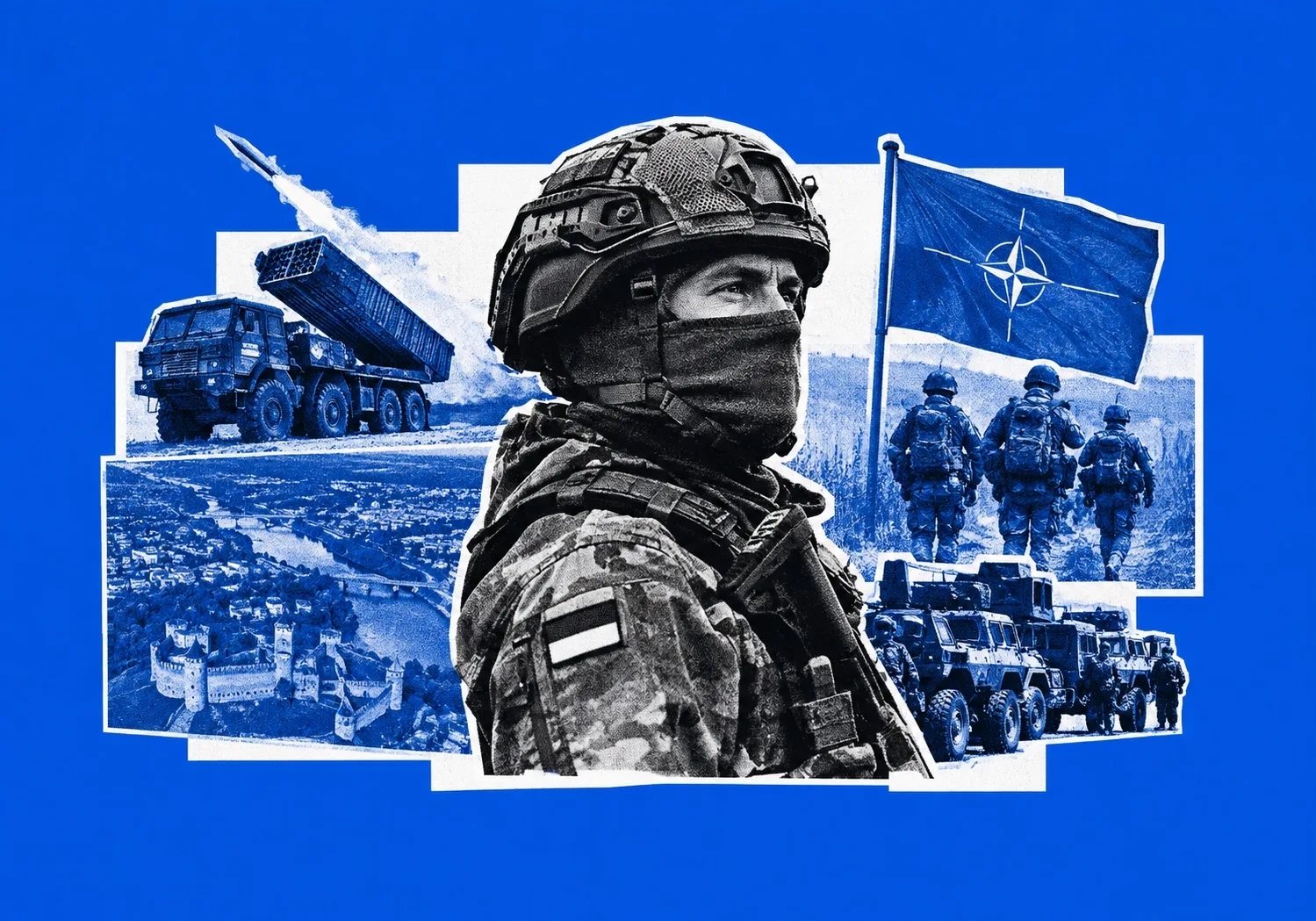
Estonia is permanently moving its main fighting force to the Russian border and constructing a new military base in Narva, marking a radical pivot toward an "active defence" doctrine. By redeploying the First Brigade to Jõhvi - just 50km from Russia - and procuring 300km-range HIMARS, Tallinn and its NATO allies are shifting from a strategy of delayed liberation to contesting every inch of territory from day one.
This transformation is about more than where troops sleep. Estonia is rebuilding its deterrence model around the simple assumption that Russia must be stopped at the frontier rather than defeated after it has already crossed it.
The geography of deterrence
For Estonia, the problem exposed by Russia’s war against Ukraine is brutally simple: territory that is surrendered may be extraordinarily difficult to recover.
The country’s previous planning, developed after Russia seized Crimea in 2014, was shaped by its limited size and small population. Estonia has around 45,000 sq km of territory and 1.3m people. A tactical withdrawal into difficult forest and bog terrain offered a way for a relatively small force to impose costs on an attacker while waiting for allied forces to build sufficient combat power.
The experience of Ukraine has altered that calculation.
Estonian planners now see a Russian military that has demonstrated a willingness to absorb heavy personnel losses and to destroy territory rather than abandon it. In such circumstances, a strategy based on retreat risks turning the opening phase of a conflict into a race that Estonia cannot afford to lose.
The National Security Concept adopted in May formalised the alternative. “Active defence” means making the initial Russian advance itself the object of deterrence.
That is why Jõhvi and Narva matter.
Permanent positioning close to the frontier reduces the time between detecting a threat and responding to it. It also removes some of the ambiguity that could otherwise surround a limited Russian operation. Moscow would have to assume that an incursion could meet organised resistance immediately rather than encounter lightly defended territory followed by a delayed NATO counter-offensive.
For a country whose entire strategic problem is the danger of a rapid fait accompli, that distinction is critical.
Rockets change the equation
The troop movements are only one part of the transformation. Estonia is spending €2.4bn on defence this year, equivalent to 5.4% of GDP, a 42% increase.
Much of the significance lies in what that money is buying.
Estonia is acquiring nine US-made HIMARS launchers capable of firing M57 ATACMS missiles with a range of up to 300km, alongside nine South Korean K239 Chunmoo multiple rocket launchers. From Estonia’s eastern frontier, that gives the country the ability to threaten targets deep inside Russian territory rather than limiting its defensive firepower to the immediate battlefield.
St Petersburg lies roughly 260km from the border.
The military logic is straightforward. A forward defence strategy needs more than infantry close to the frontier. It needs the ability to disrupt the forces, logistics, and command infrastructure supporting an attack before they can generate momentum.
This creates a different deterrence calculation for Russia. An assault on Estonia would not simply encounter a small national force waiting for help. It could immediately expose Russian military infrastructure to precision strikes.
The regional dimension is equally important. Latvia and Lithuania are pursuing parallel measures through the Baltic Defence Line, including anti-tank ditches, engineered obstacles, sensors and pre-planned minefields. Their HIMARS procurement is being synchronised with the wider regional effort.
The objective is not three separate national defence plans operating next to each other. It is an increasingly integrated Baltic battlespace.
The air defence problem
The forward posture also exposes the central weakness in Estonia’s new strategy.
Putting combat units, rocket artillery and military infrastructure near the border makes them more useful operationally, but also more vulnerable to the opening strike of a war.
Estonia received its first IRIS-T SLM medium-range air defence unit in June 2026. Three units are expected in total through 2027. But a genuinely layered defence against ballistic missile threats will require a longer-range system, and Estonia does not expect to select and receive such a capability until the early 2030s.
The options under consideration include Patriot, SAMP/T and David’s Sling.
That leaves a significant capability gap.
For the coming years, Estonia is therefore trying to build a forward military posture faster than it can build the complete air-defence architecture needed to protect it. The closer its forces move to the frontier, the more valuable they become as a deterrent - and the more attractive they become as targets.
This is the strategic price of active defence.
The choice is not between vulnerability and safety. It is between different forms of vulnerability: accepting the risk of exposing forward forces to missile and drone strikes, or accepting the potentially greater risk that an attacker could seize territory before Estonia and its allies can respond.
The post-Ukraine clock
Estonian officials and intelligence chiefs are not presenting the new posture as evidence that an invasion is expected in the immediate future. The concern is longer term.
The more consequential scenario is what happens after the war in Ukraine.
An end to the conflict could eventually free tens of thousands of battle-hardened Russian troops for redeployment elsewhere. It would also give Russia time to rebuild forces and replenish its defence-industrial capacity. For the Baltic states, that possibility may be more strategically significant than the current battlefield itself.
This helps explain the urgency of Estonia’s investment.
The aim is to establish the architecture before Russia has completed its own regeneration, rather than attempt to construct deterrence after a new Russian force has already appeared opposite the Baltic states.
Britain is reinforcing the same logic from the allied side. Its military presence in Estonia is due to rise from 800 to 1,200 troops by April, while British forces have also been using deep-strike one-way drones such as Nyan during exercises.
The emerging model is therefore broader than Estonia’s national defence. It combines permanent frontline forces, precision strike, medium-range air defence, physical barriers and multinational reinforcement.
Narva becomes the test
Nowhere is the dilemma more visible than Narva.
The city sits directly on the Russian border and has a Russian-speaking population, making it a particularly sensitive point for any scenario involving hybrid pressure or a limited incursion. The strategic danger for Estonia is not necessarily a full-scale invasion. A smaller operation designed to create confusion, establish a temporary presence, or test whether NATO would respond quickly could present a far more complicated political and military problem.
A force permanently based in the area changes that calculation.
It also changes the risk for civilians. Turning border cities into forward defence zones inevitably makes them more exposed to the first phase of a conflict. The same geography that allows Estonia to contest an attack immediately also places people and infrastructure close to the potential battlefield.
That tension cannot be removed by doctrine.
Estonia’s new approach is therefore a bet that visible military readiness at the frontier will make a limited Russian gamble less attractive than the alternative of allowing Moscow to believe that the first phase of a conflict could be won before NATO reacts.
The bet extends beyond Estonia. Latvia and Lithuania are building their own defensive obstacles and strike capabilities around the same assumption, while allied forces are becoming more deeply integrated into the regional posture.
For NATO’s eastern flank, the underlying change is significant: the Baltic states are no longer designing their defence around surviving an initial Russian assault and waiting for liberation.
They are trying to make the first kilometre of an attack the most dangerous one.
Sources: FT, Minister of Defence of Estonia, Minister of Defence of Latvia, Militarnyi