
Why Lithuania Is Deploying Troops to Its Kaliningrad Border

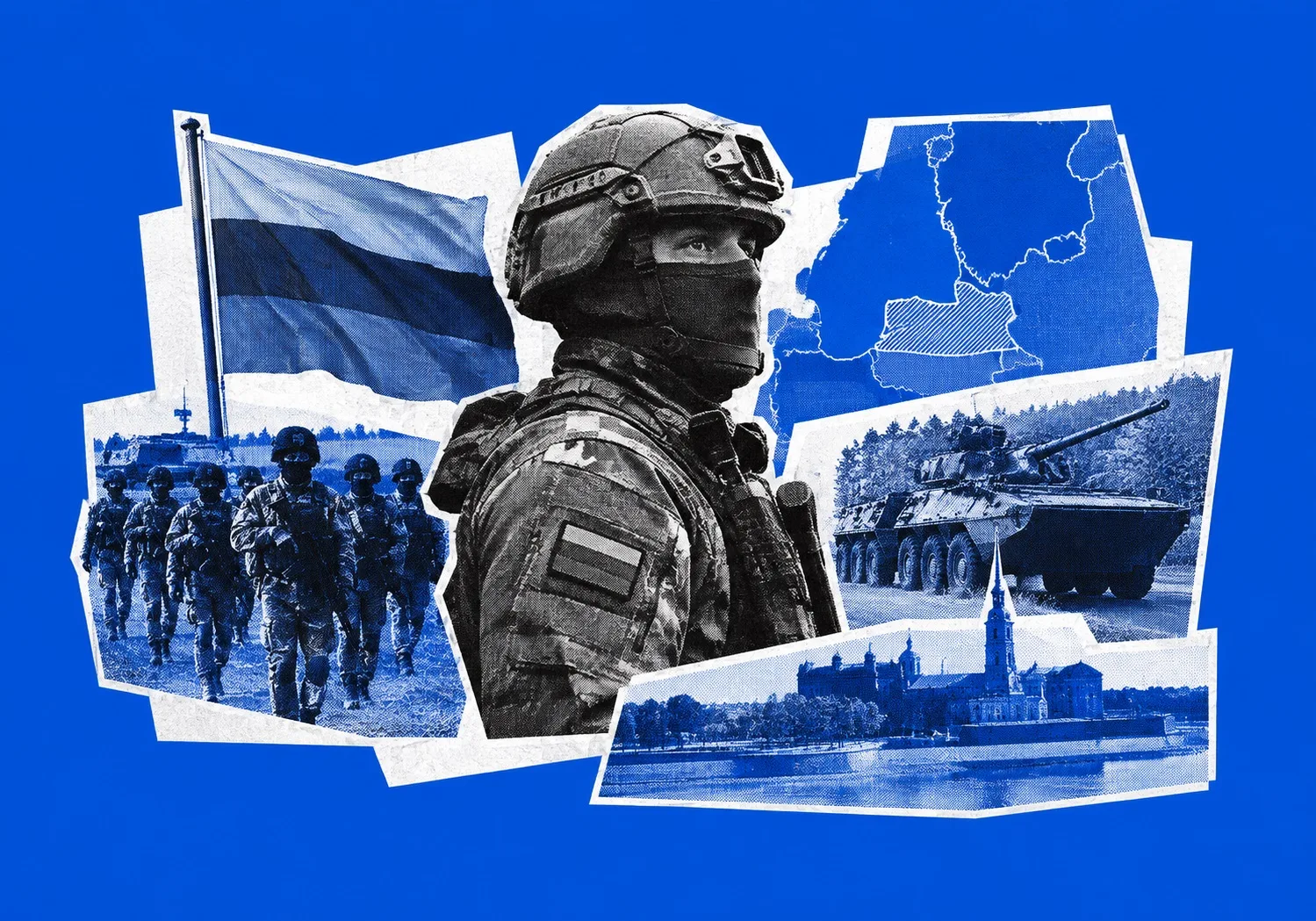
Lithuania is sending up to 100 soldiers to reinforce its perimeter with Russia’s Kaliningrad exclave. Coming after an armed hybrid breach in Latvia and fears of renewed Russian mobilization, the move marks a permanent shift: Baltic states are turning standard border control into active defense zones.
That makes the decision more revealing, not less.
Lithuania is preparing for the possibility that a border crisis may develop faster than a civilian agency can respond to it.
The incident that changed the calculation
The immediate trigger was an incident on the Latvia-Belarus border earlier this week that went beyond the familiar pattern of instrumentalised migration.
At least 20 migrants attempted to cross into Latvia accompanied by armed, masked individuals on the Belarusian side. The men threatened Latvian troops and physically pushed the migrants towards the border. Hours later, masked individuals crossed illegally into Latvian territory, sabotaged an electricity distribution box and removed CCTV surveillance equipment before returning to Belarus.
Latvian officials described the episode as an aggressive hybrid provocation.
The distinction matters. The migration pressure seen since the 2021 crisis was already designed to stretch border agencies and create political pressure. The Latvian episode added another layer: the people facilitating the movement were themselves capable of using force and damaging critical infrastructure.
For Lithuania, the lesson was straightforward. A border incident does not need to resemble a conventional military attack to require military capabilities.
It can begin with migrants, turn into an armed confrontation, and end with damaged infrastructure and compromised surveillance.
That creates a problem for any state whose border protection system is built primarily around civilian law enforcement.
A border service under pressure
Lithuania's decision also exposes a less dramatic but highly practical vulnerability: personnel.
Interior Minister Martynas Katelynas requested military assistance after intelligence and border-protection agencies assessed that VSAT resources were becoming overloaded. Officer numbers have remained broadly static while shifts have become longer.
The deployment therefore serves two purposes. It adds personnel to the frontier, but it also gives Lithuania room to keep its civilian border service functioning when a prolonged security operation threatens to exhaust its existing workforce.
That is an important change in the logic of border defence.
The problem is no longer simply whether Lithuania has enough border guards to stop an illegal crossing. It is whether the state can maintain surveillance, patrols, inspections and rapid response over an extended period while simultaneously dealing with incidents that may require capabilities normally associated with the armed forces.
The Kaliningrad frontier makes that problem harder.
Unlike Lithuania's border with Belarus, the 275-kilometre frontier with the Russian exclave does not have a continuous physical fence. A long, relatively open perimeter creates a different operational calculation from a fortified border. If authorities expect a sudden influx of people, the answer cannot simply be to reinforce one existing crossing point. Personnel must be distributed across a much larger area.
This is why a deployment of 100 soldiers can matter even without a single shot being fired.
From migration management to hybrid defence
Lithuania's current concern about Russian citizens seeking to evade conscription also belongs to this broader shift.
There is no new official decree establishing a mass Russian mobilisation. The concern is based on threat perception and on the precedent of September 2022, when Russia's partial mobilisation prompted hundreds of thousands of draft-eligible men to leave the country for neighbouring states.
A renewed mobilisation could therefore create a very different kind of border pressure from the one associated with Belarusian instrumentalisation.
In one scenario, a hostile state deliberately channels migrants towards an EU border. In another, large numbers of Russian citizens themselves seek to cross into Lithuania to avoid military service. Both could produce sudden pressure on border infrastructure, but their political and legal implications would be different.
For Vilnius, however, the operational problem would arrive first.
A surge of people does not wait for governments to settle the geopolitical interpretation.
The eastern border is losing its old dividing line
The Lithuanian deployment fits into a wider transformation along Europe's eastern frontier.
The 3,646-kilometre border stretching from Finland through Estonia, Latvia and Lithuania to Poland increasingly operates under assumptions that would have been difficult to reconcile with the post-Cold War idea of an open European border. Finland has completely closed its land crossings with Russia. Border states are strengthening physical barriers and surveillance, while protection of electricity infrastructure, communications equipment and monitoring systems has become part of the security calculation.
The old division between border management and national defence is becoming harder to maintain.
A border guard dealing with an irregular crossing is performing a policing function. A soldier protecting the same border from armed provocateurs is performing a defence function. In a grey-zone incident, the distinction can disappear within minutes.
That is precisely the advantage of below-threshold pressure for Moscow and Minsk. It creates situations in which a NATO member must react without having a clear conventional military attack to deter.
The objective does not necessarily have to be territorial penetration. Tactical friction can be enough.
A damaged electricity box, stolen cameras, exhausted border guards or a sudden concentration of migrants can each force a government to redirect resources. Repeated often enough, such incidents can make the security system more expensive and more militarised without crossing the threshold that would trigger a formal Alliance response.
The cost of keeping the border permanently ready
This model has a price, even when the deployment is small.
For Lithuania's armed forces, personnel assigned to border support are personnel unavailable for other military tasks and training. For VSAT, military assistance provides welcome relief but also confirms that civilian capacity is no longer always sufficient for the security environment in which the service operates.
For commerce and transit, the effect is less visible but potentially persistent: tighter controls, more inspections and greater operational uncertainty across Baltic routes.
None of this requires a conventional confrontation with Russia.
That is what makes the emerging model difficult for European security planners. Traditional defence planning is built around identifiable threats, force structures and escalation thresholds. Hybrid pressure operates through the accumulation of relatively small incidents that each appear manageable in isolation.
Lithuania's response is consequently less about the immediate situation on its border than about the speed at which that situation could change.
The military as the second line of border defence
The legal framework already allows Lithuania's Interior Ministry to request armed forces assistance when civilian law enforcement agencies face severe capacity deficits during state-level security operations. What is changing is the environment in which that provision is being used.
The deployment scheduled for October 8 to October 16, with the possibility of extension, is therefore more than a temporary reinforcement. It is a practical test of how civilian and military institutions share responsibility when the threat falls between policing and warfare.
Other eastern NATO members are being forced to ask the same question.
What should soldiers do when the people approaching them are migrants, but armed men are moving behind them? What authority applies when surveillance equipment is sabotaged rather than a military position attacked? How much force can be used in an incident designed precisely to remain below the threshold of conventional conflict?
These are not abstract legal questions. They determine whether a border response remains a police operation or becomes a military one.
For Lithuania, the answer is increasingly being built into routine planning. A calm border can still require soldiers. A quiet day can still consume military resources. And a NATO frontier can become more heavily defended without anyone formally declaring that it has become a battlefield.
That is the strategic space in which the Baltic states are now operating: not war, but a border system designed on the assumption that someone may continually test how close to it they can get.
Read also:
- Romania has summoned 10,000 army reservists aged 43 to 63 for the MOBEX Bucharest – Ilfov 26 exercise, testing its mobilization infrastructure following severe administrative failures in 2025. While officially routine, calling up the country's final generation of pre-2007 conscripts highlights a critical demographic bottleneck for NATO’s Eastern Flank: an aging reserve pool that is running out of time.
Sources: LRT, Reuters, Militarnyi, Meduza