
Can Russia Achieve a Major Breakthrough in Ukraine? Why Moscow’s Offensive Is Stalling

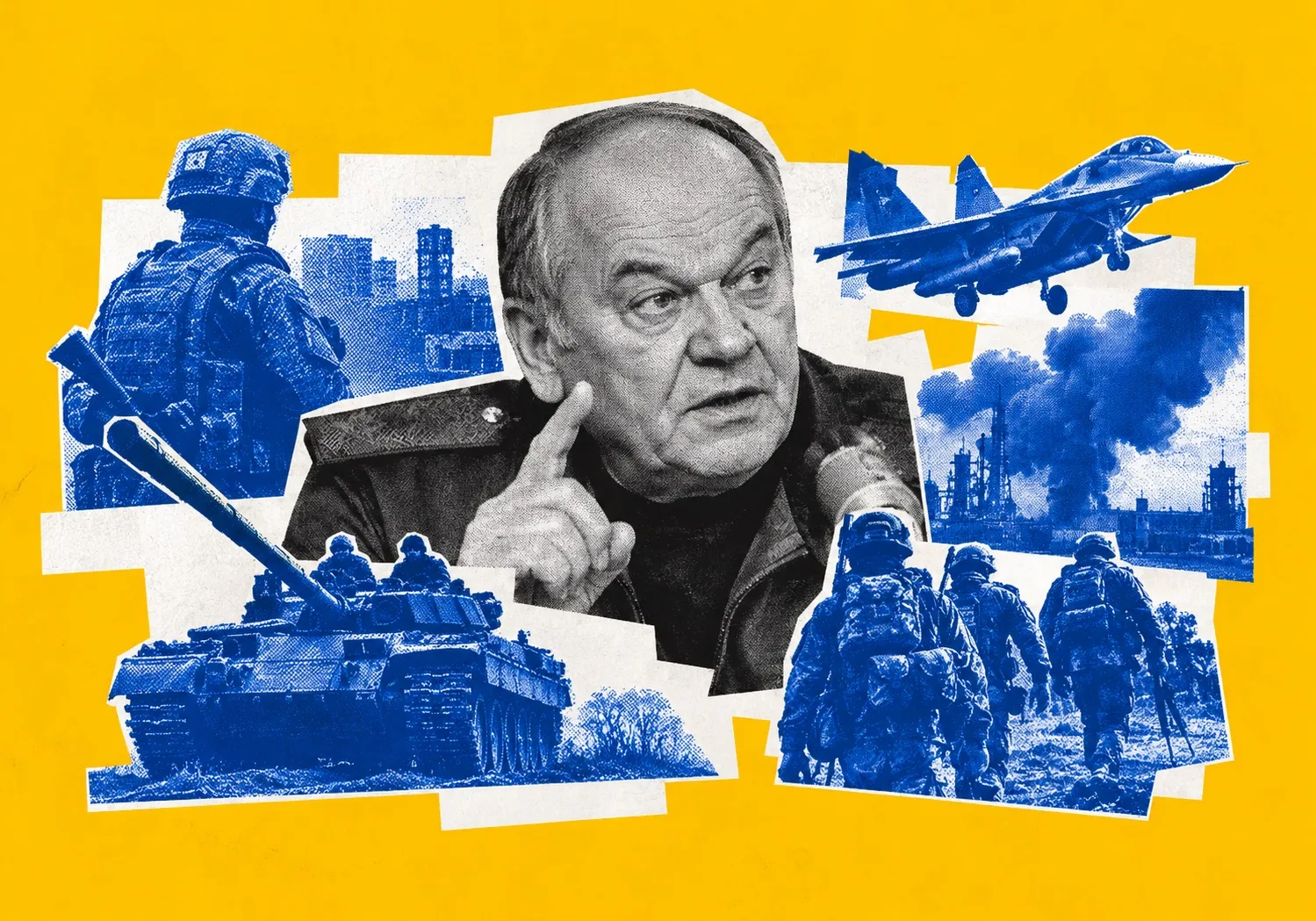
Despite ongoing incremental advances, Russia lacks the manpower and operational reserves needed for a major strategic breakthrough in Ukraine. According to pro-Kremlin military analyst Viktor Baranets, mounting troop shortages and heavy equipment losses mean Moscow cannot assemble a concentrated strike force without dangerously exposing other sectors of the frontline.
Speaking on Voennoye Revyu, Baranets - a retired colonel and writer for Komsomolskaya Pravda who has consistently supported Moscow's campaign - acknowledged that Russian commanders would need at least 200,000 troops to carry out a major encirclement operation. Because these resources are currently unavailable, Russia remains caught between maintaining its long frontline and attempting further large-scale advances.
The distinction has become increasingly important as the war stretches into another year of costly positional fighting.
Too many troops committed, too few held in reserve
Baranets offered a straightforward explanation for why Russia cannot assemble the force he considers necessary. Troops could be moved from the Kharkiv or Dnipropetrovsk directions to reinforce an offensive elsewhere. But withdrawing them would weaken the positions they currently occupy, potentially giving Ukrainian forces an opportunity to attack.
In other words, the Russian army has soldiers deployed across a long frontline, but it cannot easily free enough of them for a major new operation.
A force of 200,000 would not simply be a larger version of the assault groups currently fighting for individual settlements. A deep breakthrough requires infantry and armour to breach Ukrainian defences, followed by additional formations capable of exploiting the opening. Artillery must support the advance, aircraft must help protect it, and supplies must reach troops moving farther from their starting positions.
Encircling a substantial Ukrainian formation would be harder still. Russian commanders would have to maintain the initial breach while advancing around Ukrainian positions and preventing their own troops from becoming exposed.
Baranets' figure is an estimate rather than a fixed military rule. The size of an offensive force depends on the terrain, the objective and the strength of the defenders. Nevertheless, the 150,000–200,000 personnel range associated with major combined-arms operations gives an indication of the scale involved.
Russia's current offensive methods are far more modest.
Mechanised attacks increasingly involve small groups of vehicles, sometimes only 10–15, supported by infantry. Ukrainian analysts also describe larger local concentrations of armour, involving up to approximately 150 vehicles. Neither approach is equivalent to assembling a force capable of advancing tens of kilometres and sustaining a large encirclement.
The shortage is not necessarily one of total troop numbers. It concerns the availability of formations that can be withdrawn, regrouped, equipped and committed to a new offensive without disrupting operations already under way.
That leaves Russian commanders with little room to manoeuvre. Reinforcing one sector means accepting greater risk in another.
The difficulty of building another army
Russia has continued to recruit and mobilise personnel during the war. Yet the number of soldiers entering military service says relatively little about how many can be assembled for a new offensive.
Some replacements are absorbed almost immediately by existing formations. Others require training and equipment before they can fight effectively. Building an operational reserve takes longer than replenishing an infantry unit that has suffered losses.
Baranets has previously put Russian casualties at up to 2,000 killed or severely wounded personnel per day during particularly intense fighting. His estimate is unofficial and has not been independently verified, but it helps explain why a steady flow of recruits may do little to increase the army's capacity for larger operations.
If replacements are continually needed to maintain units already at the front, the military has fewer opportunities to build new formations behind it.
Manpower is only part of the problem.
Russian forces have suffered heavy losses of armoured equipment, contributing to their increased reliance on smaller mechanised groups and infantry assaults. A major offensive would require substantially more vehicles, trained crews and supporting units than are needed for attacks on individual positions.
Aircraft availability presents another obstacle. Ukrainian military intelligence has reported production constraints affecting Russian Su-34 and Su-35S aircraft. Such limitations complicate efforts to replace aviation losses and assemble the air support required for large ground operations.
Russia cannot solve these problems simply by assigning more soldiers to an offensive. Troops advancing without adequate armour, artillery coordination or air cover would face considerable difficulties against prepared Ukrainian positions.

Nor can Moscow quickly create experienced commanders and cohesive formations through recruitment alone.
The Russian military has consequently become heavily dependent on the forces it already has in combat. Keeping them operational consumes personnel and equipment that might otherwise be used to prepare a larger offensive.
Slow advances remain a serious threat
None of this means Ukrainian forces face an opponent that has lost its ability to attack.
Ukrainian military analysts Oleksandr Kovalenko, Dmytro Sniehyrov, Vladyslav Seleznov and Roman Svitan have broadly recognised the limits of Russia's capacity for major breakthroughs while warning that its ability to conduct local offensives remains substantial.
Russian commanders can still concentrate infantry, artillery and drones against selected Ukrainian positions. They can sustain repeated assaults, force defenders to expend ammunition and attempt to gain territory through prolonged fighting.
The same approach can be used near Ukraine's northern border, where Russian forces may seek to establish tactical buffer zones in areas such as Sumy and Chernihiv.
These operations require fewer resources than a deep offensive. They can also be repeated across different sectors, keeping Ukrainian units under pressure even when Russian territorial gains remain limited.
Russian military channels continue to promote accounts of local battlefield progress. One such channel, SVO Khronika, has reported assault activity by Russia's North grouping near Nova Kozacha in the Kharkiv direction. Those claims should not be mistaken for independently confirmed major advances.
They nevertheless fit the pattern of a military campaign increasingly focused on small territorial gains.
For Ukrainian commanders, this presents a persistent problem. Russia does not need to achieve a spectacular breakthrough to inflict losses or force Ukraine to commit reserves. Repeated assaults can gradually exhaust defending formations, particularly if ammunition and equipment become scarce.
A strategically constrained Russian army can still be a dangerous one.
And while its inability to conduct large encirclement operations may limit Moscow's military options, it does not automatically shorten the war.
What Russian commanders are telling the Kremlin
Baranets has become unusually outspoken about the gap between Russia's declared military ambitions and its performance on the battlefield.
In April 2026, he complained that the pace of Russian advances was so slow that the country's objectives could not be achieved even over another four and a half years.
He has also accused Russian commanders of submitting exaggerated or fabricated reports of battlefield success to the defence ministry and the Kremlin.
These allegations have not been independently established in the material available, but they point to another potential weakness in Russia's military system.
Senior commanders need accurate information to decide where to send reinforcements, when to launch attacks and whether units are capable of carrying out assigned missions. If reports consistently overstate battlefield achievements, those decisions become more difficult.
An operation described as successful may have consumed more troops and equipment than senior officers realise. A formation reported to be advancing may lack the strength to continue. Plans for subsequent attacks can then rest on assumptions that bear little resemblance to conditions at the front.
Baranets has also criticised Russia's inability to stop Ukrainian long-range drone attacks against cities and critical infrastructure.
Russian air defence units face competing demands. Systems deployed to protect troops near the frontline cannot simultaneously defend every facility farther inside Russian territory. Ukrainian drone operations have exposed the consequences of those competing priorities.
The problems are related. Russia is attempting to sustain attacks in Ukraine, protect its own territory and prepare for future operations with military resources that cannot be expanded at will.
Baranets' public criticism is not an official admission by the Russian defence ministry. It would also be premature to describe it as evidence of a split within the Kremlin.
Still, his comments show that criticism of Russia's military performance is being voiced within the pro-Kremlin information space itself.
That creates difficulties for a leadership which continues to pursue territorial objectives that its own military commentators increasingly question the army's ability to achieve.
Why another mobilisation may not help quickly
The Kremlin could try to build larger reserves through another wave of mass mobilisation.
Baranets has warned against that option, describing it as a politically desperate measure rather than a guarantee of military success.
A mobilisation campaign could increase the number of available soldiers, but it would not immediately produce an army capable of major combined-arms operations.
New personnel would need training, weapons, vehicles and officers. Formations would have to learn to operate together. The military would also need to maintain existing units while preparing the new ones.
Russia's industrial limitations make that task more complicated. Increasing troop numbers without a corresponding expansion in equipment production risks creating formations that are inadequately prepared for the operations expected of them.
A more extensive mobilisation of the economy might help address some shortages, but it would involve further political and economic costs. It would also take time.
For the Kremlin, the decision is therefore not simply whether to call up more men. It is whether the additional military capacity that mobilisation might eventually provide would justify the disruption involved.
The alternative is to continue the present campaign, accepting limited advances and the continuing expenditure of troops and equipment.
That approach may preserve pressure on Ukraine without delivering the territorial results Moscow wants.
Western support and the limits of Russian power
Baranets' assessment is relevant to Western governments considering the scale and duration of military assistance to Ukraine.
A Russian army unable to assemble a major offensive reserve is in a different position from one preparing a decisive breakthrough. But that does not make continued Ukrainian defence support less important.
Russian forces remain capable of exploiting weaknesses in individual sectors. A shortage of Ukrainian ammunition, air defence systems or personnel could create opportunities for local advances even if Moscow lacks the resources for a wider operation.
Ukraine's ability to strike Russian logistics and infrastructure also matters. Long-range drone attacks force Moscow to devote attention and air defence resources to targets away from the battlefield, complicating the distribution of equipment between competing military requirements.
The central issue for Western planners is how long Russia can sustain its present level of fighting, and whether its force-generation system can eventually produce the reserves it currently lacks.
Baranets has offered no indication that Moscow is close to solving that problem. His description of the army instead leaves Russian commanders facing a choice that becomes more difficult with every additional commitment: keep sufficient forces deployed to hold the existing front, or weaken parts of it in an attempt to concentrate enough troops for a larger offensive.
For a military whose political leadership still expects further territorial gains, that is an increasingly restrictive way to fight a war.
Sources: Video "Sower of the Wind" Telegram channel, MY, CT, ISW