
Bulgaria Presidential Election: Runoff Deepens NATO-Russia Divide Over Black Sea Security

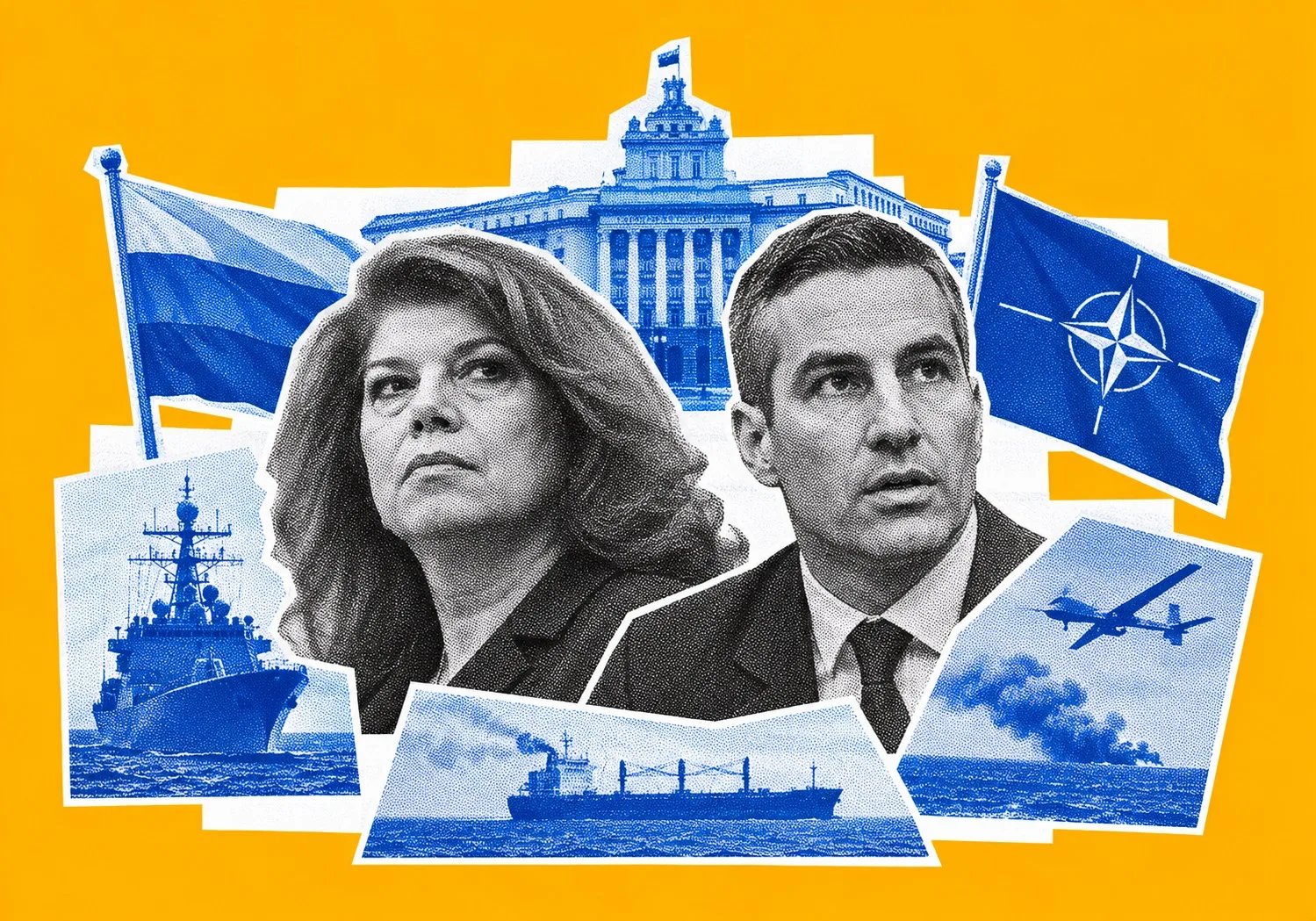
Bulgarians are heading to the polls in a high-stakes presidential runoff, where rising Black Sea security threats have turned the vote into a crucial test of NATO unity. Facing off in the second round, pro-Western former interim Prime Minister Andrey Gyurov and Kremlin-leaning Vice President Iliana Yotova offer starkly different visions for Sofia’s defense policy, relations with Moscow, and support for Ukraine. Coming amid recent drone attacks on commercial vessels near the Bulgarian coast, the election highlights a growing geopolitical divide on NATO’s southeastern flank.
Turnout has become a critical factor: just 23.16% of eligible voters participated in the first round, a record low in a country where repeated parliamentary elections and unstable coalitions have already strained public confidence.
A Maritime Security Crisis Enters Domestic Politics
The Black Sea has become more than a distant theatre of the war in Ukraine for Bulgarian voters. Attacks on merchant shipping close to the country's coast have raised immediate concerns about commercial navigation, coastal protection and the ability of national authorities to respond to threats that cross conventional military boundaries.
Bulgaria's government has sought additional allied assistance with maritime surveillance and coastal defence. That decision places the country within a wider NATO debate over how to protect commercial routes without allowing regional security incidents to develop into a broader confrontation.
Gyurov has made a clear choice in that debate. Backed by the pro-Western opposition, he supports stronger NATO deterrence and continued cooperation with Ukraine. His campaign has emphasised implementation of the ten-year bilateral security agreement with Kyiv, which he formalised during his period as interim prime minister.
For Gyurov, the attacks strengthen the case for collective security arrangements. The underlying argument is that maritime trade cannot be protected through diplomatic appeals alone, particularly when commercial vessels are already being targeted.
Yotova approaches the problem differently.
Aligned with outgoing President Rumen Radev, she has advocated negotiations involving all six Black Sea littoral states and called for a moratorium on hostilities. She condemned the attacks on shipping but declined to assign responsibility directly to the Kremlin, citing insufficient evidence.
That distinction matters. A president who publicly identifies Moscow as a principal security threat would place different political pressure on the Bulgarian government from one who stresses the need for negotiations and restraint.

Neither position, however, provides a complete operational answer to the danger facing merchant vessels. Greater deterrence requires practical coordination and resources, while a regional moratorium would depend on agreement among governments with profoundly different interests in the conflict.
The immediate challenge is protecting shipping. The political disagreement concerns how Bulgaria should pursue that objective.
The Presidency Has Limited Powers, but Considerable Reach
Bulgaria's constitutional arrangements make this election more complicated than a straightforward choice between competing foreign policies.
The president serves a five-year term and acts as commander-in-chief, but the office does not independently determine defence spending, approve military assistance or negotiate the country's international commitments without the relevant government and parliamentary processes.
Those responsibilities remain principally with the cabinet and National Assembly.
Presidential legislation vetoes are suspensive and can be overridden by a simple parliamentary majority. Even a president strongly opposed to a government policy cannot simply block it indefinitely.

This limits the immediate consequences of either candidate's victory.
A Gyurov presidency would not automatically increase military assistance to Ukraine. Nor could Yotova independently terminate existing security cooperation or impose a regional ceasefire.
Yet formal authority is only part of the picture.
Bulgaria has experienced frequent parliamentary elections and changing governing coalitions since 2020. During political deadlock, the president's role in appointing interim cabinets can become particularly consequential. The office also provides a national platform from which to challenge government decisions and shape public expectations.
Radev's presidency has already illustrated these tensions. His disagreements with successive pro-Western governments have extended across foreign policy, energy diversification and military assistance to Ukraine.
A Yotova victory would preserve much of that political approach. Gyurov, by contrast, would bring a more openly pro-Western position into the presidential institution.
The resulting relationship with parliament could influence the political environment in which future defence and diplomatic decisions are made, even where the president has no final authority over them.
What Bulgaria’s Ukraine Agreement Really Means
The ten-year security cooperation agreement with Kyiv is an important part of Gyurov's campaign, but its significance should not be confused with an unrestricted presidential mandate.
Gyurov's involvement in formalising the agreement gives his position on Ukraine an institutional dimension beyond campaign rhetoric. He is arguing for continuity in an existing bilateral commitment rather than merely proposing a new diplomatic orientation.
The presidency could reinforce that commitment through public advocacy and political pressure on the government.
Its implementation, however, remains subject to Bulgaria's constitutional division of responsibilities. Decisions involving funding, legislation and military assistance cannot be made by the president alone.
The precise legal obligations arising from the agreement cannot be determined from its ten-year duration. Its political significance is clearer: it establishes an existing framework for cooperation that future Bulgarian governments must address.
Yotova's preference for dialogue would therefore not, by itself, dissolve that framework.
What could change is the degree of presidential support for implementing it, and the willingness of the head of state to challenge government decisions concerning Ukraine.
For Kyiv, that distinction is consequential. Political backing from Sofia's presidency may not deliver military equipment or financing directly, but it can influence the domestic debate surrounding those decisions.
Can Six Black Sea States Negotiate Their Way to Stability?
Yotova's proposal for negotiations involving all six Black Sea coastal states offers an alternative to Gyurov's emphasis on deterrence.
Its appeal rests on the argument that regional security ultimately requires arrangements involving every state with a direct stake in the sea, rather than relying exclusively on military coordination among allies.
But the proposal leaves difficult questions unresolved.
A moratorium on hostilities would require agreement on what activities must cease, how compliance would be assessed and how violations would be addressed. The recent attacks on commercial shipping make those questions especially important.
Yotova's reluctance to attribute responsibility for the drone incidents to Russia illustrates another challenge: negotiations over maritime security require some common understanding of the threats being addressed.
Without agreement on accountability, even a limited arrangement intended to protect civilian navigation could become difficult to enforce.
Gyurov's approach faces a different test. Stronger NATO deterrence may improve Bulgaria's ability to respond to maritime threats, but the presidency cannot independently provide the surveillance capabilities, coastal defences or allied commitments needed to make that approach effective.
The distinction between the candidates is therefore less about whether Black Sea shipping should be protected than about the political and diplomatic mechanisms Bulgaria should favour.
It is also a disagreement over Sofia's place within NATO. Gyurov would use the presidency to press for greater allied involvement. Yotova would give more prominence to regional negotiations that include Moscow.
A Narrow Election With a Much Larger Participation Problem
The first-round result offers little certainty about the final outcome.
Yotova received 528,951 votes and Gyurov 486,232, leaving both candidates dependent on their ability to mobilise voters beyond their existing support.
With approximately 6.6 million eligible voters, the extraordinarily low first-round participation makes turnout a critical factor.
The figures do not establish why so many Bulgarians stayed away. Electoral fatigue, dissatisfaction with political institutions and disengagement from the candidates are possible explanations, but the available evidence does not establish their relative importance.
Nor can low participation alone demonstrate whether Bulgarians favour closer alignment with NATO or a more cautious approach to Russia.
What it does reveal is the limited electoral engagement behind a contest carrying substantial diplomatic significance.
A narrow victory secured amid weak participation could leave the next president with a strong constitutional mandate but a more contested claim to represent the country's wider political preferences.
That would matter for either candidate.
Gyurov would need to turn electoral success into sufficient political authority to challenge the governing coalition on security policy. Yotova would face questions about the breadth of public support for a diplomatic approach that differs from the pro-Western opposition's position.
The governing parliamentary coalition also faces an uncomfortable prospect: whichever candidate wins will have a prominent platform from which to question its response to maritime threats and its handling of Bulgaria's regional security commitments.
The Central Election Commission is required to announce the official result within three days of polls closing at 20:00 on Sunday.
Europe’s Black Sea Dilemma Goes Beyond Sofia
Bulgaria's election exposes a broader problem for European states confronting the consequences of the war in Ukraine.
Membership of NATO and the European Union establishes important institutional commitments, but it does not eliminate domestic disagreements over how those commitments should be expressed or implemented.
In Bulgaria, the division is particularly visible because the presidency can publicly challenge the political direction of governments without controlling their principal policy instruments.
That creates the possibility of competing messages from Sofia: one emerging from the cabinet and parliamentary majority, another from the president.
Such disagreements need not produce immediate changes in military assistance or alliance obligations. They can nevertheless complicate the political presentation of Bulgaria's position at a moment when the government is seeking allied support for maritime security.
The attacks near the Bulgarian coast have made this tension harder to treat as an abstract foreign policy dispute. Commercial shipping, coastal surveillance and the protection of maritime trade are practical concerns requiring decisions by institutions with the authority and resources to act.
The next president will have considerable freedom to define how those decisions are discussed, criticised and defended.
For NATO allies and Ukraine, the question is not simply whether Bulgaria elects a politician favouring deterrence or negotiations. It is whether the country's political institutions can maintain a coherent approach to Black Sea security when the presidency and government may hold competing views about Russia and the risks of confrontation.
That tension could become especially consequential during another period of parliamentary instability, when the president's role in appointing an interim cabinet would give the office a more immediate influence over the country's political direction.
A presidency with limited executive powers can still become the institution through which Bulgaria's unresolved argument over security, sovereignty and relations with Moscow is fought.