
Zelenskyy Meets Merz in Berlin: Key Takeaways on Aid, Air Defence and Peace Talks

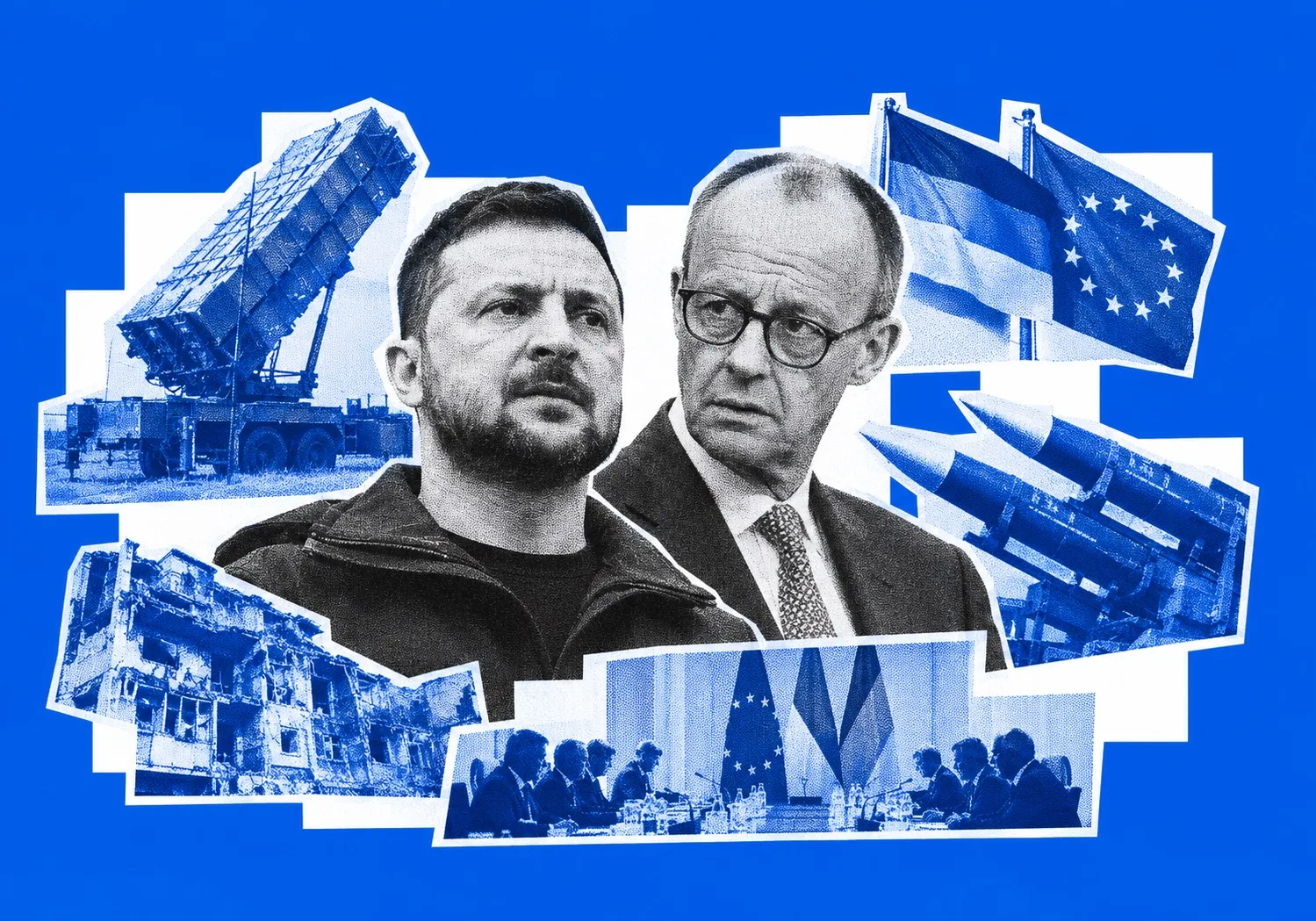
German Chancellor Friedrich Merz pledged a new winter support package during talks with Volodymyr Zelenskyy in Berlin, as Europe faces a dual challenge: supplying urgent air defences to Kyiv while fighting for a seat at upcoming peace negotiations.
Ukrainian President Volodymyr Zelenskyy arrived in Berlin on 3 November facing a dual crisis: defending Ukrainian cities against intensifying missile attacks and ensuring Europe secures a voice in upcoming diplomatic negotiations involving Kyiv, Washington, and Moscow. German Chancellor Friedrich Merz offered reassurance on both fronts. Berlin intends to provide another winter support package, maintain military assistance and bring European leaders together later this month to discuss security guarantees and funding for 2027.
But the talks also revealed how much remains unsettled. There was no detailed public timetable for new air-defence deliveries, no final agreement on post-war guarantees and no clear answer to how Europe would participate directly in the forthcoming negotiations.
The contrast between immediate military needs and longer-term diplomatic ambitions ran through the meeting. Germany wants to help shape the peace, but it must first help Ukraine get through another winter of war.
The immediate problem: keeping Ukraine's defences supplied
Zelenskyy arrived in Germany following another wave of Russian attacks. Speaking alongside Merz, he described missile and drone strikes against Ukrainian cities and energy facilities, including an attack on Komyshuvakha in the Zaporizhzhia region the previous day.
According to figures he presented at the press conference, 33 people had been killed in one strike, five had been rescued and more than 50 were believed to remain beneath the rubble. These were preliminary figures given while rescue operations continued.
The attack was particularly relevant to the diplomatic discussions because Ukraine had recently proposed extending a local humanitarian ceasefire that had allowed civilians to be evacuated from Russian-occupied Oleshky.
Kyiv wanted that pause expanded. Instead, Zelenskyy said, Russian strikes continued.
Against this background, the most immediate result of the meeting was Merz's commitment to further winter assistance.
The Chancellor said Germany was implementing agreements reached during his visit to Kyiv in early October, particularly those concerning air defence and energy supplies. His government also intends to make additional winter assistance available before the end of the year.
The two leaders discussed Patriot PAC-2 and PAC-3 interceptors, IRIS-T missiles and further assistance for Ukraine's F-16 fleet. Zelenskyy emphasised the shortage of air-defence capabilities and the need for aircraft capable of helping counter Russian drones.
These are not interchangeable weapons. Patriot interceptors are especially important against ballistic threats, while IRIS-T systems provide another layer of protection. F-16 aircraft can help Ukraine respond to aerial attacks, but they too require a reliable supply of ammunition.
Germany has already played a substantial role in equipping Ukraine's air defences. The difficulty now is sustaining that support at a pace matching Russia's attacks.
Merz acknowledged that there had been occasional supply problems. He said deliveries of F-16 ammunition, air-defence equipment and other munitions were continuing, but that he hoped to address outstanding difficulties at the Coalition of the Willing meeting scheduled for 19 November.
It was one of the more revealing admissions of the press conference.
Berlin can announce assistance, but the availability of interceptors and ammunition depends on production capacity, procurement arrangements and cooperation among several countries. Even a government willing to spend more cannot necessarily obtain every required weapon immediately.
Nor did the Berlin meeting establish how many additional missiles Ukraine would receive or when all the discussed equipment would arrive.
The German government's published account of the press conference confirms the new winter commitment, while leaving the detailed scale of that assistance unspecified.
For Kyiv, those missing details are consequential. The difference between a political pledge and a completed delivery is measured in the ability to intercept the next attack.
Merz wants Europe involved in the peace, not merely paying for it
Military assistance was only part of the conversation.
Ukraine, Russia and the United States are expected to resume negotiations at working-team level on 10–11 November, with Abu Dhabi identified as the venue. Zelenskyy hopes the process will eventually produce direct talks between national leaders.
He has argued that the most difficult questions – particularly those concerning lasting peace and security – cannot be resolved entirely by negotiating teams.
Merz supports renewed diplomacy. His concern is that Europe must not be excluded from decisions it will subsequently be expected to implement.
Sanctions against Russia are one example. Any agreement involving their relaxation or continuation would directly affect European governments. Security guarantees are another. European states could be asked to provide military assistance, funding or personnel as part of a future arrangement.
Merz made the German position explicit: questions concerning sanctions and Europe's security architecture cannot be settled without European participation.
This was more than a declaration of solidarity with Kyiv. It was an attempt to establish Europe's place in negotiations whose outcome could reshape the continent's security arrangements.
There is a practical difficulty, however. The proposed 10–11 November talks involve Ukraine, the United States and Russia. The Berlin meeting did not announce a change to that format.
Instead, European participation is being pursued through consultations running alongside the main negotiations.
Zelenskyy said representatives of Ukraine, the United States, NATO and European countries would meet in Brussels on 4 November to discuss recovery plans and security guarantees.
Such coordination gives Kyiv an opportunity to align positions with its partners. It does not automatically give European governments a seat at every negotiating session.
The distinction matters because Washington may be central to negotiating an agreement, but Europe would remain geographically exposed to its consequences.
Germany's position is that European governments cannot be treated simply as future contributors to a settlement designed elsewhere.
Whether that position produces a formal negotiating role remains to be seen.
What Kyiv wants from the November negotiations
The diplomatic agenda is broader than a general call for a ceasefire.
At the Berlin press conference, Zelenskyy outlined several measures Ukraine wants to pursue. They include a reciprocal halt to attacks on energy infrastructure, greater security for grain shipments through the Black Sea and more intensive prisoner exchanges.
Kyiv is also seeking the return of detained civilians and Ukrainian children taken to Russia.
These proposals concern immediate humanitarian and security problems. They could potentially be addressed before the parties reach agreement on the larger territorial and political disputes.
Merz pointed to the temporary humanitarian ceasefire around Oleshky as a possible model for limited arrangements covering energy infrastructure and the Black Sea.
He accused Russia of refusing broader proposals and warned that continued attacks on shipping could lead to further escalation.
There is no indication that Moscow accepted the Ukrainian proposals during the Berlin meeting. Nor was any new ceasefire agreement announced.
That leaves a familiar difficulty for the diplomatic process: the parties may be preparing to negotiate while military operations continue at considerable intensity.
Zelenskyy also rejected the idea of symbolic invitations between Kyiv and Moscow as a substitute for serious talks. He argued that a meeting between leaders would need to address substantive questions rather than become another political gesture.
The Ukrainian presidency's account of the talks places the proposed trilateral negotiations alongside the need for European coordination.
For Berlin, that means supporting diplomacy without allowing preparations for a possible settlement to weaken Ukraine's immediate military position.
A November summit with decisions still to make
The next major date is 19 November, when Merz plans to host an in-person meeting of the Coalition of the Willing in Berlin.
Germany is organising the summit with France and Britain. According to Merz, a substantial number of heads of state and government are expected to attend.
The agenda has three principal elements: coordinating further assistance to Ukraine, reaffirming readiness to provide security guarantees after a ceasefire and aligning diplomatic efforts.
The Chancellor also expects participating countries to reach understandings about the scale of their support for Ukraine in 2027.
Military assistance will account for much of the discussion, although it will not be the only subject.
Merz referred to an agreement within NATO on €70 billion in military assistance for Ukraine in 2026 and urged partners to fulfil their commitments. That figure concerns collective support; it is not a new German financial package agreed during Zelenskyy's visit.
The emphasis on 2027 is significant. European governments are preparing for a period in which Ukraine may continue to require substantial assistance whether or not negotiations produce a ceasefire.
A halt in fighting would not remove the need to maintain Ukrainian military capabilities. Nor would it settle the question of how to prevent another Russian attack.
The Coalition of the Willing has been discussing possible security arrangements for a post-ceasefire Ukraine, including military preparations intended to support deterrence.
An exercise in Poland involving nearly 2,800 personnel is scheduled for 9–22 November. It forms part of preparations associated with the proposed multinational security arrangements, rather than a deployment to Ukraine under an agreed peace settlement.
The central questions remain political as much as military. Which countries would contribute? What obligations would they accept? How would the arrangements be financed, and what would happen if hostilities resumed?
Berlin did not provide definitive answers on 3 November.
Merz's willingness to host the summit demonstrates Germany's intention to take part in organising the European response. The substance of that response will depend on decisions by the wider coalition.
Germany is looking beyond arms deliveries
There was another part of the meeting that received less attention than missiles and diplomacy.
Zelenskyy and Merz discussed joint weapons production, cooperation on drones and work on the FREYJA anti-ballistic programme.
Ukraine has accumulated extensive operational experience in defending against missiles and drones. Germany has an established defence-industrial base and access to European procurement and manufacturing networks.
Bringing those capabilities together could change the relationship between the two countries.
Until now, much of the public discussion has concentrated on weapons Germany can transfer to Ukraine. Joint development and manufacturing would create a different form of cooperation, with Ukraine participating in production rather than relying exclusively on external deliveries.
Zelenskyy presented FREYJA as relevant not only to Ukraine but to Europe's need for stronger anti-ballistic defences.
The project remains a developing initiative. Neither leader announced a completed system, an operational date or a detailed new production contract during the meeting.
Still, the discussions reflect a wider European problem. Air-defence ammunition and modern interception capabilities are expensive, technically demanding and difficult to expand quickly.
Ukraine's experience may inform future European defence programmes, while industrial cooperation could help Kyiv establish more predictable supplies.
The two leaders also discussed the role of German companies in Ukraine's recovery.
Merz highlighted the continued activity of German businesses during the war and pointed to the German-Ukrainian Economic Forum scheduled for 20 November in Berlin.
He said German companies had remained in Ukraine since the beginning of the full-scale invasion, with additional firms entering the market.
The claim was made by the Chancellor and was not accompanied at the press conference by a company-by-company breakdown.
For Ukraine, continued commercial activity matters because reconstruction cannot depend indefinitely on emergency assistance alone. Investment, industrial partnerships and functioning infrastructure will all be needed.
For Germany, the economic relationship provides another reason to maintain long-term engagement with Ukraine, regardless of the immediate outcome of peace negotiations.
Funding for 2027 and the question of EU membership
Zelenskyy also sought reassurance about financial assistance beyond the current year.
He welcomed Germany's willingness to support Ukraine in 2027, although the Berlin meeting did not establish a complete new funding arrangement covering the country's future requirements.
Much of that work is expected to continue at the 19 November summit.
Advance commitments would help Ukraine plan military procurement, energy repairs and reconstruction without having to depend entirely on successive emergency decisions.
There is a related European question: how Ukraine's long-term integration into the EU fits alongside the proposed security arrangements.
Zelenskyy reiterated his ambition to open all six negotiating clusters in Ukraine's EU accession process before the end of 2026.
He described European integration as important both for Ukraine's future and for public morale during the war.
EU accession is not something Germany can approve unilaterally. It requires decisions involving the wider Union, and no breakthrough on opening all six clusters was announced in Berlin.
Nevertheless, its inclusion in the talks showed that Kyiv is pursuing several objectives at once: military survival, a negotiated end to the war, security guarantees and a more permanent place within European institutions.
These objectives overlap, but they are not substitutes for one another. EU membership negotiations cannot provide the interceptors needed this winter, just as a new weapons package cannot resolve Ukraine's long-term institutional relationship with Europe.
Why Berlin's position matters beyond Ukraine
Merz offered a clear explanation for Germany's continued involvement. The outcome of the war, he argued, will affect European security for years, and supporting Ukraine is therefore in Germany's own interest.
That argument has implications for how European governments justify military spending and long-term commitments to Kyiv.
If Russia's war is treated as a threat to the wider European security order, support for Ukraine becomes more than a question of bilateral assistance.
It becomes part of Europe's own defence planning.
Yet Germany's influence has limits. Berlin cannot determine Russia's willingness to negotiate, control American diplomatic decisions or guarantee that every European partner will make the same financial and military commitments.
The meeting exposed those constraints without resolving them.
Germany can promise more winter assistance, but supply difficulties remain. Merz can insist on Europe's participation in peace negotiations, but the immediate trilateral format remains unchanged. European leaders can prepare security guarantees, but their final terms are still under discussion.
These are not minor technical details. They will determine how much of the political support expressed in Berlin can be translated into practical measures.
The next two weeks should provide more information. The 10–11 November negotiations will test whether the parties can make progress on limited ceasefire and humanitarian proposals. The Berlin summit on 19 November will then offer European governments an opportunity to specify what they are prepared to contribute in 2027 and after any cessation of hostilities.
Germany is positioning itself at the centre of that European effort. Its ability to coordinate partners will matter, but so will the weapons, financing and commitments those partners ultimately provide.
The rest of Zelenskyy's Berlin visit
Beyond his talks with Merz, Zelenskyy met Federal President Frank-Walter Steinmeier and Bundestag President Julia Klöckner.
The discussions with Steinmeier covered cooperation with the United States and the importance of European participation in efforts to end the war.
With Klöckner, Zelenskyy addressed the damage caused by Russian attacks on Ukraine's energy system, the need for continued protection and financial assistance for the coming year.
He also thanked Germany for including €11.6 billion in assistance to Ukraine in its federal budget, while expressing hope that the relevant decision would receive final approval.
These meetings brought the parliamentary and diplomatic dimensions of German support into the wider visit. The main decisions, however, still lie ahead – particularly those concerning weapons deliveries, European security guarantees and the financing of Ukraine's defence in 2027.
Sources: German Federal Government, Office of the President of Ukraine, Office of the President of Ukraine, Office of the President of Ukraine, Kyiv Post, Ukrinform