
Why Falling Oil Prices Won’t Fix Europe’s Fuel Crisis: High Diesel & Rising Airfares Persist

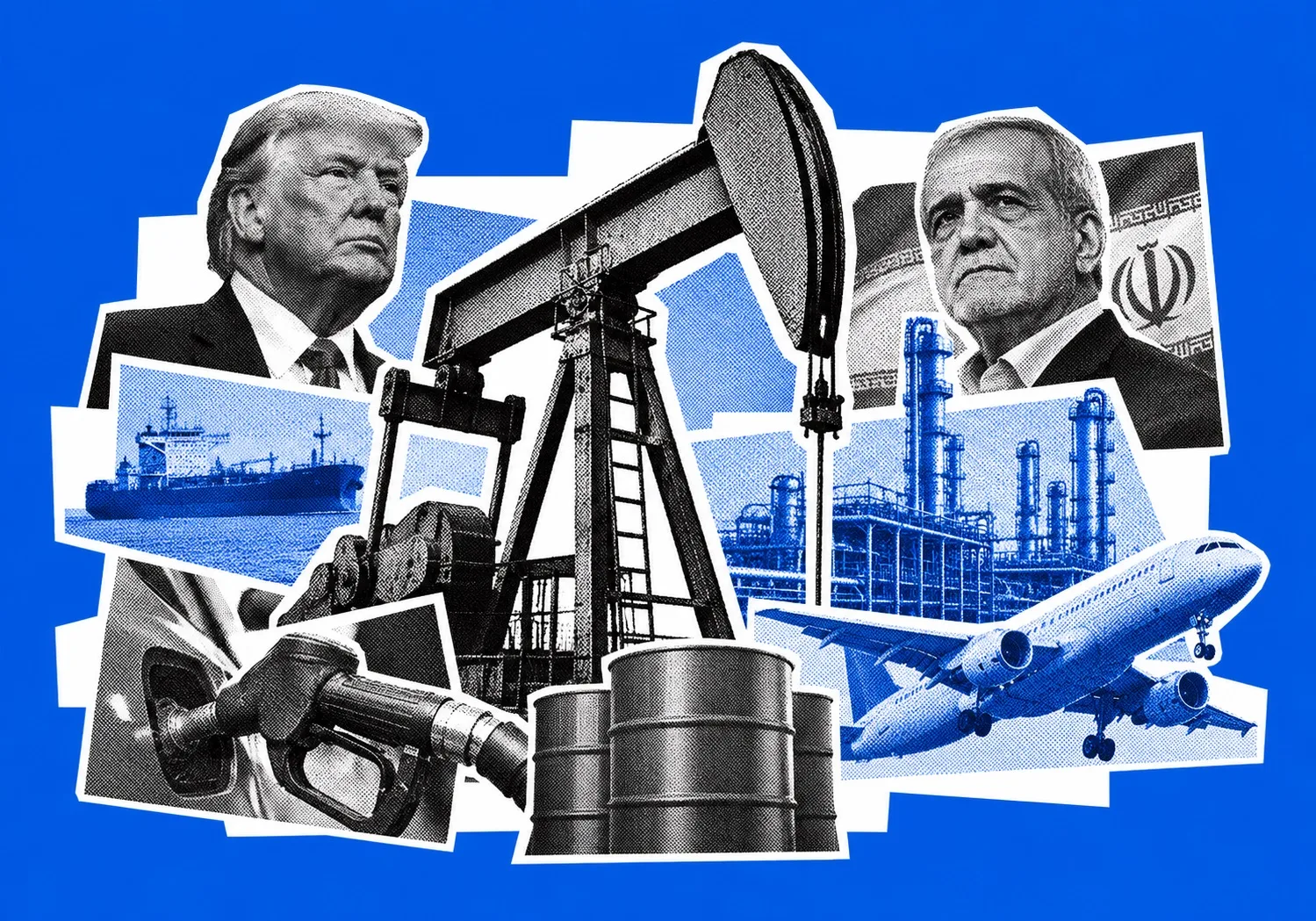
Despite crude prices tumbling following US-Iran diplomatic signals, Europe’s energy pressure remains acute. High diesel prices, low European fuel reserves, and rising aviation costs mean that cheaper Brent oil will offer limited relief to consumers this winter. As geopolitical volatility in the Strait of Hormuz keeps markets on edge, EU emergency petroleum releases highlight deeper structural supply shortages across the continent.
For European consumers, the timing could hardly have been more important. Governments are already drawing on emergency fuel stocks and cutting taxes to contain winter energy costs. A sustained decline in crude prices would offer some breathing space. But cheaper oil does not automatically mean cheaper diesel, aviation fuel or transport.
The distinction became apparent within hours.
A diplomatic opening meets military reality
The initial sell-off followed comments from US Secretary of State Marco Rubio that President Donald Trump preferred a diplomatic solution to confrontation with Iran. Rubio also made clear that Washington retained the military resources needed to act if negotiations failed.
Tehran offered its own cautious encouragement. President Masoud Pezeshkian confirmed that he had received additional negotiating authority from Supreme Leader Mojtaba Khamenei. Iranian officials indicated that an agreement remained possible, although they insisted that Tehran's demands would have to be implemented in practice.
Neither side announced a settlement. Nevertheless, the possibility of an agreement was enough to transform market expectations.
Much of the anxiety surrounding oil supplies has centred on the Strait of Hormuz, where military tensions threaten one of the world's most important energy shipping routes. Recent attacks on vessels and regional energy infrastructure have made the possibility of disruption a central consideration for traders.
When Washington and Tehran appeared willing to negotiate, some of that perceived risk rapidly disappeared from crude prices.
The reversal came on Tuesday, 3 November. Reports from The Wall Street Journal and Reuters described a limited US military strike on Iran's Qeshm Island, intended to pre-empt threats from anti-ship missiles. Brent recovered towards $105–$105.77 a barrel, while WTI climbed back into the $96.90–$97.41 range.
The rebound, amounting to roughly 0.5% to 1%, was modest compared with Monday's collapse. Its significance lay elsewhere: military operations could still interrupt diplomatic optimism almost immediately.
Washington's approach leaves traders assessing two developments that do not necessarily move together. Negotiators may be making progress through Qatar while American forces continue operations intended to contain threats in the Gulf.
A diplomatic opening can reduce the probability of a wider confrontation. It cannot, by itself, guarantee the security of tankers or energy infrastructure.
Why cheaper crude offers Europe limited protection
Europe's difficulty is not simply the price of oil entering a refinery. It is also the availability and cost of the fuels leaving it.
Diesel is particularly problematic. Inventories across Northwestern Europe are close to historical lows, while refinery margins remain under pressure. That combination leaves the region vulnerable even when international crude benchmarks decline.
A reduction in crude prices can lower the cost of raw material for refiners. But it does not immediately replenish diesel stocks, increase refining capacity or remove bottlenecks in regional distribution.
This matters because diesel remains central to European economic activity. Road freight, agricultural machinery and industrial transport depend on it. Persistent high prices therefore feed into operating costs well beyond the energy sector.
Governments have responded with increasingly direct intervention.
EU member states have agreed to release 42.6 million barrels from strategic petroleum reserves over three months. Approximately half of that volume consists of diesel, reflecting concern about the availability of refined fuel during winter rather than crude oil alone.
France began releasing 10 million barrels of diesel from its strategic reserves on 1 November. The intervention has been accompanied by retail price reductions of between 12 and 18 cents per litre across major fuel chains, including TotalEnergies and E.Leclerc.
Germany has taken a different route, implementing a second fuel tax reduction this year. Retail prices have fallen to approximately €2.052 per litre for E10 petrol and €2.197 for diesel.
Both measures provide consumers with immediate relief. They also expose the limitations of what governments can achieve without addressing underlying supply constraints.
France can put additional diesel into circulation, but those barrels come from finite strategic stocks. Germany can reduce the tax component of retail fuel prices, but doing so does not increase the physical supply of diesel.
The interventions cushion households and businesses against price shocks. They cannot permanently insulate them from another disruption in the Persian Gulf.
Emergency reserves become an economic policy instrument
Strategic petroleum reserves were designed to provide protection against serious supply interruptions. Their growing use to manage consumer prices raises a different question: how frequently can governments rely on emergency stocks before replenishing them becomes another source of pressure?
The EU's coordinated release is substantial, particularly because around 21 million barrels are expected to consist of diesel. It may help prevent a sharper winter price increase and give national markets time to adjust.
Yet reserve releases shift supply across time. Fuel consumed now is no longer available for a subsequent emergency unless stocks are replenished.
The trade-off becomes more complicated when the threat is persistent rather than temporary.
If tensions around Hormuz ease, governments may find that the additional supply has helped bridge a difficult period. If maritime insecurity continues, they could face renewed pressure to intervene while holding smaller emergency buffers.
There is also a difference between managing prices and repairing the market.
Germany's tax reductions address the amount consumers pay at the pump. France's intervention addresses immediate diesel availability. Neither directly resolves the weak economics of refining in Northwestern Europe.
The result is an increasingly active role for governments in fuel markets, even as their ability to determine longer-term supply conditions remains limited.
For traders, the sharp movements create opportunities. For businesses planning fuel purchases, they make budgeting considerably harder.
Airlines face a different fuel-price calculation
European aviation illustrates why the fall in crude prices may provide little immediate comfort to consumers.
Jet fuel is trading at around $170 a barrel, far above the international crude benchmarks that dominate financial headlines. Airlines therefore face a cost environment that looks considerably less favourable than Monday's oil sell-off might imply.
Ryanair's chief executive has warned that European airfares could rise by 10% to 20% in 2027 as elevated aviation fuel costs feed through to ticket prices.
The warning points to a wider problem with interpreting crude prices as a straightforward measure of energy affordability.
Airlines buy a refined product, not a barrel of Brent. Its price depends on refining economics, availability and the particular pressures affecting aviation fuel supply.
Even a substantial decline in crude prices may have limited effect if the market for refined products remains tight.
The consequences extend beyond holidaymakers. Higher aviation costs affect the economics of passenger travel, while expensive diesel increases the cost of moving goods by road.
European governments may succeed in reducing some retail fuel prices this winter while businesses continue to face elevated transport costs elsewhere.
The Gulf's influence reaches far beyond Europe
The vulnerability is even greater for economies that depend heavily on imported energy and have limited financial reserves.
Countries across South Asia and Africa face pressure on trade balances when oil and liquefied natural gas remain expensive. Higher import bills can strain public finances and contribute to domestic inflation.
Unlike European governments deploying coordinated strategic reserves or targeted fuel tax reductions, some energy-importing developing economies have much less room to absorb repeated price shocks.
Their exposure is not limited to the absolute price of crude. Rapid fluctuations complicate import planning, public spending and decisions about how much financial protection to maintain against future increases.
A diplomatic breakthrough could ease those pressures. Renewed military escalation could reverse the benefit before it reaches consumers.
That uncertainty also matters to central banks. Energy prices influence inflation expectations, while transport and production costs determine how widely a fuel shock spreads through the economy.
A single day's decline in crude prices is unlikely to settle those calculations when the underlying security situation remains unsettled.
The market is therefore responding to two different realities. Diplomatic signals can rapidly change the perceived likelihood of a supply interruption. Physical fuel shortages and refining constraints take longer to resolve.
Europe's winter energy measures are being implemented in the space between them.
The question for policymakers is no longer simply whether oil prices will fall after a diplomatic agreement. It is whether Europe's fuel system can withstand another period of disruption without repeated government intervention.
For now, strategic reserves are buying time, tax cuts are easing some immediate costs, and negotiations through Qatar remain a possible route away from confrontation.
But the next serious threat to shipping around Hormuz could arrive while European governments are still drawing down the stocks intended to protect them from precisely such an emergency.
Sources: Bloomberg, The Daily News, Radicor, The Cryptonomist