
Western Pharma Giants Paid Millions to Russian Middlemen Amid Corruption Allegations

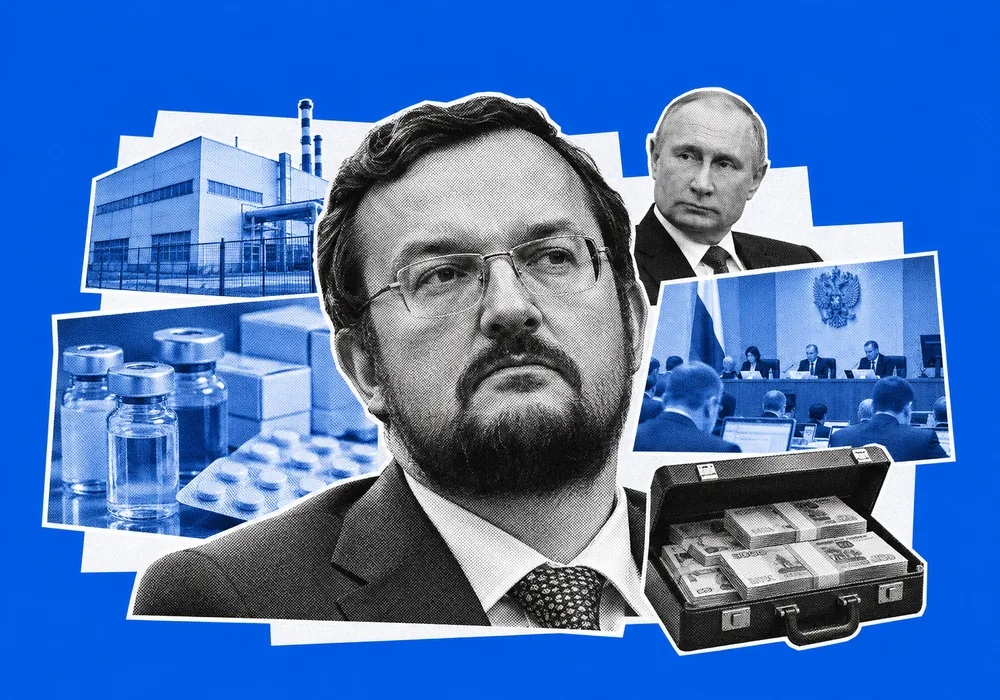
An international investigation has found that Merck, Eli Lilly, Novartis and AstraZeneca paid substantial bonuses to Russian pharmaceutical distributors facing allegations of bid-rigging and anti-competitive practices. Whistleblower disclosures suggest that the payments may have helped sustain inflated medicine prices and a procurement system in which competition was routinely absent, raising questions about Western pharmaceutical companies' oversight of their Russian business partners.
Four major international pharmaceutical companies paid tens of millions of dollars in bonuses to Russian distributors between 2020 and 2023, despite warning signs of alleged corruption and anti-competitive conduct within the country's public medicine procurement system. The companies named in confidential whistleblower disclosures are Merck, Eli Lilly, Novartis and AstraZeneca. Their Russian intermediaries supplied expensive medicines, including treatments for cancer and other serious illnesses, to state hospitals and healthcare institutions.
The findings form part of an investigation by the International Consortium of Investigative Journalists (ICIJ), in cooperation with Russia's Proekt and Switzerland's Republik. The journalists examined hundreds of pages of confidential documents, including company correspondence, procurement records and complaints submitted to corporate audit committees and the US Securities and Exchange Commission (SEC).
According to the disclosures, pharmaceutical companies provided distributors with bonuses ranging from 15% to 35% of sales. These payments were often linked to the volume of medicines purchased or the achievement of annual sales targets. Whistleblowers allege that distributors could use the additional margins to finance kickbacks to public officials and hospital administrators responsible for awarding contracts and influencing prescriptions.
The documents do not establish direct payments from the intermediaries to government officials. However, they identify a series of warning signs, including non-competitive tenders, suspected bid-rigging, shell companies and previous investigations into the distributors' business practices. The central concern is whether pharmaceutical manufacturers knowingly overlooked these risks to preserve access to a lucrative government-funded market.
A procurement system with little competition
The investigation identifies a structural problem in Russia's public pharmaceutical procurement system: contracts for expensive medicines were frequently awarded through tenders involving only one participant. This undermined the purpose of competitive bidding, which is intended to secure favourable prices for public healthcare budgets.
One of the most striking examples concerns Tagrisso, an AstraZeneca medicine used to treat non-small cell lung cancer. Russian procurement data reviewed by ICIJ show that approximately 95% of government tenders for the drug between 2020 and 2023 involved a single bidder. According to the whistleblower disclosures, the lack of competition allowed distributors to sell the medicine at prices slightly above its official list price.
A similar pattern emerged in the procurement of Cyramza, an Eli Lilly cancer treatment. The disclosures describe nine contracts worth more than $5 million awarded by the Moscow City Department of Health in 2021 to Pharmstandard. The company was reportedly the only bidder for most of these contracts.
According to the whistleblower report, Lilly provided Pharmstandard with a 29% bonus for meeting its annual sales target and a further 5% incentive for timely payments. The manufacturer reportedly received approximately $3.4 million through the contracts.
The investigation also examined Novartis' Kisqali, a treatment for breast cancer. In one procurement case, two distributors submitted identical bids, with the contract awarded to the company that entered the auction first. The whistleblower described this as an example of coordinated bidding designed to create the appearance of competition.
The figures involving AstraZeneca's Koselugo are particularly significant. The medicine is used to treat children with a rare type of tumour. Between 2022 and 2024, Pharmimex secured contracts worth $114.3 million out of nearly $129 million in total government procurement for the drug, with virtually no competition, according to procurement records reviewed by the investigators.
These cases illustrate how a system designed to distribute public healthcare resources could instead concentrate contracts among a limited network of suppliers. When competition is absent, distributors can retain substantial margins while state institutions have fewer opportunities to negotiate lower prices.
R-Pharm and the political connections behind the business
A central figure in the investigation is Alexey Repik, founder of R-Pharm, one of Russia's largest pharmaceutical distributors. Repik built the company after establishing it in 2001 with an initial investment partly financed by selling his car and borrowing money from his mother. Over the following years, R-Pharm became an important intermediary for international pharmaceutical manufacturers seeking access to Russian government contracts.
In 2009, the American pharmaceutical company Merck established a strategic partnership with R-Pharm. Their cooperation subsequently expanded to include manufacturing arrangements, technology transfers and the production of medicines under licence.
Repik's business influence grew alongside his political connections. He held meetings with Vladimir Putin, participated in high-level international business events and became chairman of Delovaya Rossiya, a major Russian business lobby. He was also included on the Forbes billionaires list in 2017, with an estimated fortune of approximately $2.1 billion.
R-Pharm repeatedly attracted scrutiny from Russian competition regulators. Investigations examined allegations that the company and other distributors coordinated bids, used affiliated businesses to create the appearance of independent competition and engaged in practices that could keep medicine prices artificially high.
In 2018, regulators discovered electronic signature devices belonging to several nominally separate companies in an R-Pharm office. Some of these businesses had submitted bids from the same internet addresses, sometimes only minutes apart. Although the authorities did not establish collusion in that particular investigation, R-Pharm was subsequently fined approximately $1.4 million in a separate anti-competitive case involving medicines purchased with public funds.
ICIJ also reported that an offshore company linked to Repik owned a Bombardier business jet apparently used by one of Putin's daughters, further illustrating the proximity between the pharmaceutical entrepreneur and Russia's political elite.
Following Russia's full-scale invasion of Ukraine in February 2022, Repik was sanctioned by the United Kingdom, Canada, Australia and Ukraine because of his connections to Putin. He subsequently left the company he had founded as Western pharmaceutical manufacturers began reducing their Russian operations.
R-Pharm's general director, Vasily Ignatiev, rejected allegations of improper payments, stating that the company operates in accordance with applicable laws and ethical standards. He also maintained that its participation in public procurement is based on transparent competitive procedures.
Cancer treatment prices and the cost to patients
The financial consequences of the procurement system extend beyond pharmaceutical companies and distributors. When intermediaries receive unusually large margins and government contracts are awarded without meaningful competition, the additional costs ultimately affect public healthcare budgets and patients' access to treatment.
Keytruda, Merck's blockbuster cancer medicine, provides an example of the scale of the business. Between 2020 and 2022, R-Pharm won approximately 2,400 out of nearly 5,000 government tenders for the drug, securing contracts worth around $360 million out of a total $870 million. Procurement records show that approximately 96% of all Keytruda tenders during the period involved only one participating company.
In 2021, the Russian Ministry of Health listed Keytruda at approximately $2,100 per vial, or $4,200 for a two-vial dose. The whistleblower disclosures alleged that R-Pharm captured a substantial share of government hospital purchases through non-competitive awards.
R-Pharm argued that its position reflected its status as Merck's licensed local manufacturing partner. According to the company, the absence of alternative suppliers was partly explained by Keytruda's patent protection and the exclusive production arrangements in place at the time.
Russia's pharmaceutical market subsequently changed following the invasion of Ukraine. As Western companies scaled back their operations, the Kremlin increased pressure on foreign manufacturers to localise production and weakened certain protections for patent holders from countries it considers unfriendly.
Russian manufacturers introduced domestic versions of Keytruda, including Pembroria and R-Pharm's Arfleyda. Their maximum reported prices were approximately $1,300 and $1,000 per vial respectively, compared with the earlier official price of around $2,100 for Merck's medicine.
The emergence of domestic alternatives reduced Merck's position in the Russian market, but it also highlighted the extent to which the pharmaceutical business had become intertwined with state procurement policies and political priorities.
Corporate accountability and the limits of oversight
The allegations raise questions about the responsibility of multinational pharmaceutical companies for the conduct of distributors operating in high-risk markets. Under the US Foreign Corrupt Practices Act (FCPA), companies cannot automatically avoid liability for improper payments simply by outsourcing sales and distribution to third parties.
Manufacturers may face legal consequences if they know, or deliberately ignore indications, that intermediaries are using their commercial margins to finance bribes to public officials. Compliance procedures are therefore expected to include checks on ownership structures, business histories and political connections.
The whistleblower reports claim that the companies were repeatedly presented with warning signs concerning their Russian partners. Letters included in the disclosures urged corporate audit committees to investigate relationships with distributors facing allegations of bid-rigging, shell-company transactions and anti-competitive conduct.
The companies have responded differently. Novartis said it had conducted a thorough investigation into the allegations but declined to disclose its findings. AstraZeneca declined to comment, while Merck and Eli Lilly did not respond to requests for comment from ICIJ. The US Securities and Exchange Commission and Department of Justice also declined to comment.
The investigation places these allegations in a broader international context. Previous enforcement cases involving Sanofi in Kazakhstan and Eli Lilly in Brazil demonstrated how pharmaceutical distribution networks could be used to generate funds for improper payments. Sanofi agreed to pay $25.2 million to settle US allegations in 2018 without admitting or denying wrongdoing. Lilly reached a separate settlement exceeding $29 million in 2012, also without admitting or denying the allegations.
The latest disclosures also come amid changes in US corporate enforcement. In 2025, the Trump administration reduced the resources devoted to enforcing the Foreign Corrupt Practices Act, with the SEC effectively disbanding its dedicated FCPA unit and the Justice Department shifting prosecutors away from corporate bribery investigations.
The allegations against the pharmaceutical companies have not been established through final legal findings. Nevertheless, the documents raise a wider question about the relationship between international pharmaceutical manufacturers, politically connected Russian intermediaries and state-funded healthcare procurement.
For European governments and healthcare authorities, the case highlights the risks of relying on opaque distribution networks in markets where political influence and commercial interests overlap. It also demonstrates how international companies can remain financially connected to Russian business structures even when their public commitments to compliance and responsible corporate conduct suggest otherwise.
Ultimately, the issue extends beyond corporate governance. When medicines intended to treat life-threatening diseases become part of procurement arrangements shaped by excessive intermediary margins and alleged corruption, the consequences are borne by patients and public healthcare systems. The investigation suggests that the transparency of pharmaceutical supply chains is not simply a matter of commercial ethics, but a question of access to essential treatment and the responsible use of public money.
Sources: ICIJ, U.S. Securities and Exchange Commission