
France Searches Assets in €53 Million Ukrainian Body Armour Scandal

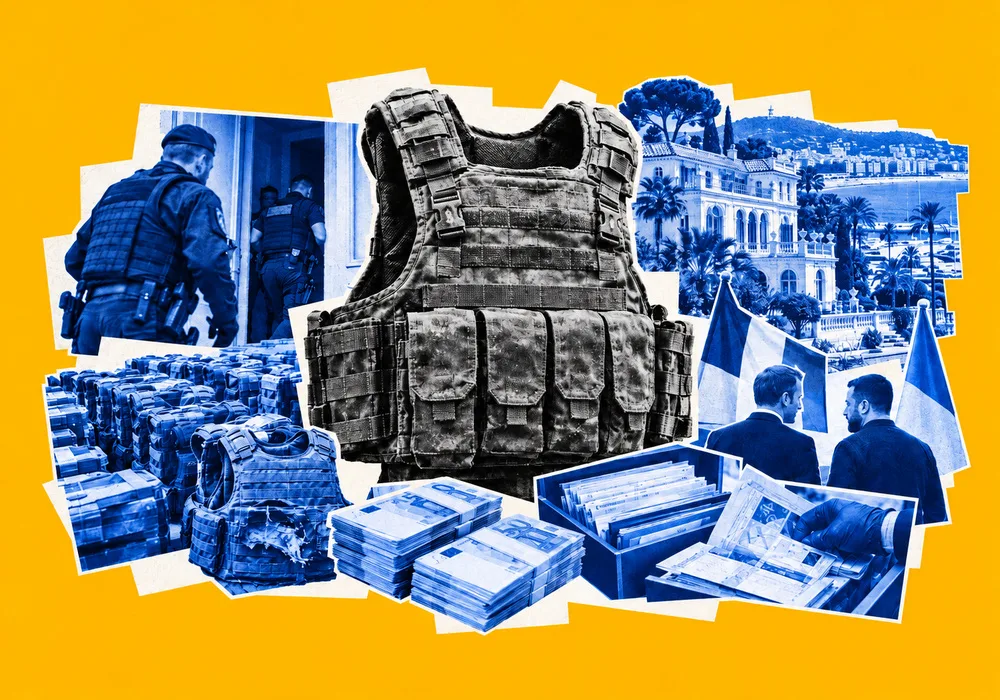
French and Ukrainian authorities have conducted searches in France as part of an investigation into the purchase of 67,000 substandard body armour vests for Ukraine’s armed forces. The procurement allegedly caused losses exceeding €53 million, while investigators suspect a former Ukrainian Defence Ministry official received illicit payments linked to the contract, some of which were invested in property in Nice.
French and Ukrainian law enforcement authorities have carried out searches in France as part of a major investigation into the procurement of 67,000 body armour vests intended for Ukraine’s armed forces. The operation, coordinated by the European Union Agency for Criminal Justice Cooperation (Eurojust), concerns a military procurement contract concluded in March 2022, shortly after Russia launched its full-scale invasion of Ukraine. According to investigators, the Ukrainian state suffered financial losses exceeding €53 million after purchasing protective equipment that failed to meet the required standards. The investigation also examines allegations that a former Ukrainian Defence Ministry official facilitated the agreement in exchange for financial remuneration from the supplier, with part of the money subsequently invested in real estate in Nice.
The case combines allegations of financial misconduct, failures in military procurement and the movement of suspected illicit proceeds across national borders. It also illustrates the difficulties Ukrainian authorities face when investigating procurement decisions made during the initial stages of the full-scale war, when the armed forces urgently needed protective equipment and the state was under considerable pressure to secure supplies. The French operation represents an important stage in the investigation because it has allowed authorities to pursue assets allegedly connected to the contract outside Ukraine and gather evidence through international judicial cooperation.
Advance payment and defective military equipment
The procurement took place under extraordinary circumstances. In the first weeks of the full-scale invasion, Ukraine faced an urgent requirement to equip newly mobilised personnel and reinforce existing military units. Body armour was among the essential supplies needed to protect soldiers operating in increasingly dangerous conditions, making the speed and reliability of procurement particularly important. The state therefore entered into an agreement for 67,000 protective vests, with the supplier receiving the full contract value in advance.
However, the subsequent delivery reportedly failed to meet the declared technical requirements. An independent examination found that the body armour was of poor quality and did not provide the level of protection specified in the procurement documentation. The discrepancy between the promised and actual characteristics of the equipment became central to the investigation, as the state had already transferred the entire payment before the quality of the goods could be established.
The financial consequences were substantial. Eurojust estimates that the procurement caused losses exceeding €53 million, although this figure reflects the losses reported in the investigation rather than an amount established through a final criminal judgment. The case raises questions about how the supplier was selected, what verification procedures were applied before the agreement was signed, and why a full advance payment was made without sufficient safeguards to protect public funds.
The circumstances are particularly significant because body armour is not ordinary military inventory. Its quality directly affects the protection available to personnel in combat conditions, and failure to meet technical standards can have consequences extending beyond the financial value of a contract. Although investigators have not established the full extent of the operational consequences of the defective equipment, the alleged procurement failure concerns supplies specifically intended to protect Ukrainian military personnel during wartime.
Former Defence Ministry official suspected of facilitating the contract
A central part of the investigation concerns a former official of Ukraine’s Ministry of Defence who headed the department responsible for developing the ministry’s material support system. Investigators suspect that he facilitated the conclusion of the procurement agreement with the supplier in March 2022 and received financial remuneration in return for his involvement. The allegations place particular attention on the role of officials responsible for military supply arrangements and the extent to which their decisions may have been influenced by private financial interests.
According to the investigation, the suspected payments did not remain entirely within Ukraine. Authorities believe that the money was transferred through another individual and subsequently invested in real estate in Nice, a major property market on France’s Mediterranean coast. This alleged financial trail became a significant element of the case, as investigators sought to establish the connection between the original Ukrainian procurement agreement, the suspected payments and assets acquired abroad.
The use of intermediaries and foreign property investments is also relevant to the broader investigation into the movement and concealment of suspected illicit proceeds. Establishing the ownership and financing of property can require cooperation between several national authorities, particularly when the individuals under investigation and the assets concerned are located in different jurisdictions. In this case, French investigators were able to examine property and financial accounts potentially linked to the alleged scheme following requests for judicial assistance from Ukraine.
The allegations against the former official remain subject to investigation, and no final determination of criminal responsibility has been announced. Nevertheless, the case places the conduct of senior personnel involved in military procurement under scrutiny at a time when public confidence in the management of defence resources is particularly important.
French authorities freeze property and bank accounts
The searches in France were conducted through coordinated action involving French judicial authorities and Ukrainian investigative bodies, with Eurojust facilitating the exchange of information and the execution of several mutual legal assistance requests submitted by Ukraine. The operation involved an investigating judge at the Paris court and France’s Central Office against Major Financial Crime. Ukrainian participation included representatives of the Prosecutor General’s Office, the Security Service of Ukraine (SBU) and the State Bureau of Investigation (SBI).
Ukrainian investigators joined their French counterparts during the operation, contributing to investigative activities and supporting the questioning of suspects and witnesses. This cooperation was particularly important for examining evidence related to the original procurement contract and identifying potential links between individuals involved in the agreement and assets located in France.
During the searches, authorities seized a property and froze several bank accounts belonging to individuals allegedly involved in the scheme. These measures are intended to preserve assets that could be relevant to the judicial proceedings and prevent their disposal while investigators examine the evidence. They do not, however, constitute a final confiscation, and the reported value of the assets should not be treated as money already recovered by the Ukrainian state.
The investigation will continue with an examination of the evidence collected during the searches. Authorities will need to establish the financial relationships between the supplier, the former official and other individuals suspected of participating in the arrangement. They will also have to determine the origin of the funds used to acquire the French property and whether the assets can be directly connected to the alleged criminal conduct.
European judicial cooperation in Ukraine's wartime investigations
The operation also demonstrates the role of Eurojust in facilitating investigations that extend beyond national borders. The agency, headquartered in The Hague, supports cooperation between national judicial authorities in cases involving organised crime, financial offences and other serious criminal activity. It does not independently determine criminal responsibility or conduct prosecutions, but helps national authorities coordinate investigative measures and exchange evidence.
Ukraine and Eurojust signed a cooperation agreement in 2016, establishing a framework for closer judicial collaboration. Since August 2018, Ukraine has also maintained a liaison prosecutor at the agency's headquarters in The Hague, providing a direct channel for communication with judicial authorities in other participating countries. This arrangement has become increasingly relevant as Ukrainian investigations involving suspected financial misconduct increasingly extend into foreign jurisdictions.
The body armour case illustrates why this infrastructure matters. When suspected proceeds from a Ukrainian public procurement contract are invested in property abroad, domestic investigative powers alone may be insufficient to establish ownership, secure relevant evidence or prevent the disposal of assets. Cooperation with French authorities has enabled investigators to take measures against property and bank accounts in France while supporting the wider Ukrainian investigation.
The case also reflects a broader European interest in ensuring that financial misconduct involving wartime public expenditure does not remain beyond the reach of national judicial systems simply because suspected assets have been transferred abroad. The ability to trace and secure such assets is particularly important when public funds are allocated to military assistance, equipment and other urgent defence requirements.
Implications for Ukraine's defence procurement system
The investigation comes amid continued pressure on Ukraine to maintain the reliability, transparency and accountability of its defence procurement system. Since the beginning of Russia’s full-scale invasion, the state has had to acquire large quantities of military equipment under conditions that differ significantly from ordinary peacetime purchasing. Urgent operational requirements, supply shortages and competition for limited production capacity have placed considerable pressure on procurement institutions, while the financial scale of military contracts has increased the importance of effective oversight.
The alleged €53 million loss highlights the risks associated with advance payments, particularly when contracts involve equipment whose technical characteristics are essential for personnel safety. Paying a supplier in full before independent verification creates substantial exposure if the delivered goods do not correspond to the agreed specifications. Although advance payments can be necessary in emergency procurement, the case demonstrates the importance of contractual safeguards, independent quality assessments and mechanisms for holding suppliers accountable for defective deliveries.
There is also a wider institutional dimension. Ukraine's ability to sustain international military and financial support depends not only on its capacity to use resources effectively but also on the credibility of the systems responsible for managing them. Allegations involving senior officials and military contracts can create additional pressure on public institutions, particularly when the equipment concerned is intended for soldiers serving on the front line. Investigations must therefore establish individual responsibility while also identifying procedural weaknesses that may have allowed questionable procurement decisions to take place.
The French searches mark a significant development in the effort to establish the financial trail behind the contract, but they do not conclude the investigation. Authorities still need to examine the seized evidence, clarify the alleged payment arrangements and determine the legal status of the assets identified in France. The case will ultimately test the ability of Ukrainian and European judicial institutions to pursue suspected corruption involving wartime military procurement across national borders, while ensuring that those responsible can be held accountable through due legal process.