
Visegrad Four Urge EU to Ease Russian Energy Phase-Out Rules as Costs Soar

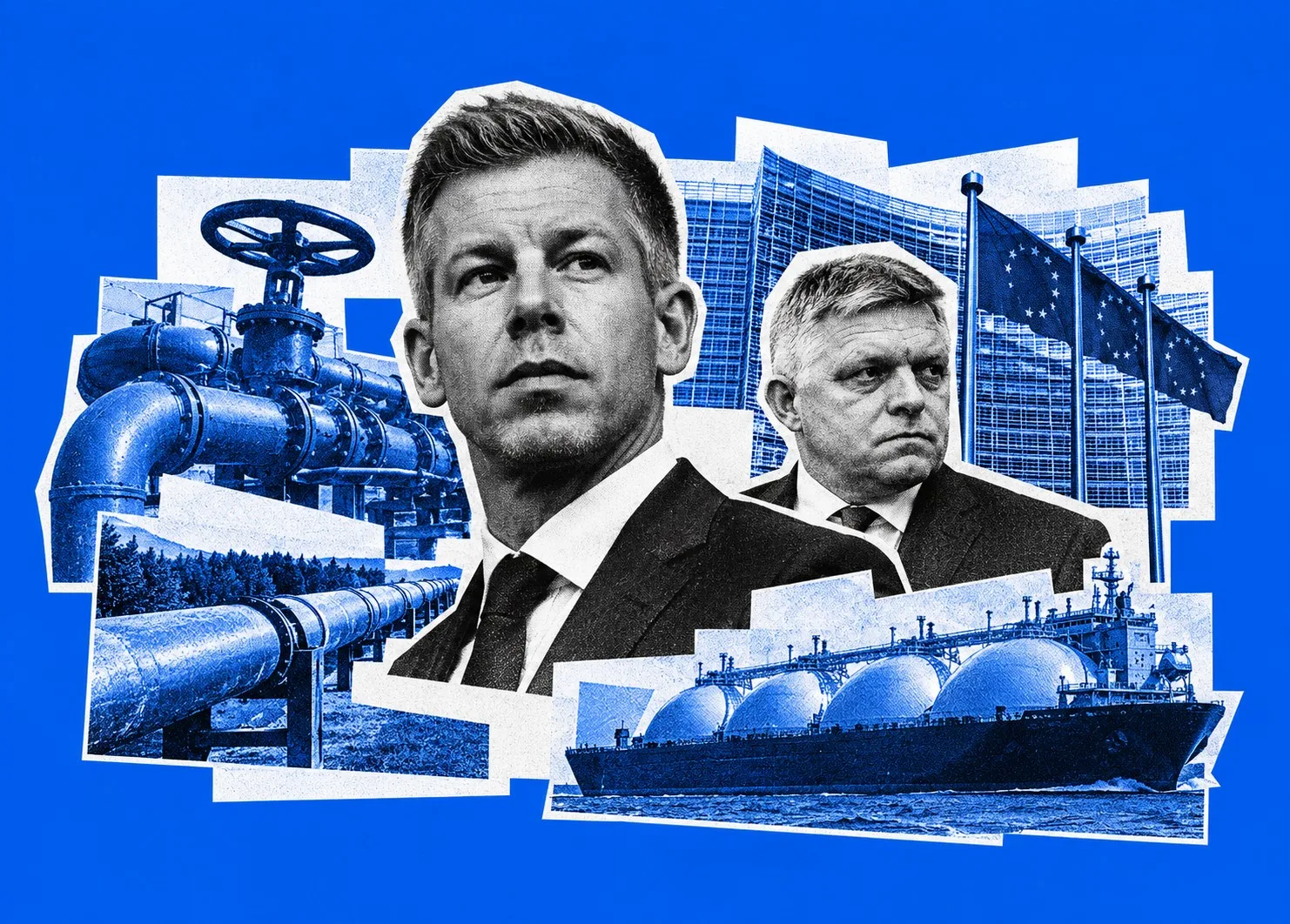
Slovakia and Hungary have called on the European Union to ease its mandatory 2027 phase-out of Russian energy, urging Brussels for greater regulatory flexibility and expanded funding to prevent a severe economic crisis in Central Europe. Speaking in Bratislava alongside EU Energy Commissioner Dan Jørgensen, officials from both landlocked nations warned that soaring electricity prices and legacy pipeline reliance make rapid decoupling from Russian oil and gas financially unsustainable without dedicated EU support.
The Bratislava talks immediately followed the October 15–16 European Council summit.
There, the Visegrad Group—comprising Hungary, Slovakia, Czechia, and Poland—pushed for collective relief from soaring power bills, specifically asking Brussels to delay the rollout of the ETS2 carbon market until 2030 and to carve out dedicated oil and gas infrastructure funding in the upcoming multi-annual financial framework.
Slovakia's Deputy Prime Minister Denisa Saková made the financial requirement explicit during a joint press briefing.
“We would like to discuss with the European Commission how the next EU funding period and the availability of EU funds can meet our needs, particularly regarding the expansion of oil and gas infrastructure in the Visegrad Four region,” - Saková said.
Saková stressed that landlocked nations cannot simply cut off existing supply lines without pre-established regulatory and physical frameworks.
From 2027 Slovacia will not be able to import gas from Russia and would like to sign new diversification contracts. "
Diversification and energy security mean that we have to have prepared rules for the supplies of oil and gas for the V4 region,” Slovakia's Deputy Prime Minister told.
Energy Commissioner Jørgensen acknowledged the severe economic strain on Central European consumers, but firmly reiterated the Commission's policy trajectory.
“We used to be dependent on Russia. We're moving out of that. Now, that is good. But the current situation shows that we are now dependent on the global market, and events in the Middle East can affect citizens here in Bratislav,” EU Energy Commissioner said.
The Middle Eastern conflict involving the United States, Israel, and Iran has choked global energy markets, driving up baseline costs across Europe and stalling planned private investments in industrial electrification.
The Geography Trap
The capacity to absorb the EU’s 2027 deadline varies dramatically across Central Europe, largely determined by geographic access to maritime trade routes and infrastructure investments made over the previous decade.
Poland represents one extreme of this regional divide.
Over a decade of systematic, heavy capital expenditure saw Warsaw transform its energy architecture, reducing its reliance on Russian imports from over 80 per cent to zero by 2025.
This structural transition was achieved by constructing and expanding the Świnoujście liquefied natural gas (LNG) import terminal, commissioning the Baltic Pipe project connecting Polish consumers to Norwegian gas fields via Denmark, and building high-capacity cross-border gas interconnectors with Lithuania and Slovakia.
Poland's strategy was forged through repeated supply disputes with Moscow.
Russian decisions to alter pipeline pressure prior to the 2016 NATO summit in Warsaw and the delivery of contaminated gas in 2017 accelerated Polish resolve to sever long-term supply contracts with Gazprom.
When Russia unilaterally cut off gas deliveries in April 2022, Poland’s alternative import corridors were fully operational, demonstrating that complete decoupling from Russian hydrocarbons is technically and logistically achievable when maritime or non-Russian pipeline access exists.
Czechia followed a similar trajectory, severing its remaining direct ties to Russian crude oil and natural gas by the end of 2025.
Masaryk University energy expert Martin Jirušek noted that Prague’s ability to act decisively stemmed from foundational pipeline infrastructure built during the 1990s, which provided physical connection to Western European supply networks.
Although cheaper Russian energy remained economically attractive for years, these Western supply routes enabled Czechia to execute a rapid transition following the escalation of the war in Ukraine.
Slovakia and Hungary possess no maritime access.
Both economies historically functioned as the primary western entry points for Soviet-era pipeline systems, specifically the Druzhba oil pipeline and the TurkStream gas corridor.
In 2025, Hungary continued to import approximately 100,000 barrels of Russian crude per day, representing roughly 90 per cent of its total domestic crude supply. Domestic refiners, notably the MOL Group, operate facilities specifically calibrated for Russian heavy crude, meaning an abrupt transition to alternative grades presents immediate technical and operational challenges.

Physical insecurity along legacy networks has further complicated energy management.
In late January 2026, airstrikes damaged the Druzhba pipeline inside Ukrainian territory, abruptly halting crude deliveries to Slovak and Hungarian refineries.
While Ukrainian officials attributed the damage to Russian military actions, Moscow denied responsibility, leading to diplomatic friction between Bratislava, Budapest, and Kyiv over inspection access and repair schedules.
Slovak Prime Minister Robert Fico repeatedly emphasized that restoring operations along the damaged corridor remains essential to prevent industrial disruption in Central Europe.
Alternative supply options exist, but they carry substantial commercial implications. Croatia’s Adria pipeline, operated by Janaf, provides access to non-Russian crude delivered via maritime terminals on the Adriatic coast.
Following regional discussions, Croatian Economy Minister Ante Šušnjar addressed Hungarian concerns directly:
“Our infrastructure is here to strengthen resilience, diversification and security across Central Europe. And our message to the Hungarian people is equally clear – Croatia extends a hand of friendship. We want cooperation, not confrontation. In a time of uncertainty, good neighbors build solutions together.”
While analysts from data intelligence firm Kpler confirm that the Adria pipeline possesses sufficient capacity to supply inland refineries, utilizing it exclusively involves higher transit tariffs and logistical adjustments.
Switches of this nature erode the profitability of refiners like MOL Group, compounding economic pressures across the domestic retail fuel sector.
The Washington Factor
Political developments in Budapest have altered the diplomatic approach of the Hungarian government, even as underlying structural constraints remain unchanged.
On April 12, 2026, Péter Magyar led the Tisza Party to a victory in Hungary’s parliamentary elections, ending Viktor Orbán’s sixteen-year tenure as prime minister. Magyar campaigned on a platform of aligning Hungarian foreign policy more closely with European Union objectives, promising to eliminate Hungary's reliance on Russian energy imports by 2035 and to repair relations with Brussels.
Upon assuming office, however, Magyar acknowledged the practical limits imposed by geography and infrastructure.
Speaking to domestic media, Magyar outlined the operational parameters facing his administration:
“The geographical position of neither Russia nor Hungary will change. Our energy exposure will also be here for a while. Diversification needs to be strengthened, but this won't happen overnight. If necessary, we will negotiate (with Russia), but we won't become friends.”
Magyar’s platform also included plans to re-examine the financing and implementation of the Paks II nuclear expansion project, traditionally developed in partnership with Russia’s Rosatom.
The incoming administration indicated an intention to explore small modular reactors (SMRs) in collaboration with French and American partners, while maintaining existing nuclear capacity to ensure baseline electricity generation.
The pragmatic stance of the new administration was tested on October 9, 2026, when US President Donald Trump announced a bilateral arrangement with Moscow authorizing the export of 4.8 million metric tons of Russian fuel products, aimed at stabilizing global diesel prices.
In an interview with Radio 444, Magyar assessed the significance of the United States-Russia agreement for Hungarian energy policy:
“I believe that the U.S. president enters into whatever agreements he deems necessary. On the other hand, this agreement does have some significance from Hungary's perspective.”
Noting that Washington maintains annual sanction waivers allowing Hungarian entities to import Russian oil and gas, with renewals traditionally reviewed in November, Magyar stated:
“It would be illogical not to grant Hungary this exemption for at least another year.”
The agreement between Washington and Moscow generated mixed reactions among European Union member states.
While several northern and eastern members expressed concern that bilateral trade accommodations undermine the collective sanctions regime, officials in Bratislava and Budapest cited the arrangement as evidence that rigid phase-out schedules are increasingly disconnected from global market realities.
Market Pressures and Carbon Pricing
The demand for regulatory relief from the Visegrad Four occurs against a background of elevated energy costs across Central Europe. Data from energy think tank Ember indicates that wholesale electricity futures in the region remain more than 60 per cent above pre-crisis levels.
The escalation of military operations in the Middle East involving the United States, Israel, and Iran has introduced additional volatility into global natural gas and oil markets. Higher primary energy costs directly affect electricity generation, creating a persistent cost disadvantage for energy-intensive manufacturing, chemical production, and heavy industrial operations located in landlocked member states.
Industrial operators in Slovakia and Hungary argue that high baseline energy costs limit their ability to commit capital toward electrification and decarbonization projects. This economic environment forms the basis for the Visegrad Group's joint petition to delay the implementation of ETS2, the European Union's extended Emissions Trading System covering building heating and road transport fuels, until 2030.
Under the current framework, ETS2 is designed to apply carbon pricing to fuel distributors, creating a direct financial incentive to reduce fossil fuel consumption.
Central European ministers argue that introducing additional carbon costs while wholesale energy prices remain elevated will place an unsustainable burden on commercial operators and private consumers alike.
A Fractured Bloc
The friction between landlocked member states and the European Commission is increasingly unfolding across institutional, legal, and financial forums.
Prior to the April 2026 elections, the Hungarian government under Viktor Orbán initiated legal proceedings in the Court of Justice of the European Union to challenge the legal structure and enforcement of the EU’s mandatory energy phase-out timelines.
Slovakia formally joined the action as a co-litigant, arguing that imposing uniform phase-out dates without corresponding financial compensation mechanisms places landlocked industrial sectors at a competitive disadvantage within the single market.
A judicial ruling on the matter is expected from the court in the coming months.
Under Péter Magyar, Hungary’s diplomatic strategy has shifted toward a dual-track approach.
While accepting the principle of long-term strategic diversification away from Russian supplies, the Hungarian government is actively aligning with Slovakia to lobby Brussels for dedicated funding mechanisms, infrastructure subsidies, and extended transitional carve-outs in upcoming budget negotiations.
The European Commission faces a complex balancing task.
Enforcing the 2027 phase-out deadline without offering financial or regulatory accommodations risks deepening economic disparities between coastal and landlocked member states. Conversely, granting broad exemptions or delaying core climate initiatives like ETS2 risks diluting the European Union's broader decarbonization commitments and undermining the uniformity of the single market’s regulatory framework.