
Europe’s Refining Deficit: Why the EU Is Warning of a New Energy Crisis

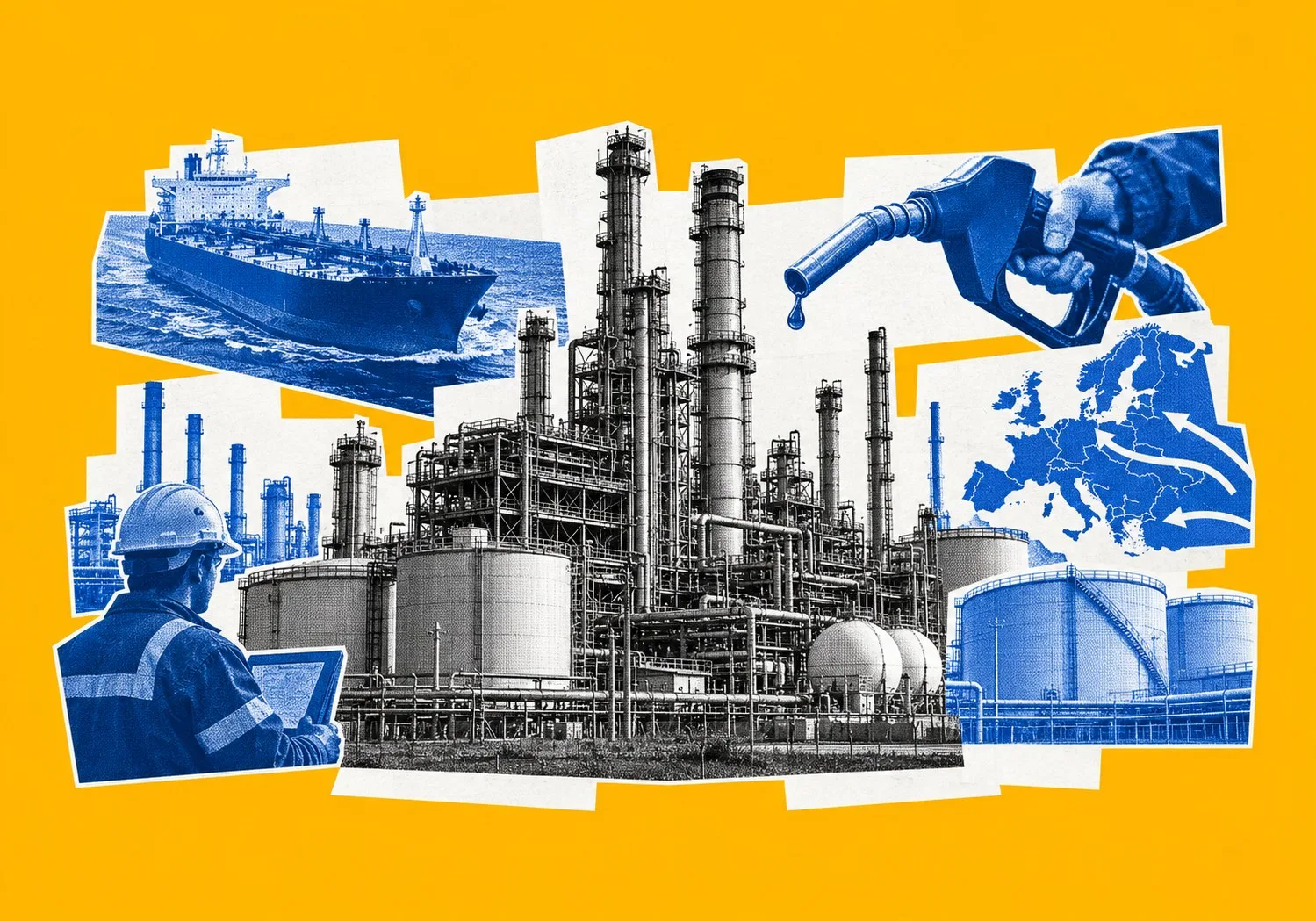
Europe must rebuild and protect its domestic oil refining capacity to handle ongoing global energy supply disruptions, according to the European Commission. EU Energy Commissioner Dan Jørgensen warned that geopolitical instability and a prolonged squeeze on diesel supplies should serve as a "wake-up call" for the bloc. Launching a strategic dialogue with industry leaders alongside European Commission President Ursula von der Leyen, Jørgensen acknowledged a vulnerability in current energy policy: securing crude oil imports on global markets is insufficient if the bloc lacks the industrial capacity to process them into diesel and jet fuel.
Conflict in the Middle East has pushed crude oil prices past $115 a barrel, while European natural gas storage has dropped to decade lows. As a result, European officials face the consequences of shrinking industrial midstream capacity, which has increased the continent's reliance on external fuel suppliers.

Brussels is currently evaluating potential emergency measures, including strategic stock releases and fuel rationing.
Beyond short-term supply bottlenecks, today's developments reflect a structural gap in European policy, which anticipated reduced domestic reliance on fossil fuel processing ahead of alternative energy deployment.
The initiative by Brussels marks a shift in how European institutions approach the energy supply chain.
For years, policy focused primarily on diversifying sources of crude oil, assuming that international markets would reliably supply processed petroleum products.
However, current disruptions demonstrate that refining capacity represents an independent industrial variable. Without operational facilities to turn crude oil into middle distillates, access to raw petroleum does not guarantee functional energy security for transport, agriculture, or defense.
The Midstream Blind Spot
Since 2009, Europe has reduced its primary refining capacity by one-fifth.
According to industry data from Concawe, the scientific division of FuelsEurope, thirty-five mainstream processing facilities have closed across the EU, the United Kingdom, Norway, and Switzerland.
These shutdowns removed 167.6 million tonnes of annual primary refining capacity from the European energy system.
At the end of 2025, the total capacity across these nations stood at 625.4 million tonnes per year across 72 remaining mainstream refineries. The EU-27 alone accounted for 567.4 million tonnes of that total.
This remaining capacity is unevenly distributed across member states.
Germany remains the largest refining center in the region, holding 98.7 million tonnes of annual capacity. It is followed by Italy with 78.6 million tonnes, Spain with 70.6 million tonnes, the Netherlands with 59.7 million tonnes, France with 57.4 million tonnes, and Belgium with 32 million tonnes. Together, these six countries account for the vast majority of the bloc's oil processing infrastructure.

However, the overall reduction of approximately 10 percent in EU refining capacity over the past two decades has eroded the region's operational flexibility.
At least five closed facilities underwent complete industrial transformations, abandoning crude oil processing to convert into biorefineries.
Market dynamics have since shifted under geopolitical pressure.
Framing the decline directly in terms of security rather than routine market adjustment, Jørgensen stated: "We need to counter this trend and ensure that we have adequate and flexible refining capacity in Europe. Today and for the future. This is not just a matter of economic competitiveness. It is also a matter of security."
Tensions increased following US and Israeli military actions regarding Iran in late February, alongside subsequent attacks on Gulf oil infrastructure.
This conflict coincided with Ukrainian strikes on Russian refining infrastructure and export suspensions by China.
Although crude oil continues to move across maritime trade routes, Brent crude reached a peak near $117 a barrel, averaging $101 throughout September.
European wholesale gas prices reached €97 per megawatt-hour this week, while natural gas storage levels stand at roughly 75 percent, compared to the seasonal average of 80 percent heading into winter.
The primary vulnerability remains focused on finished fuel products, particularly diesel and jet fuel.
According to data cited by Jørgensen, the European Union has absorbed over €100 billion in additional fossil fuel import costs since late February without increasing total imported fuel volumes.
Furthermore, existing emergency mechanisms were designed primarily around raw materials rather than finished goods.
European emergency reserves consist predominantly of unrefined crude oil, which cannot directly power logistics fleets, commercial aviation, agricultural machinery, or military equipment.
Ben McWilliams, an affiliate fellow at the Bruegel think tank, noted that emergency stockpiles cannot replace domestic refining infrastructure.
Midstream processing remains an integral component of industrial autonomy, as crude reserves require active processing facilities to maintain daily supply stability.
McWilliams emphasized that Europe must carefully maintain domestic refining capacity specifically to meet the distinct technical demands of individual fuels, including diesel, gasoline, kerosene, and naphtha for the chemical industry.
The Geopolitical Divide Over Industrial Protection
Political divisions regarding fuel security are emerging across EU member states.
Ahead of an energy ministers meeting on October 29, Poland, Czechia, and Slovakia submitted a joint position paper requesting a long-term strategy to preserve domestic oil refineries.
The three Central European governments emphasized that crude oil supply and refined product supply represent separate policy challenges.
"Security of crude oil supply and security of refined product supply are distinct challenges," reads the joint document. "Crude oil cannot substitute for diesel or aviation fuel without suitable processing capacity." The paper warned that further plant closures would increase long-term reliance on foreign processors.
The joint submission noted that essential sectors, including aviation, maritime shipping, agriculture, defense, and emergency services, will continue to require liquid fuels for the foreseeable future.
Consequently, domestic processing infrastructure constitutes a strategic asset.
While welcoming the Commission's plan to assess refinery capacity, the three governments called for concrete measures to keep European facilities economically competitive and resilient against future external disruptions.
This position aligns with assessments by Defence Commissioner Andrius Kubilius regarding military mobility and operational readiness. Kubilius is co-chairing the political talks with Jørgensen, reflecting the integration of industrial fuel supply into broader European defense planning. Transport logistics, emergency services, and defense operations rely on middle distillates such as diesel and kerosene, which cannot be immediately replaced by alternative power sources.
However, proposals to support European refining capacity intersect with existing EU climate frameworks.
Green lawmakers in the European Parliament have questioned the Commission’s industrial initiative.
German MEP Michael Bloss argued that attributing refinery closures to climate targets misrepresents market drivers.
"We keep our emergency stocks mostly as crude, while our actual weak spot is diesel and jet fuel," Bloss stated.
"Blaming climate policy for refinery closures gets the story backward."
In his view, facility closures reflected commercial decisions based on projected demand trends and narrowing profit margins.
Bloss advocated accelerating transport electrification rather than directing capital toward fossil fuel infrastructure, warning that modifying emissions standards or subsidizing refining capacity could prolong fossil fuel dependence.
This policy overlap presents an operational choice for Brussels.
Increasing output at existing refineries requires regulatory flexibility and capital investment. Conversely, reopening closed facilities or constructing new plants involves multi-year timelines and long-term financial commitments that contrast with the EU's targets for reducing fossil fuel reliance.
The Commission's current focus remains on identifying immediate operational adjustments that could boost output from existing facilities. Expanding output at active plants offers a faster response to potential fuel shortages than constructing new facilities, which require years of permitting, planning, and capital deployment.
Reopening shuttered plants presents similar hurdles, as investors require long-term demand visibility to justify capital expenditure over the asset's operational life.
A Systemic Realignment of Energy Vulnerability
The current market environment highlights the relationship between industrial policy and the energy transition.
Regional policy focused on reducing domestic fossil fuel processing while relying on international markets to supply finished fuels during the transition period.
As a result of this transition strategy, European reliance on imported finished fuels from external regions—including the Middle East, the United States, and India—has grown. When global supply chains experience friction or external refiners adjust export volumes, European markets experience immediate price pressures.
Consequently, lower domestic refining output has shifted market position to third-country processing centers.
European consumers face higher energy costs, with UK household annual energy bills projected to rise 16 percent toward £2,000, while external refiners manage supply gaps.
The UK’s energy regulators noted that reliance on power and fuel imports leaves consumers exposed to international price swings, pointing to high power import payments over the past year.
The broader macroeconomic environment reflects these energy pressures across European markets.
While wholesale gas prices surged and Brent crude fluctuated near $115 per barrel, broader European financial markets showed cautious movement. The Stoxx Europe 600 index rose by 0.3 percent in early trading, while the UK’s FTSE 100 gained 0.4 percent, even as energy costs created broader inflationary pressure across industrial sectors.
The European Commission’s immediate plan focuses on technical consultations with refiners to optimize production at operating plants, with a progress review scheduled for early 2027.
However, technical adjustments do not resolve the structural choices facing the sector. Industry representatives from FuelsEurope have pointed out that European refiners face higher operating costs and stricter regulatory conditions than competitors in other regions. The industry trade body questioned whether Europe will maintain domestic processing capacity during its industrial transformation or become increasingly dependent on imports from regions with different regulatory standards.
European energy infrastructure operates within an evolving international environment. Reductions in domestic processing capacity prior to the full scaling of alternative energy systems have increased exposure to global market shifts.
As winter approaches with lower storage levels and fluctuating energy markets, European policymakers face a clear structural reality: managing energy security requires addressing the physical requirements of midstream processing alongside long-term decarbonization goals.
Sources: Euronews, The Guardian, Concawe