
US Presidential Election 2028: Midterms Spark Race to Succeed Trump

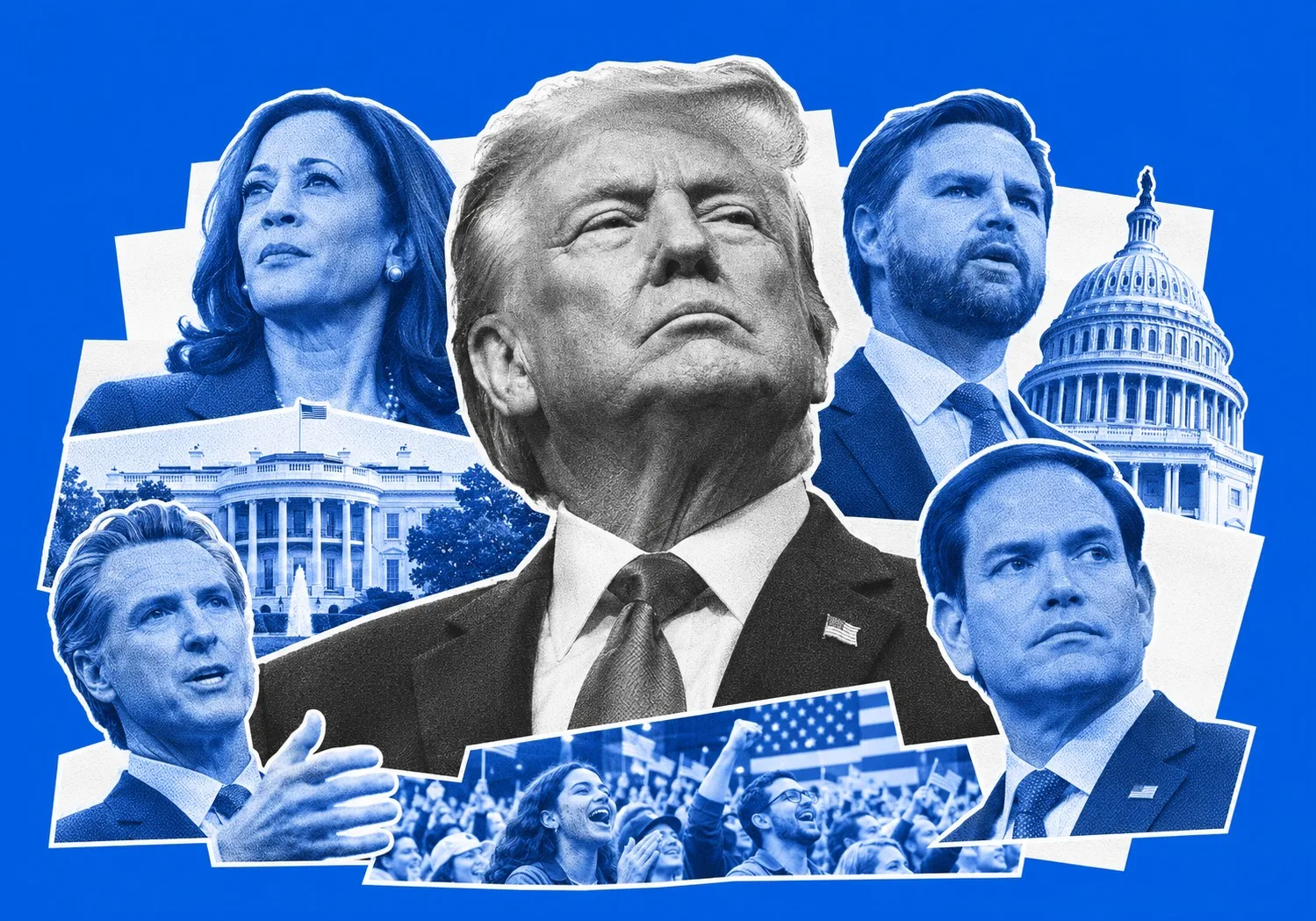
The Democrats' victory in the 2026 US midterm elections has strengthened potential White House contenders including Gavin Newsom, Kamala Harris and Josh Shapiro, but left the party without a clear frontrunner. Among Republicans, JD Vance, Ted Cruz and Ron DeSantis are emerging as possible candidates amid disagreements over the Iran war, tariffs and rising living costs.
Democrats secured at least 54 Senate seats and gained more than 30 seats in the House of Representatives, according to Reuters. Counting continued in Alaska and Mississippi on 5 November, leaving the final size of the Senate majority uncertain.
Several victories came in traditionally Republican states. James Talarico became the first Democrat elected to the Senate from Texas since 1988, while Adam Hamilton achieved the party's first Senate victory in Kansas since 1932. Democrats also defeated a Trump-backed candidate in South Carolina.
In Michigan, Abdul El-Sayed defeated Republican Mike Rogers, becoming the first Muslim elected to the US Senate. Pennsylvania Governor Josh Shapiro secured a decisive re-election victory, while Democrats gained four congressional seats in his state.
Voters' dissatisfaction with living costs helped drive the Republican losses. A Reuters/Ipsos survey conducted before the election found that 48% of registered voters considered affordability their most important electoral concern.
The prolonged war with Iran also contributed to rising fuel prices and criticism of Trump's foreign policy.
Democrats Have No Clear Favourite
At least 30 Democrats are privately considering presidential campaigns, according to party strategist Scott Ferson.
Former Vice President Kamala Harris remains among the possible candidates despite her defeat to Trump in 2024. Speaking to Associated Press after the midterms, she said she intended to help shape the party's future whether or not she ran again.
California Governor Gavin Newsom spent the election campaign supporting Democratic candidates outside his state. He has also raised his national profile through public confrontations with Trump.
Shapiro strengthened his position with another victory in Pennsylvania, a crucial presidential battleground. Kentucky Governor Andy Beshear offers a different electoral record, having repeatedly won statewide elections in heavily Republican territory.
Other possible contenders include former Transportation Secretary Pete Buttigieg, Illinois Governor JB Pritzker, Maryland Governor Wes Moore, Arizona Senator Mark Kelly and New Jersey Senator Cory Booker.
Representative Alexandria Ocasio-Cortez is another prominent name, particularly among progressive Democrats.
Reuters contacted representatives of nine leading prospective candidates. None confirmed plans to run.
Several politicians have already visited states influential in the presidential nomination process, including Nevada, New Hampshire and South Carolina.
On 12 November, Buttigieg and California Representative Ro Khanna are among those expected at a gathering in Denver organised by Majority Democrats, a group advocating younger party leadership and a more centrist platform.
Its chairman, Representative Jake Auchincloss, told Reuters that the meeting would focus on developing a positive governing agenda rather than relying solely on opposition to Trump.
A Divided Democratic Party
The midterm victories have reopened disagreements between moderates and progressives over the policies needed to win the presidency.
Talarico and Hamilton campaigned on economic concerns and discussed religious faith, appealing to constituencies that have traditionally supported Republicans.
El-Sayed's success in Michigan offers a contrasting example. He advocated expanding public healthcare and received backing from Ocasio-Cortez.
Democratic strategist Doug Sosnik told Reuters that both factions could claim their approach had been vindicated by the election results.
The disagreement extends to taxation, immigration, policing and military expenditure.
Foreign policy is another potential source of conflict. Chatham House has identified differences among Democrats over arms sales to Israel, American military intervention and defence spending.
Those divisions were visible during the Michigan Senate campaign, where disagreements over Israel complicated relations between progressive and moderate Democrats.
The party's presidential hopefuls will enter the primaries with different electoral records. Governors such as Shapiro and Beshear can point to victories in competitive or conservative states. Progressives can cite El-Sayed's success and argue for a more ambitious economic programme.
Congressional Investigations Become a Political Weapon
The incoming Democratic majorities will gain extensive investigative powers when the new Congress convenes in January 2027.
House Democratic leader Hakeem Jeffries, positioned to become the first Black speaker of the House, has identified affordability and accountability as priorities.
Representative Robert Garcia, expected to chair the House Oversight Committee, has signalled plans to investigate the Trump administration and its business connections.

Senator Ron Wyden, the prospective chairman of the Senate Finance Committee, intends to examine agreements between the White House and pharmaceutical companies over prescription drug prices.
According to Reuters, potential investigations could also involve Trump's family businesses, major Republican donors, government contractors and companies associated with Elon Musk.
The proposed inquiries have not established wrongdoing. The White House denies misconduct and describes the Democrats' plans as politically motivated.
An August Reuters/Ipsos survey found that 69% of Americans believed Trump's private business interests influenced his presidential decisions.
Sarah Longwell, a former Republican strategist and Trump critic, told Reuters that investigations could damage the presidential prospects of senior administration figures by linking them to controversies surrounding Trump.
Republican consultant Ron Bonjean warned that Democrats could lose support if investigations overshadowed efforts to address household expenses.
Their ability to pursue inquiries will also depend on overcoming resistance from the White House. Disputes over subpoenas and access to documents could lead to prolonged litigation.
Democrats will control congressional committees and spending negotiations, but Trump retains the power to veto legislation. His administration is also preparing to rely more heavily on executive action.
Republicans Search for Trump's Successor
Vice President JD Vance and Secretary of State Marco Rubio have been considered the leading potential Republican presidential candidates. The midterm defeat has also renewed attention on Texas Senator Ted Cruz and Florida Governor Ron DeSantis.
Both Cruz and DeSantis have previously challenged Trump for the Republican nomination. Cruz ran in 2016, while DeSantis entered the 2024 contest before withdrawing.
Arkansas Governor Sarah Huckabee Sanders is another possible contender.
Vance has acknowledged that family considerations might prevent him from running. Rubio has said he currently has no plans to seek the presidency. DeSantis has declined to rule out another attempt.
Former House Speaker Newt Gingrich has suggested that the scale of Republican losses makes the nomination contest more open than previously expected.
The party also faces changes in its electoral coalition. Reuters reported that exit polls showed Republicans losing support among younger voters, Hispanic voters and some Black men who backed Trump in 2024.
The next Republican nominee will be seeking support from a party still strongly influenced by Trump, who is constitutionally barred from winning a third presidential term.
Vance, Cruz and DeSantis Blame Different Failures
Vice President JD Vance blamed the Republican defeat on the war with Iran.
"The reason we lost is the war," he wrote on 4 November, despite having previously defended the military campaign.
An Associated Press voter survey found that approximately six in ten voters considered the decision to attack Iran a mistake.
However, the same research indicated that affordability and government corruption mattered more to many people deciding their congressional votes.
Republican strategist Matt Dole told Reuters that Vance has less freedom to distance himself from Trump than politicians outside the administration. As vice president, he remains associated with the policies he now identifies as politically damaging.
Cruz criticised both the Iran war and Trump's tariffs.
Speaking on his podcast, the Texas senator argued that tariffs had increased prices and the conflict had continued for too long. He accused Republican politicians of ignoring voters' concerns about the cost of food, petrol, diesel and insurance.
Cruz has not ruled out another presidential campaign.
DeSantis focused on the party's failure to fulfil its promises.
He described the election results across much of the country as approaching an extinction-level event for Republicans.
The Florida governor criticised the handling of documents connected to convicted sex offender Jeffrey Epstein and questioned congressional stock trading.
He argued that Democratic campaign advertisements had successfully exploited these controversies. Republicans had promised transparency over the Epstein files but failed, in his view, to deliver.
DeSantis has maintained a strained relationship with Trump since their 2024 nomination contest.
Rubio, meanwhile, remains closely associated with the administration's foreign policy through his work as secretary of state and national security adviser. Unlike Cruz and DeSantis, he has not emerged as a prominent public critic of the administration following the midterms.
Trump Rejects Calls for Change
Republican strategists have urged Trump to reconsider policies blamed for the defeat and replace senior White House personnel.
Veteran adviser John Feehery described the results as a major disaster and called for changes to the president's team.
A senior administration official told Reuters that internal polling had warned six weeks before election day of possible Republican losses in both chambers of Congress.
According to the official, Trump rejected advice to change course on Iran despite concerns about the electoral consequences.
The president acknowledged that the war had hurt Republican candidates but defended his decision to launch the military campaign in February.
On 4 November, during his first public appearance after the election, Trump invited journalists to inspect construction of the new White House ballroom.

Republican advisers had previously expressed concern about voters' reactions to the project. Focus groups conducted during competitive Senate campaigns suggested that some Republican and independent voters resented the president's attention to White House renovations while household costs remained high.
Trump defended the construction and said he expected to cooperate with Democrats unless they became obstructive.
He also reminded reporters that he retained presidential veto power.
Sources:Reuters, The Guardian, Axios, Bloomberg