
US election results 2026: Democrats Seize Congress in Midterm Rebuke to Trump

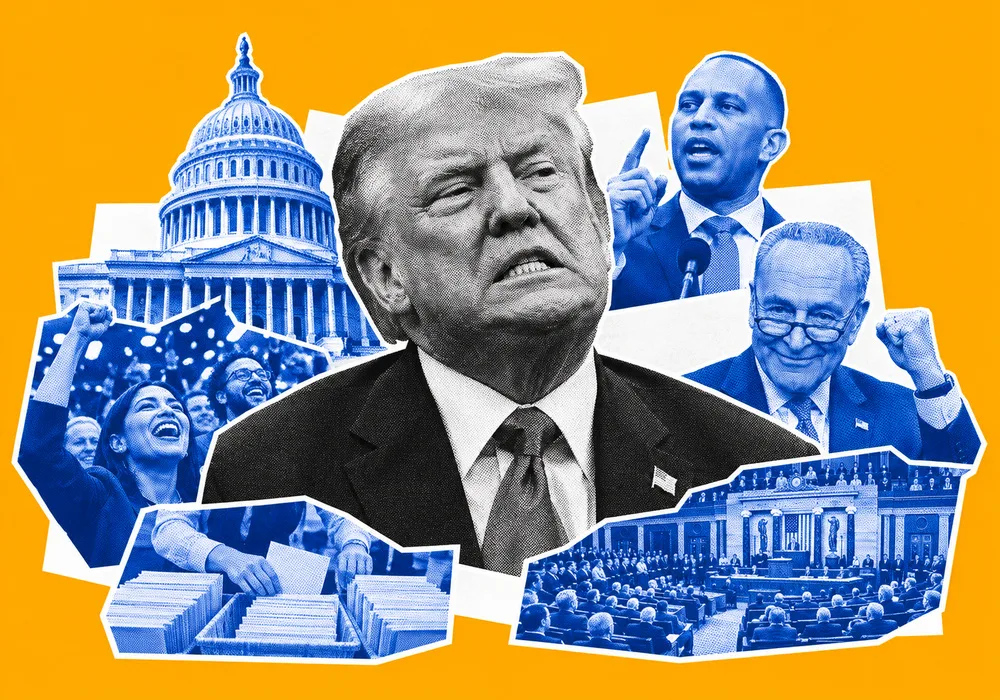
Democrats have won control of both chambers of the US Congress, delivering a major setback to Donald Trump and transforming the political landscape ahead of the final two years of his presidency. The result reflects growing frustration over the cost of living, the war with Iran and the administration’s use of executive power. It also gives Democrats new leverage over federal spending, foreign policy oversight and key appointments, although Trump retains significant authority to pursue his agenda.
The Democratic Party’s victory in the 3 November midterm elections has ended Republican control of both chambers of Congress, marking a major setback for Donald Trump less than halfway through his second term. Democrats made substantial gains in the House of Representatives and Senate, including in states that had supported Trump in the 2024 presidential election. The results indicate that dissatisfaction with the administration has spread beyond the traditional Democratic electorate, giving the opposition party a stronger position in Washington than it has held since Trump returned to the White House.
The scale of the shift is particularly significant because midterm elections are traditionally difficult for the party holding the presidency. However, the Democratic gains point to more than a routine electoral correction. Republicans lost ground in several competitive races, while Democratic candidates also performed strongly in state-level contests. The outcome has weakened the Republican Party’s ability to present itself as having a broad national mandate and raised questions about whether Trump can maintain the coalition that secured his return to office.
The new congressional majority will take office in January 2027, leaving Trump with two years of divided government. He will retain control of the executive branch and considerable authority over foreign and domestic policy, but legislation, federal spending and congressional oversight will increasingly depend on negotiations with Democrats. The change is likely to make the remainder of his presidency more confrontational, particularly on issues where the administration has so far faced limited institutional resistance.
Economic frustration and the war with Iran
The cost of living was one of the central issues shaping the campaign. High prices, concerns about household finances and uncertainty over the economic outlook provided Democrats with an opportunity to challenge the administration’s record. Their message resonated with voters who had supported Trump in 2024 but were increasingly concerned that the government was not delivering the economic improvements promised during the presidential campaign.
The war with Iran added another source of pressure. The conflict has contributed to higher fuel prices and increased uncertainty in international markets, making it more difficult for Republicans to convince voters that the administration was prioritising domestic economic concerns. Rising energy costs have a direct effect on household budgets, transportation and businesses, allowing Democrats to connect the consequences of the conflict with the everyday financial pressures facing American voters.
Trump acknowledged after the election that the war and fuel prices had contributed to the Republican defeat. Vice-President JD Vance also identified the conflict as a factor in the party’s poor performance. These statements suggest that the administration recognises the political cost of its foreign policy decisions, particularly when their economic consequences become visible to voters. The election has therefore exposed a vulnerability that could continue to affect Republican prospects if the conflict remains prolonged or energy prices stay elevated.
The results also raise questions about the durability of Trump’s electoral coalition. Groups that contributed to his victory in 2024, including younger voters and sections of the Latino electorate, showed signs of moving towards Democratic candidates. This does not necessarily signal a permanent realignment, but it demonstrates that support for Trump is not immune to economic dissatisfaction and concerns about the direction of his administration.
Democrats gain control over congressional oversight
Control of Congress gives Democrats the ability to influence legislation, federal spending and the scrutiny of the executive branch. The incoming majority will lead influential committees responsible for national security, foreign affairs, government expenditure and oversight. Their chairs will be able to organise hearings, request documents, summon administration officials and use subpoenas to investigate decisions taken by the White House and federal agencies.
Democratic leaders have indicated that affordability and accountability will be among their priorities. They are also expected to examine the administration’s conduct in the war with Iran, its use of executive authority and decisions involving federal spending. Congressional investigations cannot automatically reverse presidential decisions, but they can expose disagreements within the administration, increase public scrutiny and make it more difficult for officials to avoid questions about the legal and strategic basis of government policy.
The Senate majority will provide Democrats with additional institutional influence. The chamber plays a central role in confirming senior administration officials, ambassadors and federal judges, meaning that a change in control could delay or block some of Trump’s nominations. The new majority will also have greater influence over legislative negotiations and the approval of government appointments, creating another obstacle for an administration that has previously benefited from Republican control of both chambers.
Impeachment may also become part of the political debate, although its practical prospects remain limited. Democrats could initiate proceedings in the House, but removing a president would require a two-thirds majority in the Senate. The election results do not give them that level of support. Their more immediate tools will therefore be investigations, hearings, budget negotiations and legislative challenges rather than the removal of Trump from office.
Foreign policy becomes a new battleground
The change in congressional control could have consequences beyond domestic politics, particularly for the administration’s approach to the war with Iran. Although the president retains considerable authority over military operations and diplomacy, Congress controls federal appropriations and has constitutional responsibilities in matters of war and national security. A Democratic majority could use these powers to demand greater transparency about the conflict’s objectives, costs and expected duration, while seeking to impose conditions on the use of public funds.
Such efforts would not necessarily bring the war to an end. The president retains significant powers as commander-in-chief, and any attempt by Congress to restrict military operations could trigger a political and legal confrontation. Nevertheless, the administration will face greater pressure to justify its decisions and explain how the conflict fits into its broader strategic priorities. The political cost of continuing the war could also increase if Democrats succeed in linking military expenditure to domestic economic concerns.
Ukraine and European security are likely to become another area of disagreement. Democratic lawmakers have repeatedly criticised attempts to weaken US support for Kyiv, reduce American engagement in Europe or ease pressure on Russia. Control of Congress could give them greater opportunities to protect funding for Ukraine, scrutinise decisions affecting NATO and challenge proposals that they consider damaging to European security. They could also work with Republicans who remain supportive of Kyiv, potentially building bipartisan coalitions around specific funding and defence measures.
However, a Democratic victory in the midterms does not mean that US policy towards Ukraine or NATO will automatically change. Trump remains responsible for the executive branch and retains substantial influence over military assistance, diplomatic negotiations and the deployment of American forces. Democrats would also need sufficient Republican support to overcome a presidential veto. The most immediate consequence is therefore likely to be increased scrutiny and more difficult negotiations, rather than a wholesale reversal of the administration’s foreign policy.
Implications for European allies
For European governments, the election results provide a potential source of institutional support in Washington at a time when uncertainty over the US commitment to European security remains high. A Democratic-controlled Congress is likely to be more receptive to arguments for maintaining military assistance to Ukraine, preserving NATO cooperation and sustaining American engagement in Europe. It also gives European leaders additional political counterparts who may be willing to challenge decisions by the White House that they consider detrimental to transatlantic security.
The new balance of power could make some changes to US policy more difficult to implement. Funding for military assistance, defence cooperation and diplomatic programmes will be subject to negotiations in which Democrats will have a stronger position. Congressional hearings could also bring greater public attention to decisions affecting Ukraine and European security, increasing the political cost of measures that might otherwise be taken largely through executive action.
For Kyiv, the results could strengthen congressional resistance to further reductions in American assistance. Democratic lawmakers may seek to protect existing funding and cooperate with Republicans who continue to support Ukraine, although the scale of any renewed assistance will depend on negotiations within Congress and the White House’s response. European governments should therefore view the result as an opportunity to reinforce their relationships with Congress, rather than as a guarantee that Washington will return to its previous level of support.
The wider implication for Europe is that American foreign policy could become more contested within Washington. This may provide European allies with additional channels of influence, but it could also create delays and uncertainty over decisions that require cooperation between the executive and legislative branches. The election does not remove the strategic unpredictability associated with Trump's presidency; it changes the institutional environment in which his decisions will be made.
A difficult final two years for Trump
The Democratic victory is likely to produce a period of sustained confrontation between the White House and Congress. Disputes over federal spending, taxation, healthcare, immigration and government programmes could make it harder to pass legislation and approve budgets. If negotiations break down, the country could face temporary government shutdowns, while the administration may increasingly rely on executive action to advance policies that cannot secure congressional support.
The Republican Party will also have to reassess its political position ahead of the 2028 presidential election. The defeat has raised questions about the effectiveness of its campaign strategy, the influence of Trump’s personal endorsements and its ability to retain voters whose main concerns are economic. Republicans will face a difficult choice between continuing to align themselves closely with the president and attempting to distance themselves from policies that contributed to the party’s losses.
For Democrats, the victory creates an opportunity but also a test of political credibility. Having campaigned on affordability and accountability, the party will be expected to demonstrate that control of Congress can produce tangible results. Its ability to do so will depend on maintaining unity among lawmakers with different ideological positions and negotiating with a president who retains the power to veto legislation.
The midterms have significantly weakened Trump’s domestic political position and restored Congress as a more active counterweight to the presidency. They have not transferred control of the executive branch or guaranteed a reversal of his policies. Instead, the final two years of his term are likely to be defined by institutional confrontation, intensified oversight and disputes over spending and foreign policy, with consequences extending from American domestic politics to the future of US engagement in Europe and the wider world.
Sources: Federal Election Commission, Associated Press, DW