
Сan Europe Defend Itself Without the US? Baltic Wargame Exposes a Strategic Gap

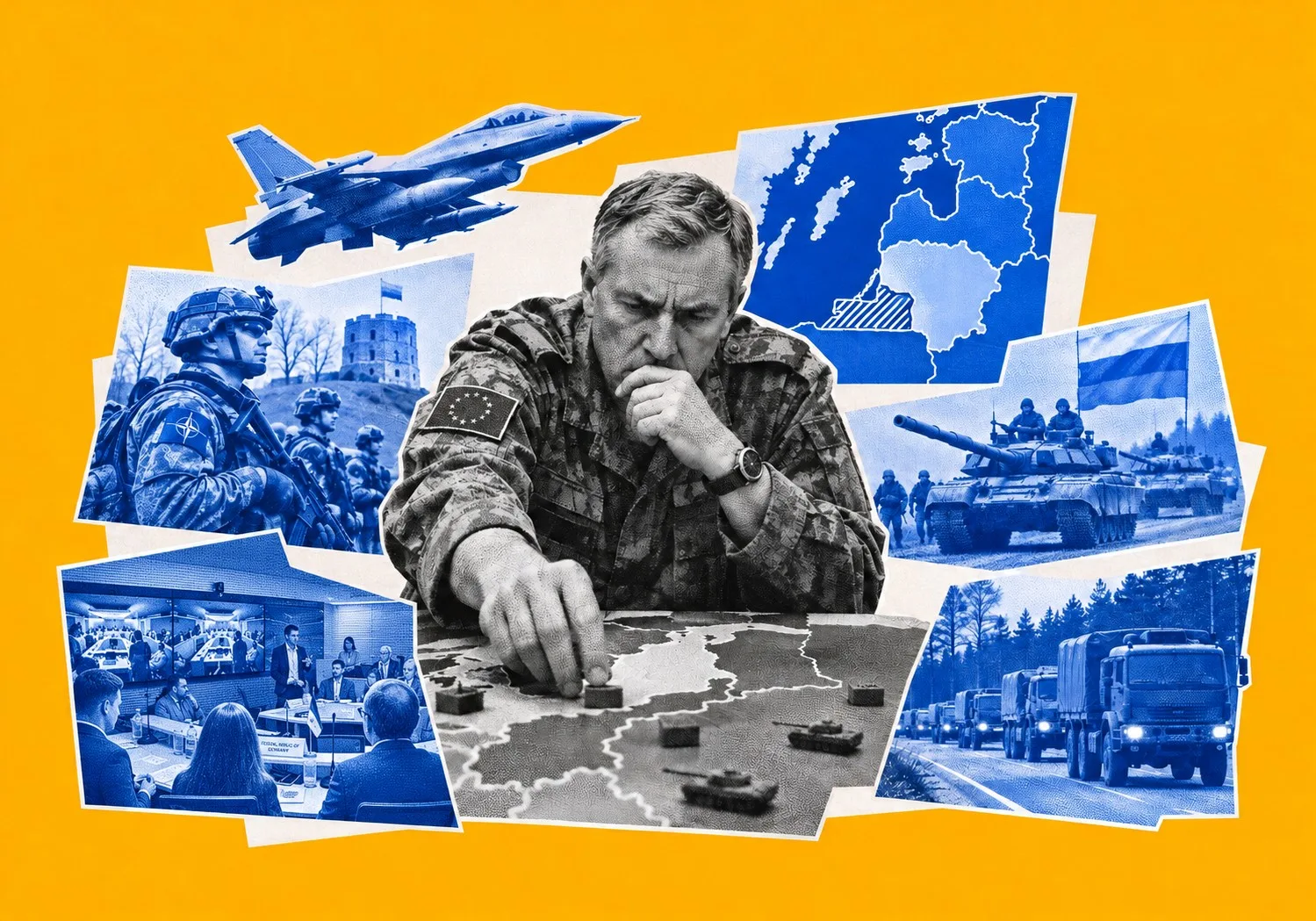
A military simulation in Tel Aviv suggested that participants representing European governments could respond more decisively to a Russian confrontation in the Baltics than in an earlier exercise. Yet the game also exposed their difficulty in setting a common strategy without US leadership.
Six hours.
That was the deadline Moscow imposed on Germany in a simulated confrontation over Lithuania, staged by the Friedrich Naumann Foundation and Israel's Institute for National Security Studies (INSS) in September 2026.
In the fictional crisis, set in March 2027, Russia demanded passage for a convoy of 160 trucks through Lithuanian territory to Kaliningrad. Moscow claimed the vehicles were carrying humanitarian supplies.
The scenario assumed that armed Russian personnel were concealed within the operation, while thousands of troops waited in neighbouring Belarus.
The participants representing Germany responded quickly. They raised the alert level of German forces stationed in Lithuania, accelerated NATO military preparations and approved the transfer of Taurus cruise missiles to Ukraine.
Their decisions contrasted sharply with those in an earlier German wargame, where political hesitation had allowed Russia to gain the initiative.
Yet the faster response did not produce a clear strategic success. As the simulated confrontation developed, Russia's representatives continued to determine where and when the next crisis would occur.
The outcome highlighted a problem extending beyond military readiness: European decision-makers could coordinate defensive measures, but struggled to agree on how to make Moscow abandon its objectives.
A Humanitarian Convoy with a Military Purpose
The fictional confrontation began near the Lithuanian-Belarusian border, where Russia assembled 160 heavy trucks supposedly carrying fuel, grain and medical supplies to Kaliningrad.
According to the scenario, Russian special forces were concealed within the convoy. Another 10,000 troops were positioned in western Belarus, while military engineers assessed potential crossing points.
Lithuania offered to permit the transportation of internationally inspected civilian cargo, provided Russian armed escorts were excluded. Moscow rejected those conditions and demanded an unrestricted transit corridor.
Germany was given six hours to respond.
The scenario drew on an existing geopolitical sensitivity.
Kaliningrad, a Russian exclave between Poland and Lithuania, maintains maritime connections with mainland Russia, but overland transit through Lithuania remains politically contentious.
Lithuania has not imposed a general blockade on civilian transit. Under EU rules, non-sanctioned goods can generally move through its territory, while restrictions and controls apply to sanctioned products. The European Commission has also established specific conditions for rail transport, and military or dual-use goods remain subject to prohibitions.
The simulated confrontation exploited this sensitive arrangement. A dispute over cargo inspections became a potential military crisis involving NATO territory.
The team representing Germany responded by placing the 45th Armoured Brigade, stationed in Lithuania, on heightened alert and bringing forward planned NATO exercises.
Participants also supported economic pressure on Russia's shadow tanker fleet and authorised Taurus missile deliveries to Kyiv.
The measures were intended to demonstrate that Moscow could not impose unilateral conditions without consequences.
The Russian side, however, soon shifted the confrontation to a different terrain.
A More Decisive Germany Than in the First Exercise
The Tel Aviv simulation followed the earlier Ernstfall wargame, conducted in December 2025 by the German newspaper WELT and the German Armed Forces' Wargaming Centre at Helmut Schmidt University. Its findings were published in February 2026.
That exercise examined a hypothetical Russian confrontation with Lithuania following a fragile ceasefire in Ukraine. Russian forces remained in Belarus, while political pressure, disinformation and military threats tested Germany's decision-making.
Participants struggled to formulate a coordinated response. The exercise attracted attention because it suggested that European hesitation could give Moscow considerable freedom of action before NATO reached a common position.
The later simulation in Tel Aviv brought together politicians, former military officers and security experts to examine a similar strategic challenge.
Julius von Freytag-Loringhoven, head of the Friedrich Naumann Foundation's office in Vilnius, played Germany's foreign minister. FDP politician Nadin Zaya assumed the role of chancellor.
Unlike an official NATO military exercise, the event was an expert-led simulation. Participants represented governments and institutions without exercising their real-world authority. Their decisions therefore reflected the assumptions and behaviour of the individuals involved, rather than the confirmed policies of European capitals.
The scenarios also differed in their design and participants, limiting direct comparisons between the two outcomes.
Nevertheless, the second exercise offered an opportunity to examine what would happen if Germany's representatives acted more rapidly and accepted greater political risks.
They did so from the opening phase. But the Russian team tested whether that initial determination could survive a succession of provocations.
How Moscow Regained the Initiative
As the simulated German response gathered momentum, Russian state television began reporting that two children had died in Kaliningrad because an ambulance had run out of fuel.
The reports were part of the fictional scenario and served as a pretext for escalating pressure on Lithuania.
Armed men dressed as civilians subsequently appeared near a Lithuanian border checkpoint, presenting themselves as angry local veterans. Gunfire followed, producing casualties within the simulation.
The European participants now faced several simultaneous problems: a disputed humanitarian operation, armed irregulars at a NATO border and the possibility that a local confrontation could trigger a wider conflict.
Each incident demanded an immediate decision. Russia's representatives were pursuing a broader political objective.
Journalist Konstantin Eggert, who participated in the Russian leadership team, described its goal as weakening NATO through limited military shocks and undermining the alliance's ability to act collectively.
Territorial conquest was not the only possible measure of success. Moscow's simulated strategy sought to create uncertainty about NATO's response and force European capitals to devote their attention to successive emergencies.
This distinction became apparent in the discussion of possible countermeasures.
Ehud Uziel of the JLM Policy-Design Team questioned why the European side lacked instruments capable of putting Moscow under comparable strategic pressure. He argued that responding exclusively to Russia's immediate demands risked allowing the Kremlin to retain control over the pace of the confrontation.
His proposed approach involved stronger counter-ultimatums and pressure on Russian interests beyond the Baltic border.
Such measures would carry significant escalation risks in a real confrontation. The exercise offered no reliable way of determining whether Moscow would retreat or respond with further military action.
But the debate exposed a disagreement among participants over the purpose of European deterrence: should the priority be to contain each incident, or to increase the costs of Russia's wider campaign?
Washington Takes Over the Diplomacy
The exercise was intended to explore Europe's ability to manage a security crisis with limited American involvement.
As the fictional confrontation continued, however, Washington became central to negotiations.
Jesse Weinberg, an INSS expert representing the US delegation, observed that American decisions continued to influence the direction and pace of the game.
In the scenario, the US president sent envoys directly to Moscow, bypassing European governments involved in the confrontation.
The American and Russian representatives discussed a possible settlement while Germany, Poland and Lithuania remained responsible for much of the immediate security response.
After three simulated weeks, a compromise began to emerge.
The proposed arrangement would have allowed inspected cargo to transit Lithuania under American and Turkish escort. The teams representing Poland and Lithuania reluctantly accepted the idea.
The negotiations then collapsed following another simulated escalation.
A Russian missile attack on Kyiv killed 90 civilians within the fictional scenario, while drones struck a German-Polish military logistics facility in Poland.
NATO representatives withdrew their concessions, leaving the crisis unresolved.
These events illustrated the limits of the European team's diplomatic influence within the game. Although European participants had taken substantial military and economic measures, the most consequential negotiations were conducted by Washington.
The result did not establish that actual European governments would necessarily surrender diplomatic leadership in a comparable crisis. The simulation reflected its own institutional assumptions and the choices made by participants.
It did, however, raise a practical question: if Washington chose to negotiate directly with Moscow, how could European governments ensure that their security interests remained central to the settlement?
Ukraine Challenges the Scenario's Assumptions
Ukraine's participation introduced a perspective shaped by direct experience of Russian military operations.
Tetiana Nikolaienko of the Ukraine Facility Platform played the Ukrainian president. She challenged the idea that the purported humanitarian convoy could be treated primarily as a transport dispute.
Drawing on the experience of Russian-backed operations in Donbas, she warned that apparently civilian movements could be used to introduce military personnel and equipment, gradually changing conditions on the ground.
Her argument placed particular importance on Lithuania's insistence on inspections and the exclusion of armed escorts.
The Ukrainian team's role became more significant as the fictional confrontation developed and drone attacks began threatening military positions.
European representatives sought Ukrainian assistance with unmanned systems, exposing questions about their ability to integrate battlefield technologies into existing military structures.
Ukraine's specialist formations, including the 414th Separate Brigade of Unmanned Systems, known as Magyar's Birds, have developed extensive operational experience in reconnaissance, strike operations and electronic warfare.
Their effectiveness rests on more than the availability of drones. Specialist operators must coordinate reconnaissance, targeting, communications, maintenance and battlefield adaptation, often under active electronic interference.
Nikolaienko argued that European forces could not simply assume that experienced Ukrainian personnel would be available to reinforce NATO units during a crisis. Ukraine's own military requirements would take priority.
Joint production projects and additional equipment could improve European capabilities, but the operational knowledge developed through continuous combat would require training and institutional changes to reproduce.
The exercise did not establish that European militaries generally lacked drone expertise. Rather, the discussion highlighted the difficulty of transferring highly specialised combat experience between armed forces.
Another disagreement concerned the use of long-range weapons.
Rajmund Andrzejczak, the former chief of Poland's General Staff, played Poland's president and questioned the consequences of transferring Taurus missiles to Ukraine during a wider confrontation involving NATO.
Kyiv would retain its own military priorities, while European governments would have to consider how Ukrainian operations might affect the crisis.
The exchange underlined Ukraine's position as an independent military actor. Its interests overlap substantially with those of NATO's European members, but its operational decisions cannot simply be directed by governments participating in a separate confrontation with Russia.
Who Sets Europe's Political Objectives?
By the final stages of the exercise, European participants had demonstrated a willingness to mobilise military forces, apply economic pressure and coordinate responses to Russian provocations.
What remained unclear was the political outcome they were collectively trying to achieve.
Would success mean keeping Russian forces out of Lithuania? Securing an inspected transit agreement? Forcing Moscow to withdraw troops from Belarus? Or convincing the Kremlin that similar provocations elsewhere would be too costly?
These objectives were related, but they required different commitments and carried different risks.
Gerlinde Niehus, a former senior NATO official who played the alliance's secretary-general, argued that the European participants needed a more effective political leadership structure.
She raised the possibility of a joint NATO–EU Security Council to help coordinate strategic priorities.
The proposal would encounter substantial institutional obstacles. NATO and the European Union have different memberships and decision-making procedures, while the North Atlantic Council already provides NATO's principal political decision-making forum.
A new mechanism would also need a clearly defined mandate. It could not resolve disagreements among governments merely by creating another venue for discussion.
The difficulty illustrated by the exercise may therefore have been political as much as institutional.
European governments possess channels for consultation and military coordination. What a crisis demands, however, is agreement on acceptable risks, negotiating objectives and the conditions under which military pressure should increase or end.
Those choices become especially difficult when governments differ in their exposure to Russian threats or their willingness to risk direct confrontation.
What the Simulation Revealed — and What It Could Not Prove
The Tel Aviv exercise was a test of decision-making under a constructed scenario, not a prediction of how an actual NATO–Russia war would unfold.
Its outcome depended on the rules of the game, the behaviour of participants and the assumptions built into the crisis. It offered no comprehensive assessment of European troop readiness, ammunition stocks, air defence, intelligence capabilities or logistical capacity.
Nor did it demonstrate that Russia could defeat NATO in the Baltics.
Within the scenario, European participants prevented a formal Russian takeover of Lithuanian territory and responded more rapidly than their counterparts in the earlier Ernstfall exercise.
Russia's representatives, meanwhile, repeatedly forced the European side to address new emergencies and eventually drew Washington into negotiations.
Both teams could therefore point to outcomes supporting their preferred interpretation.
For the European participants, maintaining territorial integrity and avoiding a general war represented important achievements. The Russian team measured its performance partly by its ability to disrupt NATO's cohesion and influence political decisions.
These competing definitions of success explain why the exercise ended without a clear strategic resolution.
It also revealed the limitations of judging deterrence solely by whether an immediate military confrontation is contained.
If a state can repeatedly create crises while avoiding decisive costs, it may consider those operations worthwhile even when it fails to seize territory.
Europe's position is more complicated than the suggestion that it simply needs stronger central leadership. Military capabilities, political willingness, national interests and the role of the United States all shape its response to threats.
The Tel Aviv simulation provided a detailed illustration of how those factors can collide under pressure.
The European participants were capable of taking military decisions quickly. They had greater difficulty defining the terms of a political settlement and maintaining control of the diplomatic process.
That leaves a question the exercise could raise but could not answer: if Washington steps aside during a confrontation with Russia, can Europe's governments agree on what they want to achieve before Moscow determines the next move?
---
Sources
- *WELT, September 2026 — Carolina Drüten, „Für die Deutschen ist alles ein Sieg, was nicht der dritte Weltkrieg ist“.*** Reporting on the wargame organised by the Friedrich Naumann Foundation and INSS in Tel Aviv.
- *WELT, February 2026 — Coverage of the original Ernstfall simulation examining Germany's response to a hypothetical Russian confrontation with Lithuania.*
- Ukraine Facility Platform, 23 October 2026 — Secret scenario of a Russian attack on the Baltics, played out in Israel. Ukraine Facility Platform strategic expert Tetyana Nikolayenko reveals the details behind the closed military game in Israel, where she acted as the President of Ukraine.
- European Commission, 13 July 2022 —Guidance on the transport of goods between Kaliningrad and mainland Russia through EU territory, including sanctions restrictions and rail transit rules.
- 414th Separate Brigade of Unmanned Systems — Magyar's Birds. Official English-language information on the unit and its operational development.