
Russia Delays Military Pay as War Budget Deficit Widens

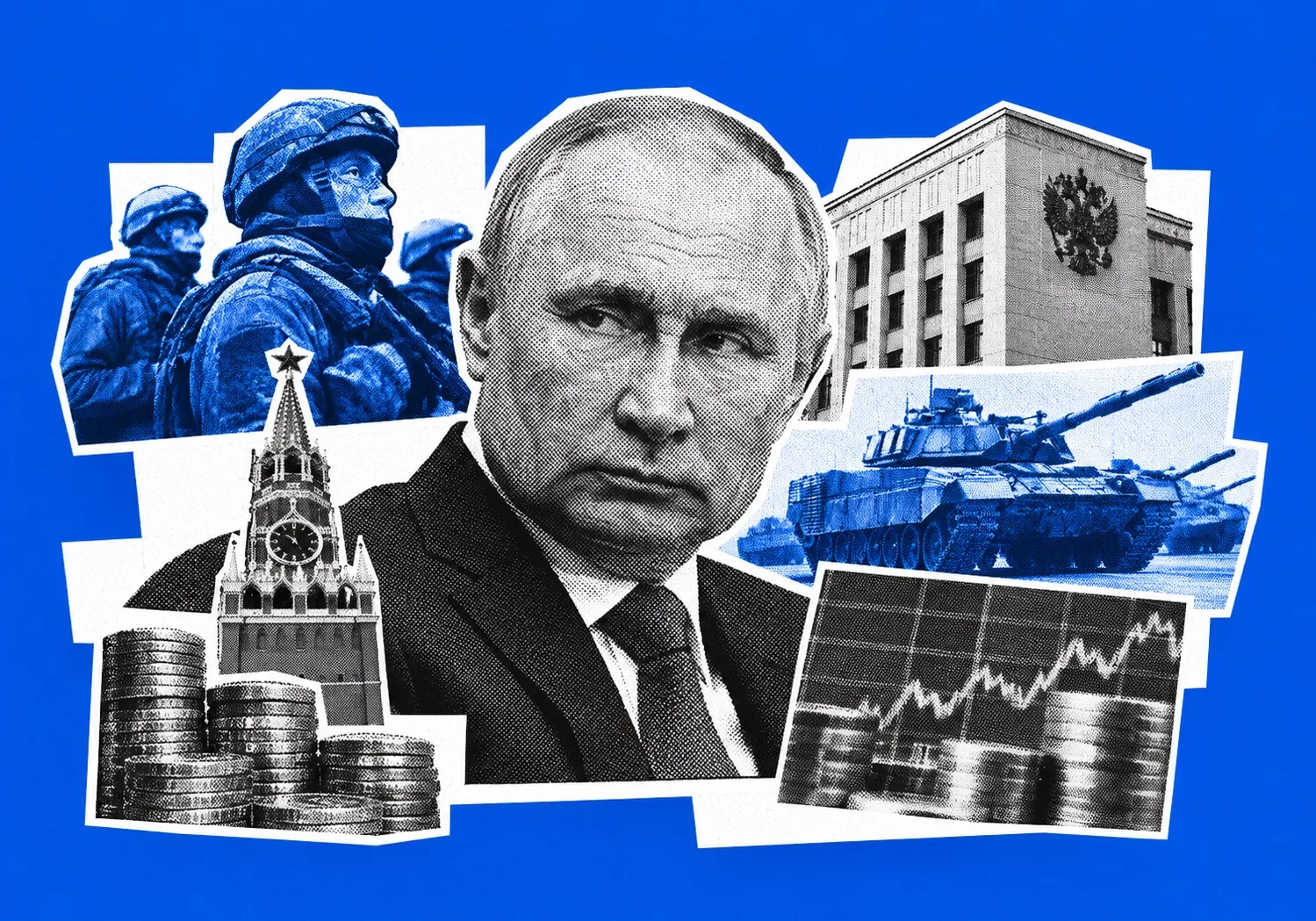
For the first time in nearly two decades, Russia’s Defence Ministry plans to delay December military salaries as soaring war expenditure strain Moscow's budget. While frontline troops in Ukraine will still be paid on time, other military personnel must wait until January—highlighting the growing financial pressure of Russia's 2026 defence spending.
Under the draft order, December salaries for non-combat personnel would arrive between 11 and 21 January, rather than before the New Year, while frontline troops will receive their money by 25 December.
The payments are not being cancelled. Moving them into the following financial year gives the government more room to manage its year-end cash requirements. Yet the decision raises an uncomfortable question: why does a state committing record sums to its armed forces need to change the timing of ordinary military salaries?
A Budget Under Pressure
The immediate problem is the scale of federal expenditure.
Russian government spending in 2026 is expected to reach 48.5 trillion roubles, approximately $602 billion, exceeding the original target by around 10%. The projected deficit has climbed to 7.3 trillion roubles, equivalent to 3.2% of GDP. That compares with a September estimate of 2.2% of GDP.
Such a deterioration leaves the Finance Ministry with fewer convenient options as the year closes. Deferring a portion of military payroll into January offers some short-term relief without formally reducing the sums owed to personnel.
It does not, however, resolve the underlying mismatch between spending commitments and available revenue.
The pressure is likely to persist. Russia's draft 2027 budget earmarks 17.1 trillion roubles, or approximately $212 billion, for national defence. That represents 35.2% of federal expenditure and roughly 6.9% of GDP.
Including law enforcement and other security spending brings the combined allocation to 21.4 trillion roubles, equivalent to 8.6% of GDP.
These figures describe an economy in which military requirements are no longer competing with civilian priorities on anything resembling equal terms. Defence has become a fixed commitment around which other spending decisions must be organised.
The expansion extends beyond equipment and ammunition. A September decree signed by Vladimir Putin increased the authorised strength of Russia's armed forces to 2,441,630 personnel, including 1,550,500 active service members.
Personnel costs are expected to account for between 9% and 10.4% of national defence expenditure over the next three years.
A larger military creates obligations that cannot easily be reversed. Salaries, recruitment and the industrial capacity required to sustain the armed forces all impose recurring costs. Delaying payments by several weeks may ease a particular accounting problem, but it cannot reduce those commitments.
Why Frontline Soldiers Are Different
The exemption for personnel fighting in Ukraine is perhaps the most revealing part of the proposed payroll changes.
Moscow appears unwilling to risk disrupting payments to troops whose continued participation in the conflict depends partly on financial incentives. By preserving their existing schedule, the Defence Ministry can contain the immediate impact of the decision among personnel outside direct combat.
This creates a hierarchy within the military payroll.
Frontline soldiers retain priority, while administrative and rear-echelon personnel absorb the inconvenience of delayed compensation. It is a politically calculated distinction, particularly when military recruitment and retention remain essential to sustaining operations in Ukraine.
There is also a practical limit to what the measure reveals. A payment deferral is not evidence that Russia has run out of money to finance its armed forces. Nor does it establish that soldiers will go unpaid.
What it does reveal is the government's willingness to adjust established financial arrangements to accommodate wartime expenditure.
The historical parallel is difficult to ignore. Delayed year-end disbursements were familiar in Soviet-era budgeting, when authorities used payment schedules to manage resource constraints. Russia's return to a similar mechanism after 18 years is notable, even if the economic circumstances are different.
More important than the historical resemblance is the allocation of financial risk. The Kremlin is keeping its most operationally sensitive personnel insulated while distributing the pressure elsewhere.
The Civilian Economy Pays More
The 2027 tax package shows how Moscow intends to raise additional revenue.
Progressive taxation on passive income will introduce rates ranging from 13% to 22%, replacing the previous 13% rate. Mining companies face a windfall tax of between 20% and 30%, while foreign online purchases worth less than €200 will attract 22% VAT.
A separate 100-rouble parcel fee will add to the cost of imported goods. Dividends held in Type S accounts by non-residents will face a 35% tax.
The measures reach into different parts of the economy, from corporate profits and investment income to everyday consumer transactions.
For households, the changes affecting foreign online purchases are particularly direct. Higher taxes and additional fees increase the cost of imported products, adding another burden at a time when inflation remains elevated.
For businesses, the combination of taxation, expensive credit and labour shortages makes investment decisions more difficult.
Russia's Central Bank expects inflation to reach 7.1% in 2026 before slowing to 5% in 2027. Its projected average key interest rate of 12.5%–13.5% indicates that borrowing conditions will remain restrictive.
The tension between fiscal and monetary policy is becoming harder to manage.
While the government channels enormous sums into defence production and military employment, the Central Bank must restrain demand and price growth across the wider economy. The two policies are pulling in different directions.
Military industries benefit from guaranteed state demand. Civilian companies must compete for workers and finance under considerably less favourable conditions.
Russia already faces an estimated labour shortage of 1.5 million people. Around 3.5 million workers are employed across more than 5,000 defence-industrial enterprises.
The competition for labour matters because higher military-sector wages do not create additional workers. They encourage people to move between industries, potentially forcing civilian employers to raise pay or operate with fewer staff.
Those adjustments can feed into production costs and consumer prices, complicating the Central Bank's efforts to bring inflation down.
Regions Face the Squeeze
The effects are also visible outside Moscow's federal institutions.
Between 60 and 65 Russian regions face serious budgetary pressure as military spending takes precedence over other commitments. Local administrations are being forced to reduce expenditure on infrastructure, public services and civilian programmes.
Regional healthcare spending fell by 5.8% during the first half of 2026.
That reduction illustrates how national defence priorities can translate into diminished resources for ordinary public services.
Regional governments have limited room to escape the pressure. They must continue meeting local obligations while operating within a fiscal system increasingly shaped by federal military requirements.
Infrastructure projects can be postponed. Public services can be reduced. Maintenance and investment can be deferred until funding becomes available.
Such decisions may provide immediate savings, but they also create future liabilities. Infrastructure still needs repair, and postponed investment does not necessarily become cheaper.
For the Kremlin, this arrangement allows military expenditure to remain protected without requiring equivalent reductions in the central defence budget. For regional administrations, it means managing the consequences of decisions largely made elsewhere.
The resulting imbalance is more than a temporary consequence of a difficult budget year. It changes the relationship between federal priorities and local financial autonomy.
The Growing Secrecy Around Military Finance
There is another obstacle to assessing the full cost of Russia's economic transformation: the declining visibility of federal spending.
The 2027 budget classifies approximately 17 trillion roubles, or 34.9% of total expenditure, as secret. The proportion is the highest in 12 years.
That makes it harder for outside analysts to establish how public resources are distributed, particularly where military and security programmes overlap with other government spending.
Published defence allocations provide a substantial indication of the state's priorities, but they cannot offer a complete account of expenditure hidden within classified budget lines.
The opacity also complicates scrutiny of the relationship between military commitments, civilian spending reductions and the government's borrowing requirements.
Russia's budget assumptions include an Urals oil price benchmark of $53 per barrel. Yet the increasing reliance on domestic taxation shows that the government is seeking revenue beyond its traditional energy-related fiscal resources.
The shift is significant because taxes on consumption, income and corporate profits distribute the financial burden more widely across the domestic economy.
Military expenditure remains concentrated in sectors receiving government contracts and direct support. The costs of financing it are spread among households, companies and regional administrations.
That distribution may be sustainable for some time, particularly while the state continues to prioritise defence employment and production. But it leaves civilian economic activity increasingly dependent on decisions made for military rather than commercial reasons.
The Central Bank faces the consequences in monetary policy. Regional governments confront them in shrinking budgets. Businesses encounter them through labour shortages and expensive credit.
And the Defence Ministry, despite receiving unprecedented funding, is preparing to move part of its own payroll into the next financial year.
The frontline exemption protects the Kremlin's most immediate military requirement. It leaves a broader question unresolved: how much further can the government shift the financial costs of war onto the rest of the Russian economy without weakening the civilian foundations on which its military spending depends?
Sources: Bloomberg, FISU, AP, CNN