
US Planning Iran Strikes: How a New Escalation Threatens Europe’s Energy Security and Shipping

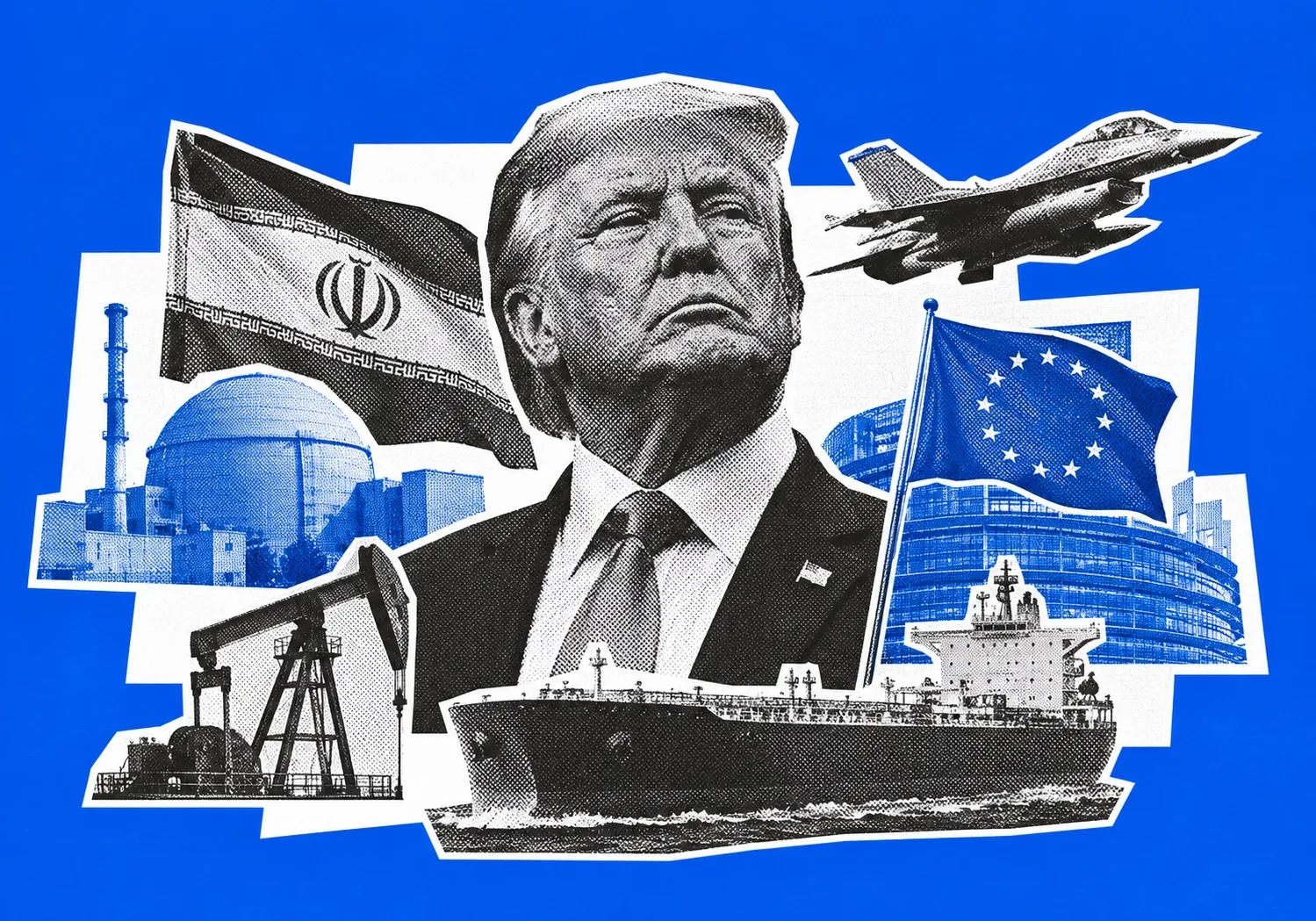
As the US prepares potential military strikes against Iran, Europe is bracing for a fresh wave of economic fallout. From rising crude oil and fuel prices to threatened Red Sea internet cables and Strait of Hormuz disruptions, European nations face severe energy and infrastructure risks with limited diplomatic leverage over Washington.
The United States is preparing for the possibility of another military operation against Iran. American and Israeli planners have identified potential targets, while Washington has warned regional partners to prepare for Iranian retaliation. President Donald Trump has not publicly committed to a new offensive.
For European governments, the timing could hardly be more difficult. The war has already driven up fuel costs, disrupted shipping and forced airlines to reconsider routes. Another round of strikes could undo efforts to stabilise energy markets just as Europe enters the winter.
The immediate question is whether the preparations will lead to an attack. The larger one is how far Iran might go in response.
What Washington is preparing
The New York Times reported on October 22 that American and Israeli officials had developed plans for a short, intensive campaign against Iranian military and strategic facilities.
The potential targets reportedly include missile installations, drone production sites, nuclear facilities and energy infrastructure. American aircraft have also conducted exercises over Iraq as part of preparations for possible operations.
One of the facilities under consideration is Pickaxe Mountain, also known as Kooh Kolang, an underground nuclear site built deep inside a mountain.
Attacking such a facility would be considerably more complicated than striking conventional military installations. Its location and construction raise questions about what weapons would be needed and whether an attack could achieve its intended objective.
Associated Press also reported that US officials had warned Middle Eastern governments about the possibility of renewed strikes and Iranian attacks on regional infrastructure.
The preparations have been linked to the period following the November 3 US midterm elections. But military planning does not necessarily mean an attack has been ordered.
In an interview with the Financial Times, Trump said there was no immediate plan for another major operation. Indirect contacts with Tehran were also continuing.
Washington therefore has two options on the table: maintain military pressure while negotiating or proceed with strikes if those negotiations fail.
Neither offers a straightforward solution. Previous attacks have not eliminated Iran's capacity to threaten neighbouring countries or commercial shipping.
European governments are looking for another way out
Britain, France and Germany have spent much of the conflict trying to balance their security relationship with Washington against the need to prevent a wider regional war.
Their governments have condemned Iranian attacks and threats to international shipping. They have also called for diplomatic negotiations and the protection of civilian infrastructure.
The difficulty is that European countries have limited influence over American military planning, despite having substantial economic interests at stake.
That helps explain the recent diplomatic activity involving European and Middle Eastern governments.
According to the European Council on Foreign Relations, foreign ministers from Britain, France, Germany, Italy, Egypt, Pakistan, Turkey and Saudi Arabia met in Istanbul on October 23.
Their discussions covered the US-Iran conflict, the reopening of the Strait of Hormuz and the security of Gulf states. They also addressed attacks by Yemen's Houthis and the wider Israeli-Palestinian conflict.
The meeting brought together governments that do not necessarily agree on how to deal with Tehran. Some maintain closer relations with Washington, while others have channels of communication with Iran.
That difference may prove useful. A diplomatic arrangement will require more than an exchange of demands between the United States and Iran. Gulf states, whose territory and infrastructure could be attacked, also have a direct interest in the outcome.
Italy's involvement is noteworthy. Rome did not join Britain, France and Germany in the earlier decision to reactivate UN sanctions against Iran, leaving it with a somewhat different diplomatic position.
The EU has meanwhile continued to emphasise maritime security. In its October conclusions, the European Council addressed threats to navigation through the Strait of Hormuz and the need to prevent further regional instability.
Whether these efforts can influence Washington or Tehran remains uncertain. Neither side has indicated that it is ready to accept all the other's conditions.
The oil market has little room for another disruption
Europe's exposure to another round of fighting begins with the Strait of Hormuz.
The narrow waterway connects the Persian Gulf to the Gulf of Oman and international shipping routes. Oil and gas exports from several major producers depend on access through it.
The war has already demonstrated what happens when that access is restricted.
Reuters reported in July that the conflict had removed more than one billion barrels of oil from global supply. At the height of the disruption, approximately 14 million barrels per day were affected.
Governments responded by releasing emergency reserves, while traders sought alternative supplies. Those measures helped prevent more severe shortages, but they also reduced the stocks available to absorb another shock.
A renewed American offensive would not automatically produce another oil crisis. Much would depend on Iran's response.
If Tehran limited its retaliation to military targets, the disruption might be relatively contained. Attacks on export terminals, refineries or commercial vessels would be a different matter.
Oil prices could rise even before physical supplies were interrupted. Tanker operators and insurers would have to assess whether vessels could safely enter the Gulf. Higher insurance costs and longer routes would eventually reach customers.
For Europe, that means higher costs for transport, manufacturing and imported goods.
The effect could be particularly difficult for energy-intensive industries, which have already faced years of volatile prices. Another sustained increase would add pressure to production costs and complicate efforts to bring inflation under control.
Natural gas is another concern. Disruption to liquefied natural gas exports from the Gulf could increase competition for cargoes from other suppliers, including the United States.
European countries would then face higher import costs even if their own gas deliveries remained uninterrupted.
Diesel and aviation fuel present a separate problem
Crude oil prices receive most of the attention during Middle Eastern crises. Yet the availability of refined fuels can be just as important.
Diesel is essential for road freight, agriculture and industrial machinery. Aviation fuel keeps passenger and cargo aircraft operating. Both depend on refining facilities and distribution networks that cannot always be replaced quickly.
An analysis by Columbia University's Center on Global Energy Policy identified refined products as a weakness exposed by the Iran war.
A country may have sufficient crude oil available and still struggle to obtain the fuels it needs at an affordable price.
European airlines have already experienced the consequences.
In April, Euronews reported that aviation fuel prices had risen by 95% since the start of the conflict.
The International Energy Agency warned about tightening supplies, although the European Commission said there was no EU-wide systemic shortage.
KLM subsequently reduced some flights because fuel costs had made certain services commercially unviable.
Another disruption could bring similar decisions across the industry. Airlines can adjust ticket prices, reduce less profitable routes or absorb part of the additional expense, but none of those options is painless.
Freight companies face comparable difficulties. Higher diesel prices increase the cost of moving food, industrial components and consumer goods.
These costs rarely remain confined to transport companies. They gradually work their way through supply chains.
Iran's threats now extend to internet infrastructure
Tehran has also warned that its response to renewed attacks may reach beyond military bases and oil facilities.
Iranian officials have identified data centres, artificial intelligence infrastructure and undersea communications cables in Gulf countries as potential targets.
The Guardian reported on October 22 that Mohsen Rezaei, secretary of Iran's Supreme National Security Council, had threatened infrastructure linked to American interests in the region.
The warnings are particularly relevant because the Gulf has become an important location for cloud computing and digital investment.
Large technology companies operate facilities there, while submarine cables connect the region with Europe, Asia and Africa.
According to an Al Jazeera report, estimates from TeleGeography indicate that more than 90% of data capacity between Europe and Asia passes through cables beneath the Red Sea.
A disruption would not necessarily shut down communications between the continents. Internet traffic can be redirected through alternative connections.
But rerouting large volumes of data can increase costs, reduce capacity and create delays. Repairs to damaged submarine cables can also take considerable time, particularly in areas affected by military operations.
Financial services, international businesses and cloud providers all depend on reliable connections.
The threat is therefore broader than an attack on a single technology company.
Reuters reported on October 23 that Iranian officials had described contingency plans involving undersea cables if the war resumed.
The report did not establish whether Iran could successfully carry out such operations. Threatening infrastructure and possessing the means to disable it are two different things.
Nevertheless, the possibility forces European governments and technology operators to consider another potential consequence of the conflict.
Negotiations continue, but the main disputes remain
Diplomatic contacts between Washington and Tehran have not ended.
Qatar remains involved in efforts to broker an interim arrangement. According to CBS News reporting on November 3, Qatari officials said proposals were still being exchanged and reviewed.
The disagreements concern more than the immediate question of military strikes.
Iran wants relief from American restrictions and an end to military pressure. Washington is seeking guarantees on security issues and the movement of commercial vessels through the Strait of Hormuz.
Neither side can easily make concessions without facing political and strategic consequences.
For Tehran, reopening the strait without obtaining substantial concessions would mean surrendering one of its principal sources of leverage.
For Washington, easing pressure without a durable agreement could leave Iran capable of disrupting regional trade again.
European governments are trying to create space for negotiations before those disagreements lead to another major confrontation.
Their diplomatic efforts may not prevent an American strike. But they could become increasingly important if military action produces a new round of retaliation and the parties eventually return to negotiations.
For now, European businesses and governments face a familiar problem: they must prepare for decisions they cannot control.
A short American operation could still produce weeks or months of economic disruption if Iran targets shipping, refineries or communications infrastructure.
The scale of that disruption remains impossible to determine in advance. Much will depend on whether Washington attacks, which targets it chooses and how Tehran responds.
What is already clear is that the costs of another confrontation would not stop at the borders of Iran or the United States.
Sources: European Council on Foreign Relations, Reuters, The Guardian,\ The New York Times, Columbia University – Center on Global Energy Policy, Euronews, Al Jazeera, CBS News