
US-Iran Talks at UNGA: How the Strait of Hormuz Turned War Into an Economic Bargaining Chip

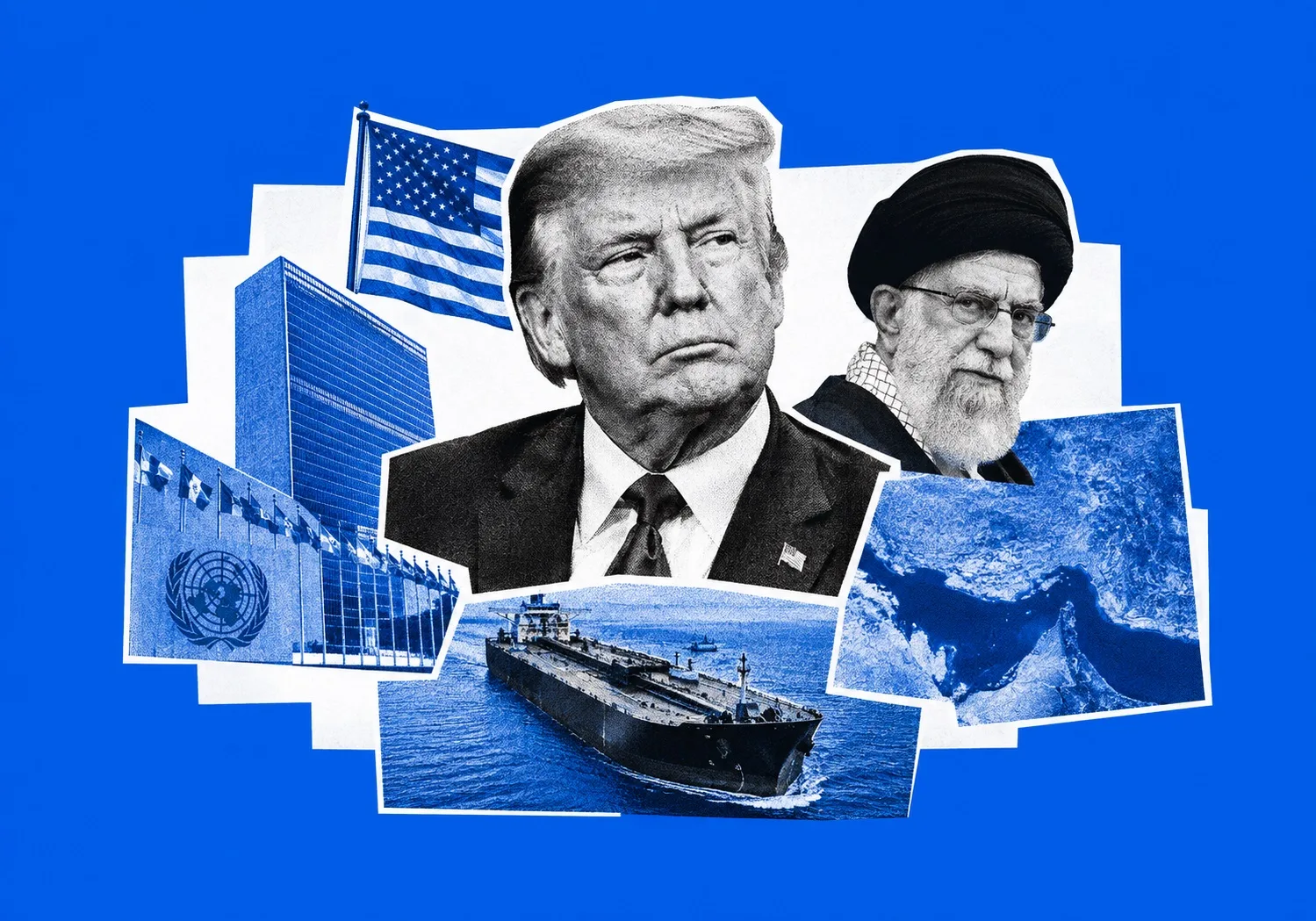
The United States and Iran have reopened diplomatic channels in New York, holding three hours of indirect talks on the sidelines of the UN General Assembly. As oil markets fluctuate and energy security hangs in the balance, control over the Strait of Hormuz has transformed the seven-month war from a military standoff into a high-stakes economic negotiation.
After seven months of war, control over this critical energy chokepoint has become inseparable from the wider dispute over Iran's nuclear programme, regional armed networks and the future of US military pressure. The delegations - led by Steve Witkoff and Jared Kushner for Washington, and Foreign Minister Abbas Araghchi for Tehran - communicated via intermediaries moving between separate rooms.
The talks were the first US-Iran diplomatic contact since the collapse of a short-lived truce in June. Their timing was hardly incidental. Oil markets are under strain, Gulf states are absorbing attacks on critical infrastructure, and Washington is approaching midterm elections with energy prices and the deaths of 19 American service members becoming increasingly difficult domestic political issues.
Hormuz is now part of the negotiating table
Iran entered the New York talks with a price for reopening the strait.
Tehran demanded the immediate lifting of the US naval blockade, the unfreezing of Iranian foreign assets and an end to the war on what it describes as all “resistance” fronts, including Iranian-backed networks in Lebanon, Yemen and Iraq.

Washington's demands run in the opposite direction. The US wants the Strait of Hormuz fully reopened to international shipping, a permanent end to Iranian nuclear enrichment and the termination of Iranian funding and weapons supplies to regional proxy militias.
That leaves little room for a narrow maritime bargain. The question is not simply whether commercial vessels can pass through the strait. Each side is attempting to make control of that passage conditional on concessions over the broader architecture of the war.
This is what makes the latest diplomatic contact different from a conventional ceasefire negotiation. The maritime crisis has become a bargaining instrument in its own right.
For Washington, reopening Hormuz would relieve an immediate threat to global energy flows. For Tehran, the strait provides leverage over an adversary with considerably greater conventional military power.
The result is an unusual form of strategic asymmetry: the side with superior military capabilities is not necessarily able to impose the economic conditions required to end the conflict on its preferred terms.
The price of military pressure
The financial markets offered a quick indication of how much is at stake.
Brent crude fell by more than 5 per cent following news of the talks, to around $98.50 a barrel. That was still more than 60 per cent above its level at the beginning of the year. US domestic diesel prices remained at record highs.
For energy importers and industries dependent on transport, the distinction between a military confrontation and a maritime supply crisis is largely academic. Restricted shipping raises the cost of moving goods, feeds inflationary pressure and complicates supply chains far beyond the immediate theatre of war.
The Strait of Hormuz is particularly consequential because it is a major global oil chokepoint. With transit volumes still severely below pre-war levels despite limited US naval escort efforts, the economic effects of the conflict are no longer confined to the countries directly involved.
That changes the political calculation in Washington.
The US midterm elections are scheduled for November 3, leaving the Trump administration only weeks before voters return to the polls. Higher petrol prices, record diesel costs and military casualties create domestic pressure to demonstrate that the war is producing a sustainable outcome rather than an open-ended economic burden.
President Donald Trump's own public messaging captures the tension. Hours before the talks, he told the UN General Assembly that he faced a choice between allowing Iran to rebuild through a historic deal and “annihilating” the Islamic Republic. Shortly afterwards, the administration's negotiators were engaged in a three-hour diplomatic session.
Military escalation and diplomacy are therefore operating simultaneously, rather than representing mutually exclusive phases of the conflict.
Gulf states have their own calculation
The pressure is not coming from Washington alone.
Saudi Arabia and the United Arab Emirates have been preparing to urge Trump to avoid further escalation as Iranian drone and missile attacks damage energy infrastructure and shipping routes. Gulf economies are facing disrupted trade lanes and a wider economic slowdown while their critical energy assets remain exposed.
For Riyadh and Abu Dhabi, the issue is therefore not simply whether Iran can be compelled to accept US demands. Continued escalation carries its own costs.
The Gulf states occupy an awkward position. Their security depends heavily on US military power, yet the consequences of a prolonged confrontation are landing directly on their infrastructure, trade and energy systems. Diplomatic pressure on Washington becomes a way of managing that contradiction.
Qatar, Oman, Pakistan and Iraq have also played roles as intermediaries in the conflict, shuttling messages between Washington and Tehran when direct contact has been politically or diplomatically difficult.
The mediation format matters. The September 22 discussions did not produce a presidential encounter or a conventional bilateral summit. Messages continued to move through third parties, reflecting the depth of mistrust left by the failed June truce.
Yet the fact that the channel exists again is significant.
A different kind of military balance
The deeper issue exposed by the crisis is the changing relationship between military power and economic security.
The United States and its allies possess overwhelming conventional capabilities compared with Iran. But the conflict has demonstrated the limits of conventional superiority when an opponent can combine relatively inexpensive drones, anti-ship missiles and allied armed networks across several theatres.
Iranian-aligned forces in Yemen, Iraq and Lebanon have expanded the geography of the confrontation. Attacks on shipping and energy infrastructure mean that the security of a single maritime chokepoint cannot be separated neatly from conflicts taking place hundreds of kilometres away.
The strategic consequence is broader than the current war.
Traditional naval power rests partly on the assumption that major military forces can protect commercial navigation when necessary. Hormuz has put pressure on that assumption. If guaranteeing passage requires prolonged military operations, and those operations themselves generate attacks on regional infrastructure and higher global energy prices, naval superiority becomes much more expensive to translate into economic security.
That is the calculation now confronting Washington.
The choice is no longer simply between continuing the war and negotiating over Iran's nuclear programme. The economic consequences of keeping the maritime system under pressure have become part of the military equation.
Can Hormuz be separated from the nuclear issue?
That leaves the central practical question unresolved.
Washington is demanding a permanent end to Iranian enrichment as part of its conditions. Tehran is demanding economic and military concessions before restoring normal passage through Hormuz. Neither position naturally produces a limited agreement focused only on shipping.
A temporary arrangement might therefore have to bridge two very different definitions of the immediate problem.
For the US, the strait is one element of a larger effort to constrain Iran's nuclear capabilities and regional military networks. For Iran, reopening the waterway is linked to the lifting of the pressure that has been imposed on the country.
The June truce already demonstrated how difficult that gap can be. That arrangement collapsed over unresolved disagreements concerning the scope of nuclear inspections and the release of sanctions.
The New York talks consequently begin from a different economic and strategic environment, but not from a clean diplomatic slate.
There is also a question of durability. Even if the sides agree on maritime transit, the networks involved in the wider conflict would remain. Iran's armed forces and Islamic Revolutionary Guard Corps have warned that further US strikes could produce retaliation extending the geography and operational character of the war.
For global energy markets, that leaves a narrow margin for error. The fall in Brent following the talks shows how quickly expectations of diplomacy can alter prices. But the oil market remains exposed to the same underlying constraint: shipping through Hormuz is still severely restricted.
The diplomatic channel has reopened. What remains uncertain is whether the economic leverage that brought Washington and Tehran back into contact can also provide the basis for separating maritime access from the much larger dispute over Iran's nuclear programme and regional power.
Sources: Bloomberg, Special envoy of the US President Steve Witkoff/X, BBC, Reuters