
US Intelligence Warning in Moscow: Why Russia Acted This Time

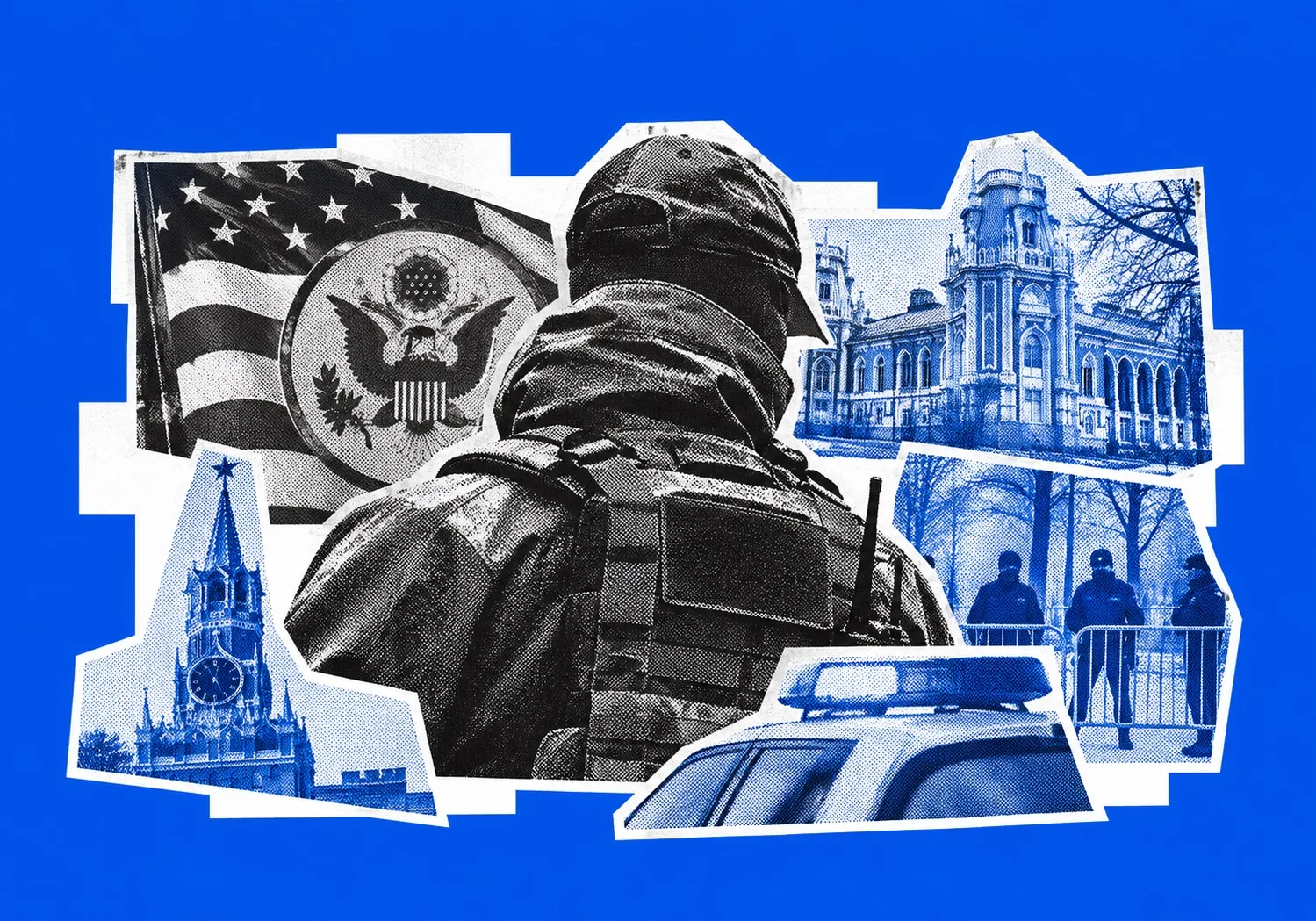
After the US warned of a threat at Tsaritsyno in Moscow, Russia closed the site. Here,is how 'Duty to Warn' survived US-Russia tension—and its contrast with Ukraine.
The American embassy named both the location, at 1 Dolskaya Street, and the date of the suspected threat. It did not disclose what form an attack might take, who might be responsible, or when an incident could occur. US citizens were advised to stay away from the area, avoid crowds, keep their phones charged, and follow local security updates.
Russia's Federal Security Service (FSB) acknowledged receiving information from its American counterparts and said appropriate measures were being taken. Security personnel established a perimeter around Tsaritsyno, while the museum and park complex was closed to visitors. Exits remained accessible to allow people already inside to leave.
 Photo: Dreamstime/IMAGO") The response was notable not simply because Moscow acted on intelligence supplied by Washington. It came more than two years after a previous American warning preceded the Crocus City Hall massacre, an episode that exposed the consequences of political distrust in counter-terrorism.
Why Washington Warns Its Adversaries
The decision to share information about a possible attack in Moscow was not necessarily a diplomatic gesture. It was consistent with a standing obligation within the American intelligence system.
Under Intelligence Community Directive 191, introduced in 2015, US intelligence agencies operate under a policy known as the Duty to Warn. When they obtain credible and sufficiently specific information about a threat to human life, they are expected to consider warning those at risk, including people living in countries hostile to the United States.
The policy is subject to exceptions, particularly where disclosure could compromise intelligence sources or sensitive operations. Nevertheless, its underlying principle is straightforward: preventing civilian deaths can take precedence over the political relationship between governments.
In practice, this creates a distinction between sharing intelligence to protect lives and sharing intelligence to advance a strategic partnership.
Washington does not need to trust Moscow's broader intentions to communicate a warning about a potential terrorist attack. Nor does the FSB need to accept American assessments of Russia's war in Ukraine to recognise the operational value of information identifying a possible threat in the capital.
The Tsaritsyno alert illustrated how that distinction works.
Its specificity made it difficult to treat as a routine advisory. A named venue and a particular date provided Russian authorities with enough information to concentrate security resources, even without publicly identifying suspects or a method of attack.
Yet the available information also has limits. The warning itself does not establish that an attack was certain, that a particular organisation was involved or that the measures taken prevented an incident. Neither government publicly disclosed the underlying intelligence.
That uncertainty is inherent in preventive security operations. Authorities must decide whether to act before the evidence can be tested against an actual event.

The Shadow of Crocus City Hall
For Russian officials, the political difficulty of responding to American warnings has an obvious historical reference.
On 7 March 2024, the US Embassy in Moscow warned of a potential attack on large gatherings. Fifteen days later, terrorists attacked Crocus City Hall, killing roughly 150 people.
Vladimir Putin had publicly dismissed Western warnings before the massacre, characterising them as blackmail. The attack subsequently became a reference point for questions about Russia's ability to assess and respond to intelligence received from abroad.
The circumstances surrounding Tsaritsyno were different, and there is no established connection between the two threats. But the institutional problem was familiar: how should a domestic security service evaluate potentially life-saving information supplied by a government its political leadership regards as an adversary?
In 2024, the public dismissal of American warnings exposed the danger of allowing political suspicion to shape perceptions of security intelligence. In October 2026, Russian authorities adopted a more visibly precautionary approach.
The FSB confirmed that it had received the information. The venue was secured. Public access was restricted.
These measures did not require Moscow to endorse Washington's foreign policy or acknowledge any broader dependence on American intelligence. They required the Russian security apparatus to recognise that information could be useful regardless of its origin.
There is a practical incentive for doing so.
A security service that ignores a credible warning risks being held responsible if an attack follows. Acting on the information may impose temporary disruption, but the potential cost of inaction is far greater.
The Crocus precedent made that calculation particularly difficult to disregard.
A Security Lockdown With Unanswered Questions
Tsaritsyno is a major cultural and recreational complex in Moscow, making it a plausible location for large public gatherings.
The restrictions on 31 October affected a venue where cultural events were scheduled, including a roundtable and gala concert dedicated to North Caucasus traditions and involving regional officials.
Nothing in the publicly disclosed warning established that those events were the intended target. Nor was there evidence identifying the organisers, participants or cultural programme as relevant to the suspected threat.
That distinction matters. A precise geographical warning can encourage speculation about particular gatherings, especially when prominent officials are expected to attend. But a location is not the same as an identified target, and a security alert is not proof of a specific attack plan.
Russian authorities described the closure in terms of technical and operational measures. Whatever the public explanation, the security response was consistent with the seriousness of the American advisory.
It also revealed an uncomfortable aspect of domestic security in Moscow.
Despite Russia's extensive internal security apparatus, its authorities were responding to a warning originating outside the country. Foreign intelligence was therefore part of the immediate decision-making process surrounding a possible threat to civilians in the Russian capital.
That does not establish a general failure of Russian intelligence collection. Countries routinely obtain information from foreign services, including those with which they have difficult relations.
It does, however, expose the limits of intelligence self-sufficiency. Domestic surveillance and policing cannot guarantee that every emerging threat will be detected internally.
The nationality of the source becomes secondary when the information is sufficiently actionable.
The Unequal Politics of Civilian Protection
The exchange also raises a more difficult question about the relationship between intelligence and political priorities.
The United States was prepared to warn Russian authorities of a possible mass-casualty incident while Russia continued its war against Ukraine. The same Russian state receiving American assistance in protecting civilians was conducting military operations that endangered civilians across the border.
There is no contradiction in the legal purpose of the Duty to Warn policy. Its premise is that civilian lives should not become expendable because of hostility between governments.
The political contradiction emerges when that principle is considered alongside the wider use of intelligence in international conflicts.
Counter-terrorism warnings and military intelligence support operate under different rules, objectives and constraints. A warning about an attack on a public venue is not equivalent to providing targeting information, battlefield assessments or other intelligence to a government fighting a war.
Still, the contrast is significant.
Information that could protect civilians in an adversary country can move through established professional channels even during severe diplomatic confrontation. Intelligence supplied to allies in active conflicts, by comparison, can be subject to political conditions and strategic calculations.
Ukraine makes that distinction especially consequential.
Ukrainian civilians face continuing danger from Russian attacks, while the intelligence relationships supporting Ukraine's defence exist within a broader framework of military assistance and diplomatic decision-making.
The Tsaritsyno warning does not establish that Ukrainian civilians were denied comparable information, or that any specific intelligence was withheld. Such a claim would require evidence beyond the Moscow episode.
What it does reveal is that different categories of civilian protection are governed by different institutional arrangements.
Under the Duty to Warn framework, the immediate concern is a credible threat to identifiable people. In wartime intelligence cooperation, the protection of civilians is frequently inseparable from decisions about military capability, escalation, and relations between governments.
That difference can produce uncomfortable political outcomes without necessarily indicating that the underlying intelligence agencies have violated their obligations.
Cooperation Without Reconciliation
The American warning should not be mistaken for a broader improvement in relations between Washington and Moscow.
A functioning channel for counter-terrorism information does not imply agreement over Ukraine, sanctions or the wider European security order. Intelligence agencies can maintain narrowly defined professional contacts while their governments remain opposed on fundamental strategic questions.
Indeed, the usefulness of such channels may increase during periods of confrontation.
When ordinary diplomatic relations deteriorate, the opportunities to clarify intentions or exchange information become more limited. Established procedures can provide a means of communication that does not depend on political goodwill.
The October alert showed how such a mechanism can operate in practice. American intelligence generated a warning specific enough to be made public. Russian authorities acknowledged receiving the information and took visible precautions.
Neither side needed to present the exchange as a diplomatic achievement.
There are also limits to what can be inferred from the Russian response. The closure of Tsaritsyno demonstrates that authorities treated the warning as sufficiently serious to warrant action. It does not reveal their assessment of its reliability, the intelligence available independently to the FSB, or whether any suspected perpetrators were identified.
The absence of those details leaves a substantial gap between the public security operation and the intelligence process behind it.
For Washington, the institutional challenge is different. The Duty to Warn policy requires agencies to communicate credible threats while protecting the methods and sources that produced the information. A warning that is too vague may be of little operational value. One that is too revealing could compromise future intelligence collection.
Tsaritsyno illustrates the narrow space between those risks. The Americans disclosed a date and an exact location, but not the suspected method or perpetrators.
For Moscow, the immediate calculation concerned whether to act on that limited information. The authorities chose to close the venue.
The more enduring question concerns the boundaries of this professional cooperation. A mechanism designed to protect civilians can function across one of the world's most hostile geopolitical relationships while intelligence assistance elsewhere remains deeply entangled with the political and military objectives of the states providing it.
In Moscow, the warning was actionable enough to trigger a lockdown. In the wider conflict involving Russia and Ukraine, the question of who receives protective intelligence, under what conditions, and for which purposes remains inseparable from the strategic choices of governments.
Sources: U.S. Embassy & Consulates in Russia, EFE, DW, France24\