
Is the US Still Sharing Intelligence with Ukraine? Foreign Minister Sybiha Addresses Concerns After Kyiv Ballistic Attack

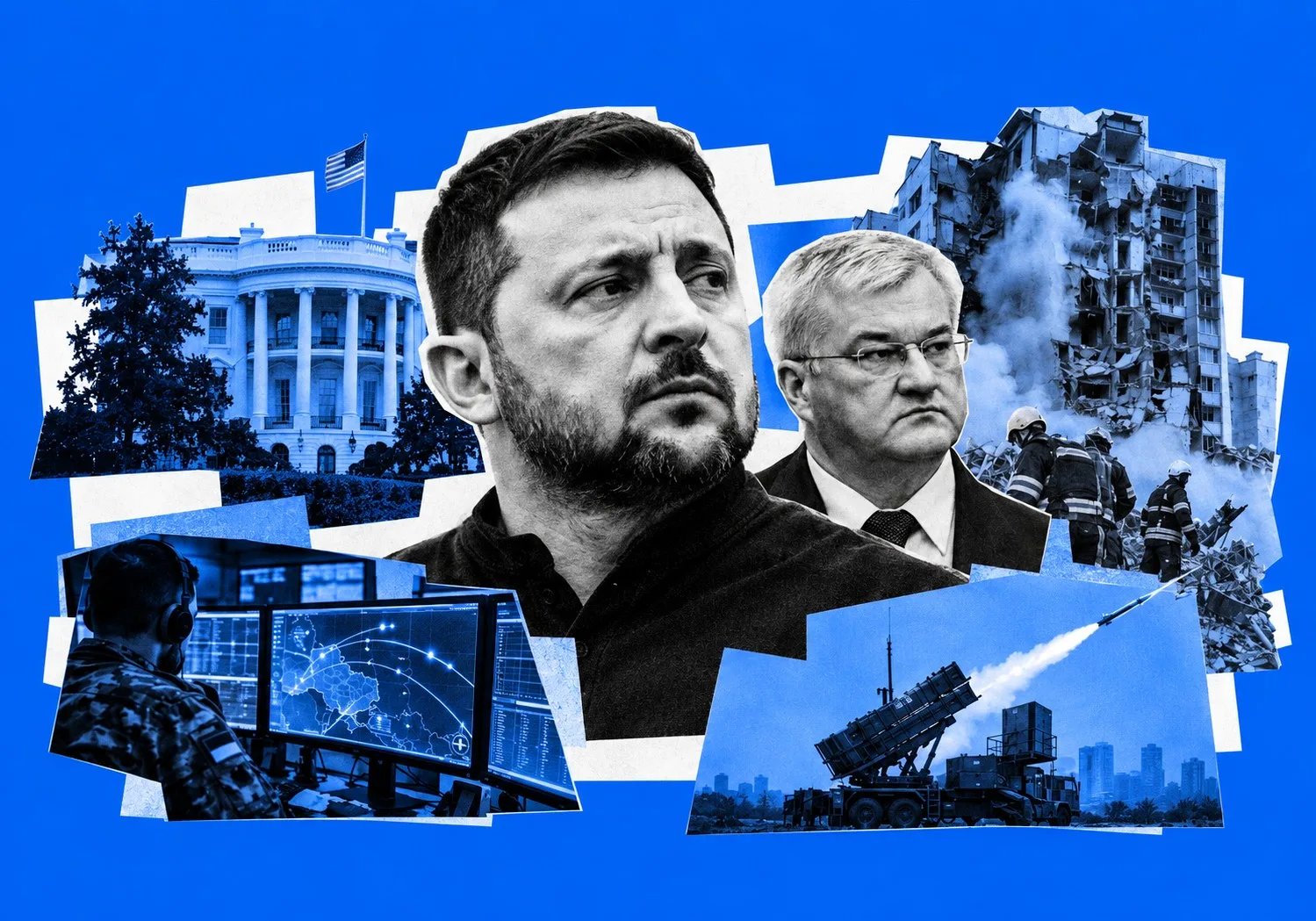
Is Ukraine still receiving vital US military intelligence following threats from Washington and a delayed air raid warning during a ballistic attack on Kyiv? Speaking at the Warsaw Security Forum on 13 October, Ukraine’s Foreign Minister, Andrii Sybiha confirms that intelligence sharing between the two nations remains fully operational despite rising diplomatic tensions over Ukrainian strikes on Russian oil refineries.
“You are probably asking whether we are receiving intelligence from the American side. Yes, we continue this cooperation,” Mr Sybiha told delegates during a panel discussion, addressing public anxieties that the information pipeline had been throttled.

The Missing Warning
Public anxiety over intelligence flows spiked after President Volodymyr Zelensky on October 13, made sharp comments regarding the night strike on Kyiv. International partners, he stated bluntly, failed to provide advance warning about five ballistic missiles launched toward the Ukrainian capital.
“Regarding this strike, unfortunately, there was no warning from our partners. Intelligence data on the launch of Russian ballistic missiles helps save human lives, and this is one of the most critical issues. This is precisely what helps prevent murders when a warning about ballistics is present,” Mr Zelensky stated.
Timing made the incident even more delicate. Prior to the attack, Ukraine had voluntarily paused its strikes on Russian refineries and energy sites for two full days, hoping to test potential de-escalation.
Moscow, however, showed no restraint. Russian forces hit nineteen Ukrainian regions during the exact same period.
Why Sirens Stayed Silent
In Warsaw, Mr Sybiha pushed back against rumors that Washington had withheld early warnings to pressure Kyiv politically. The delay, he explained, stemmed from technical factors rather than political maneuvers in Allied capitals.
Ukrainian Air Force officials provided additional operational context. Ground-based radar arrays detected the incoming ballistic targets only as they swept toward Kyiv, meaning no prior launch telemetry had arrived from within Russian borders.
Air Force spokesperson Yurii Ihnat confirmed that the alarm had been sounded only during the missile attack, but said that this had occurred previously.
Not only the U.S. shares its intelligence with Ukraine, but other NATO countries do as well, covering strategic aviation, ship movements, and ballistic missile launches, Ihnat notes.
"There are moments when this information fails to arrive. This is not the first case. If there were certain technical issues this time, I believe the intelligence can sort them out. And they will resolve this problem together with our partners," Ukrainian Air Force spokesperson said.
NATO and US intelligence feeds do transmit data to Ukrainian air command continuously, defense officials noted. Former Air Force spokesperson Yurii Ihnat acknowledged, however, that certain short-range or low-altitude launches stretch radar detection systems to their absolute limits.
Lately, Moscow has altered its tactics.
Russian units rely more heavily on short-range systems—including modified S-400 surface-to-air batteries fired in land-attack mode and mobile Iskander-M launchers—alongside hypersonic missiles deployed very close to the border.
When paired with aggressive electronic warfare, radar jamming, and low trajectories, these weapons reduce detection windows to seconds. Foreign Ministry officials reaffirmed that day-to-day intelligence sharing continues without interruption, attributing the recent warning gap strictly to tactical adjustments by Russian forces.
Friction Over Russian Refineries
Underlying these public explanations is a tense diplomatic dispute.
Reports published by the Financial Times and Axios, citing unnamed sources, claimed American officials had threatened to curtail or suspend intelligence sharing if Ukrainian drone strikes on Russian refineries persisted. The issue was reportedly raised during the meetings between US representatives and a Ukrainian delegation in Miami on 9 October.
An unnamed US official later denied that an explicit ultimatum was delivered, stressing that security collaboration remains bound by institutional military channels, though Ukrainian officials have refrained from confirming the contents of the Miami talks.
The Kyiv Independent reported on October 12, that the Trump administration threatened senior Ukrainian military and government officials in a push to protect Russian oil refineries.
"They called all the top military officials with threats," one Ukrainian official told the Kyiv Independent. "They're telling everyone that they're going to turn off both the intelligence sharing and PURL."
Multiple senior Ukrainian officials told the Kyiv Independent that Kyiv had not been informed in advance of Trump's October 11 ceasefire announcement. After the announcement, Ukrainian officials reportedly came under pressure to abide by the ceasefire and refrain from striking Russian oil refineries.
According to another official, President's Office Deputy Head Pavlo Palisa, in charge of military affairs, and Mykhailo Drapatyi, commander-in-chief of the Ukrainian Armed Forces, had received calls from the American side.
Washington’s reservations rest on three distinct concerns.
Primarily, US officials worry about global energy market volatility, fearing that damage to Russian refineries could restrict global diesel supplies and drive up fuel prices internationally. Furthermore, certain administration officials fear deep-tier strikes inside Russia might trigger broader military retaliation by Moscow. Finally, long-standing US policy mandates that shared intelligence should support territorients to US energy sanctions. The next day, Mr Trump publicly called on Ukraine to halt refinery strikes, citing fuel shortages, and went further by claiming President Zelensky had agreed during private contacts to reduce attacks on Russian energy sites.
Mr Zelensky reacted.
Easing sanctions on Moscow would only prolong the war, he warned, insisting that concessions to Russia never produce lasting peace. Meanwhile, Keith Kellogg, former US Special Envoy for Ukraine, offered a contrasting view, arguing publicly that Ukraine must be granted full operational freedom to hit targets inside Russia and stating that artificial limits only weaken Kyiv's defensive standing.
What Is at Stake?
Despite political disagreements, US intelligence support remains fundamental to Ukraine's defense across three key operational sectors.
Space-based infrared sensors pick up missile launch plumes at ignition, granting civil defense networks crucial lead time to alert civilians. Concurrently, real-time geolocational data feeds precision artillery like HIMARS and ATACMS, enabling strikes against high-value military targets. Beyond immediate defense and targeting, high-resolution satellite reconnaissance tracks Russian troop concentrations, ammunition depots, and offensive preparations along the front line.
Bilateral agreements govern this intelligence pipeline, connecting satellite constellations, European ground radars, and airborne early-warning aircraft operating in international airspace near Ukraine.
The system processes massive volumes of sensor data, routing threat assessments straight to Ukrainian air defense hubs.
Public sensitivity around these feeds is understandable. When ballistic missiles launch near the border, local ground radar often detects them too late for automated warning systems to alert urban populations, meaning that without satellite thermal detection, early warnings fail.
The debate also highlights a deeper split in risk assessment. Ukrainian commanders consider strikes on Russian oil infrastructure essential for draining Moscow's war economy, whereas U.S. allies evaluate those same strikes through the lens of global market stability and escalation management.
Despite friction over long-range targeting, technical cooperation between Western intelligence agencies and Ukrainian forces continues daily. Kyiv remains fully aware that access to real-time partner intelligence is vital for tracking enemy movements, protecting critical infrastructure, and holding the front line.
Sources: RBC-Ukraine, The Kyiv Independent, LIGA.NET