
Ukraine Strikes Russian Warship in Gulf of Finland as Baltic Security Risks Intensify

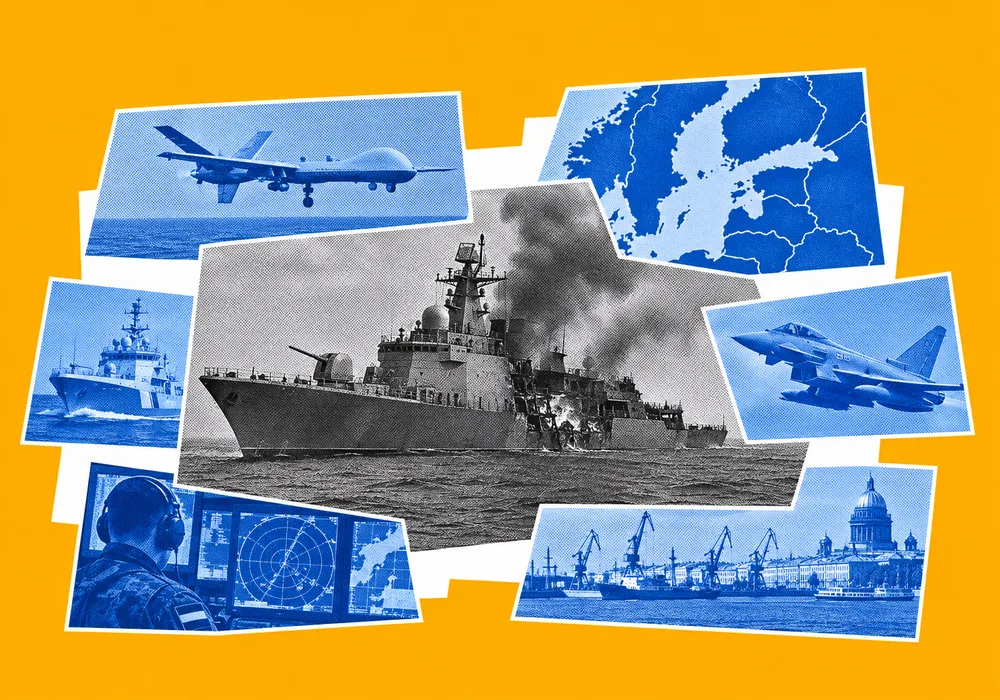
Finland has confirmed detecting a strike against a Russian naval vessel in the Gulf of Finland, marking a significant development in Ukraine’s campaign against Russian military assets in the Baltic region. The incident, which occurred amid simultaneous drone attacks on infrastructure near St Petersburg, highlights the growing vulnerability of Russia’s military and logistical presence in the strategically important maritime corridor.
Finland’s Defence Forces have confirmed detecting a strike against a Russian warship in the Gulf of Finland, following an incident on 11 November. The Finnish military said its forces monitored the situation as it developed, while emphasising that the security situation in the area remained stable and that Finland faced no immediate military threat.
Although Finnish authorities initially withheld details about the circumstances, Estonian media reported that the vessel was a small Russian Navy ship that subsequently returned to St Petersburg. Ukraine’s Security Service (SBU) claimed responsibility for the operation, according to Finnish broadcaster Yle. The precise extent of the damage, the weapon used and whether there were casualties have not been independently established.
Further reporting identified the vessel as the Naro-Fominsk, a Buyan-M-class small missile corvette belonging to Russia’s Baltic Fleet. These vessels are particularly significant because they can carry Kalibr and Oniks missiles, both of which have been used by Russian forces in attacks against Ukraine. The loss or degradation of such a platform would therefore have implications beyond Russia’s immediate naval presence in the Baltic Sea.
The incident also demonstrates how Ukraine’s long-range strike capabilities are increasingly challenging Russian military assets far from the frontline. Rather than concentrating exclusively on occupied territories and military facilities close to Ukraine, Kyiv has expanded its operations towards strategic infrastructure and military installations in north-western Russia.
A wider operation against Russia’s Baltic infrastructure
The reported strike on the warship took place amid a broader Ukrainian drone operation targeting the Leningrad region, including the port infrastructure at Ust-Luga. Located on the southern coast of the Gulf of Finland, Ust-Luga is one of Russia’s most important maritime export hubs, handling significant volumes of oil, petroleum products, grain and other commodities.
The port's strategic importance extends beyond commercial activity. Its infrastructure supports Russian export revenues and provides logistical capacity that remains relevant to the country's ability to sustain its war economy. Disruptions to operations at Ust-Luga can therefore create pressure on several interconnected sectors, including energy exports, maritime transport and regional logistics.
Ukrainian attacks on the Leningrad region have increasingly demonstrated that distance from the frontline does not guarantee protection for Russian strategic infrastructure. The combination of strikes against export facilities and military assets suggests an effort to complicate Russia's ability to protect critical sites while forcing it to allocate additional resources to air defence and infrastructure security.
The reported attack on the Naro-Fominsk adds a maritime dimension to this campaign. If the damage is confirmed, the operation could further constrain Russia's ability to maintain an uninterrupted naval presence in the Gulf of Finland, particularly as its Baltic Fleet is also expected to protect commercial shipping and infrastructure connected to Russian exports.
NATO's Baltic members face growing airspace concerns
The incident comes against a backdrop of heightened security concerns across the Baltic region. On 11 November, Estonia, Latvia and Lithuania issued warnings instructing residents to seek shelter after drones appeared in their airspace. NATO subsequently scrambled fighter aircraft in response to the reported aerial activity.
The repeated appearance of drones near or inside NATO airspace has exposed the practical difficulties of maintaining security along the alliance's eastern and northern borders while Russia's war against Ukraine continues. Even when incursions are brief or unintentional, they require military monitoring, identification and decisions about whether interception is necessary.
Finland has also faced challenges associated with the proximity of Russian military activity. Its geographical position, extensive border with Russia and growing role in NATO's northern defence architecture make developments in the Gulf of Finland particularly sensitive. The country joined NATO in April 2023, fundamentally changing the alliance's strategic position along the Baltic Sea.
The Gulf of Finland is a narrow maritime corridor bordered by Finland and Estonia, extending eastwards towards St Petersburg. Its geography makes it important for Russian naval movements, commercial shipping and the security of neighbouring NATO countries. Military activity in the area consequently carries implications for several allied states, even when an incident occurs outside their territorial waters.
The latest developments also reinforce concerns about the potential for the war to generate additional security incidents beyond Ukraine's borders. Drone incursions, disruptions to maritime infrastructure and the proximity of military operations to NATO territory increase the risk of miscalculation, particularly when several countries are monitoring the same rapidly evolving situation.
Pressure on Russia's naval and military infrastructure
Russia's Baltic Fleet has an important role in maintaining Moscow's military presence in northern Europe and protecting maritime approaches to St Petersburg and the country's western ports. Its responsibilities include coastal defence, maritime surveillance and the deployment of missile-capable vessels.
The reported targeting of a Buyan-M-class corvette is particularly relevant because these ships provide Russia with a relatively mobile platform for launching long-range precision weapons. Their operational value is not limited to conventional naval engagements: they also contribute to Russia's broader missile capabilities against targets on land.
Ukraine's ability to threaten such vessels creates additional pressure on Russian naval planning. Moscow may be required to strengthen the protection of its ships, adjust their deployment patterns and increase surveillance around strategically important maritime routes. These measures would compete for resources with other requirements across Russia's military establishment.
At the same time, the incident illustrates the changing character of security in the Baltic Sea. The region is no longer simply a strategic environment in which Russia maintains a military presence alongside neighbouring European states. Following Finland and Sweden's accession to NATO, the alliance has gained a substantially stronger geographical position, while Ukraine's expanding long-range strike capabilities have introduced another factor into the regional balance.
The consequences will depend partly on the extent of the damage to the Russian vessel and whether further operations against Baltic Fleet assets follow. Nevertheless, the incident demonstrates that Russia's naval infrastructure and export routes in the Baltic region are increasingly exposed to the wider consequences of its war against Ukraine.
For European governments, the combination of attacks on Russian military assets, threats to critical maritime infrastructure and repeated drone-related incidents across NATO airspace underscores the need to strengthen regional surveillance, air defence coordination and protection of strategic transport networks. The Baltic Sea is becoming an increasingly important component of Europe's wider security environment, where developments in the war against Ukraine can have immediate consequences for NATO's northern and eastern members.