
Russian Drone Attacks in Black Sea Expose EU and NATO Maritime Defence Gaps

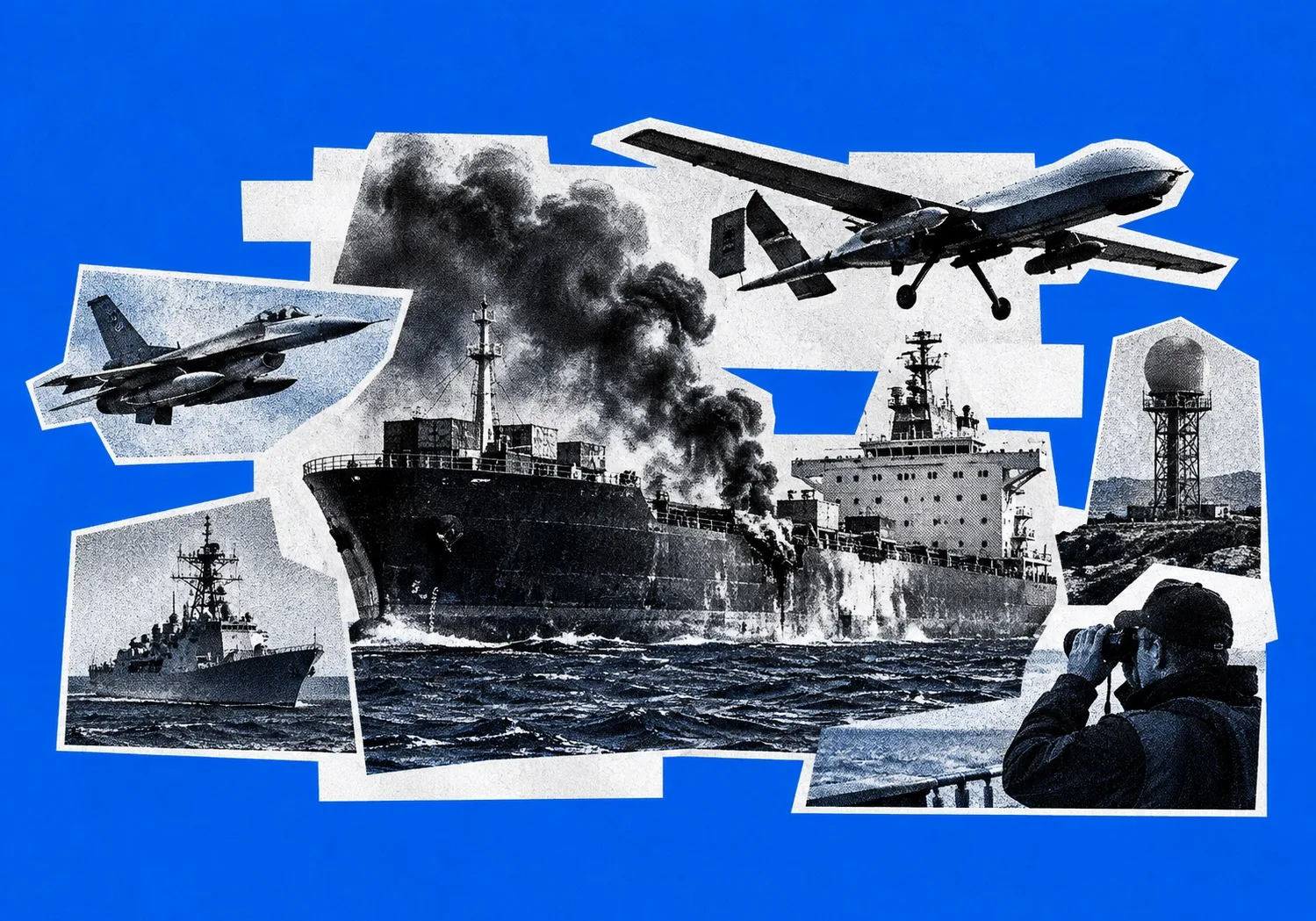
The European Parliament has urged NATO and the EU to step up Black Sea maritime security following Russian drone strikes on civilian vessels near Romania and Bulgaria. A resolution adopted on 22 October, after attacks left around 30 seafarers dead or missing, presses Western allies to defend shipping routes on the EU’s doorstep.
The attacks have brought the war closer to NATO's southeastern coastline without producing the kind of direct military confrontation that would force an immediate collective response. Merchant ships carrying agricultural cargo have been hit under Turkish, Maltese, Marshall Islands and other foreign flags. Some were operating in the exclusive economic zones of EU countries, where international law protects freedom of navigation.
For shipowners, the distinction between Ukrainian waters and those farther west is becoming less reassuring. For European governments, it is becoming harder to treat maritime security as primarily Ukraine's problem.
A Shipping Corridor Under Attack
The most recent attacks took place on 13 and 14 October, when two merchant vessels were struck near the Bulgarian-Romanian maritime border.
The Chelsea 3, a Malta-flagged Ukrainian cargo ship registered in Odesa, was hit by three aerial drones approximately 18 nautical miles east of the Bulgarian town of Byala. Its 15 crew members were evacuated to Varna with minor injuries. Nearby, the Guinea-Bissau-flagged HS Dignity sank after another strike. Eleven of its 12 crew members were initially reported missing.
These incidents followed a succession of attacks earlier in the month.
On 5 October, a Turkish-flagged grain carrier caught fire following a drone strike off Romania and subsequently sank, killing two crew members. The following day, the Alfa Watan, sailing under the Togolese flag, and the Palau-flagged Able were attacked by maritime and aerial drones in Bulgaria's exclusive economic zone. The Alfa Watan sank, while two sailors aboard the Able suffered serious injuries.

A Marshall Islands-flagged vessel carrying rapeseed oil was also struck on 6 October, leaving one person dead and seven injured.
The concentration of attacks matters as much as their individual circumstances. Russia has long sought to restrict Ukrainian maritime trade through blockades, mines and strikes on port infrastructure. The latest incidents extend that pressure into a wider commercial shipping environment, exposing vessels with no direct military role to the risks of the conflict.
The result resembles a blockade without a formally declared blockade line. Ships may remain legally entitled to navigate the western Black Sea, but the commercial calculations behind each voyage are changing.
The Cost of Keeping Trade Moving
Ukraine depends heavily on maritime transport for agricultural exports. Approximately 95% of those exports pass through the Black Sea corridor, making shipping access central to the country's economy and to international food markets.
Alternative maritime routes had helped restore part of Ukraine's export capacity after earlier Russian restrictions. Renewed attacks now threaten those gains. Ukrainian officials estimate that restrictions affecting Black Sea ports have reduced agricultural export capacity by 45–50%.
President Volodymyr Zelenskyy has characterised the strikes as deliberate attacks on global food security.
There is a commercial dimension that military responses alone cannot resolve.
Shipowners must consider whether a voyage remains viable when a drone strike could destroy the vessel, kill its crew or leave cargo stranded. Insurers face greater exposure to hull losses and damaged shipments. Higher insurance premiums, increased freight costs and difficulties recruiting crews can progressively reduce available shipping capacity even where ports remain operational.
The briefing provides no precise figures for the latest increases in insurance premiums or freight rates. Nevertheless, the direction of the pressure is clear: greater physical risk makes trade more expensive and less predictable.
Importing countries may eventually absorb part of that cost through agricultural commodity markets. Ukraine, meanwhile, faces constraints on the export activity needed to sustain its economy.
Moscow does not need to stop every vessel to disrupt the corridor. Making voyages sufficiently dangerous can achieve some of the same commercial effects.
NATO Reinforces Surveillance, but Not Shipping Escorts
NATO has begun strengthening its regional military posture, although its response remains short of direct protection for commercial vessels.
On 20 October, the alliance directed additional intelligence, surveillance and reconnaissance resources towards the Black Sea, including P-8 Poseidon maritime patrol aircraft, radar systems, explosive ordnance disposal teams and expanded intelligence-sharing arrangements.
These capabilities improve the ability to detect threats, monitor maritime activity and investigate incidents. They also help Romanian and Bulgarian forces build a more detailed picture of drone movements and potential hazards at sea.
But surveillance is not the same as interception.
Romania has already moved beyond monitoring in its own territorial waters. President Nicușor Dan confirmed that Romanian F-16 fighters intercepted and shot down two Russian drones on 17–18 October. The country's Supreme Council of National Defence has also accelerated maritime surveillance and mine-countermeasure efforts.
Such measures indicate how the military requirements of coastal states are changing. Air defence, naval surveillance and counter-drone systems can no longer be planned as largely separate capabilities when attacks combine aerial and maritime platforms.
The European Parliament wants a broader response. Its resolution urges consideration of an EU naval operation and a NATO Black Sea initiative building on discussions surrounding Black Sea Sentry. It also calls for faster implementation of an EU maritime security hub.
Yet neither an EU naval mission nor a system of military escorts has been established in response to the latest attacks.
That leaves a considerable distance between the Parliament's political demands and the protection currently available to merchant vessels.
Türkiye Holds the Key to Naval Reinforcement
Any proposal for a substantial external naval deployment faces an obstacle that cannot be overcome simply by allocating more European defence funding.
The 1936 Montreux Convention governs the passage of warships through the Turkish Straits. Its restrictions on vessels from non-Black Sea countries complicate efforts to bring additional naval forces into the region.
Türkiye therefore occupies a pivotal position. It is a NATO member and a Black Sea power, but also the state responsible for administering the straits under the convention.
Ankara has approached the latest crisis cautiously. Foreign Minister Hakan Fidan has proposed a bilateral mechanism intended to prevent strikes against commercial shipping and reduce the risk of escalation. Türkiye has not embraced the prospect of an EU military deployment.
Its position points to a fundamental difficulty for Brussels. The EU can develop maritime security policy, finance surveillance systems and encourage greater coordination, but the practical deployment of naval forces depends on legal restrictions, national capabilities and political agreement among regional states.
For that reason, the most immediate improvements may come from countries already operating in the Black Sea rather than from a new multinational fleet entering from outside.
Romania, Bulgaria and Türkiye possess geographic advantages that external forces cannot replicate. Their ability to coordinate surveillance, share threat information and respond quickly to incidents could prove more consequential in the near term than an ambitious naval mission still awaiting political agreement.
Bulgaria Faces Pressure to Close Its Defence Gaps
Bulgaria has become a particular focus of European criticism.
The Parliament's resolution challenges the government's diplomatic response and calls on Prime Minister Rumen Radev to end delays in joining NATO's Air Defence Capabilities Against Lower-level Air Threats initiative.
The criticism carries a wider implication. A weakness in one coastal state's drone defences can affect shipping across the western Black Sea, where commercial routes and maritime threats do not follow national boundaries.
Radev has convened a security council, requested international assistance with investigations and initiated trilateral coordination discussions with Romania and Türkiye.
Those steps establish a basis for cooperation. They do not, however, resolve the question of how rapidly Bulgaria will integrate its capabilities into broader allied systems.
The difference between national responses is becoming increasingly visible. Romania has intercepted drones and accelerated its defensive preparations, while Bulgaria faces pressure to translate diplomatic coordination into operational commitments.
European defence funding could help narrow those gaps. The Parliament has called for unused resources under the EU's SAFE instrument to support Romania and Bulgaria, potentially strengthening surveillance, radar coverage and counter-drone capabilities.
Such investment would also create opportunities for European defence contractors specialising in detection systems, maritime monitoring and related technologies.
Funding is only one part of the equation. Systems deployed on opposite sides of a maritime boundary must be able to exchange information and support coordinated decisions if they are to provide effective regional coverage.
The Next Vulnerability Lies Beneath the Surface
Commercial vessels are the immediate targets, but European lawmakers are also concerned about the infrastructure beneath the Black Sea.
The Parliament has urged stronger protection for submarine telecommunications cables, electricity transmission links and data infrastructure. These assets are difficult to monitor continuously and could become vulnerable as maritime security deteriorates.
The potential consequences extend beyond shipping. Damage to underwater connections could affect communications and energy systems, while a serious maritime incident could create environmental risks near sensitive coastal areas, including the Danube delta.
This broadens the security problem facing European governments. Defending merchant traffic requires one set of capabilities; protecting underwater infrastructure requires another, including persistent monitoring, specialised detection equipment and the ability to investigate suspicious activity.
Neither task fits neatly within traditional assumptions about naval deterrence.
The western Black Sea is moving towards a security model in which continuous surveillance, drone interception, mine countermeasures and infrastructure protection become routine requirements rather than temporary wartime measures.
For NATO planners, that shift strengthens the case for a more permanent presence along the alliance's southeastern perimeter. For EU governments, it raises questions about which responsibilities should be handled collectively and which must remain with coastal states.
The European Parliament can press for a naval operation. NATO can send additional aircraft and surveillance equipment. Romania and Bulgaria can strengthen their national defences.
What remains unsettled is who will provide effective protection when the next civilian vessel comes under attack outside Ukrainian territorial waters, but close enough to Europe's coastline to expose the limits of its existing security arrangements.
Sources: European Parliament, Reuters, The Turkiye Today, UNN, DPA, BBC