
UK Spent £100m on Brexit Border Posts as Five of Seven Never Opened

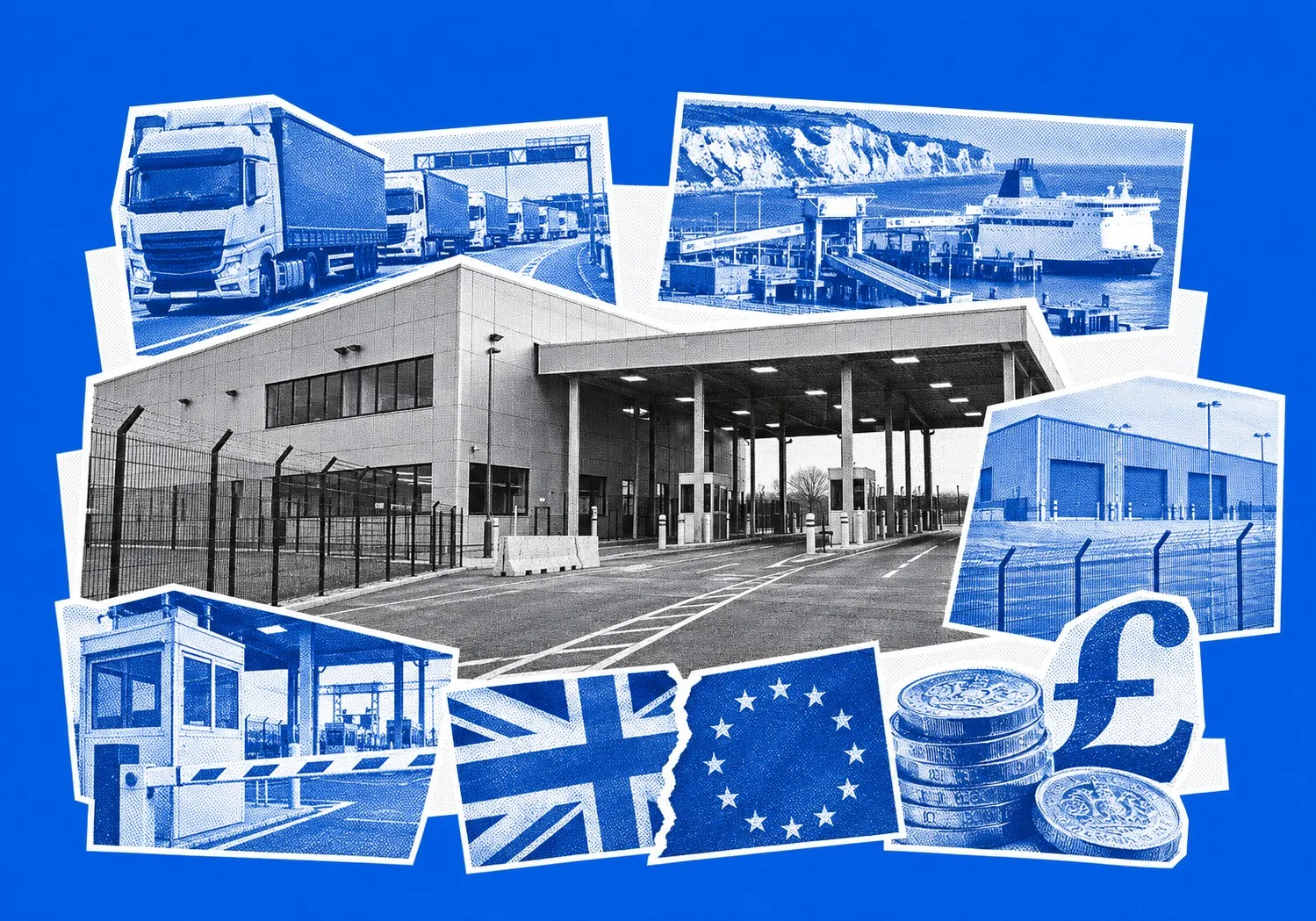
The UK spent at least £100m on post-Brexit border facilities that were abandoned or left largely unused, according to newly disclosed government figures. Five of seven inland sites never became operational after ministers repeatedly changed plans for checking goods arriving from the EU. One proposed facility near Dover cost taxpayers £28m but remains an empty field.
The figures, obtained from HM Revenue & Customs and reported by The Guardian, have emerged as Britain prepares for a new food and agricultural trade agreement with the EU. The deal could eliminate many of the inspections for which the infrastructure was built, leaving port operators facing further costs and demanding government compensation.
Millions spent on border posts that never opened
At Guston, near Dover, the government paid £21m for land intended to become the Dover White Cliffs border facility. Another £7m went on preliminary work, including archaeological investigations.
The site was never developed into a functioning border post.

Local residents first learned of the plans on 31 December 2020, hours before Britain's transition period with the EU ended. The proposed development was intended to handle lorries arriving through the Channel ports, where space for new inspection facilities was limited.
Other abandoned projects were scattered across England.
A border facility at Birmingham airport cost £17m, including £6m to close it.
At Ebbsfleet in Kent, £4m was spent converting part of the former Eurostar station car park for lorries. Decommissioning the site cost another £6m.
The government also spent £17m on a facility at Appleton Thorn in Warrington, which was intended to handle freight arriving through Liverpool, Holyhead and Heysham. Of that sum, £7m went on purchasing the site, £9m on development and £1m on closure.
At North Weald airfield in Essex, construction cost £3m and decommissioning another £2m. The site had been selected partly to prevent additional freight traffic from congesting roads closer to London.
The facilities were commissioned when ministers expected far more lorries to require customs processing or regulatory inspections. As the requirements changed, several sites became unnecessary before they had handled any commercial traffic.
Some of the government's largest border investments are still in use.
Sevington, near Ashford in Kent, has incurred £154m in capital expenditure and £179m in operating costs, according to the figures reported by The Guardian.

At Holyhead in Wales, land acquisition and construction cost £37m.
Neither facility can simply be classified as wasted expenditure. They continue to serve border operations, including customs functions that would remain necessary under the proposed EU agreement.
At Portsmouth International Port, however, the problem is a completed building with very little work to do.
The council-owned port spent £23m on a purpose-built inspection post, receiving £17.1m in government funding and covering approximately £6m from local resources. Designed to inspect 80 trailers a day, it has handled an average of just two, according to port director Mike Sellers.
The building contains specialised facilities for food imports and biosecurity checks. Its position within the working port makes the space valuable, but the design prevents it from being easily converted into a conventional warehouse.
Portsmouth is considering repurposing or demolishing the facility. Sellers has warned that converting it could cost almost as much as knocking it down.

The port and city council want the government to compensate them for infrastructure constructed to meet official requirements that may soon disappear.
Why Britain's Brexit border plans changed
Britain left the EU single market and customs union at the end of 2020, introducing new customs and regulatory barriers to trade with its largest commercial partner.
The EU began checking goods arriving from Britain in January 2021. The UK did not immediately introduce equivalent controls on imports from the bloc.
The Conservative government postponed inspections to reduce the risk of disruption at ports and give businesses time to prepare. Ministers were concerned about lorry queues, higher import costs and possible shortages of fresh food.
But the delays continued as the government struggled to complete inspection facilities, recruit staff and establish the systems needed to process incoming goods.
By the time some of the infrastructure was ready, the expected volume of checks had fallen.
Under the Border Target Operating Model, the government adopted a risk-based approach, with different inspection requirements depending on the products being imported. Physical checks on certain animal and plant products began in April 2024, but the revised system required fewer inspections than the original plans.
A National Audit Office report published that year found that ministers had postponed the introduction of import controls five times.
The public spending watchdog identified substantial costs arising from those decisions. Between 2020–21 and 2023–24, HMRC spent approximately £258m building and operating eight temporary border facilities to handle demand that never fully materialised.
Port health authorities recruited around 520 staff in preparation for the new inspection regime. About 370 subsequently proved unnecessary.
The audit also estimated that 13 major government programmes covering post-Brexit border arrangements and improvements would cost at least £4.7bn over their lifetimes.
That figure included technology, customs systems and operational infrastructure still required after Brexit. It was not an estimate of money wasted, and some of the earlier spending may overlap with the latest HMRC disclosures.
The consequences extended to businesses. Importers faced repeated changes to inspection dates, documentation requirements and fees, while port operators had to make investment decisions without knowing what the final border regime would require.
The National Audit Office also warned that postponed inspections increased biosecurity risks. Incomplete checks could make it harder to identify animal and plant diseases entering Britain or trace their origins.
A new EU deal could leave more facilities redundant
The government's next change to border arrangements could make some existing inspection posts unnecessary.
Britain and the EU have moved towards a new sanitary and phytosanitary agreement covering food, animals, plants and agricultural products. The proposed arrangements would remove many routine health certificates and physical inspections for qualifying trade between the two markets.
British rules in the areas covered by the agreement would be aligned with relevant EU standards. This would allow a substantial reduction in checks on goods moving across the Channel and the Irish Sea.
Food exporters are among those expected to benefit. Since Brexit, businesses shipping products such as fresh meat, fish and dairy goods have faced additional certification costs and administrative procedures.
The burden has been particularly difficult for smaller suppliers, for whom the cost of documentation can make low-value shipments uneconomic.
Fewer inspections could help restore some of that trade and reduce delays for importers supplying British supermarkets and food businesses.
But facilities built specifically to conduct those checks could lose much of their remaining purpose.
Government guidance acknowledges that the agreement will change both the types of goods requiring inspection and the frequency of checks. Some ports could see inspections of products arriving from countries outside the EU increase, however, as Britain aligns its rules with those of the bloc.
The agreement would not remove all border controls. Customs declarations and other requirements would remain, and Britain would have to maintain regulatory alignment in the areas covered by the deal.
The implementation timetable has also changed.
Guidance issued by the Department for Environment, Food and Rural Affairs in July 2026 envisaged the agreement taking effect in mid-2027. More recent reporting suggests early 2028, although the final date and transitional arrangements have not been confirmed.
The proposed deal is expected to feature in wider UK-EU discussions at a summit scheduled for 20 November.
In the meantime, ports must keep meeting existing inspection requirements, even as they prepare for a system that could leave their facilities largely redundant.
Port health authorities have also raised concerns about how food safety and biosecurity will be maintained when routine checks are removed.
Anthony Baldock, executive chair of the Association of Port Health Authorities, warned in a statement on 4 November that reducing border inspections would not eliminate the risks those inspections were designed to manage.
The association wants the government to explain how enforcement responsibilities will be allocated, how potential problems will be detected and whether sufficient funding will be available.
It has also questioned whether the expected financial savings will be genuine or whether some costs will simply move from border operators to other public authorities and businesses.
For Portsmouth, the financial consequences are already visible.
The council has committed approximately £6m to a building operating well below its intended capacity. Converting or demolishing it would require further spending.
The port is now seeking compensation, but the government has yet to establish how the costs of redundant border infrastructure will be divided between central government, local authorities and operators.
Sources: The Guardian, National Audit Office, Defra