
US Invites Putin to Miami G20: How Trump’s Transactional Diplomacy Challenges Europe

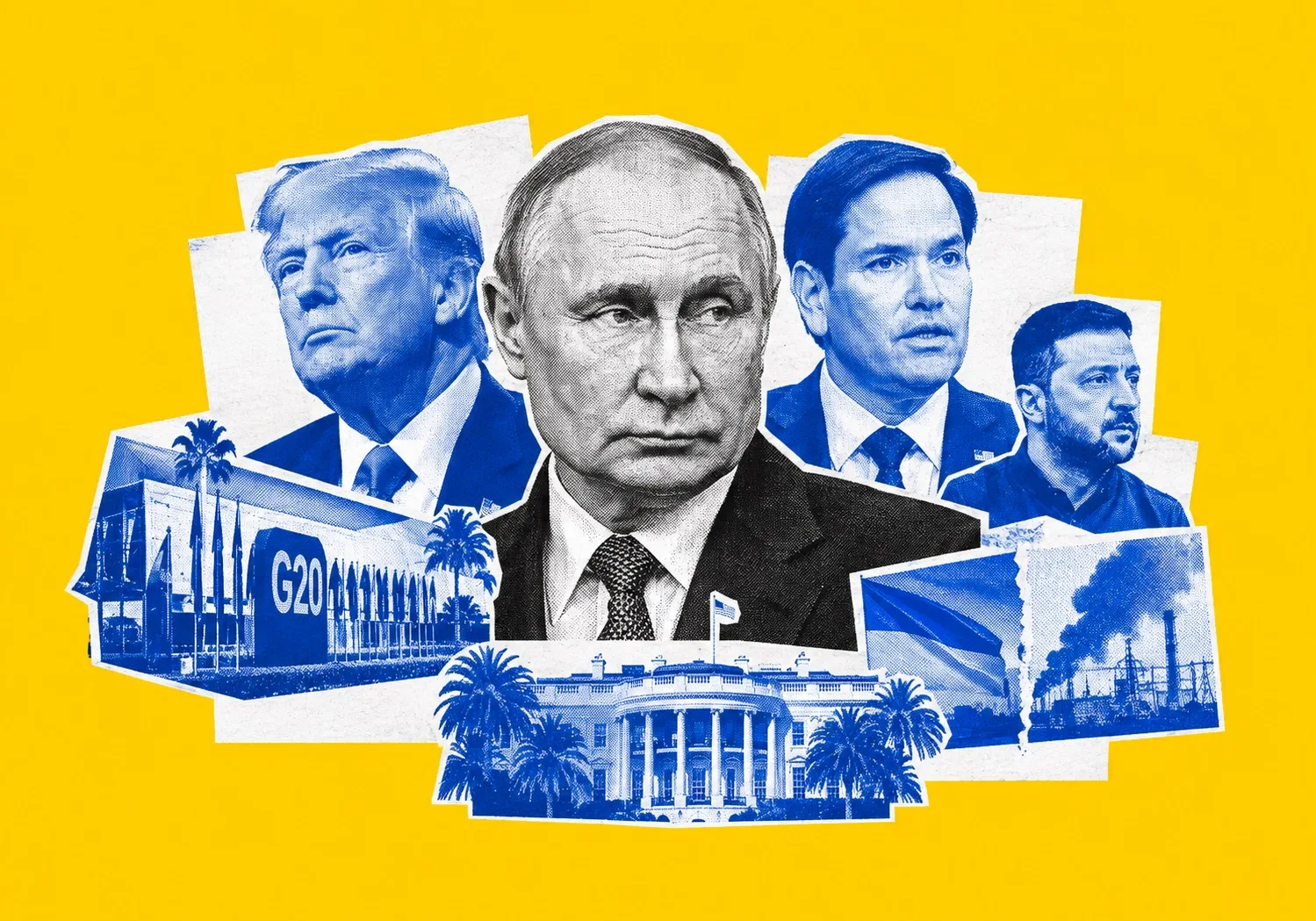
The United States has officially invited Vladimir Putin to the G20 leaders’ summit in Miami, opening the door for a high-stakes meeting with Donald Trump and testing Western cohesion over Ukraine. Announced by Secretary of State Marco Rubio after talks with Russian Foreign Minister Sergei Lavrov, Washington’s push for a limited winter energy truce signals a shift from post-2022 isolation to direct transactional bargaining - leaving European allies facing a transformed security landscape.
That ambiguity is important. The most consequential part of the announcement is not whether Putin eventually boards a plane for Florida. It is that Washington has decided the diplomatic value of bringing him back into the room now outweighs the political logic of keeping him outside it.
From isolation to transaction
Putin has not physically attended a G20 summit since 2019. After Russia’s full-scale invasion of Ukraine in February 2022, he stayed away from the subsequent meetings in Bali, New Delhi, Rio de Janeiro and Johannesburg, with Russia represented by ministers or other senior officials. His return to a leaders’ summit on US soil would therefore carry significance beyond the agenda of the G20 itself.

For Washington, the invitation is consistent with a diplomatic approach centred on direct engagement between leaders. The administration is trying to create space for narrowly defined agreements rather than waiting for a comprehensive settlement of the war.
Rubio said after his meeting with Lavrov that both Russia and Ukraine had expressed interest in a limited truce covering energy infrastructure and grain exports. He also made clear that such an arrangement would not amount to an end to the war, but could reduce pressure on energy and agricultural markets.
The distinction matters. A partial freeze is easier to negotiate than a political settlement because it does not require Moscow and Kyiv to resolve the central questions over territory, security guarantees or the future European security order.
But it also gives each side a different incentive.
Washington can present an energy or grain arrangement as evidence that diplomacy is producing tangible results. Moscow can treat a limited agreement as a tactical negotiation while retaining the broader military and political objectives that have driven its campaign.
The Miami invitation puts that difference on a much larger diplomatic stage.
The winter problem
The timing is particularly significant because the proposed truce concerns infrastructure that becomes strategically important as winter approaches.
On September 14, Trump said Russia and Ukraine had agreed to halt attacks on energy infrastructure. Kyiv subsequently confirmed its willingness to observe such an arrangement. Yet reporting cited by the Financial Times indicated that the announcement had come before Moscow had made a binding commitment. Kremlin-aligned sources suggested Putin remained reluctant to surrender the option of using pressure on Ukraine’s energy system during the winter.
That gap between political messaging and an enforceable agreement is central to the current diplomacy.
Russia has used attacks on Ukrainian thermal and hydroelectric facilities, substations and other energy infrastructure as a means of putting pressure on the country’s electricity system. Ukraine, in turn, has targeted Russian refineries, depots and export infrastructure, seeking to affect Moscow’s war revenues.
A mutual halt would therefore constrain instruments that both sides regard as useful.
For Kyiv, the immediate calculation is particularly difficult. An energy truce could reduce the risk of severe damage to the Ukrainian grid during winter. But an agreement that limits Ukrainian attacks without securing equivalent Russian restraint could remove one of Kyiv’s available sources of pressure.
That is why the Miami diplomacy cannot be separated from the military calendar. A temporary agreement reached before winter would have very different implications from one reached after Russia has already used the threat of energy disruption as leverage.
The legal question is separate from the diplomatic one
Putin’s potential presence in Miami also exposes an unusual divide between US domestic authority and the international legal system.
The International Criminal Court issued an arrest warrant for Putin in March 2023 over alleged war crimes involving the unlawful deportation and transfer of Ukrainian children. The warrant remains active.
The United States, however, is not a party to the Rome Statute. Washington signed the treaty in 2000 but never ratified it and subsequently informed the United Nations that it did not intend to become a state party. The legal obligations that bind the 124 states party to the Rome Statute therefore do not apply to the United States in the same way.
That distinction means the ICC warrant does not create an obligation for US authorities to arrest Putin if he enters the country.
The political significance is nevertheless harder to contain within legal technicalities. A visit by an ICC-indicted head of state to a US-hosted G20 would represent a visible return to high-level diplomatic engagement without the prior resolution of the legal controversy surrounding him.
The venue would make the symbolism even more pronounced: the summit is scheduled for Trump National Doral Miami, a private property associated with the US president.
The issue is not whether Washington has the legal authority to host Putin. It does. The question is what repeated high-level engagement does to the practical force of international isolation when a major Western power chooses a different diplomatic route.
Europe has less control over the channel
For European governments, the more consequential change may be institutional rather than ceremonial.
Since 2022, European security policy has been closely tied to sanctions, military assistance to Ukraine and efforts to maintain a common Western position towards Moscow. The proposed Miami summit places the central US-Russia channel increasingly in the hands of the two presidents.
That does not eliminate European influence. But it changes where decisions are made.
If Washington and Moscow begin negotiating partial ceasefires, energy arrangements or other measures directly, European governments may have to respond to agreements whose parameters were established elsewhere. The same applies to Kyiv, despite Zelenskyy’s stated willingness to meet Putin at the G20 if the opportunity arises.
The difference is between participating in a negotiation and being able to shape the conditions under which it takes place.
This is particularly relevant because the US approach does not depend on restoring the broader Western diplomatic consensus that existed before the invasion. It depends on obtaining specific results from direct engagement.
That makes the relationship with Moscow more transactional. Diplomatic access becomes something that can be exchanged for incremental concessions rather than the reward for a prior political settlement.
Moscow benefits from keeping the answer open
The Kremlin has little reason to settle the question of Putin’s attendance immediately.
Peskov’s response allows Moscow to welcome the invitation without committing the president to the trip. That preserves flexibility over both the summit and the negotiations leading up to it.
If Russia wants concessions from Washington, the possibility of a presidential meeting can remain part of the bargaining environment. If negotiations deteriorate, Moscow can delay or reject the visit without having committed itself months in advance.
The same flexibility applies to the energy truce.
Lavrov has reiterated Moscow’s willingness to negotiate what Russia describes as a “just peace”, while rejecting a simple operational pause without political concessions. In that framework, an infrastructure ceasefire is not necessarily a neutral confidence-building measure. It can become part of a wider negotiation over what Russia receives in exchange.
That makes the US invitation more than an event scheduled for December. It creates a diplomatic process in which Moscow can decide how much engagement to offer and when.
What the G20 becomes in this model
The G20 was not created as a security alliance, and Russia remains a member despite its exclusion from the G7 after the annexation of Crimea. Its traditional purpose is economic coordination among major economies.
Yet the Miami summit could give the organisation another practical role: a venue for major-power diplomacy when formal peace negotiations remain unresolved.
That may make the G20 more useful to Washington as a platform for direct bargaining. It also creates tension with the broader architecture built around sanctions, international legal institutions and coordinated Western policy towards Russia.
The question is therefore not simply whether Putin attends.
It is whether the return of leader-to-leader diplomacy becomes the mechanism through which the war is managed - with limited agreements reached first, wider political questions deferred, and European governments adjusting afterwards to decisions made in Washington and Moscow.
For the Trump administration, that approach offers a way to test whether diplomatic normalisation can produce concrete restraint before winter. For Moscow, the invitation restores a level of access that disappeared after 2022 while leaving its central demands untouched.
And for the institutions that have defined the Western response since the invasion, the difficult part begins before the first delegation arrives in Miami.
Sources: Reuters, Radio Liberty, Kyiv Post, The Straits Times