
Tinto Brass, Renowned Italian Director of 'Caligula', Dies at 93

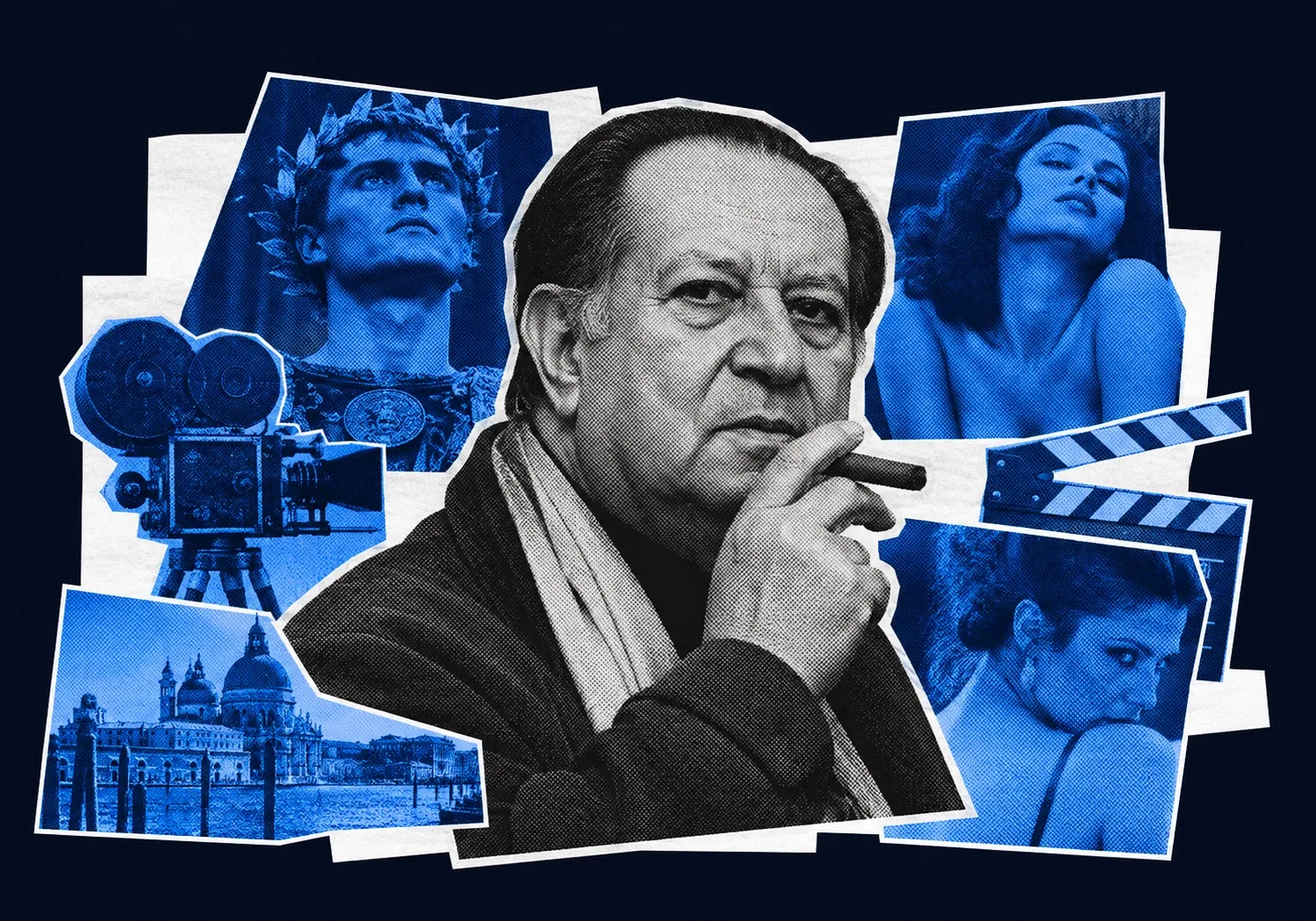
Italian filmmaker Tinto Brass, internationally acclaimed for his erotic cinema and the controversial historical drama Caligula, has died at the age of 93. He passed away on Wednesday morning, 4 November 2026, in a Rome hospital following a period of declining health. His family confirmed his death, marking the end of a six-decade career that redefined European erotic film and provocative cinema.
The director passed away at around 10:30 am in Rome. His death was confirmed by his wife, Caterina Varzi, and his children, Bonifacio and Beatrice, according to Italian news agency ANSA.
His family has decided to hold a private funeral, Rai News reported.
For audiences outside Italy, Brass was best known for films that pushed the limits of what could be shown on screen. His name became closely associated with erotic cinema, although that was only one part of his career. Before directing Caligula and The Key, he had spent years making experimental films, political dramas and comedies.

From law student to filmmaker
Born Giovanni Brass in Milan on 26 March 1933, he studied law at the University of Padua before deciding to pursue filmmaking.
He moved to Paris, where he worked at the Cinémathèque Française. It was an important period for European cinema, with French directors experimenting with editing, narrative, and camera techniques that challenged traditional filmmaking.
Brass became interested in those ideas and began developing his own approach. He later worked with established directors, including Roberto Rossellini and documentary filmmaker Joris Ivens.
His first feature film, Chi lavora è perduto (Who Works Is Lost), appeared in 1963. Set in Venice, it followed a young man struggling with the prospect of entering conventional working life. The film dealt with political disillusionment, personal freedom and resistance to social expectations.
It also attracted the attention of Italian censors.

Brass continued experimenting throughout the decade. His films included Col cuore in gola (1967), a thriller starring Jean-Louis Trintignant, and Nerosubianco (1969), which explored sexuality and racial prejudice.
He was not yet the director of erotic films that audiences would later recognise. His work was closer to the experimental cinema emerging across Europe during the 1960s.
Salon Kitty and the controversy surrounding Caligula
Brass's career took a different direction in the 1970s.
In 1976, he released Salon Kitty, a historical drama set in Nazi Germany. The story centres on a Berlin brothel used by Nazi intelligence to gather information about influential clients.
The film combined political intrigue, sexual imagery and an examination of power. Its explicit scenes attracted considerable attention, helping introduce Brass to a wider international audience.
Three years later came Caligula, the production that would become his most notorious film.
Starring Malcolm McDowell as the Roman emperor, alongside Helen Mirren, Peter O'Toole and John Gielgud, the film depicted political violence, betrayal and sexual excess in ancient Rome.

The production was troubled by disagreements between Brass and producer Bob Guccione, the publisher of Penthouse magazine.
Brass did not control the final edit. Additional explicit material was incorporated into the film without his approval, and he subsequently distanced himself from the released version.
Caligula became internationally notorious for its graphic content. It faced censorship and distribution restrictions in several countries, while critics debated whether it should be regarded as historical drama, exploitation cinema or pornography.
The controversy followed Brass for the rest of his career.
Despite its notoriety, Caligula was not a film he considered a faithful representation of his original vision.
The Key and his years as an erotic film director
During the 1980s, Brass concentrated increasingly on erotic filmmaking.
His 1983 film La chiave (The Key), starring Stefania Sandrelli, became one of his major commercial successes.
Based on a novel by Japanese writer Jun'ichirō Tanizaki, the film tells the story of a married couple whose relationship changes as they begin exploring their desires through private diaries.
Set in Venice during the final years of fascist Italy, it brought together the period settings, elaborate interiors and sexual themes that would become familiar features of Brass's later work.
He followed it with Miranda in 1985, Capriccio in 1987 and Paprika in 1991.
In 1992, he released Così fan tutte, internationally known as All Ladies Do It. Other films included The Voyeur (1994) and Monella, released internationally as Frivolous Lola, in 1998.
 His films found audiences well beyond Italy, particularly through international distribution and home video.
Brass also became known for his distinctive visual preferences. He frequently used mirrors, unusual camera angles, elaborate costumes and carefully arranged interiors. Venice, a city closely associated with his life and career, appeared repeatedly in his films.
Women were usually central to his stories, although his portrayal of female sexuality remained a subject of criticism.
Some viewers regarded his films as playful explorations of desire and sexual freedom. Others criticised their emphasis on the female body and questioned the director's claims that his work challenged conventional attitudes towards sexuality.
Brass rarely avoided these debates. He continued making erotic films even as European cinema and public attitudes towards explicit content changed.
A career that began long before his erotic films
Although his later productions attracted the greatest public attention, Brass's early work continued to interest film historians.
His experimental films from the 1960s reflected the political and cultural atmosphere of the period. They dealt with rebellion, authority and the frustrations of younger generations.
Several also departed from conventional storytelling, using fragmented editing, unusual visual compositions and techniques associated with European avant-garde cinema.
That part of his career received renewed attention in September 2026, when Brass was honoured with the Pietro Bianchi Award during the 83rd Venice International Film Festival.
The festival also presented a restored version of Col cuore in gola, his 1967 thriller.
The screening introduced another generation of viewers to a film made before Brass became internationally associated with erotic cinema.
It also offered a reminder that his career had begun in a very different artistic environment.
According to the Italian film database MYmovies, Brass's early work was closely connected to the experimental and politically engaged cinema of his generation.
Family, illness and later life
Brass was married for many years to Carla Cipriani, who worked closely with him on several productions. She died in 2006.
He later married Caterina Varzi.
In 2010, the director suffered a cerebral haemorrhage, which seriously affected his health. His filmmaking activity declined in the following years, although he continued to make public appearances and remained involved in discussions about his work.
In 2013, the documentary Istintobrass revisited his career through interviews and archival material.
By then, his films had become part of the history of Italian popular cinema, particularly the erotic productions that circulated internationally during the 1980s and 1990s.
Brass's name remained inseparable from Caligula, despite his long-standing objections to the version released in 1979.
Yet his filmography included far more than that single production. From the politically charged experiments of the 1960s to the commercially successful erotic dramas of later decades, he worked across several genres and generations of Italian filmmaking.
His final public recognition came at Venice, the city where he had made his first feature more than sixty years earlier.
Sources: ANSA, Rai News, MYmovies, Sky TG24, Movieplayer