
Pope Leo XIV Diagnosed with Lung Cancer: Vatican Assures Governance Continuity After Surgery

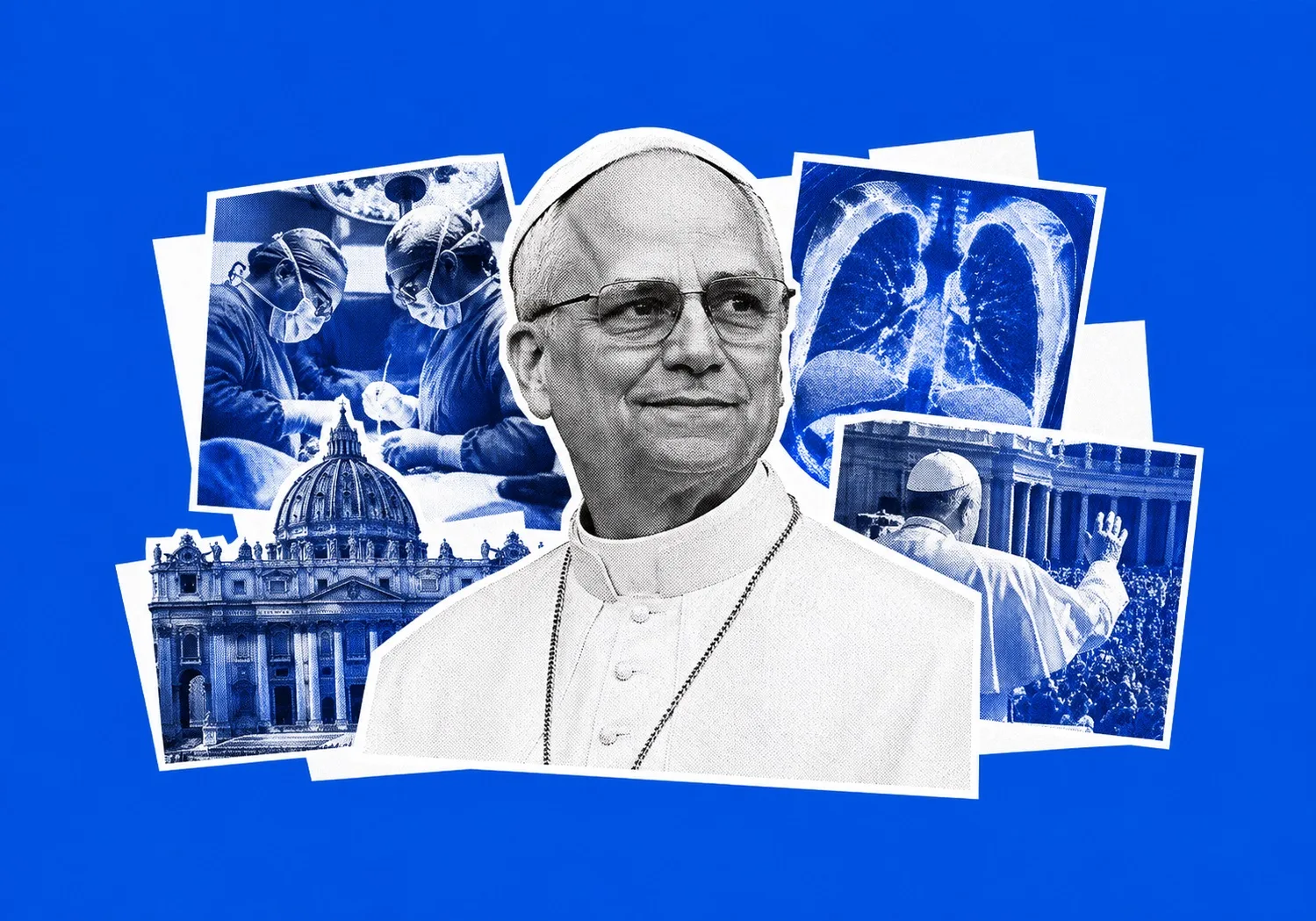
Pope Leo XIV is recovering at Rome’s Gemelli Hospital following successful surgery to remove a cancerous nodule from his lung. While the Vatican maintains that Holy See administration continues as normal and all audiences are cancelled through October 20, the pontiff’s diagnosis raises urgent questions about the long-term governance and international schedule of his young papacy.
The surgical outcome offers grounds for cautious optimism, but it does not settle the question of the Pope’s longer-term prognosis.
Preoperative examinations identified a localised nodule, and the operation involved removing the affected portion of the lung through a video-assisted technique. Surgeons performed a radical resection, aiming to remove the diseased tissue completely. The operation itself was uneventful, and Leo awoke normally afterwards.
Yet a successful operation and a favourable cancer prognosis are not interchangeable. Lung adenocarcinoma is the most common subtype of non-small cell lung cancer, and its outlook depends on factors that cannot be established from the fact of surgery alone. The precise stage of the disease, whether lymph nodes are affected and whether the tumour has been completely removed all matter.

Postoperative examination of the removed tissue is therefore central to what happens next. The findings may determine whether surgery is sufficient or whether further treatment needs to be considered. The available information does not establish the cancer’s stage, its full biological characteristics or whether chemotherapy, radiotherapy or targeted treatment will be necessary.
For the Vatican, that uncertainty creates a communications challenge. It must explain enough to reassure the public without presenting an incomplete medical picture as a definitive prognosis.
The early disclosure of the diagnosis provides an unusually clear account of the immediate medical situation: the location of the tumour, the procedure performed and the confirmation of malignancy. But transparency about an operation is not the same as transparency about what follows. The next phase will depend on medical findings that are not yet available.
A crisis without a constitutional vacuum
The Vatican’s institutional position is less ambiguous than the medical one. Leo retains full papal authority while recovering in hospital. Temporary physical incapacity does not, by itself, trigger the constitutional procedures associated with the end of a pontificate.
A sede vacante — the period during which the papal office is vacant - follows the Pope’s death or a formal resignation. A conclave is then convened to elect his successor. Neither mechanism is activated simply because a pontiff is undergoing treatment or cannot appear in public for a period.
This distinction is fundamental to understanding the Vatican’s response. The Pope’s public schedule can be suspended without creating a vacancy in the office itself. The Roman Curia, the administrative apparatus of the Holy See, continues its work, while officials and senior clergy adjust their responsibilities to accommodate his absence.

There is no need to turn a temporary hospital stay into a succession question. Indeed, doing so would confuse two very different situations: a leader who cannot temporarily perform public duties and an institution whose highest office has become vacant.
That does not mean the situation is without practical consequences. The Pope’s visibility is central to the public life of the Church, and his international engagements carry diplomatic as well as religious significance. The longer his recovery affects those activities, the greater the pressure on the Vatican to explain how decisions are being made and which commitments remain realistic.
For now, the institutional response rests on continuity rather than delegation of the papal office itself. Leo remains the Pope; the administration must ensure that his temporary absence does not become an administrative disruption.
Managing the public face of the Church
The Vatican has also had to reorganise its public calendar at short notice. Cardinal Luis Antonio Tagle is scheduled to lead Wednesday’s Mass in St Peter’s Square, while other events, including a medal presentation in Castel Gandolfo and the publication of a family summit document, have been postponed.
These adjustments are modest in constitutional terms but significant in practical ones. Papal events are not simply appearances that can be cancelled without consequence. They structure the Church’s public communication, bring senior clergy together and provide occasions for the Pope to articulate priorities to Catholics and international audiences.

The decision to cancel audiences through 20 October gives the recovery period a clear initial boundary. It also leaves open the question of what happens afterwards. A date on the calendar is an administrative planning tool, not a medical guarantee.
The Holy See Press Office, directed by Matteo Bruni, faces the difficult task of maintaining that distinction. Too little information can encourage speculation; too much certainty, offered before the medical evidence is complete, risks creating expectations that later have to be revised.
The disclosure of a confirmed cancer diagnosis makes this balancing act particularly delicate. The public now knows more than it would if the Vatican had described the episode merely as a routine operation. But the information released so far does not answer the questions most likely to shape expectations about the coming weeks.
The next set of medical findings will matter not only for treatment decisions but also for the credibility of the Vatican’s communications. A measured account of what is known, what remains uncertain and when further information may become available would allow the institution to manage expectations without pretending that the outcome is already clear.
The November question extends beyond Rome
Leo’s recovery also has an international dimension. His planned November tour of Uruguay, Argentina and Peru is now uncertain, placing a significant diplomatic and pastoral undertaking in question.
A papal visit is more than a sequence of ceremonies. It is an opportunity to engage Catholic communities directly, reinforce relationships with national leaders and give the pontificate a visible presence beyond the Vatican. For countries on the itinerary, uncertainty over the visit complicates preparations; for the Holy See, it creates a choice between preserving an ambitious schedule and allowing medical recovery to determine the pace of international activity.
No decision about the tour can responsibly be inferred from the operation alone. The Pope’s ability to resume public engagements will depend on his postoperative progress and the results of further examinations. The available information provides no confirmed medical timetable for long-distance travel, nor does it establish that the tour has been cancelled.
That leaves the Vatican with an awkward planning problem. Diplomatic schedules require advance notice, while a cancer recovery cannot be managed according to a fixed political calendar. The institution may be able to maintain routine administration during the Pope’s hospital stay, but international travel places different demands on his physical condition and working schedule.
The same uncertainty applies to the wider pontificate. At 71, Leo is confronting a serious diagnosis early in his tenure, before his plans for international engagement have had much time to unfold. His immediate medical needs must take precedence, yet the longer-term consequences for the rhythm of his leadership will depend on information that is still emerging.
Continuity is easier to declare than to sustain
The Vatican’s immediate response has been designed to prevent a medical crisis from becoming an institutional one. The Pope remains in office, the Curia continues its work, and scheduled public activities have been adjusted rather than treated as evidence of a breakdown in governance.
That arrangement provides a clear constitutional answer to the immediate question of authority. It does not remove the practical challenge of running a global Church whose leader is temporarily absent from public life.
Much will depend on the coming medical assessments and the pace of recovery. If the operation has removed the disease at an early stage, the implications may be very different from those of a diagnosis requiring prolonged or additional treatment. At present, neither outcome can be established from the information released.
The more immediate test is whether the Vatican can preserve confidence while acknowledging that uncertainty. Its constitutional arrangements are not in question, but the public role of the Pope cannot be reduced to the formal fact that he retains authority. The institution must continue to function while the extent of Leo’s illness, and the demands it may place on his pontificate, remain unresolved.
Sources: Vatican News, CNBC, DW, Aljazeera, BBC