
Spain’s Canary Islands Hit Record 1,488 Migrant Arrivals in a Day

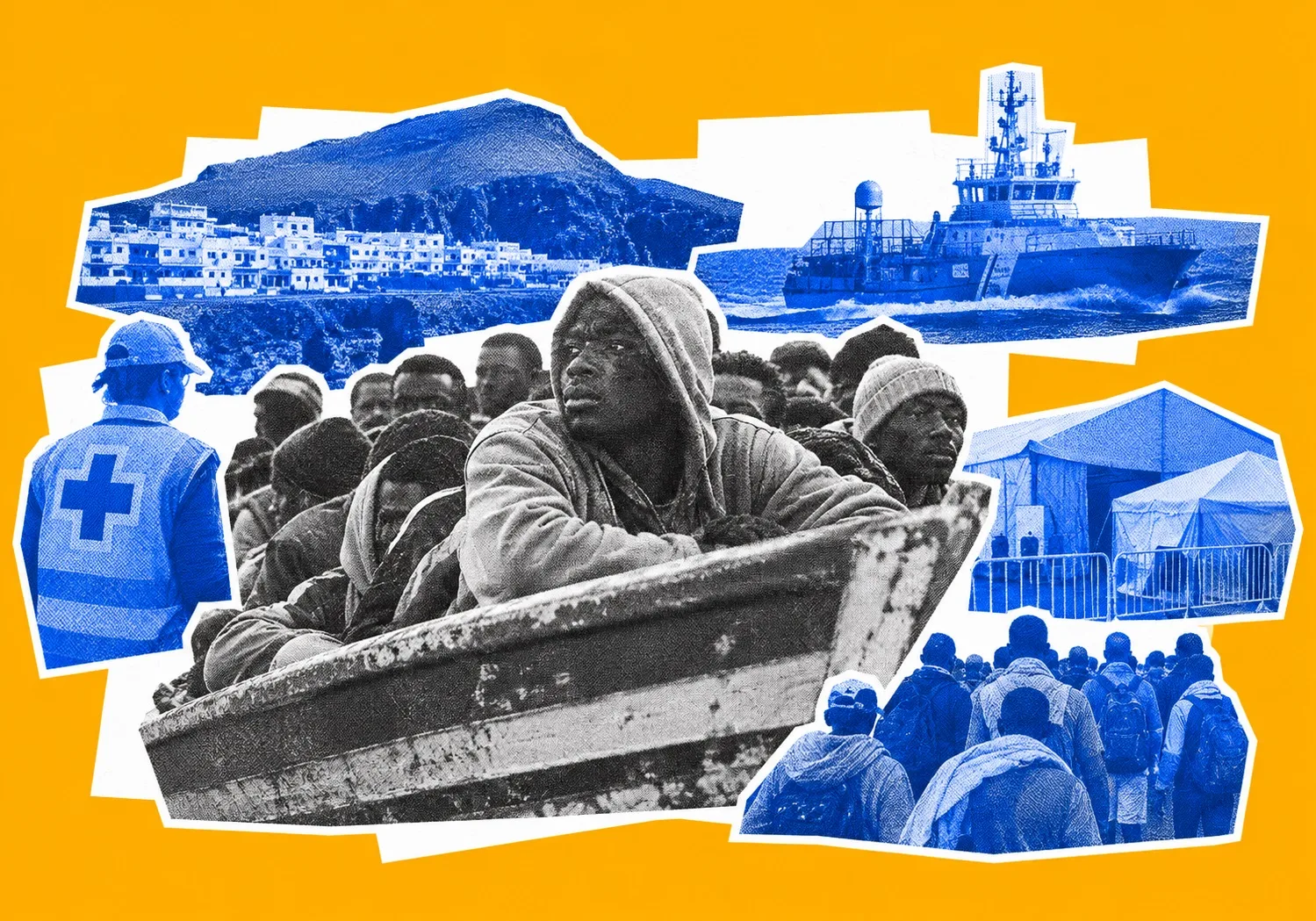
Fourteen boats carrying 1,488 migrants reached Spain’s Canary Islands on Saturday, 14 November, overwhelming the tiny island of El Hierro. With local services stretched beyond capacity, regional leaders are demanding urgent transfers from Madrid and emergency support from the EU.
The previous daily record was 1,461 arrivals, registered on 7 November 2020, according to figures reported by Spain’s maritime rescue service and the EFE news agency. Over the two days of 13 and 14 November, 2,331 people reached the archipelago on 22 vessels.
El Hierro received 1,235 people aboard 12 boats on Saturday alone. Gran Canaria took in another 203 migrants, while 50 arrived in Tenerife. One of the boats carried 240 people, including 12 women and 36 children.
The scale of the arrivals is particularly difficult for El Hierro, an island of just 11,400 residents. The number of people reaching its shores in a single day was equivalent to almost 11% of the local population.
Spanish authorities have announced additional rescue resources and emergency funding, but local officials want faster transfers and more assistance from the European Union. Their concern is that the island cannot continue accommodating large numbers of new arrivals without further support.

El Hierro's reception system comes under pressure
More than 8,000 migrants have arrived on El Hierro over the past five weeks. The Island Council has declared a social emergency, while residents of La Restinga, the port where many boats arrive, have protested over pressure on public services and infrastructure.
The island has limited accommodation, healthcare facilities and port capacity. When several boats arrive within hours of one another, authorities must arrange medical checks, temporary shelter and basic assistance while preparing transfers to other locations.
These arrangements require personnel, transport and space that cannot be expanded overnight.
The latest arrivals have added to an already difficult situation. Local authorities must accommodate people who have just completed dangerous sea crossings while continuing to provide services for the island's existing population.
Residents' protests have brought attention to the practical consequences of concentrating arrivals in a small community. Housing and healthcare are among the main concerns, alongside the demands placed on La Restinga's port.
The problem is not confined to the number of people arriving. Much depends on how long they remain on the island before being transferred elsewhere.
A reception centre that can manage several hundred arrivals over a week may struggle when a similar number reaches the port within hours. If onward transfers are delayed, the next boats can arrive before space has become available.
El Hierro's authorities have little control over that process. Decisions about funding, additional resources and transfers depend largely on the Spanish government.
Why the Atlantic route is producing sudden surges
The record arrivals come against an apparently contradictory trend. Between January and 31 October, the number of migrants reaching the Canary Islands was 5.5% lower than during the corresponding period of 2025.
That decline offers limited reassurance to communities dealing with sudden increases.
Migration figures accumulated over several months can conceal considerable differences between individual islands and periods. Fewer arrivals overall do not necessarily mean fewer days when local reception services are stretched beyond their normal capacity.

Changes along the West African migration route have contributed to this uneven pattern.
Stronger border enforcement in traditional departure and transit areas, including parts of Morocco and Mauritania, has been associated with a movement of departure points farther south.
Senegal, Gambia and Guinea have become increasingly relevant to these movements. Migrants arriving during the latest surge also came from Mauritania, Guinea-Bissau and Mali.
For some passengers, the journey to the Canary Islands involves more than 1,000 kilometres across the Atlantic.
The longer crossings expose migrants to strong currents, rough seas and the risks associated with spending extended periods aboard overcrowded vessels. Rescue operations remain essential, particularly when boats encounter difficulties far from shore.
Weather also influences the timing of departures. Autumn can bring periods of calmer conditions that make crossings more feasible, although the route remains dangerous.
When favourable conditions coincide with departures from several locations, boats can reach the Canary Islands in quick succession.
Reports have also identified temporary changes in security deployments in West African departure areas, including the reassignment of personnel for sporting events in Dakar. There is insufficient evidence, however, to determine whether those changes played a significant role in the November surge.
The available information supports a broader explanation involving shifting routes and seasonal conditions, rather than a single event responsible for the record.
For Spanish authorities, predicting where boats will arrive is as important as estimating how many people may attempt the crossing.
Spain announces funding and additional rescue capacity
Madrid announced a €15.18 million emergency package on 10 November to support reception facilities and transfers between the islands and mainland Spain.
The government also allocated €1 million to the Red Cross.

The funding was announced before Saturday's record arrivals, indicating that pressure on the archipelago's reception system was already serious.
On Sunday, 15 November, Territorial Policy Minister Ángel Víctor Torres travelled to El Hierro for meetings with residents and local representatives.
He announced that a third maritime rescue vessel, the Guardamar Calíope, would be deployed to reinforce operations.
The government has also provided military logistical assistance, including field kitchens, to help meet immediate needs.
Torres confirmed that the Interministerial Immigration Commission would meet on Tuesday, 17 November, to coordinate the response.
Additional rescue capacity is important for people attempting the Atlantic crossing, but the difficulties on El Hierro continue after passengers have been brought ashore.
Once migrants reach the port, they need somewhere to stay and access to essential services. Reception facilities can only accommodate a limited number of people, and moving arrivals elsewhere requires coordination between different authorities.
The €15.18 million package is intended to help address these problems. Its immediate effectiveness will depend on how quickly accommodation can be made available and transfers organised.
The available reporting does not establish where all 1,488 people who arrived on Saturday will eventually be accommodated.
Nor is there a complete timetable for transfers to other islands or mainland Spain.
Those details matter to local authorities, who must plan for further arrivals while managing the people already in their care.
Canary Islands seek a stronger EU response
Canary Islands President Fernando Clavijo has appealed directly to EU Migration Commissioner Magnus Brunner for additional European support.
In a letter to the commissioner, Clavijo called for urgent solidarity, a review of funding arrangements and closer diplomatic cooperation with West African countries.
The appeal comes as European governments continue working within the framework of the EU Pact on Migration and Asylum, which addresses responsibility for migration management and solidarity between member states.
For the Canary Islands, the question is how that responsibility translates into assistance during periods of unusually high arrivals.
Spain controls the immediate national response, including funding and domestic transfers. Regional and island authorities, meanwhile, deal directly with the demands placed on ports, accommodation and local services.
Clavijo's request seeks greater European involvement in addressing those pressures.
Cooperation with West African governments is another part of the discussion. As departure points move along the coast, enforcement concentrated in particular areas may have limited effects on the wider route.
But diplomatic cooperation and border enforcement do not resolve the immediate need for reception space when boats arrive.
As of 16 November, the European Commission had not announced a new financial package specifically linked to the latest surge. A formal written response to Clavijo's appeal had also not been published.
That leaves the Spanish government's emergency funding and planned transfers as the main confirmed measures for relieving pressure on El Hierro.
The situation also presents a challenge for the island's residents. Local services must continue operating while authorities arrange assistance for people arriving after long and hazardous journeys.
With more than 8,000 arrivals in five weeks, the island's declared social emergency predates Saturday's record. The latest figures have intensified an existing problem rather than created an entirely new one.
The next decisions will come from Madrid's Interministerial Immigration Commission on 17 November. Among the outstanding questions are how quickly people can be transferred from El Hierro, how much additional reception capacity can be provided, and whether European institutions will respond to the Canary Islands' request for further assistance.
Sources: Reuters, Euronews, The Telegraph, Global Sconflicts