
Somali Piracy Resurgence Puts Europe’s Maritime Security Back Under Pressure

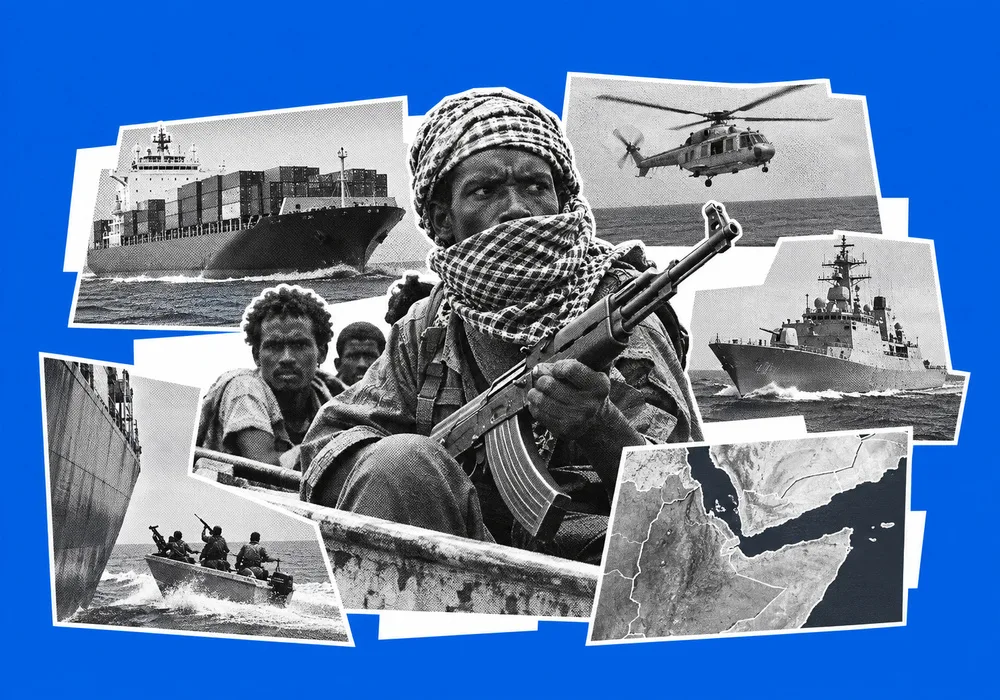
A renewed wave of piracy in the Gulf of Aden is creating additional risks for international shipping as conflicts across the Middle East and the Horn of Africa destabilise key maritime routes. The EU’s Operation Atalanta is stepping up surveillance and naval patrols, but growing insecurity is exposing the limits of existing maritime protection arrangements.
A resurgence of piracy off the coast of Somalia is raising concerns about the security of one of the world's most important maritime corridors. The Gulf of Aden and the Bab el-Mandeb Strait have become increasingly exposed to overlapping security threats, as regional conflicts, economic instability and disruptions to international shipping create opportunities for armed groups operating at sea.
The European Union's Operation Atalanta, established in 2008 to combat piracy off the Horn of Africa, is maintaining naval patrols across the western Indian Ocean and the Gulf of Aden. The mission is currently led at sea by the Spanish frigate ESPS Santa Maria, which operates with more than 200 personnel, including special forces trained to recover vessels seized by pirates.
The renewed threat is particularly significant because maritime insecurity is no longer confined to isolated piracy incidents. Attacks by Houthi forces on commercial shipping since November 2023, disruptions linked to the conflict involving Iran, and instability across Yemen and Somalia have created a more complicated operating environment for international shipping.
Regional conflicts are creating opportunities for pirate networks
According to figures provided by Operation Atalanta commanders, 79 pirate attacks have been recorded in the region since Houthi attacks on shipping began in November 2023. Approximately 30 incidents occurred after the outbreak of the Iran war in February 2026, suggesting that the deterioration of regional security has coincided with a renewed increase in maritime crime.
The relationship between armed conflict and piracy is not necessarily direct. However, prolonged instability weakens coastal security, disrupts local economies and creates conditions in which criminal networks can operate more easily. In Somalia, economic hardship, food insecurity, political divisions and declining international assistance are among the factors contributing to the resurgence.
Pirate groups operating from Somalia's semi-autonomous Puntland region have targeted commercial vessels, including fuel tankers. Several ships were hijacked between April and August 2026, demonstrating that the threat has moved beyond occasional attempts to seize smaller vessels.
The consequences have also been deadly for seafarers. During a September operation to recover the tanker Honour 25, five crew members died, while 44 seafarers were subsequently freed from the vessel and two other tankers. Another hijacked tanker, the MT Asana, remained under pirate control in Somali territorial waters according to Operation Atalanta's October update.
The methods used by pirate groups are also evolving. Fishing vessels can serve as mobile bases from which attackers approach larger commercial ships. Attacks originating near the Yemeni coast have also demonstrated how instability on both sides of the Gulf of Aden can complicate maritime surveillance and response operations.
Bab el-Mandeb becomes more important to global trade
The strategic importance of the region extends far beyond the immediate security of vessels. The Bab el-Mandeb Strait connects the Gulf of Aden with the Red Sea and provides a critical passage between the Indian Ocean, the Suez Canal and European markets.
Around 12% of global trade, including approximately a quarter of international container traffic, normally passes through this maritime corridor. Disruptions to the Strait of Hormuz have further increased the importance of alternative routes for energy exports from the Gulf, placing additional pressure on shipping infrastructure around the Arabian Peninsula.
For European economies, renewed piracy presents a risk that extends into supply chains, energy security and transport costs. Shipping companies facing a combination of military threats and criminal attacks must reconsider routing decisions, insurance arrangements and onboard security.
Some operators have already introduced additional protective measures, rerouted vessels and increased security expenditure. These adjustments can translate into higher freight rates and insurance premiums, eventually affecting the cost of imported goods and energy across European markets.
EU naval capabilities face a more complex security environment
Operation Atalanta relies on a combination of naval vessels, helicopters, drones and surveillance aircraft to monitor maritime activity and deter potential attacks. Intelligence gathered during patrols is shared with international partners, including the United States, South Korea, Japan, India and regional governments.
The mission's effectiveness depends not only on its ability to respond to hijackings but also on preventing attacks before they occur. The presence of surveillance aircraft and naval patrols can discourage potential attackers from approaching commercial vessels, although the scale of the operating area makes continuous protection difficult.
Atalanta is not the EU's only naval deployment in the region. Operation Aspides focuses on protecting maritime traffic in the Red Sea, reflecting the growing need for European involvement across several interconnected shipping corridors.
Nevertheless, the renewed piracy threat highlights a structural limitation of maritime security operations: naval forces can protect shipping lanes and respond to individual incidents, but they cannot independently resolve the economic and political conditions that enable piracy to return.
For the EU, the challenge is therefore becoming increasingly strategic. Protecting access to international trade routes requires not only naval deployments but also sustained cooperation with regional partners, intelligence-sharing arrangements and measures addressing instability along the coastlines surrounding these corridors.
The resurgence of Somali piracy demonstrates that the security of global shipping cannot be separated from developments on land. As conflicts continue to reshape the maritime environment between the Middle East and the Horn of Africa, Europe's ability to maintain secure access to the Indian Ocean and the Suez route will depend on whether its naval presence can adapt to threats that increasingly overlap rather than occur in isolation.
Sources: Associated Press, Africanews