
France Deploys Maritime Patrol Aircraft to Black Sea as Attacks on Shipping Intensify

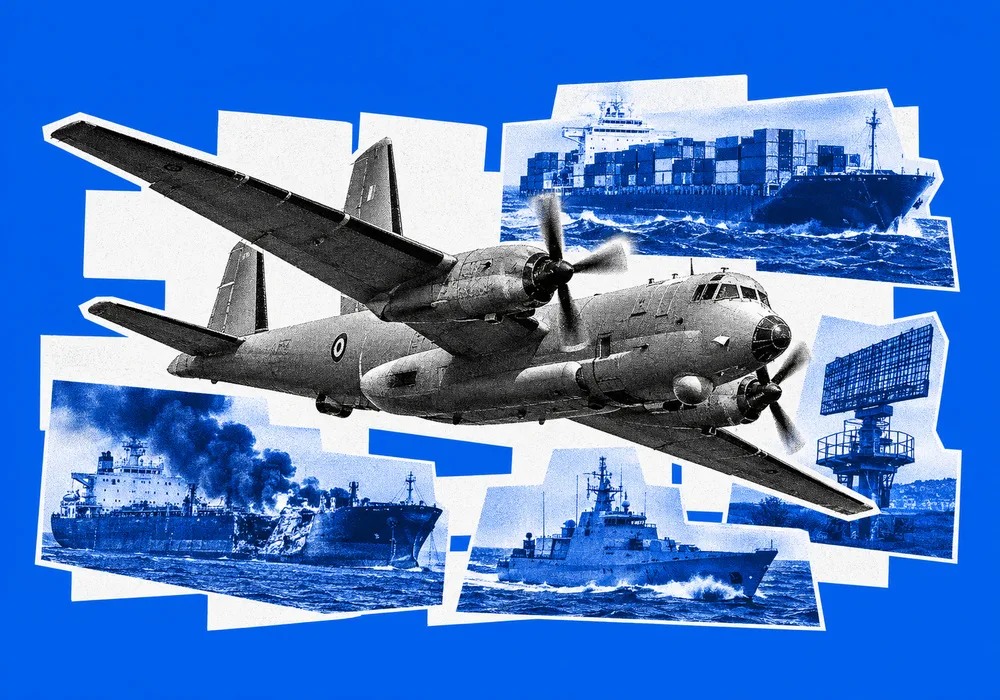
France has temporarily deployed a maritime patrol aircraft to Romania to monitor growing threats to commercial shipping and critical infrastructure in the western Black Sea. The mission reflects mounting concern among NATO members that attacks on civilian vessels could undermine regional security, disrupt vital trade routes and increase the risks of further escalation along the alliance’s eastern flank.
France has temporarily relocated a maritime patrol aircraft to Romania following a deterioration in the security situation in the western Black Sea, where a series of attacks on commercial shipping has raised concerns about the safety of civilian vessels and the protection of critical infrastructure. The French Navy’s Atlantique 2 aircraft was deployed to the Mihail Kogălniceanu air base at Romania’s request and is scheduled to conduct surveillance and reconnaissance missions between 18 October and 6 November. The Romanian Ministry of National Defence confirmed the deployment on 27 October, describing the mission as part of allied cooperation to maintain freedom of navigation in the region.
The aircraft is operating over the western Black Sea, with its activities focused on identifying navigational hazards and improving Romania’s ability to protect critical infrastructure within its exclusive economic zone. Its deployment is coordinated with Romanian naval command structures and the country’s Maritime Rescue Coordination Centre. The arrangement allows French capabilities to complement existing Romanian patrols and surveillance operations at a time when the risks to commercial shipping have become increasingly difficult to manage.
The decision follows attacks on at least eight cargo ships near the coasts of Romania and Bulgaria over a three-week period. Approximately 34 sailors have been reported dead or missing in connection with the incidents, underlining the human cost of the deteriorating maritime security environment. The attacks have also raised questions about whether commercial vessels can continue operating safely along established routes close to NATO territory while military activity associated with the war against Ukraine remains intense.
The French deployment is temporary, but its significance extends beyond the duration of the mission. It demonstrates that security concerns in the Black Sea are requiring a more coordinated response from European allies, particularly where threats to commercial navigation intersect with the protection of energy infrastructure and the security of NATO member states. The immediate objective is to improve surveillance and provide authorities with a clearer picture of potential dangers without introducing a fundamentally different military posture in the region.
A Wider Pattern of Attacks on Commercial Shipping
The recent incidents have intensified concerns about the vulnerability of commercial shipping in the Black Sea. In October, drones struck two chemical tankers near Romania’s coast, setting the vessels ablaze and leaving sailors missing. Other cargo ships were also hit in the weeks surrounding the attacks, including incidents close to Bulgarian waters. The concentration of incidents in a relatively short period has placed additional pressure on coastal authorities responsible for maritime safety and emergency response.
The western Black Sea occupies a strategically sensitive position because commercial shipping routes pass close to Romania and Bulgaria, both members of NATO, while connecting regional ports with wider international markets. The area is also affected by military operations linked to Russia’s war against Ukraine. As a result, incidents involving drones or other weapons can create immediate risks for civilian crews, even when the vessels themselves are not military targets.
The attribution of individual attacks remains an important distinction. NATO has announced additional surveillance and investigative measures but has not formally attributed the recent series of attacks to a particular state. Analysts have pointed to Russia as the likely source of the incidents, although Moscow has not acknowledged responsibility. The lack of a definitive public attribution does not diminish the operational risks facing shipping, but it complicates efforts to establish responsibility and determine an appropriate response.
For European governments, the central problem is that the consequences of military activity can extend well beyond the immediate battlefield. Commercial vessels operate according to routes, schedules and insurance arrangements that depend on a reasonable degree of predictability. Repeated attacks can undermine that predictability, forcing shipping companies and maritime authorities to reassess the risks associated with particular areas of the Black Sea.
The French aircraft is intended to improve the ability to detect and assess potential dangers. Its presence may help authorities identify suspicious activity, monitor maritime movements and coordinate warnings to vessels. However, surveillance cannot eliminate the underlying threat. Its value depends on how quickly information reaches the relevant authorities and whether they possess the resources and procedures needed to respond to emerging incidents.
NATO Expands Its Regional Surveillance Capabilities
France’s contribution comes as NATO prepares to reinforce its maritime surveillance capabilities in the Black Sea. On 20 October, following a meeting of the North Atlantic Council in Brussels, the alliance announced that member states would deploy additional maritime patrol aircraft, radar systems, drones, intelligence personnel and teams capable of conducting forensic analysis of explosives used in attacks.
The measures are intended to improve situational awareness, strengthen information-sharing between allies and support investigations into the incidents. Rather than relying on a single platform or national capability, NATO is seeking to combine different sources of information to establish a more comprehensive picture of activity across the region. Maritime patrol aircraft can cover large areas, radar systems can contribute to the detection and tracking of relevant movements, and drones can provide additional surveillance where required.
The inclusion of forensic teams is particularly significant because it connects military surveillance with the investigation of attacks. Examining explosive materials and other evidence may help authorities establish how particular incidents occurred and identify similarities between them. Intelligence-sharing can then help governments assess whether apparently separate incidents form part of a broader pattern. Such work is important when the available public evidence does not yet establish responsibility for every attack.
The alliance has also stressed that its eastern flank has already been reinforced, including through counter-drone capabilities. Romania’s experience illustrates why these measures matter. Earlier in October, Romanian F-16 pilots shot down two Russian drones over Romanian territorial waters. The incidents demonstrated that the risks associated with the war can reach areas under the jurisdiction of NATO members, creating additional demands on national air surveillance and response systems.
Nevertheless, increased surveillance should not be confused with a decision to introduce a new standing naval escort mission for commercial shipping. NATO’s announced measures focus on improving detection, intelligence and the capacity to investigate incidents. Their immediate purpose is to strengthen awareness of threats and the readiness of allied forces, rather than to guarantee that every commercial vessel can be protected against attack.
This distinction is important for managing escalation. NATO governments must demonstrate that threats near allied territory are taken seriously while avoiding steps that could lead to a direct confrontation with Russia. Additional aircraft and sensors can strengthen the alliance’s ability to assess incidents and coordinate its response, but decisions about interception, the use of force and collective defence remain subject to separate operational and political considerations.
Romania Accelerates Its Own Maritime Defence Plans
Romania is not relying exclusively on allied deployments. Following the attacks on commercial shipping, the country’s Supreme Council of National Defence announced on 22 October that it would accelerate the development of capabilities for maritime surveillance and for countering naval mines and drones. The decision reflects growing concern about the protection of human life, access to national ports and the security of energy facilities in the Black Sea.
The planned improvements address several connected challenges. Maritime surveillance is necessary to detect and assess threats, while counter-drone capabilities can help authorities respond to aerial systems entering sensitive areas. Measures to address naval mines are also relevant to safe navigation, as explosive hazards can create risks for commercial vessels even when no attack is taking place. These tasks require different equipment and procedures, making it necessary to develop a broader set of capabilities rather than concentrate exclusively on one type of threat.
Bucharest has also emphasised the importance of closer cooperation with Bulgaria and Turkey, the other NATO members bordering the Black Sea. Coordination between the three countries could improve the exchange of information, strengthen the monitoring of maritime approaches and support a more consistent response to incidents affecting regional shipping. The effectiveness of such cooperation will depend on the compatibility of national systems, the speed of communication and the ability to coordinate operations across different jurisdictions.
The French deployment provides a practical example of how this cooperation can work. Romania supplies the operational framework and local knowledge, while France contributes an additional aircraft and specialised surveillance capabilities. NATO’s wider measures could extend this approach by bringing together resources from several allied countries. Such arrangements allow individual states to contribute to regional security without each having to develop every capability independently.
However, temporary deployments and announced procurement or capability plans are not equivalent to a fully developed, permanent maritime defence system. Building effective surveillance and response capabilities requires investment, trained personnel, maintenance and reliable coordination. Romania’s decisions therefore point to a longer-term requirement: the country must be able to maintain maritime awareness and respond to threats even when additional allied assets are no longer deployed.
The challenge is particularly relevant as Romania develops its role on NATO’s southeastern flank. Its geographical position makes the country important for monitoring the western Black Sea, supporting regional logistics and protecting infrastructure that may have implications for several European states. The recent incidents have reinforced the argument that maritime security should be treated as a sustained defence priority rather than a temporary response to individual attacks.
Critical Energy Infrastructure Adds Another Dimension
The French mission is intended not only to improve the safety of navigation but also to strengthen the protection of critical infrastructure within Romania’s exclusive economic zone. This broadens the significance of the deployment beyond the immediate risks to cargo ships and their crews.
The Black Sea has become increasingly important to European energy security. Offshore resources, energy-related projects and associated infrastructure form part of the region’s wider economic and strategic environment. Damage to installations or disruption around them could create consequences for investment, operations and the reliability of energy supplies. The precise risks vary by project, but the common concern is that infrastructure operating in a contested or unstable maritime environment requires effective monitoring.
An exclusive economic zone is not equivalent to a state’s territorial waters. Under the law of the sea, a coastal state has specific sovereign rights over natural resources and certain jurisdictional powers in its exclusive economic zone, but it does not exercise the same general sovereignty as it does within its territorial sea. This legal distinction matters because surveillance and protective measures must operate within the applicable international framework.
For Romania, the presence of a French patrol aircraft can help improve awareness of activity in an area where commercial, economic and security interests overlap. Better monitoring may support the identification of potential hazards and enable authorities to coordinate appropriate action. It can also provide information that helps distinguish ordinary maritime activity from developments requiring closer attention.
The wider European implication is that the protection of energy infrastructure increasingly depends on cooperation between civilian authorities, naval forces and intelligence services. Physical security measures remain necessary, but they are more effective when combined with surveillance, information-sharing and clear procedures for responding to incidents. The Black Sea is one of several maritime environments where European governments must consider how military threats can affect civilian economic activity.
At the same time, the deployment should not be interpreted as evidence that a particular energy installation has been attacked or that a specific project is under immediate threat. Romania’s stated objective is to strengthen its ability to protect critical infrastructure as the regional security situation deteriorates. The mission is precautionary as well as operational, reflecting the importance of identifying risks before they result in damage.
Implications for Ukraine’s Maritime Trade
The security of the western Black Sea also has direct implications for Ukraine’s economy. Maritime routes remain important for the movement of agricultural products and other goods to international markets, while the Danube corridor provides an additional connection between Ukrainian exporters and European transport networks. Disruption in the wider Black Sea region can therefore affect trade flows even when individual attacks occur outside Ukraine’s territorial waters.
The commercial consequences of insecurity extend beyond vessels that are directly damaged. Shipping companies must account for the possibility of attacks, delays and changes to recommended routes. Insurers and operators assess the risks associated with voyages, while cargo owners must consider whether shipments can be delivered according to schedule. When incidents become frequent, the combined effect can be higher costs and greater uncertainty throughout the supply chain.
These pressures are particularly important for agricultural exports. Ukraine is a major supplier of grain and other food commodities to international markets, and the reliability of export routes affects both Ukrainian producers and overseas buyers. Any deterioration in the security of maritime transport can complicate the movement of goods, place additional pressure on logistics and increase the costs associated with reaching destination markets.
The Danube route provides an alternative for some trade flows, but it cannot automatically replace the capacity or commercial advantages of maritime routes through the Black Sea. Different corridors have their own infrastructure requirements, handling capacity and logistical constraints. For this reason, insecurity in the wider maritime environment remains relevant even when exporters can redirect some shipments through other channels.
The recent attacks near Romania and Bulgaria also illustrate why the protection of civilian shipping cannot be separated entirely from the broader regional security situation. A vessel does not need to be Ukrainian-owned or destined for a Ukrainian port to be affected by the risks generated by the war. The commercial networks operating in the Black Sea are interconnected, and a serious incident in one area can affect the confidence of operators elsewhere.
France’s contribution will not directly resolve Ukraine’s export challenges. Its immediate mission is focused on surveillance in the western Black Sea and the protection of Romanian interests. Nevertheless, improved maritime awareness and closer coordination between NATO members could help authorities respond more effectively to incidents that threaten regional navigation. The wider economic benefit would depend on whether these measures contribute to a more predictable security environment over time.
The Limits of Surveillance and Deterrence
The response by France, Romania and NATO demonstrates a growing willingness to strengthen the monitoring of the Black Sea, but the available measures have clear limitations. Patrol aircraft, radar systems and drones can help detect activity and improve the quality of information available to decision-makers. They cannot guarantee that every attack will be prevented, nor can they eliminate the possibility of damage to civilian vessels or infrastructure.
Effective protection requires several layers of capability. Detection must be followed by the rapid assessment of information, communication between relevant authorities and a decision about the appropriate response. If a threat is identified too late, or if the available information is incomplete, even sophisticated surveillance equipment may have limited practical value. The ability to coordinate national and allied systems is therefore as important as the number of platforms deployed.
The investigation of attacks presents a further challenge. Establishing responsibility may require physical evidence, technical analysis and intelligence that cannot immediately be made public. Governments must distinguish between preliminary assessments and confirmed findings, particularly when attribution could influence diplomatic relations or military decisions. A credible response depends partly on the quality of the evidence available to support it.
There is also a difference between deterring an attack and responding after one has occurred. A stronger surveillance presence may make it easier to detect hostile activity, but its deterrent effect will depend on whether potential attackers believe that their actions are likely to be identified and carry meaningful consequences. If attacks continue despite improved monitoring, NATO members may face renewed pressure to consider additional defensive measures.
For the alliance, this creates a difficult balance. A limited and coordinated surveillance mission can strengthen the protection of allied interests without automatically creating a direct military confrontation. More extensive measures, however, could raise questions about operational mandates, the allocation of resources and the risks associated with closer encounters between Russian and NATO forces. These decisions require political coordination as well as military planning.
The immediate priority is therefore to establish a clearer picture of what is happening in the Black Sea and improve the capacity to protect civilian navigation and critical infrastructure. The longer-term question is whether the combination of national investment and allied support will be sufficient to make the maritime environment more predictable while Russia’s war against Ukraine continues.
A Test of Europe’s Security Coordination
France’s deployment illustrates how European security cooperation is evolving in response to threats that cross the boundaries between military operations, civilian infrastructure and commercial activity. The Black Sea is not simply a theatre for naval competition. It is also an economic corridor, an energy region and an essential connection between European markets and international trade networks. Attacks on commercial vessels therefore create risks that cannot be addressed by military planning alone.
The response involves several levels of coordination. Romania must maintain the capacity to monitor its maritime approaches and protect its national interests. France contributes specialised capabilities in response to a request from an ally. NATO provides a framework for sharing information and coordinating additional resources, while Bulgaria and Turkey remain important partners in the regional security environment. The effectiveness of this arrangement will depend on whether these contributions can be sustained and integrated into a coherent approach.
The temporary nature of the French mission also raises a broader question about the continuity of European security commitments. A deployment lasting until 6 November can provide additional surveillance during a period of heightened concern, but the threats facing the Black Sea are unlikely to be resolved solely by the end of that period. If attacks persist, governments will need to assess whether further deployments, expanded national capabilities or additional coordination mechanisms are required.
For European defence policy, the issue reinforces the importance of investing in surveillance, intelligence-sharing and the protection of critical infrastructure alongside more conventional military capabilities. These functions may receive less public attention than combat aircraft or naval vessels, but they are essential to understanding threats and responding before incidents escalate. The Black Sea demonstrates how gaps in monitoring can have consequences for civilian safety, economic activity and alliance security at the same time.
France’s aircraft will not remove the risks created by the war, and the NATO response does not amount to a guarantee that commercial vessels will be protected from every future attack. Its significance lies instead in the effort to strengthen regional awareness, improve cooperation and reduce the likelihood that maritime incidents will go undetected or provoke an improvised response.
The central challenge for Europe is to protect freedom of navigation and critical infrastructure without allowing repeated attacks to produce a wider confrontation. Whether the current measures achieve that objective will depend on the quality of surveillance, the credibility of investigations, the resilience of regional trade routes and the ability of European allies to maintain a coordinated response as the security situation evolves.
Sources: Romanian Ministry of National Defence, Stars and Stripes