
Russia's Ice Hockey Return Sparks European Boycott After CAS Ruling

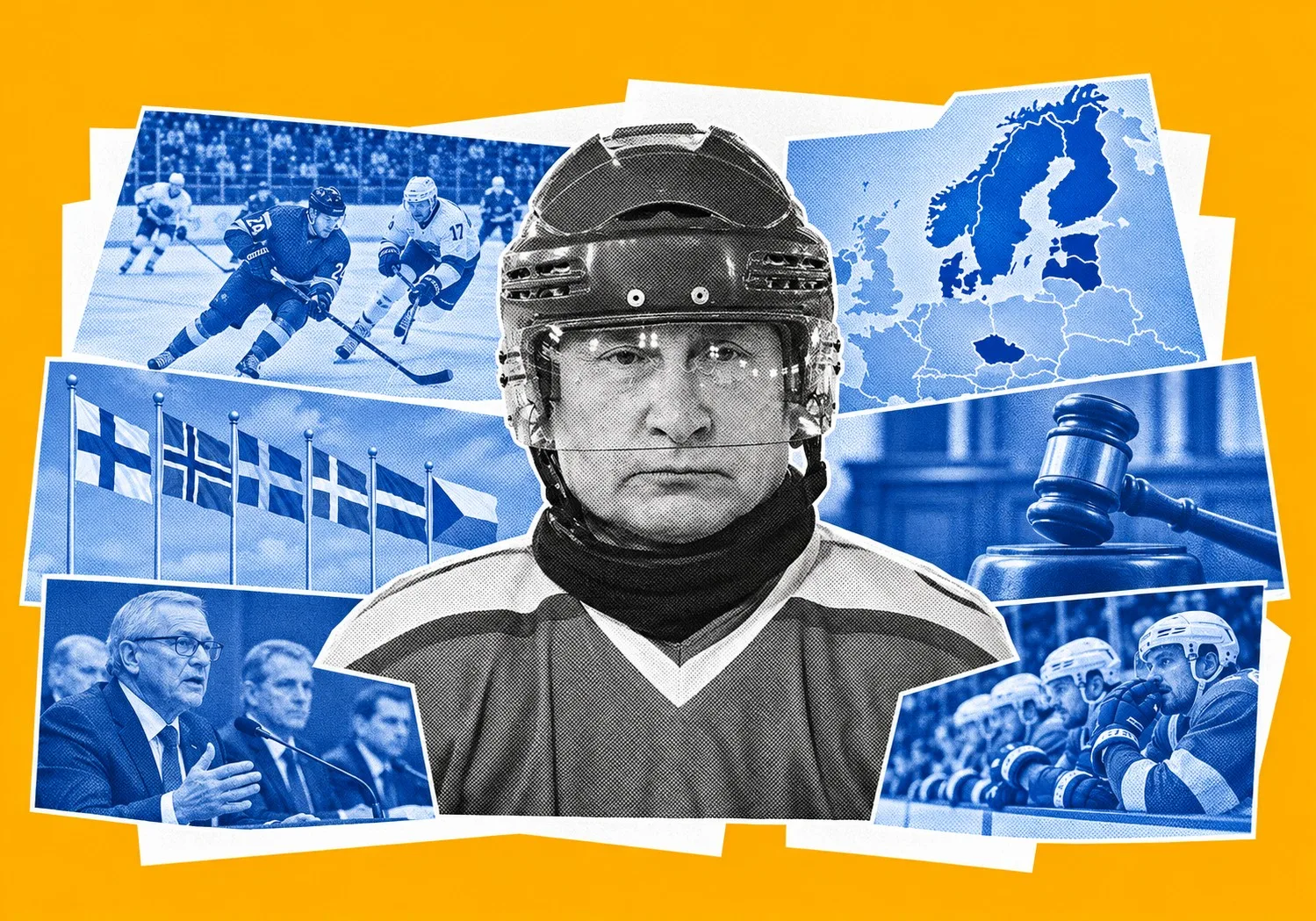
France has withdrawn its para ice hockey team from December's World Championship in Mexico, where it was scheduled to face Russia, the French Ice Hockey Federation announced on 5 November. The decision comes amid a growing European boycott after a sports court ordered Russia's return to international ice hockey. Germany is reconsidering its role as host of the 2027 World Championship, while the International Ice Hockey Federation (IIHF) disputes the ruling but says it will comply.
The Court of Arbitration for Sport (CAS) ruled on 30 October that Russia could enter five IIHF championships during the 2026–27 season. Its national teams had been excluded since the full-scale invasion of Ukraine in February 2022.
The French decision concerns a tournament organised by World Para Ice Hockey, independently of the IIHF. The federation said the circumstances could not guarantee the proper running of the competition and acknowledged the impact on athletes who had spent months preparing.
France also warned that Russia's reinstatement could affect its women's national team at the November 2027 World Championship. It is due to host the men's tournament in 2028.

Boycott Spreads
Finland helped organise the opposition. Its ice hockey association said it would not play Russian teams while the war continued, and chairman Heikki Hietanen contacted other federations about a joint response.
Sweden, Norway, Denmark, Latvia and the Czech Republic subsequently announced that they would refuse matches against Russia. Norway and Denmark said their teams intended to contest their other fixtures; they were not withdrawing from entire championships.
Austria's federation chief executive Alexander Helwig told broadcaster ORF that his team would "certainly not" play Russia under present circumstances. Austria was still considering how to formalise its response, so its position should not be confused with a confirmed withdrawal from a particular tournament.
The boycott has also raised questions about visas.
Czech Interior Minister Lubomír Metnar said the CAS ruling did not oblige his government to admit Russian players. Existing restrictions on short-term visas for Russian citizens remained in force.
Finnish Foreign Minister Elina Valtonen has proposed wider entry restrictions for Russian athletes across the Schengen area.
No new Schengen-wide ban has been agreed. Host governments nevertheless control entry to their territories, regardless of decisions taken by a sports federation.
The IIHF has yet to announce how it would apply disciplinary rules or record the results of fixtures that one team refuses to contest.
Canada Bars Russia
The first IIHF competition directly affected is the World Junior Championship in Edmonton and Red Deer, Alberta, beginning on 26 December 2026.
Canadian Prime Minister Mark Carney said on 3 November that Russian and Belarusian teams would not be permitted to participate. His announcement followed a request by Hockey Canada for clarification of the court's decision. Belarus was not covered by the Russian federation's successful appeal.
 Turku, due to stage the 2028 World Junior Championship in Finland, has warned it could relinquish hosting rights if Russia takes part.
The Czech Republic is scheduled to host the Women's Under-18 World Championship in January 2027. That tournament is also covered by the CAS ruling.
These decisions present practical problems for the IIHF, which must determine participation in competitions whose schedules and host arrangements were settled before the court ordered Russia's reinstatement.
IIHF's Legal Dilemma
The IIHF has opposed Russia's return but has not said it will disregard the CAS order. In its statement of 30 October, it described the judgement as disappointing and said it would act in accordance with the court's ruling.
The federation originally barred Russian and Belarusian national teams after the invasion. In January 2026, its council again excluded Russian teams for the following championship season. The Russian federation appealed.
An IIHF disciplinary panel overturned the council's initial decision in May, without automatically restoring Russia's eligibility. The council reassessed individual tournaments in July and maintained the exclusion on safety, security and sporting-integrity grounds.
That decision led to the CAS proceedings.
The court found that the IIHF had not submitted sufficient evidence to justify Russia's continued exclusion under the applicable legal requirements.
The ruling concerns five tournaments: the men's and women's senior World Championships, the World Juniors and the men's and women's under-18 championships.
After a council meeting, the IIHF repeated its objections on 4 November. It identified problems with visas, security, travel and existing tournament formats. Some affected competitions were only weeks away.
On 5 November, CAS defended its decision against criticism from national associations and governments. The court said it had ruled on the arguments and evidence presented.
It also said it could not impose neutrality arrangements that the parties had neither requested nor supported with adequate evidence.
The court did not separately order Belarus's reinstatement. Nor did it establish the conditions under which Russian athletes might compete without national flags or symbols.
Under IIHF competition rules, failing to fulfil a fixture can result in a forfeit and additional sanctions. It remains unclear how those provisions would apply to teams boycotting Russia.
Germany's Hosting Question
Germany's Ice Hockey Federation is considering whether it can remain host of the men's 2027 World Championship.
Chairman Frank H. Lutz said Russia's return fundamentally changed the conditions under which Germany had agreed to stage the tournament.
The main competition is scheduled for 14–30 May in Düsseldorf and Mannheim, with an opening match on 13 May in Gelsenkirchen.
Germany has not surrendered its hosting rights. The opening Germany–Switzerland fixture has already been scheduled, while tickets for other matches have gone on sale.
Sixteen teams are included in the published draw. Ukraine, promoted to the top division for the first time in 20 years, shares the Mannheim group with Germany, Finland, Sweden, Latvia, Austria, Switzerland and Slovenia.
Canada, the United States, the Czech Republic, Denmark and Norway are among the teams in the Düsseldorf group.
Adding Russia would change an existing schedule involving 16 qualified teams. The IIHF has not explained whether another team would lose its place or whether the competition could accommodate an additional participant.
Lutz has raised security and economic concerns. Germany must also consider national teams unwilling to meet Russia and restrictions that could affect Russian players' travel.
Discussions with government representatives and the IIHF are continuing.
Sponsors Reconsider
Opposition has extended to companies that fund the World Championships.
Škoda Auto, a principal sponsor of the men's event for more than three decades, said it would review its involvement if Russia competed.
German workwear company Strauss warned that it would remove its branding and might withdraw financial support.
Finnish tyre manufacturer Nokian Tyres also threatened to end its sponsorship.
Swedish office furniture company AJ Products, which has supported the championship since 1989, said it would ask that its logo be removed if Russian teams appeared.
Most of these statements are conditional. They do not mean the companies have already terminated their contracts.
Germany must therefore assess the possible loss of sponsorship revenue alongside the cost of any changes to tournament arrangements.
Ukraine's Response
Ukraine's ice hockey federation opposed Russia's reinstatement, saying the safety concerns behind the original exclusion had not disappeared.
Foreign Minister Andrii Sybiha argued that returning Russia to international sport would grant Moscow legitimacy while its invasion continued.
Twenty-one members of the European Parliament called for sanctions and visa restrictions on Russian hockey representatives.
The European Commission said national authorities and sporting bodies must respect EU restrictive measures. It also opposed normalising Russian or Belarusian participation and displaying their national symbols at European competitions.
Moscow rejected the boycott campaign.
Sports Minister Mikhail Degtyaryov said countries refusing fixtures should forfeit their matches. Russian officials also pointed to Russian professionals who continue to play in North America's National Hockey League, which operates separately from IIHF national-team competitions.
On 5 November, Putin accused governments resisting Russia's return of imposing political restrictions and disregarding judicial decisions.
In remarks to a government meeting, he said Russia's Olympic Committee should continue defending the interests of its athletes.
Putin's Hockey Triumphs
Putin has also made hockey part of his own public appearances for years. He has played in televised exhibition games involving former professionals, officials and businessmen, often with extraordinary scoring totals.
On his 63rd birthday in October 2015, he scored seven goals as his side won 15–10 in Sochi.
His teammates included former NHL stars Pavel Bure and Vyacheslav Fetisov. The opposition included Defence Minister Sergei Shoigu and businessmen close to the president, including Gennady Timchenko and Arkady Rotenberg.
In May 2019, Putin scored eight goals in a 14–7 victory while skating alongside former professionals.
Reuters observed that his teammates repeatedly created chances and that opposing defenders offered little resistance.
He was credited with eight more goals at a Night Hockey League exhibition in May 2021, when his team won 13–9.
The exhibition scores are not results from competitive international fixtures. They were games staged with a mixture of former stars and political figures.

The 2019 match is remembered for another moment. After scoring eight times, Putin waved to spectators on a victory lap, skated across a red carpet laid on the ice and fell face-first. Teammates helped him up.
Sources: French Ice Hockey Federation, Euronews, Routers, IIHF, Rolling Stone