
Sports Court Overturns Russia’s Ice Hockey Ban as 21 MEPs Seek Sanctions

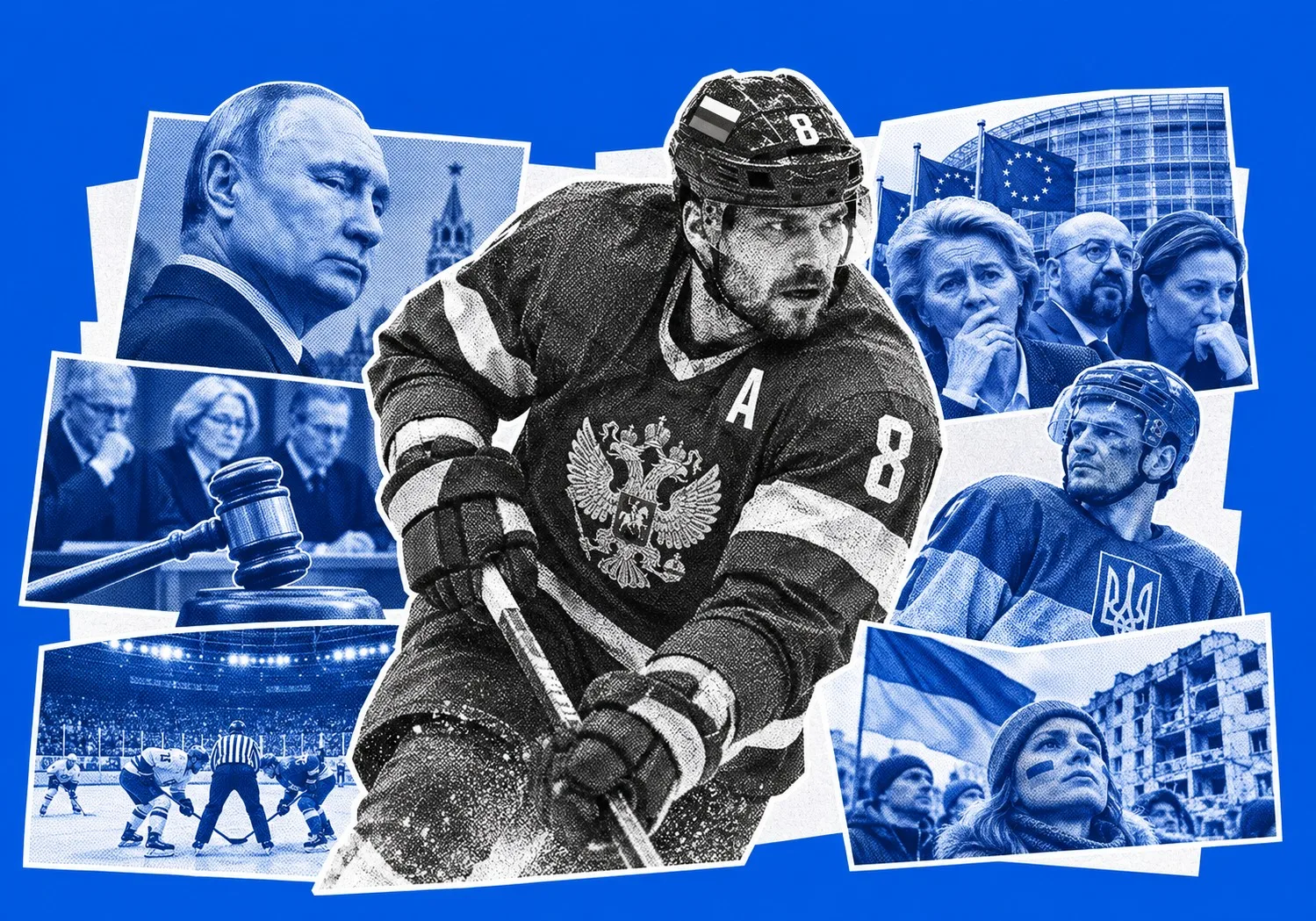
Russia has won a route back to five international ice hockey championships, but European politicians, host federations and a major sponsor are resisting its return. The ruling has also raised an awkward question about Ukraine’s place at the 2027 men’s World Championship.

On 30 October 2026, the Court of Arbitration for Sport (CAS) ordered the International Ice Hockey Federation (IIHF) to admit Russian national teams to five world championships in the 2026–27 season, overturning restrictions imposed after Russia’s full-scale invasion of Ukraine. The ruling gives Moscow a chance to return to tournaments from which it has been absent for more than four years. It does not settle how those tournaments will accommodate Russian teams, or whether the players will be allowed into their host countries.
Twenty-one Members of the European Parliament responded with a call for sanctions and visa restrictions. Russian officials hailed the decision as a victory, while Ukraine condemned it. In Germany, host of next May’s men’s championship, the organising federation has warned of political and financial risks. A Czech commercial partner has added another complication: it does not want its advertising shown during Russian matches.
How Russia Overturned the Exclusion
The IIHF suspended Russia and Belarus in February 2022, citing safety and security concerns following the invasion.
It renewed the restrictions over successive seasons, arguing that bringing the teams back would endanger participants and undermine the organisation of its competitions.
In January 2026, the IIHF Council decided to keep Russia out of the following season.
The Russian Ice Hockey Federation challenged the decision within the organisation and, in May, persuaded its disciplinary body to order a fresh assessment. The Council reviewed the events individually in July but maintained restrictions on four championships; the women’s senior tournament was to be considered separately. Russia then pursued arbitration in Lausanne.
CAS found that the federation had not supplied sufficient evidence to justify the restrictions on Russian participation under the applicable rules. The ruling did not assess whether the war had become less dangerous. It examined the grounds on which the IIHF had excluded the teams.
The five affected competitions are the World Junior Championship, the men’s and women’s senior World Championships, and the men’s and women’s Under-18 World Championships. Belarus was not reinstated through Russia’s appeal. The arbitrators also left open whether Russian teams could use national symbols and how organisers should alter tournaments whose draws and schedules had already been agreed.
In an official statement, the IIHF said it disagreed with the ruling but would comply. It must now work with tournament organisers, member federations and national authorities to determine what that means in practice.
Moscow Claims a Victory
Russia’s sports minister, Mikhail Degtyarev, welcomed the decision as vindication of the Russian federation’s case and portrayed the exclusion as discrimination. He said that Russia had a rightful place in world ice hockey and that the IIHF would have to honour the judgment despite its objections.
Vladislav Tretiak, president of the Russian Ice Hockey Federation, struck a more operational note. Speaking to the Russian outlet Championat, he said both sides had agreed to abide by the CAS outcome and would now work through the details of Russian participation. For Moscow, the next priority is to translate the ruling into actual entries, beginning with the junior tournament in Canada in December.
Those statements underline the difference in emphasis. Russian officials regard the legal dispute as settled; the IIHF must deal with five competitions designed without Russia on the entry list. A victory in arbitration has not yet produced a match schedule or permission to travel.
The MEPs’ Plan: Sanctions and Entry Restrictions
The appeal by 21 MEPs was set out in a letter dated 30 October to European Commission President Ursula von der Leyen and IIHF President Franz Reindl. Finnish broadcaster Yle identified five Finnish signatories: Mika Aaltola, Pekka Toveri, Jussi Saramo, Merja Kyllönen and Anna-Maja Henriksson. They come from different political parties, reflecting widespread resistance to reinstatement in Finland.
The lawmakers want the Commission to examine sanctions against sports officials and organisations involved in supporting Russia’s aggression or promoting Kremlin propaganda. They also urged countries hosting championships to explore restrictions on Russian delegations entering their territory. Their concern is that Moscow would use national-team appearances to suggest that other countries were beginning to accept the war as a lasting reality.
The letter carries political weight, but it does not impose restrictions. EU foreign-policy sanctions generally require unanimity among member states.
Any individual designation must also meet the criteria of the relevant legal framework and be backed by evidence. Following a CAS ruling is not, on its own, proof that a sporting official supports Russia’s invasion.
Travel restrictions raise a separate set of questions.
The 2025 EU decision limiting multiple-entry short-stay visas for Russian nationals resident in and applying from Russia did not prohibit every Russian athlete from entering the Schengen area. Decisions about individual applications, including security assessments and any applicable exceptions, remain subject to immigration law.
Finland’s foreign minister, Elina Valtonen, has argued against admitting Russian athletes while the war continues.
A coordinated position by European governments could have a much greater effect on competitions in Germany and Czechia than statements from individual politicians. Yet reaching agreement would be difficult, and an EU decision would not determine who may enter Canada or the United States. The hosts of those championships must apply their own laws.
Four Host Countries, Five Tournaments
Canada is due to stage the World Junior Championship in Edmonton and Red Deer from 26 December.
Hockey Canada has sought clarification from the IIHF, while Canadian officials have questioned Russia’s return. With the opening game approaching, there is little time to adjust the draw, travel arrangements or the number of participating teams.
Czechia hosts the women’s Under-18 championship in January. Its hockey authorities have opposed reinstatement and discussed asking the government to examine entry restrictions. The United States hosts the men’s Under-18 tournament in April, and Canada is scheduled to stage the women’s senior championship in November 2027.
The most politically sensitive event is the men’s World Championship in Germany, scheduled for 14–30 May in Düsseldorf, Mannheim and Gelsenkirchen. In a statement, Frank H. Lutz, chairman of the German Ice Hockey Federation’s board, said the federation continued to oppose Russian participation and warned of substantial security, political and economic consequences.
German officials have discussed the possibility of giving up hosting rights. No withdrawal had been announced by 2 November, however, and relinquishing the event would come at a cost. Tickets, broadcasting arrangements and commercial agreements have been planned around Germany as host. Organisers would also have to account for demonstrations and additional security if Russia played.
The IIHF is therefore negotiating with a host that has publicly opposed admitting one of the teams it may now be required to accommodate.
Ukraine’s Place in the Championship
Ukraine’s men earned promotion to the top division for the 2027 World Championship after a 20-year absence.
The draw has already been held for a 16-team competition, without Russia.
Swedish Ice Hockey Association chairman Anders Larsson has referred to an earlier understanding that Russia would return at the level it occupied before suspension.
He noted that Ukraine was the last team promoted. That has prompted concern that Ukraine could be displaced if Russia is added without expanding the tournament.
There is no confirmed decision to remove Ukraine. The IIHF could alter the format, although additional games would require fresh arrangements for venues, broadcasters and accommodation. Removing a qualified side would create a different dispute, particularly if the affected team were Ukraine.
Kyiv’s response has been unequivocal. On 1 November, Foreign Minister Andrii Sybiha condemned the judgment, arguing that Russia’s national teams represent a state still attacking Ukrainian cities. He urged host governments to refuse entry to Russian players and called for the decision to be reversed. The Ukrainian hockey federation also said the security concerns behind the original suspension had not disappeared.
Ukraine earned its place through qualification. The IIHF has yet to explain how it intends to add Russia without changing the terms of the competition for teams already admitted.
Why Some Federations Reject a Boycott
Not every opponent of reinstatement supports withdrawing from competitions. Sweden’s hockey leadership has criticised the CAS decision, but Larsson has ruled out a boycott. In his view, Swedish players should not lose their chance to compete because another national team has been admitted.
Lithuania has shown the price a host may pay for refusing Russian participation. It lost a 2027 modern pentathlon World Cup event in Kaunas after maintaining restrictions on Russian and Belarusian competitors. Its authorities stood by their position, while the international federation moved the event elsewhere.
That example does not establish what the IIHF would do in a comparable situation. Hockey has its own rules and contracts. It does show why a federation may prefer to lobby organisers and governments rather than withdraw its athletes from a tournament.
Tipsport Brings Sponsorship Into the Dispute
A commercial challenge emerged over the weekend from the Czech betting company Tipsport, an official partner of the IIHF’s senior world championships through 2029.
Spokesman Václav Sochor told Czech media that the company could not envisage its advertising appearing during matches involving Russia, whether on the ice or in television coverage.
Tipsport also said it would continue not to offer betting markets on the Kontinental Hockey League, other Russian and Belarusian competitions or the Russian national team. It urged national federations to take a firm stand against reinstatement.
The company has not announced that it is ending its IIHF partnership. Its objection is narrower, but potentially awkward for tournament organisers: sponsorship agreements depend on agreed advertising exposure, and a partner that wants to disappear from certain matches raises questions about how those commitments would be delivered.
There is a precedent. In a January 2021 statement, carmaker Škoda said it would withdraw sponsorship from that year’s World Championship if Belarus remained a co-host following the crackdown on protests against Alexander Lukashenko. Belarus subsequently lost its hosting role.
That earlier dispute concerned where an event would be held, rather than whether a team could compete, so the situations are not identical.
Tipsport’s stance is nevertheless more than another political statement. If Russia plays at the 2027 men’s championship, an official commercial partner says it does not want its branding visible in those games. The IIHF must now consider that objection alongside its obligations to the Russian federation, the hosts and the other participating teams. Its legal position has been decided in Lausanne; its commercial arrangements have not.
Sources: Court of Arbitration for Sport, IHF, German Ice Hockey Federation, DW, iDNES, Foreign Minister of Ukraine Andrii Sybiha YLE