
Russia’s Budget Deficit Surpasses Full-Year Target, Hitting $64 Billion as War Spending Weighs on Economy

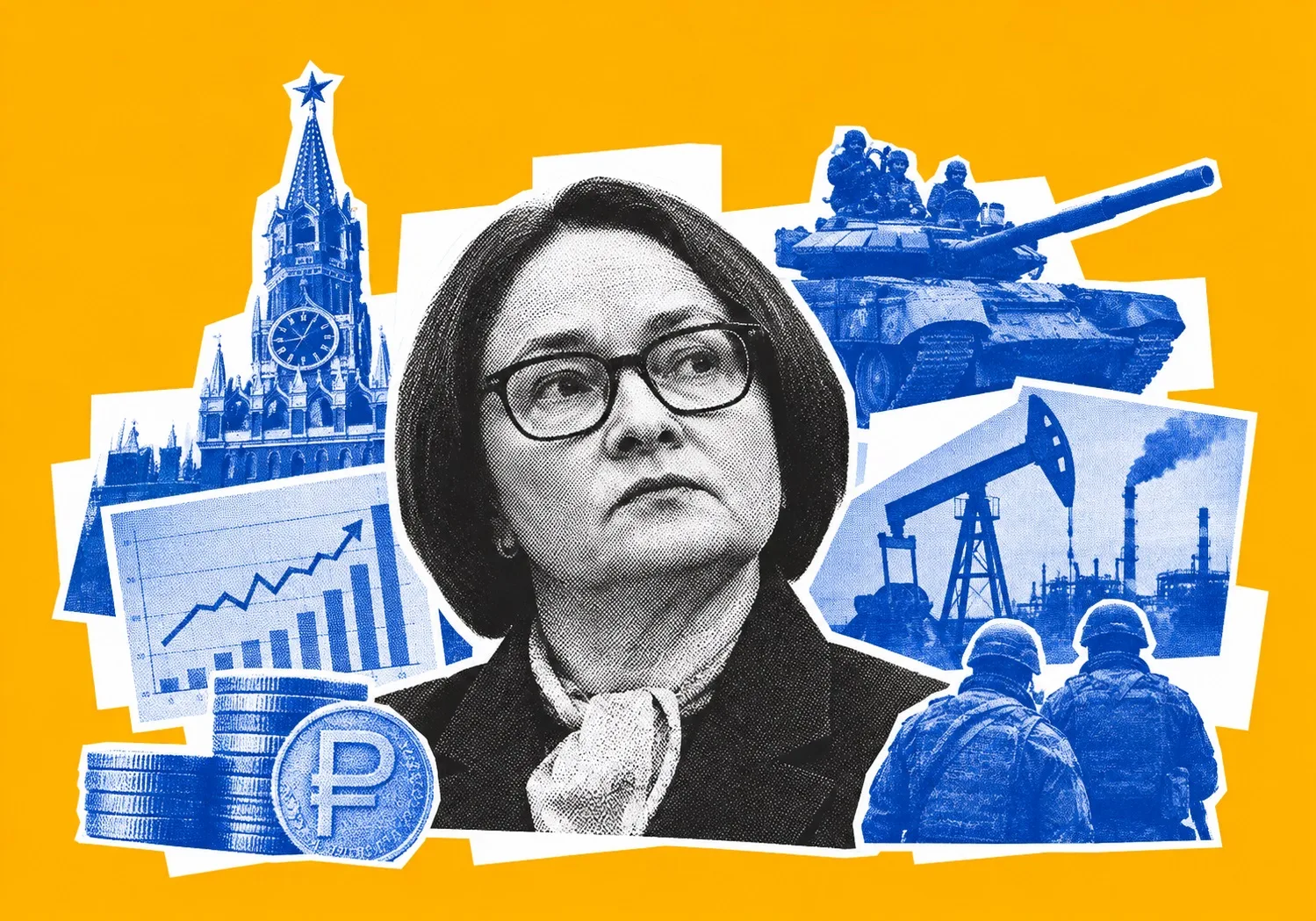
Falling oil and gas revenues, a 10% drop in real investment, and 14% interest rates are squeezing Moscow’s finances as the Central Bank warns of prolonged economic strain into 2027.
Official figures, published by Russia’s Finance Ministry on November 10, provide a clear picture of the financial challenges facing Moscow as it continues to fund its war against Ukraine while attempting to preserve domestic economic stability.
Russia’s Budget Gap Exceeds Its Original Annual Target
According to preliminary Finance Ministry estimates reported by Interfax, Russia's federal deficit reached 5.234 trillion rubles between January and October 2026, equivalent to 2.3% of gross domestic product.
That compares with a deficit of 3.942 trillion rubles, or 1.8% of GDP, during the same period in 2025. In nominal terms, the shortfall has widened by approximately 33% year on year.
The original 2026 budget anticipated a full-year deficit of 3.786 trillion rubles, equivalent to 1.6% of GDP. However, the Finance Ministry revised its annual estimate in September to 7.345 trillion rubles, or 3.2% of GDP.
The distinction matters. Although the deficit has already surpassed the initial annual target, it remains below the government's revised forecast. The figures nevertheless demonstrate how substantially Moscow has had to adjust its fiscal expectations during the year.
Federal expenditure reached 38.41 trillion rubles over the first ten months, an increase of 13.4% compared with the corresponding period in 2025. Revenue rose by 11% to 33.176 trillion rubles.
This difference between spending and revenue growth has contributed to the widening deficit, although the final annual result will also depend on tax receipts, expenditure timing and other financing measures during the remaining months.
The October figures suggest some moderation in the pace of deficit accumulation. Based on the ministry's preliminary cumulative estimates, the monthly shortfall was approximately 48 billion rubles, substantially smaller than the deficits recorded earlier in the year.
That makes the broader trend more important than any single month's result: Russia's public finances remain under pressure, but the available figures do not indicate an uninterrupted monthly deterioration.
Rising Tax Revenue Is Not Eliminating Fiscal Pressure
Russia's non-oil and gas revenue increased by 19.1% year on year to 26.734 trillion rubles during January–October.
Value-added tax receipts were particularly significant, rising by 27.8% to 14.701 trillion rubles.
The growth in tax collections has helped compensate for weaker revenue from energy exports, but it has not prevented the federal government from recording a substantial deficit.
As Nexus Europa previously reported, Russia's oil and gas revenues have been declining, adding pressure to the federal budget. The latest figures show that energy-related receipts fell by 14.1% year on year to 6.442 trillion rubles over the first ten months of 2026.
The central fiscal challenge is therefore broader than energy revenue alone. Even with strong growth in other tax receipts, the government is spending more than it collects.
For Moscow, closing that gap requires a combination of additional revenue, borrowing, available financial reserves or adjustments to expenditure. Each option carries different consequences for businesses, consumers and future budget flexibility.
Central Bank Governor Acknowledges Falling Real Investment
The fiscal figures emerged just days before Central Bank Governor Elvira Nabiullina addressed the State Duma on November 12, outlining the difficulties facing Russia's economy and the constraints on monetary policy.
One of the most revealing indicators concerned investment.
Nabiullina said that capital investment totalled approximately 43 trillion rubles between July 2025 and June 2026. Although the nominal value was slightly higher than a year earlier, real investment had declined by nearly 10%.
The discrepancy reflects the rising cost of machinery, equipment and other investment goods. Companies may be spending similar or larger amounts of money while purchasing fewer productive assets.
Nabiullina identified inflation, increasingly complicated logistics and tighter sanctions as factors contributing to higher investment costs.
She also acknowledged that profits across Russia's real economy had fallen by approximately 10% year on year, reaching 25 trillion rubles over the latest twelve-month period.
These figures do not suggest that Russian businesses have stopped investing. The central bank maintains that investment remains above pre-2022 levels and expects renewed growth. Nevertheless, the decline in real investment highlights the difficulty of translating nominal spending into additional productive capacity.
For an economy facing restrictions on imported technology, equipment and international financing, this distinction is particularly important.
High Interest Rates Could Persist Throughout 2027
Russia's key interest rate currently stands at 14%, reflecting the Central Bank's continued efforts to contain inflation.
During her November 9 parliamentary appearance, Nabiullina said underlying inflation was estimated at between 5% and 6%, still above the central bank's 4% target.
She argued that cutting interest rates too aggressively could reignite price pressures, ultimately making long-term financing more expensive rather than more affordable.
The Bank of Russia's baseline forecast envisages a double-digit key rate throughout 2027, with a gradual return to its estimated neutral range of 7.5%–8.5% only by 2029.
That outlook creates a difficult environment for companies seeking to modernise production, expand capacity or finance major projects.
Higher borrowing costs can discourage investment, while persistent inflation raises the price of raw materials, equipment, transportation and labour.
Nabiullina also emphasised the relationship between government finances and monetary policy. A gradual reduction in the budget deficit is an important assumption behind the central bank's forecast for lower inflation and interest rates.
If fiscal pressures remain elevated, the authorities could face greater difficulty easing monetary conditions without risking renewed price increases.
Labour Shortages and Weak Productivity Limit Growth
Russia's economic difficulties extend beyond government finances and credit conditions.
Nabiullina identified labour shortages as a major obstacle to further expansion. With unemployment around 2.2%, the economy has limited scope to increase production simply by employing more workers.
That places greater importance on productivity, where the central bank's own figures reveal a substantial gap between investment and results.
According to Nabiullina's November 9 address, real investment in the first half of 2026 was almost 25% higher than five years earlier. Labour productivity, however, had increased by only 5% over that period.
The contrast raises questions about how efficiently capital and labour are being allocated across the economy.
The governor also questioned the effectiveness of government support for businesses that remain unprofitable, warning that preserving inefficient enterprises can impose additional costs on public finances without improving economic performance.
These concerns are especially relevant in an economy where defence production, government contracts and state-directed spending play an important role in supporting industrial activity.
Increased production in strategically prioritised sectors does not necessarily translate into equivalent improvements in productivity or investment opportunities throughout the wider economy.
War-Related Disruptions Add to Economic Constraints
Russia's continuing war against Ukraine has introduced additional financial and operational pressures.
During her November 12 speech, Nabiullina acknowledged that attacks had caused the loss of production capacity in certain industries, reducing the economy's potential growth in 2026.
She said the Central Bank had adjusted banking regulations to encourage lending for measures designed to protect industrial facilities and infrastructure.
Such spending illustrates another demand on business and financial resources: companies must allocate capital not only to expanding production but also to protecting and restoring existing assets.
The broader impact of the war is also visible in sanctions-related logistical difficulties and restrictions affecting access to foreign financing.
Russia has adapted parts of its economy to these conditions, but adaptation carries costs. More expensive imports, longer supply chains and additional infrastructure requirements can reduce the amount of productive investment generated by each ruble spent.
At the same time, government expenditure continues to support economic activity, particularly in sectors linked to state orders and industrial production.
This creates a complex economic picture in which wartime spending sustains demand while labour constraints, inflation and investment costs limit the potential for broader growth.
Russia Faces a Difficult Fiscal and Monetary Balancing Act
The Bank of Russia expects GDP growth of approximately 1% in 2026, according to Nabiullina's November 12 address.
The central bank anticipates a gradual acceleration in economic activity, although its forecasts depend on inflation declining, productivity improving and damaged production capacity being restored.
The government's ability to reduce the budget deficit will also influence how quickly monetary policy can be eased.
These objectives are interconnected.
Reducing public spending too rapidly could weaken demand in sectors dependent on government contracts. Maintaining elevated expenditure, however, could prolong inflationary pressures and complicate the central bank's efforts to lower interest rates.
Increasing tax revenue may help finance the budget, but it can also affect business costs and household purchasing power, depending on how additional revenue is collected.
Russia therefore faces a policy dilemma rather than a single financial emergency.
Its federal debt remains relatively low by international standards, and the government retains domestic financing options. The current deficit does not, by itself, indicate that Moscow is approaching an inability to meet its financial obligations.
The more significant question is how long Russia can sustain its current spending priorities without further weakening investment conditions, productivity growth and economic flexibility.
What Russia's Economic Strains Mean for Europe
For European governments, Russia's fiscal position matters because economic capacity is one of the factors shaping Moscow's ability to sustain a prolonged war.
A widening deficit does not automatically translate into reduced military spending. The Russian government can continue prioritising defence expenditure, even if doing so requires adjustments elsewhere in the economy.
However, persistent inflation, expensive credit, labour shortages and weaker real investment can gradually increase the economic costs of maintaining that strategy.
These pressures may also influence how Moscow responds to sanctions, restrictions on technology imports and further disruptions to industrial infrastructure.
For European policymakers, the distinction between immediate financial resilience and longer-term economic sustainability is essential.
Russia may retain the resources to support substantial military expenditure while simultaneously experiencing deterioration in parts of its civilian economy.
The latest Finance Ministry figures and Nabiullina's parliamentary statements illustrate precisely that tension.
With a 5.234 trillion-ruble budget deficit after ten months, real investment declining and interest rates expected to remain elevated into 2027, Moscow faces increasingly difficult choices over how to distribute financial and productive resources.
Whether those pressures eventually constrain Russia's military spending will depend on future budget decisions, revenue performance, access to financing and the government's willingness to prioritise the war over other economic needs.
Sources: Interfax, Bank of Russia – Elvira Nabiullina's Speech at the Joint Meeting of State Duma Committees, Bank of Russia – Elvira Nabiullina's Address to the State Duma