
Russia-Linked Network Spread Fake News During French Riots, EU Report Finds

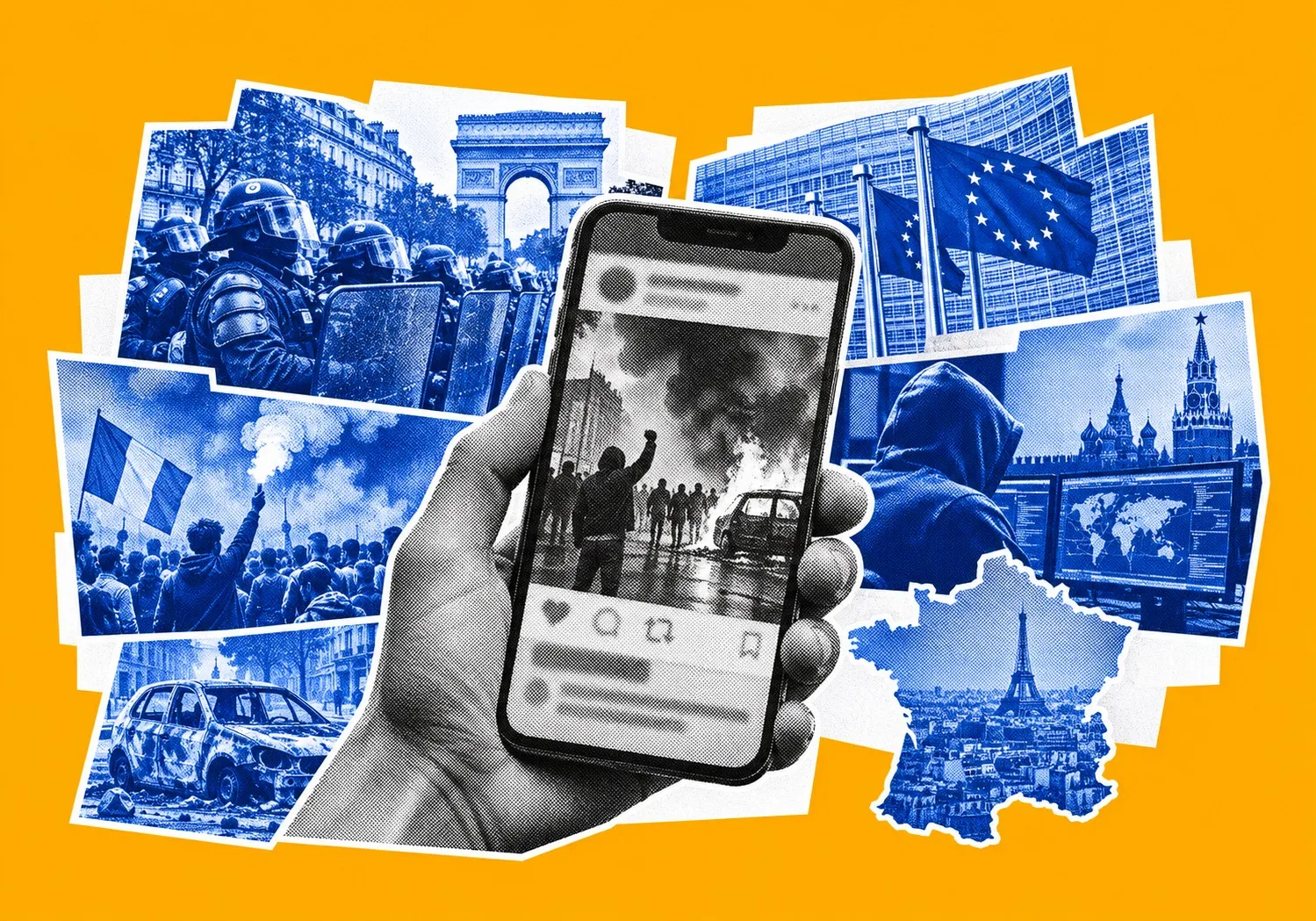
A Russia-linked network impersonated Western news organisations to spread false claims about migrants during October's riots in France, according to an internal EU assessment obtained by Reuters. Known as Operation Overload, the campaign also sought to turn public anger over living costs into opposition to European support for Ukraine. The network circulated fabricated videos alleging that migrants had raped protesters and warning of imminent terrorist attacks. Its operators used the visual identities of established media outlets to make the reports appear authentic.

The campaign targeted President Emmanuel Macron's government, portraying it as weak, increasingly authoritarian and unable to maintain public order. The EU assessment, prepared by disinformation specialists at the European External Action Service, covered online activity between 7 and 21 October.
Reuters published the findings on Monday, 9 November, alongside details of a separate French foreign ministry assessment. That report identified hostile narratives circulated by accounts associated with the US MAGA movement and Israeli officials and influencers. Their most popular posts attracted substantially larger audiences than those identified as pro-Russian.
Reuters said it could not independently verify the conclusions of either internal report.
False reports amid genuine unrest
The demonstrations began in September with protests by school pupils over teacher shortages and deteriorating facilities. They expanded as trade unions, students and Yellow Vest activists mobilised against rising living costs, inequality and declining public services.
On 17 October, around 550,000 people joined demonstrations across France, according to government estimates. Most marches were peaceful, but violent groups clashed with police, looted shops and attacked public buildings.
In Limoges, rioters set fire to the historic town hall. Municipal buildings were also attacked in Marseille, while violence spread through parts of Paris and Lyon. Police reported approximately 1,200 arrests and more than 150 injured officers that day.
Images of burning buildings, damaged streets and confrontations with police circulated widely on social media. The Russian-linked campaign used this footage and the surrounding public anger to promote claims that immigrants were responsible for the disorder.
Some fabricated news reports alleged sexual violence against demonstrators. Others warned of terrorist attacks that had not occurred.
The EU assessment described the activity as an attempt to exploit an existing crisis. Its authors said the material was intended to fuel fear and political division while discrediting the French leadership.
Macron acknowledged the distinction on 21 October. He said there was no visible evidence of foreign interference behind the protests themselves, although French authorities had detected foreign manipulation of information.
The Russian foreign ministry did not respond to Reuters' request for comment on the latest findings.
How Matryoshka manufactures news
Operation Overload, also known as Matryoshka, has been active since at least September 2023. It has targeted politicians, journalists, public institutions and media organisations across Europe and North America, often using fabricated material presented as legitimate reporting.
France's foreign-interference monitoring agency, Viginum, documented the operation in 2024. Its investigation found that many false reports initially appeared on Russian-language Telegram channels before being distributed through coordinated accounts on X.
The operators frequently tagged journalists, researchers and fact-checking organisations, urging them to investigate claims that the network itself had invented. Some recipients were also contacted directly by email.
By attracting responses from established organisations, the accounts attempted to give otherwise obscure fabrications a wider audience.
The British-based Institute for Strategic Dialogue (ISD) examined 135 pieces of content attributed to Operation Overload during the first three months of 2025.
Its researchers identified impersonation of more than 80 organisations across ten countries, with particular emphasis on France, Germany and Ukraine.
The material included videos made to resemble television news reports, forged newspaper headlines and altered photographs. Some operators used artificial intelligence to imitate the voices of journalists, academics and police officers.
Genuine footage was occasionally combined with fabricated audio, making the manipulation more difficult to detect from the images alone.
ISD found that most of the posts attracted little genuine engagement, despite coordinated attempts to increase their visibility. One exception was a false report alleging that the US Agency for International Development had paid celebrities to visit Ukraine. After amplification by prominent accounts, the video accumulated more than four million views.
The network's methods allow operators to change subjects quickly, moving between elections, public protests and controversies involving Western governments.
During the French unrest, the fabricated material concentrated on immigration, public safety and criticism of Macron's administration.
Ukraine becomes part of the message
The October operation also sought to redirect frustration over domestic spending towards France's military and financial support for Ukraine.
According to the EU assessment, Operation Overload promoted the claim that European governments were giving priority to Kyiv while neglecting problems affecting their own citizens.
A separate investigation by Alliance4Europe identified similar messaging from Doppelganger, another Russia-linked disinformation network.
The organisation examined 547,471 posts on social media platforms and news websites in nine languages, tracing coordinated activity back to 1 September.
In the six weeks before 17 October, researchers identified 639 messages attributed with high confidence to Doppelganger. Published in French, German, English and Polish, the posts accumulated approximately 7.4 million views.
The messages drew on real grievances about household finances and public spending. Some explicitly presented aid to Ukraine as money being withheld from French citizens.
Others referred to the Yellow Vest demonstrations of 2018, which began in opposition to fuel taxes before developing into a wider protest movement against Macron's presidency.
Alliance4Europe found that the network concentrated criticism on centrist, pro-European and pro-Ukraine politicians. It did not consistently support any one French party.
Researchers also documented differences in how the October violence was described to domestic and international audiences.
In French-language posts, approximately one in 33 directly blamed migrants or Islam for the unrest. Among English-language posts, the proportion was nearly one in five.
Unfounded allegations that immigrants had set fire to Limoges town hall circulated 3.6 times more frequently in English than in French. The claims also appeared in the researchers' English-language dataset approximately six hours earlier.
The findings show how accounts publishing in different languages presented contrasting explanations for the same events.
Alliance4Europe found no evidence that foreign actors had initiated the demonstrations. Its report documented attempts to amplify anger, spread misleading accounts of the violence and direct criticism towards immigration and European support for Ukraine.
MAGA and Israeli-linked accounts draw larger audiences
The French foreign ministry's assessment identified other influential sources of commentary about the riots, particularly accounts associated with the US MAGA movement and Israeli officials, media organisations and influencers.
Their most widely viewed posts frequently connected the violence to immigration and radical Islamism.
Between 16 and 18 October, the ten most-viewed posts about the unrest from accounts classified as belonging to pro-Russian circles received a combined 2.8 million views on X.
The ten most-viewed posts from MAGA-linked officials, media outlets and influencers attracted more than 49 million views during the same period.
For Israeli officials, government accounts, media organisations and influencers, the equivalent figure exceeded 35 million.
Those figures represent views of selected posts, rather than the overall reach of the different groups. They do not establish how many individual users saw the material or whether it influenced their political opinions.
The French assessment described the messages as hostile narratives. It did not establish that the MAGA-linked and Israeli accounts were participating in a coordinated campaign with Russian operators.
Nor does the classification mean that every post contained fabricated information.
Elina Treyger, a senior political scientist at the RAND Corporation, told Reuters that competing political messages of this kind amounted to a long-term "narrative competition" that could influence perceptions of Western democracies.
She warned that anti-immigration messaging could contribute to political polarisation and strengthen support for more extreme positions.
Israeli Prime Minister Benjamin Netanyahu's office and the Israeli foreign ministry did not respond to Reuters' requests for comment.
France's 2027 election under pressure
The disclosure comes as French authorities investigate a series of suspected Russian information operations targeting politicians ahead of the presidential election scheduled for April 2027.
In August, Viginum identified a campaign directed against former prime minister Gabriel Attal.
The material included fabricated reports and videos that copied the visual identities of French news organisations, including France 24, RFI, BFM TV and Le Parisien.
Some falsely suggested that Attal suffered from serious medical conditions. Other manipulated reports attempted to damage his reputation through allegations presented as genuine journalism.
Viginum attributed the campaign with high confidence to the Matryoshka network.
Former prime minister Édouard Philippe and centre-left politician Raphaël Glucksmann have also been targeted by suspected Russian disinformation operations.
The incidents prompted complaints from politicians and investigations into possible foreign interference in France's presidential campaign.
French authorities have repeatedly identified impersonation of established media outlets as a feature of these operations. Forged reports can be distributed rapidly through social media accounts before the organisations being impersonated have an opportunity to respond.
European regulators have faced questions about their ability to respond to similar campaigns during episodes of public disorder.
On 21 October, the European Commission said it had not initiated emergency measures against online platforms over the French riots because the evidence did not establish that foreign actors had caused or intensified the violence.
The EU's Digital Services Act requires major online platforms to assess and address systemic risks, including organised disinformation. It also provides a crisis-response mechanism for exceptional threats to public security.
That mechanism was not activated during the October unrest.
French authorities have continued examining suspected foreign interference separately from the criminal investigations into violence during the demonstrations.
The latest EU assessment identifies the fabricated reports and the Russian-linked network distributing them. It does not establish how widely the material was believed or whether it changed public behaviour.
Meanwhile, the Paris prosecutor's office has opened an investigation into suspected foreign interference targeting potential presidential candidates. Viginum continues to monitor campaigns involving forged news coverage and impersonated media brands ahead of the 2027 election.
Sources: Reuters, Alliance4Europe, Le Monde, Institute for Strtegic Dialogue